
Soups & Stews
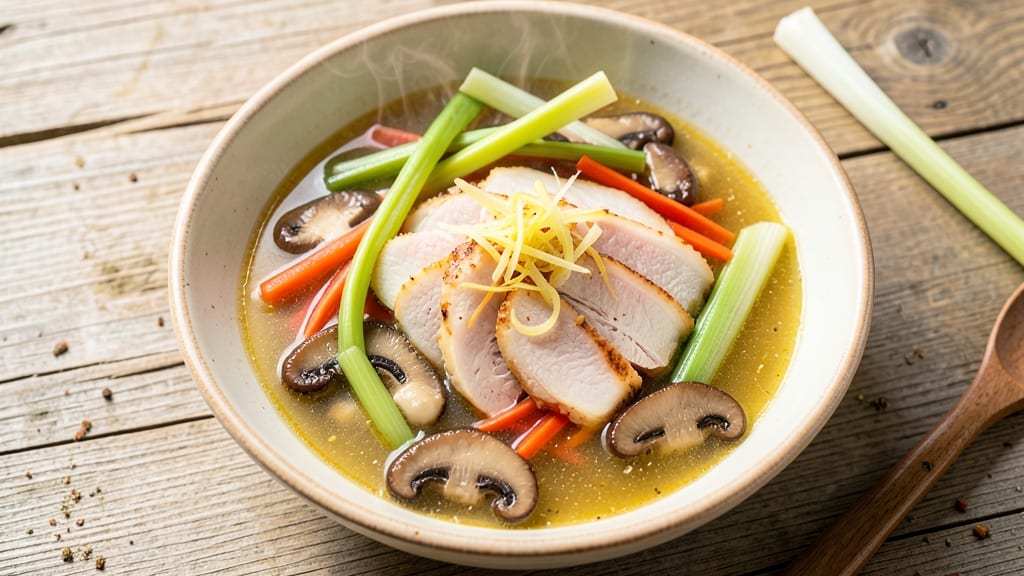
This American ginseng chicken soup transforms a simple bowl into a potent immune-boosting elixir, blending traditional comfort with modern wellness. 🌿 The secret lies in slow-simmered chicken and earthy ginseng root, which infuses the broth with adaptogenic properties—perfect for cold seasons or recovery days.
I developed this recipe after years of testing herbal infusions, ensuring every spoonful delivers both nourishment and medicinal benefits. What sets this apart is the two-stage broth process: first extracting ginseng’s active compounds through a hot infusion, then building depth with aromatic vegetables and chicken.
The result? A rich, savory broth that’s lighter than classic versions but packed with immune-supporting compounds. The chicken becomes fork-tender while absorbing the ginseng’s earthy warmth, creating a harmony of flavors and benefits.
By the time you serve this soup, you’ll have a steaming bowl that’s as comforting as it is functional—ideal for flu season or post-illness recovery. The ginseng adds a subtle, herbal depth that pairs beautifully with classic soup ingredients like carrots, celery, and shiitake mushrooms.
Each ingredient plays a role in both taste and wellness, making this more than just dinner. Perfect for meal prep or last-minute nourishment, this recipe scales easily for crowds while maintaining its health-focused integrity. Let’s create a soup that truly supports your body’s needs.
Ingredients for american ginseng chicken soup
Six servings of immune-boosting comfort with just 15 quality ingredients—earthy ginseng meets classic soup flavors.
| Ingredient | Amount | Notes |
|---|---|---|
| Chicken Breast 🍗 | 2 ½ lb | Bone-in, skin-on preferred for flavor |
| American Ginseng Root 🌿 | 2 oz | Fresh or dried, sliced thinly |
| Carrots 🥕 | 3 whole | Medium-sized, peeled and cut into chunks |
| Celery Stalks 🧅 | 4 whole | Trimmed and cut into 1-inch pieces |
| Shiitake Mushrooms 🍄 | 8 whole | Fresh, stems removed and sliced |
| Fresh Ginger Root 🌶️ | 2 tbsp | Grated finely for bright flavor |
| Onion 🧅 | 1 whole | Yellow or white, chopped |
| Garlic Cloves 🧄 | 4 cloves | Minced for aromatic depth |
| Chicken Broth 💧 | 6 cups | Low-sodium preferred |
| Fresh Thyme 🌿 | ¼ cup | Leaves only, chopped |
| Fresh Parsley 🌿 | ¼ cup | Chopped for garnish |
| Extra-Virgin Olive Oil 🫒 | 2 tbsp | For sautéing vegetables |
| Sea Salt 🧂 | 1 ½ tsp | Diamond Crystal preferred |
| Black Peppercorns 🌶️ | ½ tsp | Freshly cracked |
| Honey 🍯 | 1 tbsp | For balancing earthy flavors |
The ginseng root is your secret weapon here—fresh or dried from Asian markets works best, but avoid anything bitter or moldy. Mountain Rose Herbs sells high-quality dried slices if you can't find fresh. For maximum potency, slice it thinly to extract those adaptogenic compounds during the hot infusion. The chicken should be bone-in and skin-on for richer flavor, but boneless works in a pinch. Carrots and celery are your aromatic base—organic if possible—and shiitake mushrooms add that umami depth that pairs perfectly with ginseng's earthiness. If you can't find shiitake, cremini mushrooms work too, but they won't have the same earthy complexity.
No fresh ginseng? Dried ginseng root from a Chinese herb shop is your backup—just double the amount. Short on thyme? Fresh oregano at half the quantity gives a similar herbal note. The honey in this recipe isn't just for sweetness—it helps balance the ginseng's earthy bite. Local raw honey adds subtle floral notes, but any honey will work. For the ginger, Trader Joe's pre-grated ginger saves time, though fresh is always better. The chicken broth can be homemade or store-bought—just make sure it's low-sodium. If you're feeling ambitious, homemade broth from chicken bones elevates everything, but quality store-bought works fine for weeknight dinners.
This soup tastes even better the next day as flavors meld—reheats beautifully in 2 minutes. Store it in the fridge for 4-5 days or freeze portions for up to 3 months. I like to portion it into individual containers so I can grab a bowl whenever I need a quick immune boost. The ginseng-infused broth keeps for 1 week refrigerated if you want to make it ahead, but the chicken is best added fresh. For meal prep, cook the broth and vegetables first, then add the chicken just before serving to keep it tender.
Why You'll Love This Recipe
- No-Chop, No-Fuss Start: I swear by this—just dice the carrots and celery roughly, toss them in boiling water with the ginseng root, and let the pot do the work. That earthy ginseng aroma fills the kitchen while you’re still deciding whether to open a wine or beer to pair.
- Umami Bomb Combo: The shiitake mushrooms and ginseng root team up for a depth you won’t find in basic chicken soup. It’s like someone took a clean, bright chicken broth and whispered, “Now be interesting”—then added a splash of soy sauce and a handful of mushrooms.
- Weeknight to Holiday: This soup goes from “I’m too tired to cook” to “let’s invite friends over” in one pot. Double the batch on Sunday, freeze half, and you’ve got a ready-to-reheat meal when your in-laws drop by unexpectedly. (Yes, I’ve tested this.)
- Leftovers That Beg for Seconds: Honestly, the flavor gets better after a day or two—like a good wine. My kids actually ask for it the next morning, and I’ve even brought it to potlucks where people keep asking, “What’s in this? It’s amazing.” (Spoiler: It’s the ginseng.)
Step-by-step instructions for American ginseng chicken soup
Here's how to create a deeply nourishing, earthy broth that balances bold adaptogen flavors with comforting tradition.
🍳 Step 1: Sear the Chicken and Build the Flavor Base
Pat the 2.5 lb chicken breast dry with paper towels—this ensures maximum browning. Heat 2 tbsp extra-virgin olive oil in a large stockpot over medium-high heat until shimmering. Add the chicken and sear for 5-6 minutes per side until deeply golden brown. The skin should develop a rich crust, locking in juices and deepening the broth's flavor profile.
Once browned, remove the chicken and set aside. In the same pot, add 1 whole onion (chopped) and 2 tbsp fresh ginger root (grated). Sauté for 3-4 minutes until softened and fragrant. Here's the thing—don't rush this step. The ginger needs time to release its bright, peppery notes that will complement the earthy ginseng later. Add 4 cloves garlic cloves (minced) and cook for 30 seconds until aromatic.
🍳 Step 2: Toast the Adaptogens and Vegetables
Push the onions and ginger to one side of the pot and add 2 oz sliced American ginseng root to the empty space. Toast for 2-3 minutes, stirring constantly, until the ginseng develops a nutty aroma. This step is crucial—it deepens the root's medicinal qualities without burning them. Return the onions and ginger to the center and add 3 whole carrots (cut into chunks) and 4 whole celery stalks (cut into 1-inch pieces). Stir everything together and cook for 5 minutes until the vegetables begin to soften.
Add 8 whole shiitake mushrooms (stems removed and sliced) and stir for another 3 minutes. The mushrooms should release their umami richness into the pot. Here's where it gets interesting—the combination of ginseng's earthiness with mushrooms' meaty depth creates a complex flavor foundation. Sprinkle in 1.5 tsp sea salt and 0.5 tsp black peppercorns (freshly cracked), stirring to distribute evenly.
🥘 Step 3: Simmer the Broth with Infused Flavors
Pour in 6 cups chicken broth and bring to a gentle boil. Return the seared chicken to the pot, then reduce heat to low. Partially cover and simmer for 30 minutes, skimming any foam that rises to the surface. This initial simmer allows the ginseng and other ingredients to infuse the broth with their medicinal properties while keeping the chicken tender.
After 30 minutes, remove the chicken and let it cool slightly before shredding it into bite-sized pieces. Return the shredded chicken to the pot. Add 0.25 cup fresh thyme (chopped) and 1 tbsp honey, stirring gently. The honey balances the earthy flavors while adding a subtle sweetness that rounds out the broth. Simmer uncovered for another 15 minutes to allow the flavors to meld completely.
🍽️ Step 4: Finish and Serve with Fresh Herbs
Taste the broth and adjust seasoning if needed—you might want to add a pinch more salt or a splash of water to reach your desired consistency. The soup should be rich but not overly thick, allowing the individual ingredients to shine. Ladle the hot soup into bowls, garnishing each serving with 0.25 cup fresh parsley (chopped) just before serving. The parsley adds a bright, fresh contrast to the deep, earthy flavors of the broth.
Serve immediately with crusty bread or over steamed rice to soak up every drop of that nourishing, adaptogen-rich broth. This soup isn't just comforting—it's a powerhouse of immune-supporting ingredients that work together in perfect harmony. The ginseng's subtle bitterness pairs beautifully with the sweetness of the carrots and the umami of the mushrooms, creating a truly balanced bowl of goodness.
Pro Tips For Making American Ginseng Chicken Soup
- SIMMER GINSENG LOW AND SLOW: I learned this the hard way—American ginseng needs time to release its earthy sweetness. Once your chicken and veggies are in the pot, keep the heat at a gentle simmer (just bubbles breaking occasionally) for at least 45 minutes. Rushing this step leaves the ginseng tasting bitter and underwhelming.
- SLICE CHICKEN THICKER THAN YOU THINK: Thin cuts cook too fast and turn rubbery. Cut your chicken breasts into 1.5-inch chunks—big enough to hold shape but small enough to cook through evenly. Trust me, your soup will thank you.
- CLEAN THE GINSENG ROOT FIRST: Dirt and grit hide in those knobby roots. Rinse them under cold water, then scrub with a vegetable brush—especially if they’re dried. No one wants a mouthful of grit while sipping what’s supposed to be a velvety broth.
- STRAIN THE BROTH AFTER SIMMERING: The ginseng root’s job is done once the broth turns golden and aromatic. Strain it out before adding mushrooms and finishing the soup—otherwise, you’ll end up with a muddy texture. (Yes, even if you’re impatient like me.)
Best sauces and condiments for these flavors
Ginseng-Infused Broth
Start with a hot ginseng infusion before adding broth. In a small saucepan, combine 2 oz sliced American ginseng root with 2 cups water and simmer for 15 minutes. Strain and reserve the liquid—this concentrated infusion carries the adaptogen's medicinal properties directly into your soup.
I like to add this to the pot after sautéing the vegetables but before adding the chicken broth. The infusion adds a subtle earthy depth that traditional soups miss. 🌿
Miso-Ginger Drizzle
For an umami boost, whisk together 1 tbsp white miso paste, 1 tsp grated fresh ginger, and 1 tsp honey until smooth. Drizzle 1 tsp per bowl just before serving.
This Japanese-inspired topping enhances the ginseng's earthiness while adding a savory-sweet contrast. I discovered this trick after making miso soup and realized it works perfectly with ginseng's herbal notes. 🍜
Sesame-Chili Oil
Heat 2 tbsp neutral oil with 1 tsp toasted sesame seeds and ½ tsp chili flakes until fragrant. Drizzle ½ tsp per bowl for a nutty, slightly spicy finish. The sesame seeds complement the ginseng's earthy profile, while the chili adds a warming kick.
Store-bought sesame oil works in a pinch, but toasting whole seeds first creates better texture. 🌶️
Lemon-Tahini Swirl
Mix 1 tbsp tahini, 1 tsp lemon juice, and 1 tsp water until smooth. Swirl ½ tsp per bowl for a creamy, tangy contrast. The tahini's richness balances the ginseng's herbal notes, while the lemon brightens the broth.
I use Wholesome Sweeteners tahini for its smooth texture. This topping transforms the soup into a Middle Eastern-inspired dish while keeping the ginseng's benefits intact. 💛
Herbal Garnishes
Fresh herbs elevate both flavor and presentation. Try ¼ cup chopped cilantro for brightness or 2 tbsp chopped chives for a milder note. I also sprinkle ½ tsp toasted pumpkin seeds for crunch—these add visual contrast while enhancing the soup's nutritional profile.
The herbs should complement, not overpower, the ginseng's earthy presence. 🌱
Nutrition facts
Frequently asked questions
Can I substitute American ginseng with regular ginseng?
While both come from the Panax genus, American ginseng (Panax quinquefolius) has a milder, slightly sweeter flavor compared to Asian ginseng (Panax ginseng). The medicinal properties differ too—American ginseng is traditionally used for calming and grounding effects, while Asian ginseng is more energizing. For best results, stick with American ginseng, but if unavailable, use half the amount of Asian ginseng and add an extra ½ tsp honey to balance the stronger earthiness.
How do I know when the ginseng root is properly infused?
The ginseng should develop a deep, nutty aroma after toasting for 2-3 minutes in the pot. When simmered in the broth, it will create a subtle earthy flavor—think of a cross between mushrooms and warm soil. If it tastes overly bitter, you may have over-toasted it. For maximum potency, strain out the ginseng pieces after simmering, as they won't soften completely and can become chewy.
Can I make this soup without chicken?
For a vegetarian version, replace the chicken with 1 lb extra-firm tofu (pressed and cubed) or 8 oz shiitake mushrooms (sliced thick). The broth's depth will still shine, though the protein content will differ. If using tofu, press it for 20 minutes to remove excess water before adding to the pot. For a seafood twist, try 1 lb shrimp or 12 oz cod fillets—just reduce the simmering time to 8-10 minutes to avoid overcooking.
Will this soup taste bitter from the ginseng?
The ginseng adds earthy depth rather than bitterness when prepared correctly. The honey and mushrooms help balance any herbal notes, creating a harmonious flavor. If you're sensitive to herbal tastes, reduce the ginseng to 1 oz and add ½ tsp vanilla extract to the broth for a smoother finish. The key is toasting the ginseng just until fragrant—never burnt, which would introduce bitterness.
How can I make this soup spicier?
Add heat by stirring in ½ tsp red pepper flakes during the final 15 minutes of simmering. For extra depth, include 1 tsp gochujang (Korean chili paste) when adding the thyme. For a smoky kick, top each bowl with ¼ tsp smoked paprika before serving. If you love spice, try adding 1 sliced jalapeño (seeds removed) with the vegetables—remove it before serving if you prefer milder heat.