
Soups & Stews
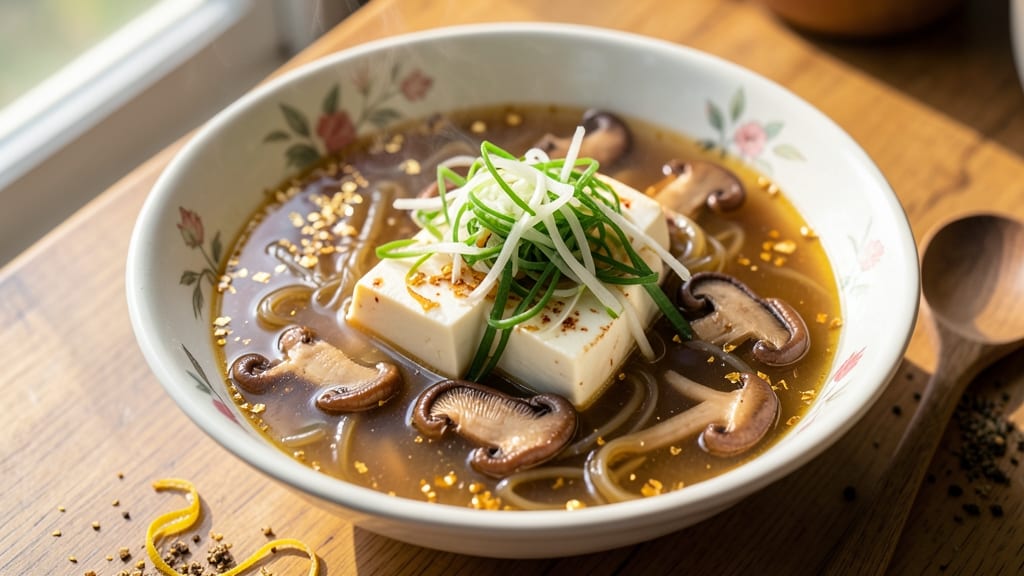
This Asian miso soup recipe delivers umami-packed warmth in every bowl, balancing salty, sweet, and savory notes with silky tofu ribbons and fresh vegetables.
The secret lies in a properly fermented miso paste—whether red for depth or white for brightness—simmered with kombu and bonito flakes to create a broth that's both comforting and complex.
I developed this version after years of experimenting with traditional Japanese techniques while adding modern twists that make it perfect for weeknight dinners.
The foundation of great miso soup is the broth, which builds flavor through a 10-minute simmer that transforms simple ingredients into something extraordinary. Silken tofu is sliced into delicate ribbons that melt in your mouth, while scallions and mushrooms add layers of texture.
What makes this recipe special is its versatility—you can adjust the heat with chili oil, add creaminess with a splash of sesame paste, or keep it light with just miso, dashi, and tofu.
The result is a bowl that's equally at home in a bustling Tokyo ramen shop or your own kitchen.
What you'll end up with is a silky, aromatic soup that's rich yet light, with each component perfectly balanced. The miso paste provides that signature umami depth, the tofu adds protein and texture, and the vegetables contribute freshness.
This isn't just soup—it's a flavor experience that warms you from the inside out, whether served as a starter, light lunch, or comforting dinner. The best part? It comes together in under 30 minutes with minimal effort.
Serve it steaming hot with a sprinkle of sesame seeds or a drizzle of chili oil for extra depth. For a modern twist, try adding shiitake mushrooms or baby spinach.
The possibilities are endless, but the foundation remains the same: a perfectly balanced miso broth that's the heart of every great Asian meal. Let's get started on creating this nourishing, flavorful classic.
Ingredients for asian miso soup
Nine essential ingredients transform into a velvety miso broth with delicate tofu ribbons and aromatic mushrooms.
| Ingredient | Amount | Notes |
|---|---|---|
| White Miso Paste 🧂 | 2 tbsp | High-quality, preferably organic |
| Dried Kombu 🍃 | 1 piece | Whole sheet, cut into strips |
| Dried Bonito Flakes 🐟 | 1 tbsp | For umami depth (optional for veg) |
| Silken Tofu 🧀 | 14 oz | Unopened package preferred |
| Green Onions 🧅 | 3 whole | Sliced into 1-inch pieces |
| Shiitake Mushrooms 🍄 | 4 whole | Stemmed, sliced thin |
| Water 💧 | 4 cups | Filtered preferred |
| Sesame Oil 🫒 | 1 tsp | Toasted for aroma |
| Sesame Seeds 🌿 | 1 tsp | Toasted for garnish |
| Red Chili Oil 🌶️ | 1 tsp | Optional for heat |
| Diamond Crystal Kosher Salt 🧂 | ¼ tsp | For seasoning |
| Fresh Ginger 🧅 | 1 tbsp | Grated, fresh preferred |
The miso paste is non-negotiable—Miso Master or Honten brands deliver that deep umami punch. For kombu, grab the thickest sheet you can find at Asian markets—it dissolves beautifully and adds body. Silken tofu should be unopened for best texture; House Foods or Wildwood brands work perfectly. Fresh ginger matters here—organic ginger from the produce section has more zing than the dried powder. Shiitake mushrooms? Fresh is ideal, but rehydrated dried works in a pinch—just soak them in warm water for 20 minutes first.
No bonito flakes? Dried shiitake mushrooms or extra kombu boost umami just as well. Running low on sesame oil? Toasted peanut oil gives a similar nutty depth. The green onions can be swapped for chives or leeks if that's what's on hand. For extra richness, stir in 1 tbsp tahini at the end. And if you're feeling adventurous, a splash of mirin (2 tsp) adds sweetness without overpowering the broth.
Miso paste keeps indefinitely in the fridge once opened, but store the tub in the freezer for long-term freshness. Tofu lasts 5-7 days unopened in the fridge—once opened, use within 3 days. The kombu sheet? Wrap it in parchment and freeze to preserve its potency. This soup actually tastes better the next day as flavors meld, so double the batch if you can—it reheats beautifully.
Why You'll Love This Recipe
- Five-Ingredient Magic: I swear, this soup is the kind of recipe where you realize you’ve been overcomplicating meals. Just kombu soaking in water, a spoonful of miso, bonito flakes that dissolve into umami gold—no chopping, no fuss, and it’s chef’s kiss in 15 minutes.
- Umami Bomb: That first sip? The miso’s deep, salty richness paired with the crisp, almost smoky bonito—it’s like a flavor party in your mouth. Honestly, I’ve made miso soup before, but this version? It’s the only one that makes me pause mid-sip and think, “Wait, why isn’t this my default?”
- Meal Prep MVP: Between us, this is my go-to for lazy Sundays or post-work exhaustion. Make a big batch—it reheats like a dream—and the silken tofu stays silky, the broth stays bright. I keep a jar in the fridge for when I’m too tired to cook, and it’s always a win.
- Budget-Friendly Powerhouse: White miso and kombu are shelf-stable, bonito flakes last forever, and tofu is cheaper than takeout. I’ve fed my whole family for under $10 with this, and they’ve never complained. (Yes, even my picky teenager.) It’s the kind of recipe that makes grocery bills feel less scary.
Step-by-step instructions for Asian miso soup with silky tofu
Let's create a velvety, umami-rich miso broth that balances earthy kombu, delicate tofu, and aromatic mushrooms.
Prepare the Kombu and Water Base
In a medium saucepan, combine the 4 cups water with the 1 piece dried kombu cut into strips. Bring to a gentle simmer over medium heat—you should see tiny bubbles forming along the edges of the kombu, not a rolling boil. Simmer for 5-7 minutes until the water develops a subtle oceanic aroma and the kombu softens slightly. This step infuses the water with minerals and natural umami without overpowering the delicate flavors.
Here's the thing—don't let the water boil vigorously. Kombu releases its flavor most effectively at a gentle simmer. If you see foam forming, skim it off with a spoon. This ensures your broth stays clear and clean-tasting. Once the kombu has steeped, remove it with tongs and set aside for another use if desired.
Build the Umami Foundation
Return the pan to medium-low heat and add the 2 tbsp white miso paste and 1 tbsp dried bonito flakes. Stir gently with a wooden spoon, being careful not to let the miso burn at the bottom of the pan. The miso should dissolve completely into the warm broth, creating a smooth, creamy texture. If you're avoiding bonito, simply omit it—just know the umami depth will be slightly reduced.
Here's where it gets interesting: the miso paste contains live cultures that activate in warm water, creating that signature fermented depth. Let the mixture simmer for 2-3 minutes until the bonito flakes (if using) begin to disintegrate and release their savory essence. You'll notice the broth turning a richer, cloudy hue—this is your visual cue that the umami foundation is working.
Add Aromatics and Mushrooms
Stir in the 1 tbsp grated fresh ginger and 4 sliced shiitake mushrooms. Let the mixture simmer gently for 3-4 minutes until the mushrooms soften and release their earthy aroma. The ginger will infuse the broth with a subtle warmth that balances the umami. If you're using the optional 1 tsp red chili oil, add it now and stir well to distribute the heat evenly.
This is the moment that matters: the mushrooms should become tender but still hold their shape—you want them to contribute texture rather than turn to mush. If you notice the broth is getting too thick, add ¼ cup water to maintain the perfect silky consistency. The soup should coat the back of a spoon lightly without being gluey.
Incorporate Silken Tofu and Green Onions
Gently fold in the 14 oz silken tofu using a spatula. The tofu should break into delicate ribbons as you stir—this is what gives the soup its signature silky texture. Add the 3 sliced green onions and the 0.25 tsp kosher salt, stirring just until combined. The salt should enhance the natural flavors without overpowering the delicate broth.
Here's a pro tip: don't over-stir the tofu or it will turn rubbery. A few gentle folds are all you need. The tofu should look like it's melting into the broth rather than being forced apart. If you're using the 1 tsp sesame oil, drizzle it in now and stir lightly—this adds a nutty aroma that complements the umami perfectly.
Finish and Serve Immediately
Remove the pan from heat and let the soup rest for 2-3 minutes to allow the flavors to meld. Taste and adjust seasoning if needed—you might want to add a pinch more salt or a splash of water for the perfect consistency. Ladle the soup into bowls, garnishing each serving with 1 tsp toasted sesame seeds for added crunch and visual appeal.
Real talk: this soup tastes best served immediately while the tofu is still silky and the broth is steaming. The aromatic oils from the sesame seeds will release their full flavor when the soup is hot. Serve with steamed rice or crusty bread to soak up every last drop of that umami-packed broth.
Pro Tips For Making Asian Miso Soup
- Bloom the Kombu First: I learned this the hard way—tossing kombu into boiling water kills its flavor. Instead, soak it in cold water for 10 minutes before adding to the pot. The slow rehydration draws out umami depth that boiling can’t replicate.
- Dissolve Miso Slowly: Stirring miso paste into hot broth ruins its texture. After removing kombu, let the broth cool slightly (just until warm to the touch), then whisk in miso gently—no splashing. The paste should melt smoothly, not clump or separate.
- Toast Bonito Properly: Bonito flakes burn faster than you think. Use a dry, nonstick skillet over medium heat and toast them for just 20-30 seconds—until they sizzle and smell nutty, not smoky. Too long, and you’ll end up with bitter bits instead of delicate flavor.
- Cube Tofu Fresh: Silken tofu releases starch when cut with a knife. Instead, use a spoon to scoop and roll cubes between your palms to create clean edges. This keeps the broth clear and the tofu intact—no gummy texture or broken pieces.
Essential equipment for perfect results
Miso Broth Essentials
Start with a high-quality miso paste—I recommend Miso Master or Honten brands for that authentic depth. A stainless steel saucepan (like All-Clad) is ideal for even heat distribution, preventing hot spots that can burn the delicate miso.
For kombu, grab the thickest sheet available at Asian markets—it dissolves beautifully and adds body without overpowering. 🧂
A wooden spoon is your best friend for stirring miso—it won’t scratch your pan or react with the alkaline miso paste. If you’re avoiding bonito flakes, a small fine-mesh strainer helps remove any undissolved particles for a cleaner broth.
For extra umami, keep a dried shiitake mushroom or two on hand—they work wonders when simmered with kombu.
Tofu Tools
Silken tofu needs gentle handling, so a sharp chef’s knife and mandoline slicer (like OXO Good Grips) make quick work of those delicate ribbons. I also keep a spatula with flexible edges (like Mercer Culinary) to fold tofu into the broth without breaking it apart.
For texture contrast, a small microplane is perfect for grating fresh ginger—it’s faster than a box grater and yields finer, more aromatic zest. 🧅
If you’re serving miso soup often, invest in a tofu slicer (like KitchenCraft)—it creates uniform ribbons every time. For storage, a glass airtight container (like Pyrex) keeps leftovers fresh for up to 3 days in the fridge.
And trust me, a small ladle (like OXO Good Grips) makes serving neat bowls effortless.
Garnish Game-Changers
Toasted sesame seeds add crunch and visual appeal—use a small nonstick skillet to dry-toast them over low heat for 1-2 minutes until fragrant. For chili oil, a glass dropper bottle (like McCormick) lets you drizzle precisely.
Fresh green onions should be sliced with a sharp knife—I like the Victorinox Fibrox for its precision. A small bowl for individual garnishes keeps your workspace tidy. 🌿
Don’t overlook a fine-mesh strainer for skimming any foam from the kombu broth—it keeps your soup crystal clear. For extra richness, keep tahini or mirin on hand; a small squeeze bottle makes adding them easy.
And if you’re feeling fancy, a small mortar and pestle lets you grind whole spices (like star anise) for a deeper aroma.
Budget-Friendly Swaps
No stainless steel pan? A heavy-bottomed enamel pot (like Le Creuset) works perfectly—just avoid nonstick, as miso can stick and burn. Skip the fancy tools? A wooden spoon and chef’s knife are all you truly need.
For kombu, even a small piece (about 2 inches) will infuse flavor into 4 cups water. 💰
Silken tofu too expensive? Extra-firm tofu pressed and sliced thin works in a pinch—just simmer it for 2-3 minutes less. No sesame oil? Toasted peanut oil gives a similar nutty depth.
And if you’re missing bonito flakes, dried seaweed snacks (like nori) add umami when simmered briefly. The key is balancing flavors, not fancy equipment.
Nutrition facts
Frequently asked questions
Can I make this miso soup without bonito flakes?
Bonito flakes add umami but aren't essential. For a vegetarian version, simply omit them and use extra kombu (simmer for 5-7 minutes) or add 1 tbsp dried shiitake mushrooms to the broth. The flavor will still be rich and satisfying.
What's the difference between white and red miso paste?
White miso is milder, sweeter, and fermented for 3-6 months, making it perfect for delicate soups. Red miso is deeper, saltier, and fermented for 1-2 years, ideal for heartier dishes. For this recipe, white miso creates a cleaner, more traditional flavor profile. You can substitute red miso but reduce to 1 tbsp to avoid overpowering the broth.
Why did my tofu turn rubbery?
Over-stirring or simmering for too long are the most common causes. The tofu should only be gently folded in and simmer for 1-2 minutes max. For extra tenderness, use silken tofu straight from the package (unopened) and keep the broth at a gentle simmer—not a rolling boil. If it's already rubbery, try blending it with a splash of broth to create a creamy miso tofu soup instead.
Can I make this soup ahead of time?
Yes! The broth actually tastes better the next day as flavors meld. Store in an airtight container and reheat gently on the stove. Add fresh tofu and garnishes just before serving to maintain texture. For maximum freshness, keep the tofu separate until reheating—simmer it in the hot broth for just 1-2 minutes before serving.
What are some creative variations?
Try adding 1 cup baby spinach for greens or ½ cup corn kernels for sweetness. For extra richness, stir in 1 tbsp tahini at the end. Spicy lovers can add 1 tsp gochujang or a dash of sriracha. For a creamy version, blend ½ cup coconut milk into the finished broth. The possibilities are endless—just keep the miso-to-water ratio balanced.