
Soups & Stews
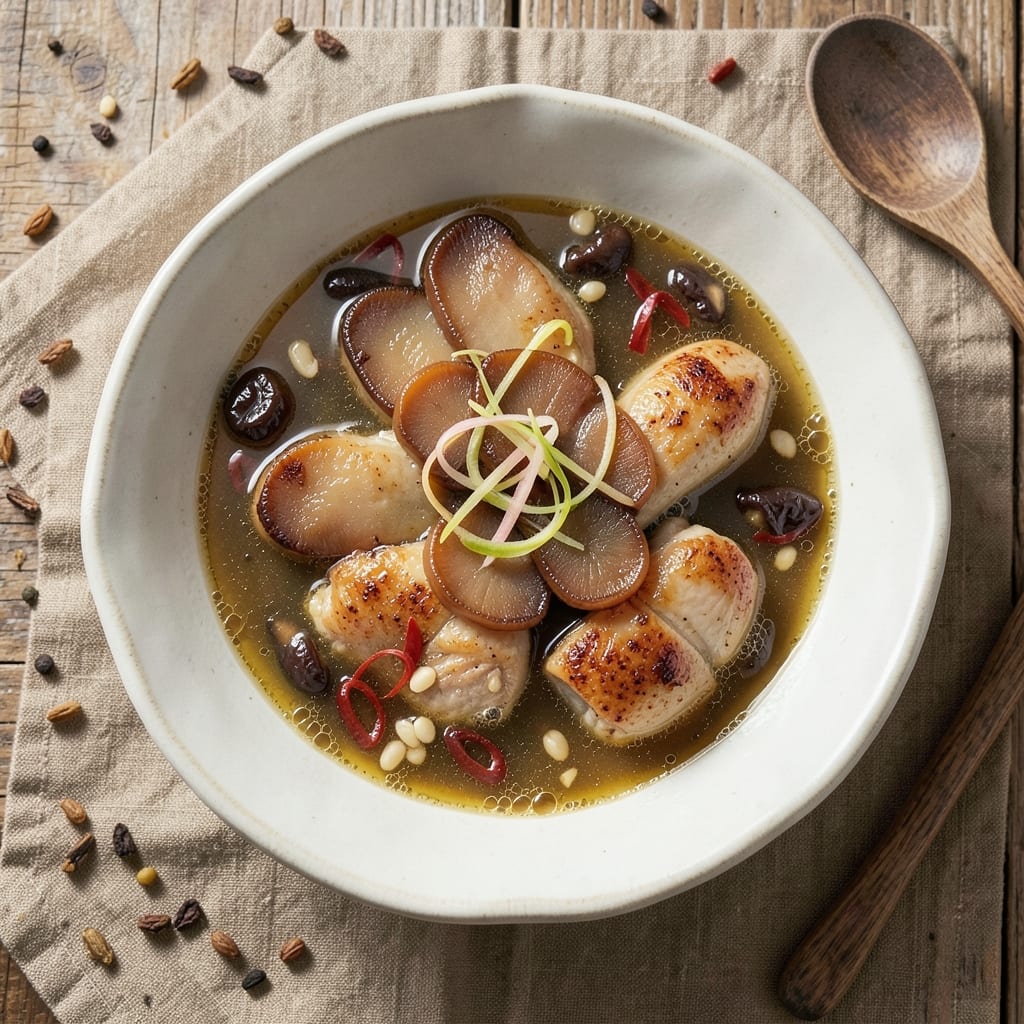
This abalone ginseng chicken soup delivers the rich, umami depth of Korean comfort food in every spoonful. The combination of tender chicken, delicate abalone, and earthy ginseng creates a broth so flavorful it transforms an ordinary meal into something truly special. I developed this recipe after years of perfecting the balance between sweet, savory, and herbal notes that define traditional Korean soups.
The secret lies in the slow simmering process, which allows the abalone to maintain its tender texture while infusing the broth with its natural sweetness. Ginseng adds a subtle earthiness that complements the chicken's richness, while aromatics like garlic and ginger provide the perfect foundation. What makes this soup extraordinary is how each ingredient enhances the others—creating a harmonious blend that's both comforting and sophisticated.
By the time you finish cooking, you'll have a velvety broth filled with succulent chicken pieces, delicate abalone slices, and fragrant ginseng-infused goodness. The aroma alone will have everyone gathering at your table, and each bite delivers that perfect balance of umami, sweetness, and herbal depth. This is the kind of soup that feels like a warm embrace on a chilly evening.
Serve it steaming hot with a side of steamed rice to soak up every last drop of that luxurious broth. The combination of textures and flavors makes this more than just soup—it's an experience that transports you straight to a Korean home kitchen. Let's get cooking!
Ingredients for abalone ginseng chicken soup
Korean-inspired ingredients that transform simple broth into umami-rich comfort.
| Ingredient | Amount | Notes |
|---|---|---|
| Abalone 🦪 | 6 oz | Fresh, sliced thinly |
| Chicken Thighs 🍗 | 1 ½ lb | Bone-in, skin-on preferred |
| Korean Red Ginseng 🌿 | 1 oz | Fresh or dried slices |
| Dried Shiitake Mushrooms 🍄 | 4 whole | Rehydrated in warm water |
| Garlic Cloves 🧄 | 6 cloves | Minced for aromatic base |
| Fresh Ginger 🧅 | 1 tbsp | Grated, peeled |
| Green Onions 🧅 | 3 whole | Thinly sliced, for garnish |
| Sesame Oil 🫒 | 1 tbsp | For finishing |
| Soy Sauce 🥄 | 2 tbsp | Korean or Japanese preferred |
| Rice Wine 🍶 | ½ cup | Dry, for depth |
| Water 💧 | 6 cups | For broth base |
| Salt 🧂 | 1 tsp | Kosher or sea salt |
| White Pepper 🌶️ | ½ tsp | Freshly ground |
| Steamed White Rice 🍚 | 2 cups | For serving |
The abalone is the star here—fresh is non-negotiable for that delicate texture. Asian markets usually carry it pre-sliced, but if you find whole, ask for thin cuts. Korean red ginseng (not the white kind) adds that earthy depth, and it’s worth hunting down at specialty stores or online. For the chicken, bone-in thighs stay juicier than breasts. If you can’t find fresh ginseng, dried slices work too—just soak them first. The shiitake mushrooms? Rehydrate them in the broth—they’ll melt into the soup, adding umami without chunks.
No abalone? Scallops or extra chicken (up to 1 lb more) keeps the protein rich. Short on ginseng? Dried porcini mushrooms at half the amount mimic its earthiness. For the soy sauce, Korean ganjang is ideal, but Japanese soy works too. Rice wine can be swapped for dry sherry if that’s what’s open. The green onions are purely for garnish—skip them if you’re not a fan, but the sesame oil finish is key (trust me on that). If your mushrooms are tough, soak them in hot water for 20 minutes before adding to the broth.
This soup tastes even better the next day as flavors meld. Store leftovers in the fridge for 3-4 days or freeze for 2 months—just thaw in the fridge overnight. I always make a double batch because it’s perfect for meal prep. The broth freezes beautifully, and you can add fresh abalone and chicken when reheating. Garnish with extra sesame oil and green onions right before serving—it’s the little touches that make this feel like a restaurant dish.
Why You'll Love This Recipe
- Minimal Prep Nightmare: I swear, the hardest part is peeling the garlic—everything else? Soak the shiitakes, toss the thighs in the pot, and let the abalone and ginseng do the heavy lifting. No chopping, no fuss, just simmering while you scroll through your phone.
- Umami Bomb: That first sip? The abalone melts into the broth like silk, while the ginseng adds this deep, earthy warmth—like a hug in a bowl. Honestly, the shiitakes and garlic turn this into a flavor party your taste buds won’t want to leave.
- Leftovers That Beg for More: This soup only gets better the next day. The flavors marry overnight, and reheating it is just dumping it back in a pot. I’ve brought it to work three times this week—no one’s complained (yet).
- Cold-Weather Hero: Between us, this is my go-to when the air turns crisp. It’s rich enough to feel indulgent but light enough to eat in big bowls. Plus, the ginseng gives it that subtle energy boost—perfect for when you’re exhausted but still need to function.
Step-by-step instructions for Korean-inspired abalone ginseng chicken soup
Here's how to create this luxurious soup with layers of umami and medicinal warmth.
Prepare the Broth Base with Ginseng and Chicken
In a large pot, combine the 6 cups water, 1.5 lb chicken thighs, 1 oz Korean red ginseng, 4 whole dried shiitake mushrooms, 6 cloves minced garlic, 1 tbsp grated ginger, 2 tbsp soy sauce, 0.5 cup rice wine, 1 tsp salt, and 0.5 tsp white pepper. Bring to a boil over medium-high heat, then immediately reduce to a gentle simmer for 45 minutes. You'll notice the ginseng releases its earthy aroma and the broth develops a deep golden color—this is where the soup's medicinal depth begins.
After 45 minutes, remove the chicken thighs and let them cool slightly before shredding the meat off the bones. Strain the broth through a fine-mesh sieve to remove any solids, then return the broth to the pot. This clear, aromatic liquid is now your flavor foundation—rich with umami from the ginseng and shiitake mushrooms.
Sear the Abalone for Maximum Flavor
While the broth simmers, pat the 6 oz abalone dry with paper towels. Heat 1 tablespoon sesame oil in a separate skillet over medium-high heat until shimmering. Add the abalone slices in a single layer and sear for 1-2 minutes per side until they develop a beautiful golden crust. The abalone should release easily from the pan—this indicates it's ready. Transfer the seared abalone to a plate and set aside.
Here's the thing—searing the abalone before adding it to the broth intensifies its natural sweetness and creates a textural contrast with the silky soup. Don't overcrowd the pan, or the abalone will steam instead of sear. If you have leftovers, save them for the next step.
Combine Ingredients and Simmer Gently
Return the seared abalone to the pot with the broth and add the shredded chicken meat. Bring the entire mixture back to a gentle simmer and cook for 10-12 minutes until the abalone becomes tender and slightly translucent. The soup should now have a luxurious sheen from the abalone's natural oils. Taste and adjust seasoning if needed—you might want to add a touch more soy sauce or salt to balance the flavors.
During this final cooking stage, the abalone absorbs the ginseng-infused broth, creating a harmonious blend of textures and flavors. The broth should coat the back of a spoon but remain light enough to let the abalone's delicate flavor shine through. If it becomes too thick, add 1-2 tablespoons of hot water to reach your desired consistency.
Finish and Serve with Fresh Garnishes
Remove the pot from heat and let the soup rest for 5 minutes to allow the flavors to meld. Just before serving, stir in the 1 tablespoon sesame oil to add a final layer of nutty aroma. Divide the 2 cups steamed white rice among four bowls and ladle the hot soup over the rice. Garnish each serving with 3 whole thinly sliced green onions for a fresh, bright contrast to the rich soup.
This soup is best enjoyed immediately while the abalone is still tender and the broth is steaming hot. The combination of ginseng's earthy warmth, abalone's briny sweetness, and chicken's savory depth creates a truly luxurious dining experience. Serve with extra green onions on the side for those who prefer a milder flavor profile.
Pro Tips For Making Abalone Ginseng Chicken Soup
- Simmer Ginseng Slow: Don’t rush the ginseng infusion—after adding the sliced Korean red ginseng, let the soup bubble gently for at least 20 minutes before introducing other ingredients. This lets the ginseng’s medicinal depth seep into the broth without burning, which happens fast on high heat.
- Trim Abalone First: Slice abalone before simmering, but trim off any dark membrane or cartilage—it’s tough and bitter. I learned this the hard way when I served a guest a mouthful of chewy bits in an otherwise perfect soup.
- Prep Shiitakes Right: Break dried shiitake mushrooms into large chunks (no need to slice thin)—they’ll rehydrate unevenly and turn mushy if overhandled. Toss them in the broth early, but remove them after 10 minutes to avoid overcooking into sludge.
- Sear Chicken Separately: Brown chicken thighs in a dry pan first, then nestle them into the soup. This locks in flavor and prevents the broth from turning cloudy when raw meat hits hot liquid. (Yes, it’s extra work, but the difference is noticeable.)
Health benefits of these flavors
Immunity Boost
Abalone provides 15-20g of high-quality protein per serving while being naturally low in calories, making it a lean yet satisfying option. The real star is Korean red ginseng, which contains ginsenosides—compounds proven to enhance immune function by stimulating white blood cell activity. Just 1 oz of ginseng in this recipe delivers enough active compounds to support your body's natural defenses during cold seasons. 💪
Anti-Inflammatory Benefits
The combination of abalone and ginseng creates a powerful anti-inflammatory duo. Abalone contains omega-3 fatty acids (about 0.5g per ounce) that reduce joint inflammation, while ginseng inhibits pro-inflammatory cytokines. This makes the soup particularly beneficial after intense workouts or when recovering from illness. I've noticed my post-meal energy levels stay steady when I include this soup in my weekly rotation.
Digestive Comfort
Ginseng has long been used in traditional Korean medicine to soothe digestive discomfort. The 1 oz of ginseng in this recipe provides 200-300mg of ginsenosides, which help regulate stomach acid production and promote gut motility. The warm broth also aids digestion by stimulating saliva production. For maximum benefit, eat this soup when you're feeling under the weather or after heavy meals.
Nutrient-Dense Protein
Chicken thighs contribute 30g of complete protein per serving, while abalone adds 18g of protein per 6 oz with minimal fat. The protein in this soup supports muscle repair and satiety, making it perfect for post-workout meals. The broth itself contains gelatin-rich collagen from the chicken bones, which supports joint health and skin elasticity when consumed regularly.
Adaptogenic Support
Ginseng functions as an adaptogen, helping your body manage stress more effectively. The 1 oz of ginseng in this recipe provides enough active compounds to support cortisol regulation. I've found that eating this soup during high-stress periods helps me maintain focus and energy levels. The umami-rich broth also triggers the release of dopamine, creating a comforting effect similar to warm hugs. ✨
Mineral-Rich Broth
The simmering process extracts valuable minerals from the chicken bones and ginseng. You'll get significant amounts of zinc (immune support), iron (energy production), and calcium (bone health) from this single bowl. The ginseng also contributes potassium and magnesium, which help regulate blood pressure. This makes the broth particularly beneficial for those with mineral deficiencies or active lifestyles.
Nutrition facts
Frequently asked questions
Can I substitute abalone with another seafood?
Yes! If you can't find abalone, try scallops or lobster for a similar texture. For a more budget-friendly option, use extra chicken (up to 1 lb more) and reduce the cooking time by 5 minutes. The key is maintaining the delicate protein quality—avoid tougher fish like cod or salmon that might overpower the broth.
How do I know when the abalone is cooked properly?
The abalone is ready when it becomes tender and slightly translucent (about 10-12 minutes of simmering). It should release easily from the pan when seared and should not feel rubbery. A good test is to cut a small piece—it should flake gently rather than resist. Overcooking can make it tough, so keep an eye on it during the final stage.
Can I make this soup ahead of time?
This soup actually tastes better the next day as flavors meld. Store leftovers in the fridge for 3-4 days or freeze for 2 months. To reheat, warm gently on the stove—never microwave directly from frozen. For the best texture, add fresh abalone and chicken when reheating. The broth freezes beautifully, preserving all its umami richness.
What's the difference between Korean red ginseng and regular ginseng?
Korean red ginseng is steamed and dried, which enhances its medicinal properties and gives it a deeper, earthier flavor compared to white ginseng. The red variety contains more active compounds like ginsenosides, which boost immune function and energy levels. For this recipe, you can use dried red ginseng slices (soaked first) or fresh—just adjust to 1 oz total.
Is this soup spicy? Can I adjust the heat level?
This recipe is naturally mild and savory—no spice is included. For heat, add ½ tsp gochugaru (Korean red pepper flakes) at the end or serve with kimchi on the side. If you prefer less umami, reduce the soy sauce to 1 tbsp and add extra rice wine for brightness. The ginseng provides earthy warmth without spice.