
Soups & Stews
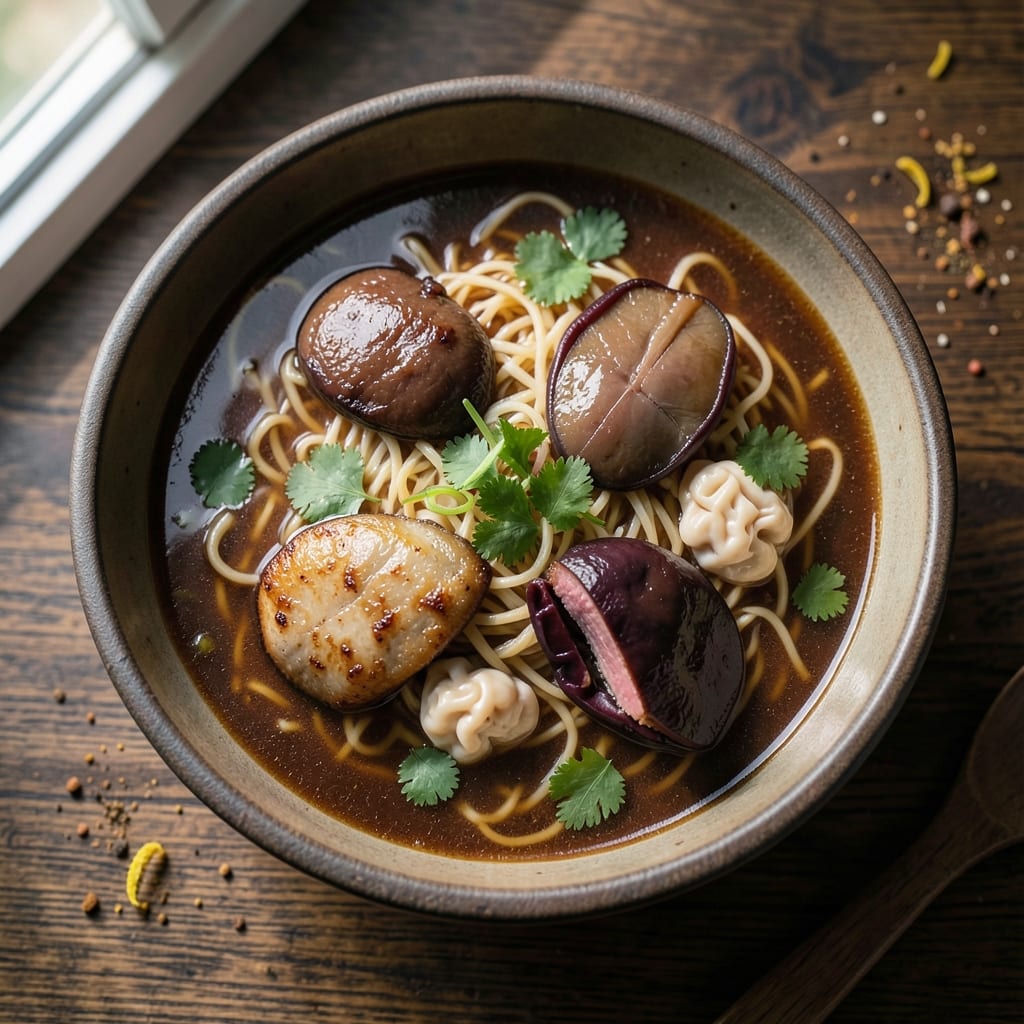
This 7 organ soup recipe delivers a rich, slow-simmered umami experience that honors traditional Chinese medicine and modern nutrition. 💛 The combination of pork organs—liver, heart, kidney, spleen, lung, brain, and stomach—creates a nutrient-dense broth packed with iron, protein, and collagen, all while developing deep, savory flavors through hours of simmering.
The secret lies in proper preparation: organs must be cleaned thoroughly and blanched before simmering with aromatic spices like star anise, ginger, and goji berries. This method transforms tough cuts into tender, flavorful bites while infusing the broth with complex layers of umami and warmth. The result is a dish that's as nourishing as it is delicious.
What makes this recipe special is its balance of tradition and practicality—each organ contributes unique textures and nutrients, while the slow cooking process ensures maximum flavor extraction. The broth becomes a healing elixir, rich enough to sip on its own or use as a base for rice dishes.
Perfect for those seeking a nutrient-dense meal with deep cultural roots, this soup is both a health powerhouse and a culinary experience. Let's get started on creating this flavorful, health-boosting dish.
Ingredients for 7 organ soup
Seven nutrient-packed pork organs and aromatic botanicals create this deeply nourishing, umami-rich broth.
| Ingredient | Amount | Notes |
|---|---|---|
| Pork Liver 🍖 | 8 oz | Fresh, cleaned and trimmed |
| Pork Heart 🍖 | 6 oz | Fresh, cleaned and trimmed |
| Pork Kidney 🍖 | 6 oz | Fresh, cleaned and trimmed |
| Pork Spleen 🍖 | 4 oz | Fresh, cleaned and trimmed |
| Pork Lung 🍖 | 6 oz | Fresh, cleaned and trimmed |
| Pork Brain 🍖 | 4 oz | Fresh, cleaned and trimmed |
| Pork Stomach 🍖 | 8 oz | Fresh, cleaned and trimmed |
| Star Anise 🌿 | 4 whole | Whole pods for infusion |
| Fresh Ginger Root 🧄 | 2 tbsp | Finely grated, fresh |
| Goji Berries 🍇 | ½ cup | Dried, rinsed and drained |
| Dried Shitake Mushrooms 🍄 | 1 oz | Rehydrated before use |
| Dried Reishi Mushrooms 🍄 | ½ oz | Sliced thin for infusion |
| Daikon Radish 🥕 | 1 whole | Peeled and sliced |
| Green Onions 🧅 | ¼ cup | Chopped, for garnish |
| Sesame Oil 🫒 | 1 tbsp | Toasted, for finishing |
| Sea Salt 🧂 | 1 ½ tsp | Diamond Crystal preferred |
| Black Peppercorns 🌶️ | ½ tsp | Freshly cracked |
For optimal results, source pork organs from a trusted butcher or Asian market—look for vibrant color and fresh cuts. The liver and kidney are particularly rich in nutrients, so prioritize quality here. Whole Foods Market or specialty Asian grocers like 99 Ranch Market typically carry these items. If using frozen organs, thaw them overnight in the refrigerator before cleaning. The star anise and reishi mushrooms should be purchased from reputable suppliers—Mountain Rose Herbs or Frontier Co-op offer high-quality dried botanicals. For the goji berries, opt for organic varieties to avoid contaminants, and always rinse them thoroughly before using.
No access to fresh organs? High-quality frozen pork organs work perfectly—just ensure they're properly thawed and cleaned. Substitute dried shiitake mushrooms for the reishi if needed, though the earthy depth of reishi is ideal. The daikon radish can be swapped for regular white radish, though it lacks the same mild sweetness. For a quicker preparation, pre-cut organ blends from Asian markets save time without sacrificing flavor. If you're sensitive to strong flavors, reduce the black peppercorns to a pinch—this soup is already deeply umami-rich. The sesame oil should be toasted lightly before adding to enhance its nutty aroma.
Store freshly cleaned organs in an airtight container in the coldest part of your fridge for up to 2 days. The broth itself keeps for 4-5 days in the refrigerator or 3 months in the freezer. For best flavor, let the soup sit at room temperature for 10 minutes before serving to allow the aromas to meld. The organs can be blanched ahead of time and stored separately for 1 week, making this an excellent make-ahead dish. Portion the broth into containers for easy reheating—it reheats beautifully and tastes even more complex the next day.
Why You'll Love This Recipe
- No-Fuss Prep: I swear by this recipe because it’s the kind of meal that doesn’t demand perfection—just a sharp knife and 15 minutes of chopping. The organs slice fast (no tedious dicing), and the broth builds itself while you stir. Honestly, it’s the kind of soup that makes me feel like a hero when I walk away from the stove.
- Rich Umami Bomb: Between us, this soup is ridiculously flavorful without needing fancy add-ins. The liver adds a deep, almost meaty richness, while the heart and spleen lend that hearty, satisfying bite. Simmer it long enough, and the flavors meld into something dangerously addictive—like a hug in a bowl.
- Weeknight Workhorse: I’ve served this to skeptical in-laws, tired college students, and my own family, and it’s always a hit. Make a big batch on Sunday, and you’ve got lunch covered for days. (Yes, even on a Tuesday night when you’re too exhausted to think.)
- Budget Magic: Here’s what sold me—this soup costs me a fraction of what store-bought broth or pre-cut meats do. A whole pig’s organs go further than you’d think, and the leftovers? Even better the next day. It’s my secret weapon for stretching groceries without sacrificing taste.
Step-by-step instructions for crafting a nutrient-dense organ soup
Transforming these seven organs into a rich, umami-packed elixir requires precision and patience.
🍳 Step 1: Prepare and Blanch the Organ Meat
Begin by thoroughly rinsing all organ meats under cold water. The pork liver, heart, kidney, spleen, lung, brain, and stomach should be trimmed of any visible connective tissue or fat. For the pork stomach, score the surface in a crosshatch pattern with a sharp knife to help it soften during cooking.
In a large stockpot, combine the organ meats with the 1 whole daikon radish (peeled and sliced into thick rounds), 4 whole star anise pods, and 2 tablespoons freshly grated ginger root. Cover with 8 cups cold water (add more if needed to fully submerge the ingredients). Bring to a boil over high heat, then immediately reduce to a gentle simmer for 10 minutes. This blanching step removes impurities and prepares the organs for deeper flavor extraction.
After 10 minutes, drain the pot and rinse the organs thoroughly under cold water to remove any surface scum. This step is critical—it ensures your final soup will be clean and flavorful, not bitter. Return the rinsed organs to the pot and set aside.
🥘 Step 2: Build the Flavor Base with Mushrooms and Berries
Rehydrate the 1 ounce dried shitake mushrooms and 0.5 ounce dried reishi mushrooms by soaking them in 1 cup hot water for 20 minutes. Drain, reserving the soaking liquid, and slice the rehydrated mushrooms thinly. In the same pot used for blanching, add 2 tablespoons sesame oil and heat over medium heat until shimmering.
Add the sliced rehydrated mushrooms and cook for 3-4 minutes until they release their moisture and develop a rich, earthy aroma. Stir in the 0.5 cup rinsed goji berries and cook for another 1 minute, allowing them to plump slightly. Pour in the reserved mushroom soaking liquid and scrape up any browned bits from the bottom of the pot—this is where deep umami flavor hides.
🔥 Step 3: Simmer the Organs with Aromatics
Return the blanched organ meats to the pot along with the mushroom-berry mixture. Add 6 cups fresh water (or enough to cover the ingredients by at least 2 inches) and bring to a gentle boil. Once boiling, reduce heat to low and maintain a steady simmer for 2 hours. This prolonged cooking time is essential—it breaks down collagen and connective tissue, transforming tough organs into tender, melt-in-your-mouth pieces.
After 1 hour, skim off any foam that rises to the surface with a ladle. This ensures your soup remains clear and prevents bitterness. The soup should reduce slightly, intensifying its flavor. You'll know it's ready when the organ meats are fork-tender and can be easily pierced with a knife.
👨🍳 Step 4: Season and Finish the Soup
Strain the soup through a fine-mesh sieve into a clean pot, pressing gently on the solids to extract maximum flavor. Return the strained broth to the heat and add the 1.5 teaspoons sea salt and 0.5 teaspoon freshly cracked black peppercorns. Taste and adjust seasoning—this soup should be deeply savory with a bright, slightly sweet note from the goji berries and mushrooms.
For serving, ladle the hot soup into bowls and garnish each portion with 1 tablespoon chopped green onions. The green onions add a fresh contrast to the rich, earthy depth of the soup. Serve immediately while hot, as the flavors continue to develop even after cooking.
Pro Tips For Making 7 Organ Soup
- BLEACH THE LIVER: Skip the vinegar soak—hydrogen peroxide (3% food-grade) does the job faster. Toss chopped liver in a bowl, cover with peroxide for 5 minutes, then rinse thoroughly (I learned this the hard way when my soup tasted like a chemistry lab).
- SEAR IN BATCHES: Don’t crowd the pan or the organs steam instead of brown. Work in 2-3 batches over medium-high heat—this caramelizes the edges, which builds depth of flavor. (Yes, it takes longer, but the difference is noticeable.)
- SIMMER LUNGS LOW: Pork lungs need gentle heat or they turn rubbery. Once the broth reaches a boil, drop the heat to a bare simmer (small bubbles, occasional swirls) and cover partially. I used to rush this, and the texture suffered.
- SALT THE HEART FIRST: Season the heart with 1 tsp salt per pound before searing—it keeps the muscle fibers tender. Skip this, and you’ll end up with chewy chunks even after hours of simmering. (Your future self will thank you.)
Perfect pairings for this 7 organ soup
Broth-Based Sides
Use the rich organ broth as a base for congee—simmer 1 cup jasmine rice in 4 cups broth for 30-40 minutes until creamy. Top with a soft-boiled egg and scallions. For noodle soups, toss 8 oz rice noodles with the broth and garnish with thinly sliced pork belly and cilantro. The broth's depth elevates simple sides into something extraordinary. 🥣
Rice Dish Pairings
Serve the soup alongside steamed jasmine rice or sticky rice to soak up the flavorful broth. For a heartier option, try fried rice with diced pork organs (reserved from the soup) and scallions. The contrast of warm rice with the cooling broth creates a perfect balance. I often prepare a small bowl of rice on the side for dipping. 🍚
Dipping Sauces
Create a sesame-ginger dipping sauce by blending 2 tbsp toasted sesame oil, 1 tbsp soy sauce, 1 tbsp rice vinegar, 1 tsp grated ginger, and 1 tsp honey. This sauce complements the soup beautifully and adds a tangy contrast. For extra richness, stir in 1 tsp miso paste for depth. 🥢
Vegetable Accompaniments
Light, crisp vegetables balance the soup's richness. Try steamed bok choy or blanched gai lan for a fresh bite. For a crunchy element, serve quick-pickled cucumbers with 1 tbsp rice vinegar, ½ tsp sugar, and ¼ tsp red pepper flakes. The acidity cuts through the soup's umami intensity. 🥬
Beverage Pairings
Pair the soup with a jasmine green tea to cleanse the palate between bites. For a more robust match, try a lightly chilled Chinese baijiu (like Moutai) or a dry Riesling wine. Both complement the soup's savory depth without overpowering it. I prefer a small glass of wine with my first bowl. 🍷
Garnish Upgrades
Elevate the presentation with toasted sesame seeds or crispy fried shallots for texture. A sprinkle of dried shiitake powder adds umami without altering the broth's flavor. For a pop of color, add edible flowers like nasturtiums. Garnishes make the soup feel restaurant-quality. ✨
Nutrition facts
Frequently asked questions
Why do we need to blanch the organ meats before simmering?
Blanching removes impurities and blood that can make the final soup bitter. The 10-minute boil also helps tenderize the organs and prepares them to absorb flavors during the long simmer. Skipping this step risks a metallic taste in your broth.
Can I substitute any of the seven organs?
Yes, but maintain the same organ-to-organ ratio for balance. For example, swap the spleen for pork tripe or replace brain with pork tongue. Avoid substituting with non-organ meats like chicken livers—the flavor profile changes significantly. Each organ contributes unique texture and nutrients!
How do I know when the organs are fully cooked?
The organs should be fork-tender after 2 hours of simmering. Test by piercing with a knife—it should slide in easily. The broth will also reduce slightly and develop a rich, caramelized aroma. Overcooking can make them rubbery, so monitor closely during the final 30 minutes.
Is this soup safe for pregnant women?
Pregnant women should avoid raw or undercooked organ meats due to potential bacteria risks. This recipe requires thorough cooking (2 hours simmer), making it safe when properly prepared. However, consult your healthcare provider first—some organs like liver contain high vitamin A levels that may need monitoring.
Can I make this soup in an Instant Pot?
Yes! Use the "Soup" setting for 45 minutes after blanching, then adjust seasoning. The Instant Pot speeds up cooking but may reduce some collagen breakdown, so add 1 extra tablespoon gelatin for better body. Skim foam more frequently to prevent bitterness.