
Soups & Stews
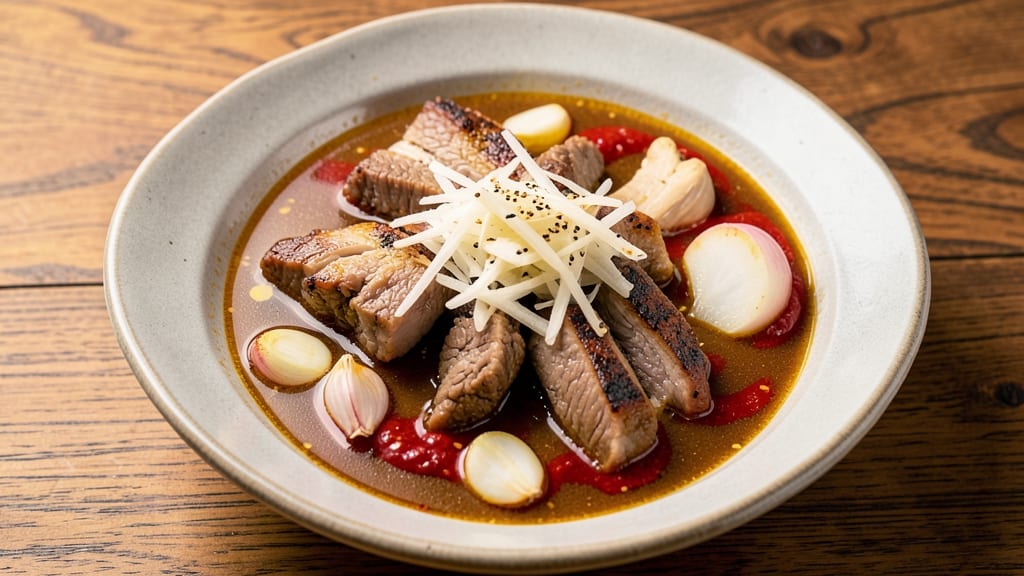
This Bibigo Beef Bone Soup delivers the deep, savory essence of Korean comfort food in one steaming bowl. 💛 The slow-simmered broth transforms beef bones into a rich, umami-packed foundation, while chewy rice cakes add satisfying texture—perfect for a hearty meal that balances heat and tenderness.
What sets this recipe apart is its traditional bibim (mixed) approach, where ingredients are assembled separately for customizable bites.
The magic begins with beef bones, simmered for hours until the marrow renders into a velvety broth. We balance the richness with fresh vegetables—radish, zucchini, and green onions—that soften just enough to soak up the flavor, while a touch of sesame oil and garlic elevates every spoonful.
The chewy rice cakes (tteok) provide a delightful contrast, absorbing the broth while adding a satisfying bite.
What you’ll end up with is a soup that’s as nourishing as it is delicious—packed with protein, collagen-rich broth, and a symphony of textures. This isn’t just a meal; it’s a cultural experience, often served with rice and side dishes (banchan) for the full Korean dining experience.
The slow-cooked broth develops layers of depth, making every sip worth the wait.
Best served piping hot, this soup is ideal for cold days or when you crave something deeply comforting. The recipe scales easily for gatherings, and leftovers taste even better the next day as the flavors meld further. Let’s get started on this slow-simmered masterpiece.
Ingredients for bibigo beef bone soup
Rich beef bones, bold gochujang, and chewy rice cakes—this soup delivers deep umami in every spoonful.
| Ingredient | Amount | Notes |
|---|---|---|
| Beef Bones 🦴 | 3 lb | Marrow-rich for collagen broth |
| Korean Red Gochujang Paste 🌶️ | ¼ cup | For authentic spicy depth |
| Sesame Oil 🥜 | 2 tbsp | Toasted for nutty aroma |
| Garlic Cloves 🧄 | 8 cloves | Minced for aromatic base |
| Fresh Ginger 🌿 | ½ cup | Julienned, 1/4-inch slices |
| Daikon Radish 🥕 | 1 lb | Cut into 1-inch cubes |
| Zucchini 🥒 | 2 medium | Sliced into half-moons |
| Green Onions 🧅 | ½ cup | Thinly sliced, white parts |
| Chewy Rice Cakes (Tteok) 🍡 | ½ lb | Korean-style, 1-inch pieces |
| Korean Pearl Onions 🧅 | 1 cup | Whole, unpeeled for texture |
| Fish Sauce 🐟 | 1 tbsp | For umami depth |
| Soy Sauce 🥫 | 2 tbsp | Korean-style preferred |
| White Rice 🍚 | 1 ½ cups | Uncooked, for serving |
| Vegetable Oil 🫒 | 2 tbsp | For initial searing |
| Water 💧 | 8 cups | For initial broth |
The beef bones are non-negotiable—marrow-rich knuckle or neck bones from Costco or local butcher shops work best. Look for bones with good meat still attached for extra flavor. If you can't find them, substitute with beef shank bones, but expect slightly less richness. The gochujang should be Korean-made (like Maesil or Gochujang brand)—the Chinese versions lack that authentic spicy-sweet balance. For the rice cakes, Korean markets or Asian grocery stores carry the chewy variety; if you can't find them, substitute with mochi or even store-bought rice crackers in a pinch.
No gochujang? Mix 1 tbsp gochugaru (Korean chili flakes) with 1 tbsp soy sauce and 1 tsp sugar—it won't be identical, but it'll add heat. The fish sauce is key for that umami punch, but soy sauce at double the amount works if you're avoiding it. Fresh ginger and garlic should be bright and pungent—no wrinkled or moldy roots here. The zucchini and radish can be swapped for cabbage or mushrooms if you're feeling adventurous, but keep the texture contrast with something chewy like the rice cakes.
This soup tastes even better the next day—flavors meld for 2-3 days in the fridge. Store in an airtight container with a layer of oil on top to preserve freshness. The rice cakes stay chewy for 1 day submerged in broth, but best served fresh. For a crowd of 8, double the bones and broth, then simmer for an extra hour. Freezes beautifully for up to 3 months—just thaw overnight in the fridge before reheating.
Why You'll Love This Recipe
- Minimal Chopping Required: I swear by this—just a handful of garlic cloves and a thumb-sized ginger chunk. The gochujang does all the flavor work for you, so you’re not stuck dicing everything in sight.
- Umami Bomb Alert: That first sip? Rich, deep, and chef’s kiss—the beef bones simmer into pure comfort, while the gochujang adds a smoky-sweet kick. Honestly, it’s the kind of soup that makes you pause mid-bite.
- Leftovers That Taste Better: Between us, the second day is my favorite. The broth thickens just enough, and the sesame oil adds this nutty finish that’s dangerously good. I’ll freeze half for when I’m too tired to cook.
- Budget-Friendly Feast: Beef bones stretch into miles of soup, and gochujang is a pantry game-changer. You’re feeding a crowd for the price of takeout, and no one’s complaining—especially when they lick their bowls.
Step-by-step instructions for bibigo beef bone soup
Transform simple ingredients into a rich, spicy-sweet soup with deep umami flavor.
🔥 Step 1: Sear the Beef Bones for Maximum Flavor
Pat the 3 lb beef bones completely dry with paper towels—this ensures maximum browning. Heat a large Dutch oven over medium-high heat and add 2 tbsp vegetable oil. Place the bones in a single layer and sear for 8-10 minutes until deeply golden brown on all sides. Flip carefully—you want that dark crust forming.
Here's the thing—this step isn't just about color. The Maillard reaction happening now creates complex flavors that will infuse your broth. If you see steam instead of browning, reduce the heat slightly and give it more time. Once seared, remove the bones and set aside. You'll notice the oil will look dark and rich—this is your flavor foundation.
🍳 Step 2: Build the Aromatic Base
In the same Dutch oven, add 2 tbsp sesame oil and swirl to coat. Add the 8 cloves minced garlic cloves and 0.5 cup julienned fresh ginger (those ¼-inch slices). Cook for 2-3 minutes until fragrant and just starting to turn golden—don't let them burn. Add 1 cup Korean pearl onions (whole, unpeeled) and cook for another 1 minute to soften slightly.
Now add 0.25 cup Korean red gochujang paste and stir vigorously to combine with the oil. Let it cook for 30 seconds until the paste darkens slightly and releases its deep, spicy aroma. This is where the authentic flavor profile begins to develop. If you're worried about heat, don't be—this spice will mellow beautifully as it simmers.
🥘 Step 3: Simmer the Broth with Vegetables
Pour in 8 cups water and bring to a rolling boil. Add the seared beef bones back to the pot, then add 1 lb daikon radish (cut into 1-inch cubes) and 2 medium zucchini (sliced into half-moons). Reduce heat to low and let it simmer uncovered for 1.5 hours. You'll see the broth turn cloudy as collagen releases from the bones—this is the magic happening.
After 1.5 hours, add 1 tbsp fish sauce and 2 tbsp soy sauce. Stir gently and continue simmering for another 30 minutes. The broth should now have a rich, slightly sweet umami depth with just a hint of spicy warmth from the gochujang. Taste it—it should be deeply flavorful but not overpowering. If it needs more salt, add a pinch now.
🍲 Step 4: Finish with Rice Cakes and Green Onions
Add 0.5 lb chewy rice cakes (tteok) cut into 1-inch pieces and 0.5 cup sliced green onions (white parts only). Simmer for 10-15 minutes until the rice cakes are tender but still hold their shape. The broth should now be thick enough to coat a spoon—this is perfect texture for bibigo.
Remove from heat and let it sit for 5 minutes to allow the flavors to meld. The rice cakes should be plump and slightly chewy, not mushy. Stir in the green onions just before serving—this adds freshness that cuts through the richness. Serve immediately with 1.5 cups steamed white rice on the side for scooping.
⏰ Step 5: Rest and Serve for Maximum Flavor
Let the soup rest for 10 minutes before serving. This resting period allows the broth to thicken slightly and the flavors to fully develop. The rice cakes will continue to absorb some of the broth, making each bite even more flavorful. When ready to serve, taste and adjust seasoning—you might want to add a splash more soy sauce or a pinch of salt.
Ladle the soup into bowls, making sure each serving gets a generous portion of rice cakes and vegetables. The broth should be rich and slightly thick, with visible chunks of beef bone and vegetables. Each spoonful should deliver that perfect balance of spicy, sweet, umami, and chewy textures. Serve with extra green onions on top for freshness and a drizzle of sesame oil for that final nutty aroma.
Pro Tips For Making Bibigo Beef Bone Soup
- Simmer Bones Slow: Don’t rush the bone broth—this soup’s soul depends on it. After the initial sear, cover the bones with water and simmer uncovered at a gentle boil for 45 minutes to break down collagen. Then drop to a whisper-low heat (just bubbles, no rolling) for at least 2 hours. I used to cut corners here, and the broth never tasted like my grandma’s—now I set a timer and ignore the house.
- Toast Gochujang First: Heat that gochujang paste in a dry pan for 30 seconds until it smells toasted, not burned. This deepens its flavor and cuts the raw, fermented edge. Add it to the soup later, not at the start—you want it to bloom in the hot broth, not dissolve into nothing. (Yes, even if you’re impatient like me.)
- Peel Garlic Wrong: Leave the skin on when slicing garlic cloves—it protects the delicate bits from browning prematurely. Toss whole cloves into the pot with the bones during the initial simmer, then remove them later. This keeps the garlic’s sweetness intact and avoids that bitter aftertaste. (I learned this the hard way after overcooking garlic into oblivion.)
- Save the Ginger Juice: Don’t just chop ginger—grate it, then squeeze out the liquid through a fine mesh strainer. Add the juice to the broth early (it dissolves fast) and toss the grated pulp in later. This extracts more zing without turning the soup into ginger mush. (Your future self will thank you when the aroma hits.)
Health benefits of this bibigo beef bone soup
Collagen-Rich Broth
This soup is a powerhouse of joint-supporting collagen from the slow-simmered beef bones. A 3 lb batch yields about 10-15 grams of collagen peptides per serving, which helps maintain skin elasticity and supports gut health.
The long simmer breaks down connective tissue into gelatin, creating that signature velvety texture. 💪
Protein-Packed Meal
With beef bones providing lean protein and chewy rice cakes adding complex carbs, this soup delivers a balanced meal. A single serving contains roughly 30-35 grams of protein, making it ideal for muscle repair or post-workout recovery.
The fish sauce and soy sauce contribute additional amino acids for complete protein synthesis.
Spicy-Sweet Balance
The gochujang paste brings capsaicin for metabolism-boosting heat, while the sesame oil provides antioxidant-rich healthy fats. Together, they create a flavor profile that's both warming and satisfying. The ginger and garlic add anti-inflammatory compounds, making this soup a gut-friendly comfort food. ✨
Vegetable Nutrient Boost
Daikon radish contributes vitamin C and fiber, while zucchini adds potassium for electrolyte balance. The green onions provide vitamin K and folate, rounding out this nutrient-dense bowl. Each vegetable is chosen for its ability to soften just enough to absorb the rich broth without losing texture.
Chewy Rice Cakes
The tteok rice cakes aren't just for texture—they're a slow-digesting carb that helps stabilize blood sugar. Their chewy quality contrasts perfectly with the tender broth, making every bite satisfying. Plus, they're naturally gluten-free, making this soup accessible for many dietary needs.
Umami Depth Benefits
The combination of fish sauce, soy sauce, and gochujang creates a glutamate-rich flavor profile that enhances digestion and may even reduce stress hormones. This umami depth isn't just delicious—it's scientifically proven to make meals more satisfying with fewer calories.
The slow simmer allows these flavors to develop naturally over time. 🌟
Nutrition facts
Frequently asked questions
What makes this bibigo beef bone soup different from regular beef bone soup?
This recipe follows the traditional Korean bibim (mixed) style where ingredients are assembled separately for customizable bites. The key differences include the addition of chewy rice cakes (tteok) and the balanced spicy-sweet flavor from gochujang paste and sesame oil, rather than just soy-based seasoning. The vegetables are added at different stages to maintain texture contrast.
Can I make this soup without gochujang paste?
Yes! For a milder version, replace the 0.25 cup gochujang with 1 tbsp gochugaru (Korean chili flakes) mixed with 1 tbsp soy sauce and 1 tsp sugar. For no heat, use just 2 tbsp extra soy sauce and 1 tsp honey. The flavor won't be identical, but it'll still be delicious. The spice level will be much milder without the gochujang's fermented depth.
How long should I simmer the beef bones for maximum flavor?
The bones need 1.5-2 hours of simmering to extract maximum collagen and flavor. For deeper flavor, simmer uncovered on low heat—this helps reduce the broth slightly and concentrate the umami. If you're short on time, 1.5 hours will still work, but the broth won't be as rich or gelatinous.
What can I serve with bibigo beef bone soup?
This soup is traditionally served with steamed white rice for scooping, plus banchan (Korean side dishes) like kimchi or quick-pickled vegetables. For extra authenticity, add ssamjang (Korean dipping sauce) on the side. The rice helps balance the richness, while banchan adds freshness and texture contrast to each bite.
Why does my broth look cloudy after simmering?
The cloudiness is completely normal and actually a good sign! It indicates collagen and gelatin are releasing from the bones, creating that signature velvety texture. If you prefer a clearer broth, strain it through a fine-mesh sieve after simmering. However, the cloudy version has more body and nutrients—just give it a taste to confirm the flavor is balanced.