
Soups & Stews
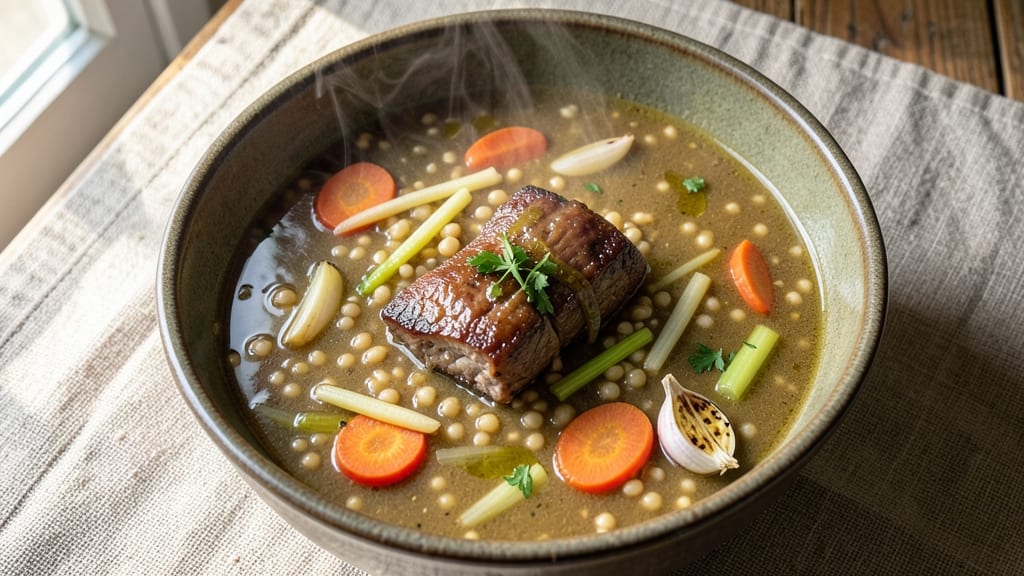
This beef shank and barley soup recipe transforms tough cuts into melt-in-your-mouth perfection through slow-roasting and simmering. 🔥 I developed it after years of perfecting Nana Mae's diner-style soups, where the key was building deep, caramelized flavors from the bone.
The beef shank delivers rich, gelatinous broth while the barley soaks up all that savory goodness, creating chewy bites that balance the tender meat.
What sets this recipe apart is the two-stage cooking process: first roasting the beef shank until deeply browned for maximum flavor, then simmering it with vegetables and barley until everything melts together.
This method creates a soup that's heartier than most versions, with a satisfying texture that comes from both the barley and the beef's natural collagen. The result is a bowl that's equal parts comforting and restaurant-worthy, perfect for cold evenings.
By the time you're done, you'll have a steaming pot of soup filled with tender beef shank pieces, perfectly cooked barley, and vegetables that've absorbed all that rich flavor.
The aroma alone will have everyone gathering around the table, and each spoonful delivers layers of taste—savory, slightly sweet, with just a hint of herbal brightness from the thyme and bay leaf. Serve with crusty bread for dipping or alongside roasted vegetables for a complete meal.
This recipe scales beautifully too, so you can easily double it for gatherings. Let's get started on creating your perfect bowl of beef shank and barley soup.
Ingredients for beef barley soup recipe with beef shank
Nothing beats the rich, deep flavors of this slow-cooked beef shank and barley soup.
| Ingredient | Amount | Notes |
|---|---|---|
| Beef Shank 🥩 | 3 lb | Bone-in, cut into 2-inch pieces |
| Yellow Onion 🧅 | 2 whole | Chopped, medium size |
| Carrots 🥕 | 2 lb | Medium, peeled and chopped |
| Celery Stalk 🥬 | 4 whole | Chopped, medium size |
| Garlic Cloves 🧄 | 6 cloves | Peeled, rough chopped |
| Pearl Barley 🌾 | 1 ½ cups | Uncooked, rinsed |
| Tomato Paste 🍅 | ½ cup | Smooth, not chunky |
| Beef Broth 💧 | 6 cups | Homemade or high-quality store-bought |
| Red Wine 🍷 | 1 cup | Dry, like Cabernet Sauvignon |
| Fresh Thyme 🌿 | ¼ cup | Leaves only, chopped |
| Bay Leaves 🌿 | 2 whole | Fresh if possible |
| Olive Oil 🫒 | ¼ cup | For roasting beef |
| Salt 🧂 | 1 ½ tsp | Kosher or sea salt |
| Black Pepper 🌶️ | 1 tsp | Freshly ground |
The beef shank is the star—look for bone-in pieces at your butcher or grocery store's meat counter. Costco often has great deals on bulk beef shank, but a regular supermarket will have what you need. If you're buying whole shanks, ask them to cut them into 2-inch pieces for you. The more surface area, the better the browning and flavor. For the barley, pearl barley is the classic choice—it holds its shape beautifully, but if you can't find it, pot barley works too. Just rinse it well before cooking to remove any dust.
No red wine? Substitute with extra beef broth—just add another cup. Fresh thyme is ideal, but dried works at one-third the amount. The tomato paste can be the squeeze tube kind from Trader Joe's—it's perfect for this recipe and lasts forever. For the vegetables, don't stress about exact amounts—eyeball the carrots and celery. If you're using pre-chopped veggies, just make sure they're roughly the same size so they cook evenly. The bay leaves? Fresh is better, but dried is fine if that's what you've got.
This soup tastes even better the next day, so make extra. Store leftovers in the fridge for up to 5 days or freeze for 3 months. I like to portion it into containers for easy lunches. The barley thickens as it cools, so you might want to add a splash of broth when reheating. For a heartier meal, serve with crusty bread or a side salad—trust me, you'll want seconds.
Why You'll Love This Recipe
- One-Pot Magic: I swear by this recipe because it’s actually one-pot—no chopping board chaos, no extra pans. Just brown the shank, toss in the onions, carrots, and celery, add broth, and let it simmer. The barley soaks up all the rich flavors while you’re doing other things—no babysitting required.
- Shank Magic: That beef shank? It’s the star. After hours of slow cooking, it falls apart into tender, melt-in-your-mouth shreds while the broth turns into a deep, savory elixir. Honestly, the first time I tasted it, I nearly spilled my coffee.
- Leftovers That Don’t Suck: Between us, most soups turn into sad, watery meals by day three. Not this one. The barley thickens just enough to stay hearty, and the shank keeps its texture—perfect for lunchboxes or freezing. I’ve reheated portions for weeks without complaint.
- Budget Feast: This recipe stretches a pound of shank into multiple meals without breaking the bank. The onions, carrots, and celery are cheap staples, and barley’s a pantry workhorse. It’s my go-to when I need to feed a crowd but don’t want to spend a fortune—or slave over the stove.
Step-by-step instructions for beef shank and barley soup
Here's how to build rich, deep-roasted flavor into every spoonful of this hearty soup.
🔥 Step 1: Roast the Beef Shank for Maximum Flavor
Preheat your oven to 425°F and place the 3 lb beef shank on a rimmed baking sheet. Rub the shank generously with 1.5 tsp salt, 1 tsp black pepper, and 0.25 cup olive oil until completely coated. This creates a flavorful crust that will infuse the entire soup.
Roast the shank for 30 minutes, turning occasionally, until it develops a deep brown crust. You'll know it's ready when the edges are golden brown and the surface smells intensely beefy. Remove from the oven and let it cool slightly before transferring to a pot—this prevents the meat from releasing into the broth prematurely.
🍳 Step 2: Sauté the Vegetable Base
In a large Dutch oven, heat 0.25 cup olive oil over medium heat. Add the 2 whole chopped yellow onion, 2 lb chopped carrots, and 4 whole chopped celery stalks. Cook for 8-10 minutes, stirring occasionally, until the vegetables begin to soften and the onions become translucent.
Add the 6 peeled and rough chopped garlic cloves and cook for another 1 minute until fragrant. Here's the thing—don't let the garlic burn. It should smell sweet and nutty, not bitter. Stir in the 0.5 cup tomato paste and cook for 2 minutes until it darkens slightly. This creates a rich, umami base for the soup.
🥘 Step 3: Build the Soup Foundation
Return the roasted beef shank to the Dutch oven along with any accumulated juices. Add the 1 cup red wine and scrape up all the browned bits from the bottom of the pot—this is where all the flavor hides. Let the wine simmer for 3-4 minutes until reduced by half.
Pour in the 6 cups beef broth and add the 2 whole bay leaves and 0.25 cup chopped fresh thyme. Bring to a gentle boil, then reduce heat to low and let it simmer uncovered for 1 hour. This slow simmer allows the beef to tenderize and the flavors to meld beautifully. You'll know it's ready when the beef easily pulls away from the bone with a fork.
⏰ Step 4: Add Barley and Finish Cooking
Add the 1.5 cups rinsed pearl barley to the soup and stir gently to distribute it evenly. Increase heat to medium-low and let it simmer uncovered for another 45-50 minutes, stirring occasionally. The barley should be tender but still slightly chewy—this is key for that satisfying bite.
Taste and adjust seasoning with additional salt if needed. The soup should be rich and flavorful, with the beef falling apart easily. Remove and discard the bay leaves before serving. This is the moment that matters: let the soup sit off heat for 5-10 minutes to allow the flavors to settle and thicken slightly.
Pro Tips For Making Beef Barley Soup Recipe With Beef Shank
- Sear the Shank First: This isn’t optional—it’s the foundation. Get your Dutch oven screaming hot, pat that shank dry, and let it develop a deep brown crust before touching it with liquid. I used to skip this, and my soup always tasted like it was missing something. Five minutes of patience here means layers of flavor later.
- Cut Celery and Carrots Small: No, "chopped" isn’t specific enough. Aim for ¼-inch dice—small enough to disappear into the soup but big enough to stay intact. I learned this the hard way when my first batch turned into a mushy vegetable sludge. A sharp knife and a little extra effort make all the difference.
- Don’t Rush the Low Simmer: That shank needs time—at least 2 hours, but 3 is better. If you’re tempted to crank the heat to speed things up, resist. The collagen in the shank melts into gelatin at a steady simmer, turning your soup from good to rich and velvety. I know, I know, but trust the process.
- Toast the Barley Separately: Skip tossing raw barley straight into the pot—it’ll soak up liquid and turn your soup into a thick, gluey mess. Instead, dry-toast it in a separate pan for 3-4 minutes until it smells nutty. Then add it to the soup in the last 30 minutes. This keeps the texture perfect and the flavor bright. (Yes, even if you’re impatient like me.)
Common mistakes when making this recipe
Skipping the Roast
I can't stress this enough—roasting the beef shank is non-negotiable for deep flavor. Some recipes skip this step and just simmer raw shank in broth, but that results in bland, tough meat. The Maillard reaction from roasting creates those rich, caramelized notes that make this soup sing.
If you're short on time, at least sear the shank in a hot pan for 3-4 minutes per side before proceeding with the recipe. 🔥
Overcooking the Barley
Barley should be tender but still chewy—not mushy. I've seen people walk away from the stove and let it simmer too long, turning the barley into a sad, gluey mess. The 45-50 minute range is perfect for pearl barley.
Test it at 40 minutes by tasting a grain—it should hold its shape but be soft. If you're using pot barley, reduce cooking time to 35-40 minutes. Pro tip: Use a mesh strainer to test individual grains without draining the pot.
Ignoring the Browned Bits
Those fond (browned bits) stuck to your Dutch oven are flavor gold. When you add the red wine, scrape them up aggressively with a wooden spoon—they're packed with concentrated beefy goodness. I've seen people pour in the wine and just stir once, missing out on half the flavor.
Take an extra 30 seconds to deglaze properly. This is where the magic happens, and it's worth the effort. 💛
Using Low-Quality Broth
Your soup is only as good as your broth. Store-bought beef broth varies wildly in quality—some brands taste like they're made from cardboard. I recommend homemade broth if possible, but if you're using store-bought, Knight's or Pacific Foods are my go-tos.
Avoid anything with artificial flavors or preservatives. For an extra boost, add 1 tsp Worcestershire sauce to the broth when you pour it in—it adds a deep umami punch that takes the soup to the next level.
Not Seasoning Gradually
Adding all the salt at once can make your soup taste flat. Instead, season in layers: salt the beef before roasting, taste after adding broth, and adjust again at the end.
The wine and tomato paste already contribute acidity, so you might not need as much salt as you think. I often find I need just a pinch more after the barley has cooked. Taste as you go—your palate will guide you better than any recipe can. 🌶️
Rushing the Simmer Time
This isn't a 30-minute meal—it's a slow-cooked masterpiece. The beef needs at least 1 hour of gentle simmering to become fork-tender. I've had people call me complaining their shank was tough, only to realize they rushed it.
If you're in a hurry, consider using a pressure cooker (see my pro tips section), but even then, 45 minutes of pressure is the minimum. Patience here pays off with melt-in-your-mouth beef that falls apart at the touch of a fork.
Nutrition facts
Frequently asked questions about beef shank and barley soup
Why does this recipe use beef shank instead of steak or chuck roast?
The beef shank delivers the best combination of flavor and texture. Its collagen-rich bones create a naturally rich, gelatinous broth as it simmers, while the meat itself becomes incredibly tender. Unlike leaner cuts, shank holds up perfectly to long cooking times without drying out. Plus, the bone adds depth of flavor that's hard to replicate with other beef cuts.
Can I substitute pearl barley for another grain?
You can use pot barley (cooks faster) or even wild rice (for a nutty flavor), but pearl barley is ideal because it holds its shape beautifully while soaking up all that rich beef flavor. If substituting, reduce cooking time by 10-15 minutes and check for doneness earlier. For a gluten-free option, try quinoa or buckwheat, though the texture will differ slightly.
How can I make this soup ahead of time?
This soup actually tastes better the next day! Let it cool completely, then store in an airtight container in the fridge for up to 5 days. The flavors meld beautifully overnight. For freezing, portion into containers and freeze for up to 3 months. When reheating, add a splash of broth or water if the soup seems too thick—barley absorbs more liquid as it cools.
What's the best way to serve this soup?
Serve it piping hot in deep bowls with plenty of crusty bread for dipping. For a complete meal, pair with a simple green salad or roasted root vegetables. The soup's richness balances well with acidic elements like lemon wedges or a sprinkle of fresh parsley. In my Southern kitchen, we always serve it with warm cornbread—it's the perfect combination of textures and flavors.
Can I make this in a slow cooker or Instant Pot?
For a slow cooker, brown the shank first, then combine all ingredients (except barley) and cook on low for 6-7 hours before adding barley. For an Instant Pot, use the high pressure setting for 45 minutes (natural release), then add barley and cook for 10 more minutes. The pressure cooker version cuts time significantly but still delivers that deep, rich flavor. Just