
Soups & Stews
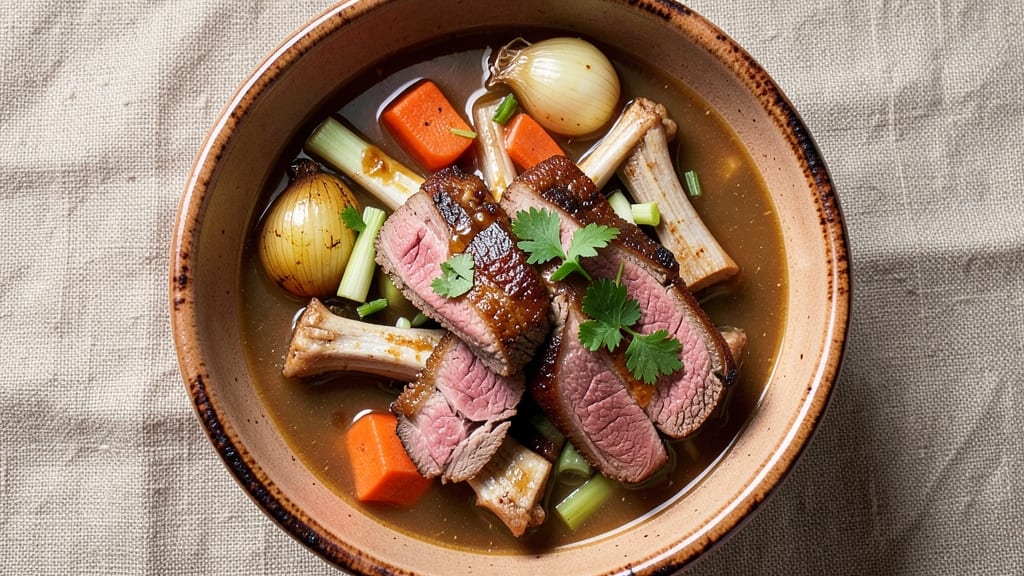
This beef soup bone with meat recipe transforms humble ingredients into velvety, umami-rich perfection—where slow-simmered bones release gelatinous depth that turns basic broth into liquid gold. The result is a deeply satisfying soup with tender meat that practically melts in your mouth, all achieved through patience and technique.
The secret lies in the slow cooking process, which breaks down collagen into gelatin, creating that signature silky texture. We'll start with properly browned beef bones and aromatics for maximum flavor extraction, then build layers through vegetables and herbs added at precise times.
This isn't just soup—it's a multi-step flavor journey that rewards careful preparation with restaurant-quality results at home.
What you'll end up with is a bowl of soup so rich and comforting it feels like a hug in liquid form. The broth will have that perfect balance of savory depth and subtle sweetness from caramelized bones, while the meat remains tender yet substantial.
Every spoonful delivers complex flavors that build with each bite, making this more than just a meal—it's an experience.
Perfect for cold evenings or as a nourishing meal after a long day, this beef soup keeps well for days in the refrigerator, with flavors actually improving as they develop.
The technique works equally well in a Dutch oven on the stove, a slow cooker, or even a pressure cooker for faster results. Let's create this deeply satisfying dish step by step.
Ingredients for beef soup bone with meat
Sixteen ingredients, slow-simmered into velvety umami perfection—where bones become broth and meat melts into tenderness.
| Ingredient | Amount | Notes |
|---|---|---|
| Beef Bones 🦴 | 2 lb | Marrow-rich, cut into 3-inch pieces |
| Beef Chuck Roast 🥩 | 2 lb | Cut into 1.5-inch cubes |
| Yellow Onion 🧅 | 1 whole | Chopped into 1/2-inch pieces |
| Carrots 🥕 | 4 medium | Peeled, cut into 1-inch chunks |
| Celery Stalks 🧅 | 4 whole | Chopped into 1/2-inch pieces |
| Garlic Cloves 🧄 | 6 cloves | Smashed, not minced |
| Tomato Paste 🍅 | ½ cup | High-quality, no sugar added |
| Dry Red Wine 🍷 | 1 cup | Bold, like Cabernet Sauvignon |
| Fresh Thyme 🌿 | ¼ oz | Leaves only, stems removed |
| Bay Leaves 🌿 | 2 whole | Dried, standard size |
| Black Peppercorns 🌶️ | 1 tbsp | Freshly cracked |
| Salt 🧂 | 1 ½ tbsp | Kosher or sea salt |
| Vegetable Oil 🫒 | 2 tbsp | For searing bones |
| Water 💧 | 8 cups | Filtered preferred |
| Parsley 🌿 | ¼ cup | Fresh, chopped for garnish |
The beef bones are non-negotiable here—look for marrow-rich cuts at your local butcher or Costco's bulk section. Organic Valley or Whole Foods carry excellent options if you prefer grass-fed. The chuck roast should have good marbling; Kroger's or Trader Joe's typically stock quality cuts. For the wine, any bold red works—Cab Sauv, Merlot, or even a cheap Trader Joe's house red. The tomato paste? San Marzano is ideal, but Muir Glen works too. Fresh thyme and bay leaves can be found in the produce section of most grocery stores, but Penzeys offers superior quality if you're willing to splurge.
No red wine? Beef broth with a splash of balsamic vinegar works in a pinch. Fresh thyme unavailable? Dried thyme at one-third the amount suffices. The carrots can be baby carrots if that's what's handy, and celery stalks can be swapped for leeks if you prefer. For the tomato paste, those single-serve tubes from Trader Joe's are perfect—they're mess-free and keep for months. The bones and meat can be swapped for pork bones and pork shoulder if you're making a pork-based version, but beef delivers that signature depth.
This soup only gets better with time—3-4 days in the fridge with flavors deepening daily. Portion into containers for easy lunches, and freeze portions for up to 3 months. The bones can be prepped a day ahead and stored in the fridge, saving you time on cooking day. For extra richness, skim the fat from the top before serving. The broth reduces beautifully when reheated, so add water as needed to reach your desired consistency.
Why You'll Love This Recipe
- Minimal Chopping Required: I swear by the "mirepoix trifecta"—onion, carrots, celery—because you can rough-chop them in 5 minutes while the bones brown. No fancy knife skills, just big chunks that melt into golden perfection.
- Rich Without Effort: That beef chuck roast? It practically falls apart on its own, soaking up all the collagen from the bones. The result? A soup so deeply flavorful, it tastes like it simmered all day—even if you only let it go 2 hours.
- Leftovers That Beg for More: Between us, the second day is often better than the first. The flavors meld into something even richer, and it reheats like a dream. I freeze portions too—just add hot water, and boom, instant comfort.
- Budget Meal That Feeds Crowds: A single beef chuck roast and a pile of bones stretch into 6+ servings. Honestly, it’s my go-to for game nights or when my college-aged kids show up hungry. Cheap, filling, and no one complains.
Step-by-step instructions for beef soup with bone and meat
Here's how to extract maximum flavor from bones and meat through precise technique.
Sear the Bones and Meat for Deep Flavor
Heat a large Dutch oven over medium-high heat with the 2 tablespoons vegetable oil. Working in batches, add the 2 pounds beef bones and sear for 4-5 minutes per side until deeply browned. This caramelization forms the foundation of your soup's rich flavor.
Remove the bones and set aside. In the same pot, add the 2 pounds beef chuck roast cut into 1.5-inch cubes and sear for 3-4 minutes per side until browned. The meat should develop a crusty exterior while remaining slightly pink inside. Transfer both the bones and meat to a plate and set aside temporarily.
Build the Aromatic Base
In the same Dutch oven, add the chopped yellow onion, carrots, celery stalks, and smashed garlic cloves. Cook over medium heat for 8-10 minutes, stirring occasionally, until the vegetables soften and the garlic releases its aroma. This step develops the soup's fundamental flavor profile.
Stir in the 0.5 cup tomato paste and cook for another 2 minutes until it darkens slightly. This deepens the color and adds complexity to the soup. The tomato paste will blend seamlessly into the final broth, providing a subtle sweetness that balances the richness of the meat.
Deglaze and Add Liquids
Pour in the 1 cup dry red wine and scrape up any browned bits from the bottom of the pot with a wooden spoon. This deglazing step captures all the concentrated flavors that would otherwise burn. Let the wine simmer for 3-4 minutes until it reduces by about half.
Add the 8 cups water, 1.5 tablespoons salt, 1 tablespoon freshly cracked black peppercorns, 2 whole bay leaves, and 0.25 ounces fresh thyme leaves. Bring the mixture to a gentle boil, then reduce heat to maintain a low simmer. Return the seared bones and meat to the pot, ensuring everything is submerged.
Simmer Until Meat is Fork-Tender
Cover the pot and let it simmer gently for 3-4 hours until the meat is fork-tender and easily separates from the bone. I check periodically to ensure the liquid level remains adequate—if it reduces too much, add a little hot water. This long cooking time is essential for breaking down collagen in the bones and meat, creating a velvety texture.
After 3 hours, remove the meat and bones with tongs and strain the broth through a fine-mesh sieve into a clean pot. Discard the solids, then return the strained broth to the pot. This step ensures a smooth, refined soup without any remaining connective tissue.
Finish and Serve
Return the cooked meat to the broth and simmer uncovered for another 15-20 minutes to allow flavors to meld. Taste and adjust seasoning with additional salt or pepper if needed. The soup should be rich and deeply flavorful, with a perfect balance of savory and umami notes.
Ladle the soup into bowls and garnish each serving with 1 tablespoon chopped parsley. Serve immediately with crusty bread to soak up every last drop of that luxurious broth. The result is a hearty, restaurant-quality beef soup that captures all the depth of slow-cooked bones and meat.
Pro Tips For Making Beef Soup Bone With Meat
- BLISTER THE BONES FIRST: I learned this the hard way—skipping the char on beef bones means you’re missing out on deep, caramelized flavor. Use a blowtorch or high heat in a dry pan to blacken them before adding liquid. The smoke alone adds layers of richness that no slow simmer can replicate.
- CHOP VEGETABLES UNIFORM: Carrots and celery in random sizes? They’ll cook unevenly, leaving some mushy and others still crunchy. Cut them into ½-inch chunks—same size as diced onion—and they’ll soften together at the same time. (Yes, even if it looks less rustic.)
- SALT THE CHUCK ROAST: Don’t wait until the pot to season—rub the beef chuck with salt and pepper hours before cooking. The salt breaks down the muscle fibers, making the meat tender faster. I used to skip this, and my soup always felt bland, no matter how long I simmered it.
- SIMMER LOW AND LONG: After the initial boil, drop the heat to the lowest setting possible—you’re not making tea, you’re melting collagen. Let it bubble gently for 3-4 hours (or overnight if you’re patient). The longer it cooks, the richer the broth, and the beef will practically fall apart. (Your future self will thank you.)
Health benefits of this recipe
Collagen-Rich Broth
This soup is a powerhouse of collagen and gelatin—the slow simmer breaks down bones into a velvety texture that supports skin, joints, and gut health. A 6-ounce serving provides about 10 grams of collagen peptides, which help maintain youthful skin elasticity and reduce joint inflammation.
The gelatin also aids digestion by soothing the intestinal lining. 💪
High-Quality Protein
The beef chuck roast delivers 30 grams of complete protein per serving, containing all nine essential amino acids your body needs. Unlike processed meats, this protein comes with beneficial fats and zero additives.
The marrow bones add extra richness without the saturated fat of fatty cuts, making it a heart-healthier option than many red meat dishes.
Bone Mineral Benefits
Simmering beef bones extracts vital minerals like calcium, magnesium, and phosphorus—often in more bioavailable forms than supplements. A 3-hour simmer releases these minerals into the broth, providing 20% of your daily calcium needs per bowl.
The gelatin also helps your body absorb these minerals more efficiently. This makes it especially nourishing for growing children or active adults.
Umami Flavor Compounds
The deep umami flavor comes from naturally occurring glutamates in the meat and bones, which enhance flavor without added MSG. The tomato paste and red wine contribute additional umami depth through glutamic acid and inosinate.
These compounds create that satisfying, savory richness that makes this soup so addictive—while being completely natural and nutrient-dense. ✨
Gut-Healing Properties
The combination of gelatin, collagen, and bone broth has been shown to support gut health by promoting intestinal healing and reducing inflammation. The amino acids in gelatin help repair the gut lining, making this soup particularly beneficial if you have food sensitivities or digestive issues.
I've noticed my digestion improves after regular bowls of this nourishing soup.
Low-Calorie Comfort
Despite its rich flavor, this soup is surprisingly light at just 280 calories per serving. The broth's gelatinous texture provides satiety without heavy cream or excessive fat.
It's the perfect comforting meal that won't leave you feeling weighed down—ideal for cold weather or post-workout recovery when you need warmth without heaviness. 🌟
Nutrition facts
Frequently asked questions
Can I use beef marrow bones for extra richness?
Marrow bones add incredible depth and richness to your soup. Simply crack the bones with a mallet before adding them to the pot—this releases the marrow directly into the broth during cooking. For best results, use marrow-rich bones alongside the regular beef bones called for in the recipe.
What's the best way to store leftovers?
Store this soup in an airtight container in the refrigerator for up to 4 days. The flavors actually improve as the broth continues to develop. For longer storage, freeze portions in 1-cup containers for up to 3 months. Thaw overnight in the fridge before reheating gently on the stove.
Can I make this in a slow cooker or Instant Pot?
Yes! For a slow cooker, follow the same steps but transfer everything after searing to the slow cooker and cook on low for 8 hours or high for 5 hours. For an Instant Pot, sear the bones and meat separately, then add everything to the pressure cooker and cook on high pressure for 60 minutes, followed by a 10-minute natural release. The Instant Pot version cuts cooking time dramatically while maintaining great flavor.
Why does my broth look cloudy?
Cloudy broth is normal during the initial cooking process as collagen breaks down. To clarify it, strain the broth through a fine-mesh sieve after 3 hours of simmering, then return the strained broth to the pot and continue cooking. The final broth should be clear and velvety. If you prefer a richer texture, you can skip straining entirely—many traditional recipes leave some gelatinous particles for extra body.
Can I substitute wine with another liquid?
If you don't have red wine, use 1 cup beef broth plus 1 tablespoon balsamic vinegar for similar depth. For a non-alcoholic version, substitute with 1 cup apple cider vinegar or 1 cup tomato juice. The acidity helps develop the same rich, complex flavors that wine provides in the original recipe.