
Soups & Stews
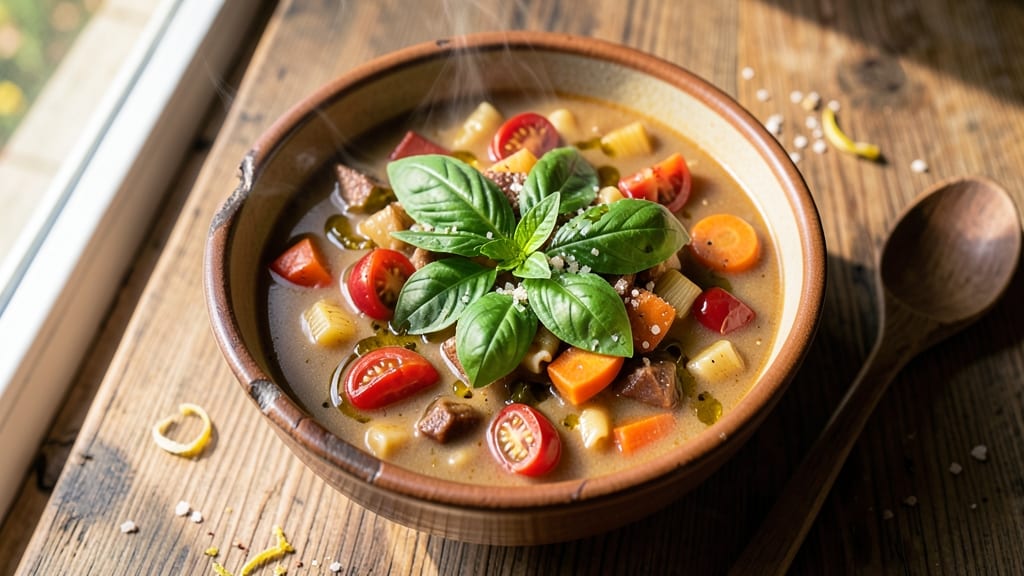
Biaggi's minestrone soup recipe transforms simple vegetables into a hearty, Italian-inspired bowl of comfort that feels like a warm hug on a chilly day.
The secret lies in balancing tender beans, al dente pasta, and a rich tomato base—each ingredient playing a role in creating a soup that's both satisfying and nutritious. This isn't just a vegetable soup; it's a celebration of seasonal produce elevated by Biaggi's signature techniques.
The beauty of this recipe is its flexibility—swap in whatever vegetables you have on hand, from hearty carrots and celery to leafy greens, while the beans provide protein and creaminess. Simmering low and slow allows flavors to meld into a harmonious broth that's deeply aromatic and packed with umami.
The addition of Parmesan and fresh basil at the end adds brightness and depth, turning a simple soup into something truly special.
What you'll end up with is a bowl of minestrone that's hearty enough to stand alone but light enough to enjoy any time of day. The beans stay tender yet firm, the pasta maintains its bite, and the broth is rich with the flavors of tomatoes, herbs, and vegetables.
It's the kind of soup that disappears quickly, leaving everyone asking for seconds.
Perfect for meal prep or a cozy weeknight dinner, this recipe delivers restaurant-quality results with minimal effort. The technique is straightforward, but the flavor is anything but basic—each spoonful is a testament to how simple ingredients can come together to create something extraordinary.
Ingredients for biaggi's minestrone soup
Six servings of Italian-inspired comfort using seasonal vegetables and Biaggi's signature techniques.
| Ingredient | Amount | Notes |
|---|---|---|
| Extra-Virgin Olive Oil 🫒 | 2 tbsp | For sautéing vegetables |
| Yellow Onion 🧅 | 1 whole | Diced into small pieces |
| Carrots 🥕 | 3 medium | Peeled and sliced into rounds |
| Celery Stalks 🧄 | 3 whole | Diced into small pieces |
| Garlic Cloves 🧄 | 4 cloves | Minced for depth of flavor |
| Canned Diced Tomatoes 🍅 | 2 cups | San Marzano preferred |
| Vegetable Broth 💧 | 4 cups | Low-sodium preferred |
| Canned Cannellini Beans 🌾 | 1 can (15 oz) | Drained and rinsed |
| Small Shell Pasta 🍝 | 8 oz | Al dente texture preferred |
| Fresh Basil Leaves 🌿 | ¼ cup | Chopped for garnish |
| Parmesan Cheese 🧀 | ½ cup | Freshly grated from block |
| Dried Oregano 🍃 | 1 tsp | Mediterranean blend preferred |
| Bay Leaves 🌿 | 2 whole | Removed before serving |
| Salt 🧂 | 1 ½ tsp | Diamond Crystal preferred |
| Black Pepper 🌶️ | ½ tsp | Freshly ground for finish |
The foundation of this minestrone lies in the quality of your vegetables and broth. San Marzano canned tomatoes and low-sodium vegetable broth from Pacific Foods or Imagine brands deliver the most authentic flavor. For the carrots and celery, look for vibrant, firm produce—avoid any with soft spots or wilting. The cannellini beans should be plump and tender, not mushy. Fresh basil and Parmesan from a deli counter elevate the dish, so invest in the best quality you can find. The pasta is key too—De Cecco or Barilla brands maintain their bite when cooked al dente.
No San Marzano tomatoes? High-quality crushed tomatoes work in a pinch, but add an extra pinch of salt to compensate. Short on cannellini beans? Substitute kidney beans or white beans—they hold up well to simmering. For the vegetable broth, mushroom broth adds depth if you're feeling adventurous. The dried oregano can be swapped for fresh oregano at half the amount, but Mediterranean blends from Penzeys add complexity. If you're using frozen vegetables, thaw and drain them thoroughly before adding to the pot. The bay leaves are non-negotiable—they add that classic Italian aroma that makes this soup truly special.
This soup tastes even better the next day as flavors meld together. Store in an airtight container in the fridge for up to 5 days, or freeze portions for 3 months. For meal prep, cook the pasta separately and add it to the soup when reheating to maintain its texture. The Parmesan and basil should be added fresh when serving—they brighten up the dish and make it feel restaurant-quality. If you're serving a crowd, double the recipe—it reheats beautifully and the flavors only deepen with time.
Why You'll Love This Recipe
- Sauté-and-Simplicity Magic: The moment those onions hit the olive oil, I swear the kitchen smells like a warm hug. You’re basically dicing veggies and stirring—no fancy techniques, just the slow simmer of carrots, celery, and garlic until they melt into something rich and fragrant. My kids call it "the soup that doesn’t make me cry" (because chopping is optional if you buy pre-cut).
- Garlic-Glazed Depth: That first clove of garlic sizzling in the olive oil? It’s the secret weapon. The recipe lets it caramelize just enough to coat every spoonful with a sweet, nutty punch. Honestly, the balance of crisp-tender celery and buttery carrots—all kissed by that olive oil—makes it taste like you slaved over it for hours. (Spoiler: You didn’t.)
- Leftovers That Lie: Between us, this soup always tastes better the next day. The flavors marry overnight, and the broth gets even richer. I make a double batch on Sundays, freeze half, and pretend I’m some kind of meal-prep genius when I reheat it for lunch. (No one needs to know it’s just a pot of saved grace.)
- Pantry-to-Pot Flex: No fresh herbs? No problem. Stuck with whatever’s in the fridge? Still works. The base—onion, carrots, celery, garlic—is so forgiving that I’ve thrown in everything from canned beans to leftover roasted veggies. It’s the kind of recipe that turns "what’s for dinner?" into "what do we have to toss in?" and somehow still wins. My roommate’s favorite, and he’s picky.
Step-by-step instructions for Biaggi's minestrone soup
Master this Italian classic with a method that balances hearty vegetables and tender pasta for maximum comfort.
Sauté the Vegetable Base
Heat the 2 tablespoons extra-virgin olive oil in a large Dutch oven over medium heat. Add the 1 whole diced yellow onion, 3 medium sliced carrots, and 3 whole diced celery stalks. Cook for 8-10 minutes until the vegetables soften and the onion becomes translucent.
Add the 4 minced garlic cloves and cook for an additional 1 minute until fragrant. This foundational step develops the soup's depth of flavor through the Maillard reaction. If the vegetables begin to brown too quickly, reduce the heat slightly to prevent burning.
Build the Tomato and Broth Foundation
Stir in the 2 cups canned diced tomatoes, 4 cups vegetable broth, 1 teaspoon dried oregano, and 1.5 teaspoons salt. Bring the mixture to a gentle boil, then reduce the heat to medium-low and let it simmer uncovered for 15 minutes. This allows the flavors to meld while the tomatoes break down slightly.
Add the 2 whole bay leaves and 0.5 teaspoon black pepper during this simmering phase. The bay leaves will infuse subtle earthy notes, while the pepper adds a subtle warmth that complements the vegetable medley. Skim off any foam that rises to the surface for a cleaner broth.
Incorporate Beans and Pasta
Add the 1 can (15 oz) drained and rinsed cannellini beans and 8 ounces small shell pasta to the simmering broth. Stir gently to distribute the ingredients evenly. The pasta should cook directly in the broth, absorbing its rich flavors as it cooks.
Simmer uncovered for 12-15 minutes, stirring occasionally, until the pasta is al dente—just tender enough to hold its shape but still firm to the bite. The beans will soften further during this time, adding creaminess to the soup. Taste the broth and adjust seasoning if needed, adding more salt or pepper as necessary.
Finish with Fresh Herbs and Cheese
Remove the 2 whole bay leaves from the soup. Stir in the 0.25 cup chopped fresh basil leaves and let the soup simmer for an additional 2 minutes to infuse the basil's bright, aromatic qualities. The basil should be added just before serving to preserve its freshness and vibrant color.
Ladle the soup into bowls and top each serving with 0.5 cup freshly grated Parmesan cheese. The Parmesan adds a salty, umami-rich finish that elevates the dish. Serve immediately while the soup is hot and the pasta retains its ideal texture. The combination of tender vegetables, hearty beans, and al dente pasta creates a comforting bowl that captures the essence of Italian home cooking.
Pro Tips For Making Biaggi'S Minestrone Soup
- Sweat the Veggies Low: After burning three batches of onions, I finally learned to keep the heat at a steady simmer—not a sizzle—when cooking the onion, carrot, and celery mix. Too much heat turns them bitter, and you’ll taste it in every spoonful. If your pan is smoking, drop the heat and let them soften properly.
- Dice Carrots Evenly: I used to chop carrots haphazardly, and some ended up mushy while others stayed crunchy. For Biaggi’s minestrone, cut them into ¼-inch cubes—small enough to cook through but not so fine they dissolve into the broth. A sharp knife and a steady hand make this easier than it sounds.
- Don’t Rush the Garlic: This isn’t the place to rush. Once your onion-celery-carrot base is soft, add the garlic and let it bloom for 30 seconds before stirring. That extra moment lets the flavor develop without burning—trust me, your soup will taste deeper if you wait.
- Reserve Some Broth: If you’re using canned beans or pre-cooked pasta, skip adding them all at once. Simmer the soup until the veggies are tender, then stir in a ladle of broth to loosen any stuck-on bits before adding the rest. It keeps the texture smooth and the flavors balanced. (Yes, even if you’re impatient like me.)
Perfect pairings for biaggi's minestrone soup
Bread Pairings
Serve this minestrone with a crusty Italian loaf like Fiore di Farro or Ciabatta from your local bakery. The crusty exterior contrasts beautifully with the creamy beans and tender pasta.
For extra flair, toast the bread with garlic-infused olive oil and sprinkle with flaky sea salt—it’s the perfect vessel for soaking up every last drop of broth. 🥖
Wine Pairings
A crisp Italian white wine like Vermentino or Pinot Grigio complements the bright acidity of the tomatoes and fresh basil. For red lovers, a Chianti Classico with its cherry notes balances the earthy vegetables and Parmesan.
Avoid heavy, oaky wines—they’ll overpower the delicate flavors. I always reach for a 2022 Tenuta di Argiano Chianti when I make this soup. 🍷
Cheese Board Additions
Turn your meal into a full Italian spread by pairing the minestrone with a cheese board featuring Pecorino Romano, Gorgonzola Dolce, and Prosciutto di Parma.
The sharpness of Pecorino cuts through the soup’s richness, while the creamy Gorgonzola adds a tangy contrast. Serve with roasted grapes and walnuts for a sophisticated touch. 🧀
Beverage Alternatives
For non-alcoholic options, a sparkling blood orange soda like San Pellegrino Aranciata Rossa adds a refreshing citrus note that cleanses the palate. Alternatively, a chilled hibiscus tea with honey enhances the soup’s herbal undertones.
If you prefer beer, a light Italian lager like Peroni pairs surprisingly well with the tomato base. 🍺
Garnish Upgrades
Elevate your bowl with edible flowers like nasturtiums or microgreens for a pop of color. A drizzle of aged balsamic glaze adds a sweet-tangy contrast, while toasted pine nuts bring a nutty crunch.
For a smoky twist, sprinkle with crumbled pancetta (optional for vegetarians). These finishing touches make your minestrone feel like a restaurant-worthy dish. ✨
Meal Prep Pairings
When prepping for the week, pair this minestrone with roasted vegetable medleys or grilled chicken (if adding protein). Store components separately—reheat the soup first, then add pasta cooked separately to maintain texture. Serve with warm crusty rolls or arugula salads dressed with lemon vinaigrette for a balanced meal. 📅
Nutrition facts
Frequently asked questions
Can I make this minestrone soup vegetarian?
This recipe is already vegetarian! The original Biaggi version uses vegetable broth and cannellini beans for protein, making it perfect for plant-based diets. Just omit any optional pancetta garnish if you're strictly avoiding meat products entirely.
How do I adjust the recipe for dietary restrictions?
For gluten-free needs, use gluten-free pasta like De Cecco's GF line. Vegan? Skip the Parmesan and use nutritional yeast for a cheesy flavor. For lower sodium, reduce the salt to 1 teaspoon and use no-salt-added canned tomatoes and beans. The recipe remains flexible while keeping its authentic Italian character.
What's the best way to store leftovers?
Store in an airtight container in the fridge for up to 5 days. For freezing, cool completely first, then portion into freezer-safe containers with 1-inch headspace. Thaw overnight in the fridge and reheat on the stove with a splash of water or broth to restore texture. The flavors actually improve overnight!
Can I substitute any of the vegetables?
Swap carrots for butternut squash or zucchini, and celery for kale or spinach. For extra heartiness, add diced potatoes or sweet potatoes—just adjust cooking time by 5-8 minutes. The key is maintaining a balance of textures and flavors in your vegetable medley.
Why does my minestrone taste bland?
Most likely, your broth needs more depth. Try adding 1 teaspoon tomato paste with the tomatoes, or simmer with 1 sliced mushroom for umami.