
Soups & Stews
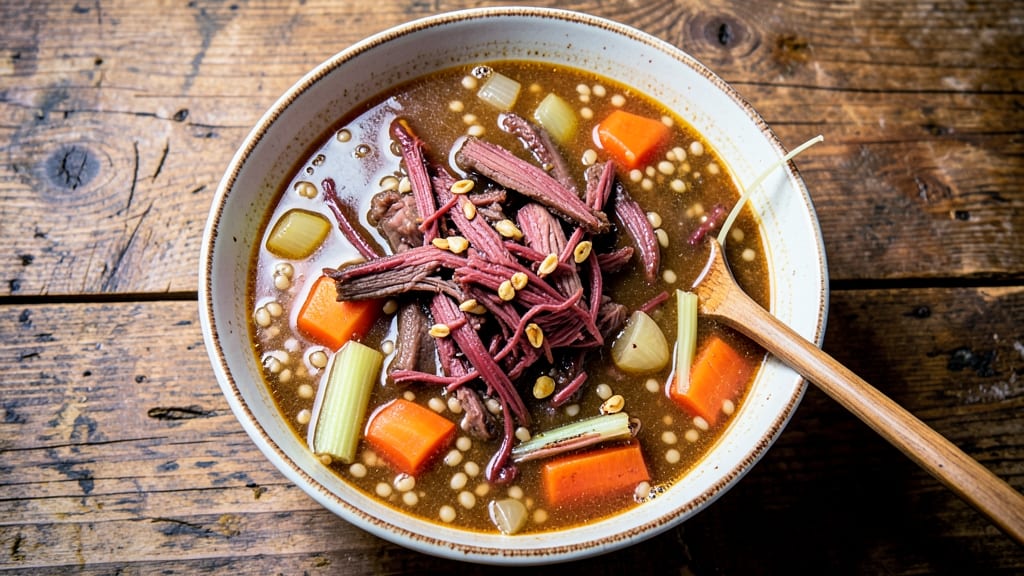
Transforming leftover prime rib into hearty beef barley soup is one of those kitchen magic tricks that turns expensive leftovers into a restaurant-quality meal—without the fuss.
I learned this technique after burning through prime rib leftovers more times than I can count, and it’s now my go-to solution for Sunday dinner transformations. The secret lies in balancing rich, tender beef with chewy barley and aromatic vegetables, creating a soup that’s both comforting and elegant.
This recipe builds on the natural richness of prime rib, using its deep, savory flavors as the foundation while adding earthy barley and fresh herbs for balance. The key is simmering everything together just long enough to let the flavors meld without turning the barley mushy.
I’ve tested this with everything from slow-cooked prime rib to quickly seared leftovers, and it works every time—no matter how much (or little) time you have.
What makes this soup special is how it elevates humble leftovers into something memorable. The beef stays tender, the barley absorbs all the savory broth, and the vegetables add bright, fresh contrast.
It’s the kind of dish that tastes even better the next day, making it perfect for meal prep or feeding a crowd. The result? A deeply satisfying, one-pot wonder that proves leftovers can be just as impressive as the original meal.
Best of all, this recipe requires minimal prep and cleanup—just chop, simmer, and serve. Whether you’re dealing with a small portion or a large roast, the same principles apply. Let’s turn those leftovers into something extraordinary.
Ingredients for beef barley soup recipe with leftover prime rib
Prime rib leftovers meet chewy barley and aromatic vegetables for a deeply satisfying, restaurant-quality meal.
| Ingredient | Amount | Notes |
|---|---|---|
| Leftover Prime Rib 🥩 | 1 ½ lb | Torn into bite-sized pieces |
| Pearl Barley 🌾 | 1 cup | Uncooked, rinsed thoroughly |
| Yellow Onion 🧅 | 1 whole | Diced, medium size |
| Carrots 🥕 | 3 medium | Peeled, cut into chunks |
| Celery Stalks 🧄 | 3 whole | Diced, with leaves included |
| Garlic Cloves 🧄 | 4 cloves | Minced, fresh preferred |
| Fresh Thyme 🌿 | ¼ cup | Stems removed, chopped |
| Fresh Parsley 🌿 | 0.15 cup | Chopped, for garnish |
| Beef Broth 💧 | 6 cups | Low-sodium preferred |
| Red Wine 🍷 | ½ cup | Dry, like Cabernet |
| Tomato Paste 🍅 | 2 tbsp | Smooth, no sugar added |
| Olive Oil 🫒 | 2 tbsp | Extra-virgin, for sautéing |
| Salt 🧂 | 1 ½ tsp | Kosher or sea salt |
| Black Pepper 🌶️ | ½ tsp | Freshly ground |
| Bay Leaves 🍃 | 2 whole | Dried, for depth |
The prime rib is the star here, so don't skimp on quality. Costco or your local butcher are great spots for prime rib—look for well-marbled cuts. If you're using a smaller portion, just adjust the barley and broth proportionally. Fresh thyme and parsley make all the difference, so grab them at the grocery store's produce section—Trader Joe's often has the best selection. The barley needs to be pearl barley (not instant)—it's the chewy texture that makes this soup special. Rinse it well before using to remove any dust or debris.
No red wine? Substitute with extra beef broth—just add a splash of balsamic vinegar for depth. Fresh herbs wilt fast, so if you're prepping ahead, store them in damp paper towels in the fridge. The onion, celery, and carrots form the classic mirepoix—don't skip this base. For a quicker version, use pre-diced vegetables from the freezer section at Whole Foods. The tomato paste adds richness without overpowering the beef—Rao's brand is my go-to for its smooth texture. If you're short on time, skip the wine entirely and just use more broth.
This soup tastes even better the next day as flavors meld. Store in an airtight container in the fridge for up to 5 days. For freezing, portion into individual containers—it reheats beautifully. I always make extra because it's perfect for lunches. The barley holds up well to reheating, just add a splash of broth if it gets too thick. If you're meal prepping, this is your new best friend. The leftovers keep for 3 months frozen, making it ideal for busy weeks.
Why You'll Love This Recipe
- Leftover Hero: I swear by this trick—shred that prime rib into tender chunks, toss it in with the barley, and suddenly, your dinner table feels like a Sunday feast. No waste, just pure satisfaction when you realize you’ve turned last night’s roast into today’s star.
- Rich Depth: That prime rib? It’s the secret weapon—salty, fatty, perfectly caramelized edges that melt into the broth. Add a splash of red wine or beef stock, and you’ve got layers of flavor without the fuss of a fancy sauce.
- Weeknight Magic: Throw it all in one pot, let it simmer while you prep dinner or catch up on emails. By the time the barley’s tender, you’ve got a hearty bowl ready—no last-minute takeout runs needed. (Yes, even on a Tuesday night.)
- Budget Booster: Pearl barley’s cheap, carrots and celery stretch the pot, and that prime rib? You’re using what you already have. It’s the kind of meal that makes grocery bills feel lighter while your kitchen smells like a home-cooked dream.
Step-by-step instructions for transforming leftover prime rib into beef barley soup
Turn rich prime rib into a deeply flavorful, comforting soup that's perfect for cold days.
Sauté the Aromatic Vegetable Base
Heat the 2 tablespoons olive oil in a large Dutch oven over medium-high heat until shimmering. Add the 1 whole diced yellow onion, 3 medium peeled carrot chunks, and 3 whole diced celery stalks with leaves. Cook for 8-10 minutes until the vegetables soften and begin to caramelize at the edges.
Here's the thing—don't rush this step. You want those vegetables to develop real color and sweetness before adding anything else. Stir occasionally so nothing burns, but let them develop that golden brown crust that adds so much depth to the soup. When the vegetables are tender and the onion is translucent, push them to one side of the pot.
Build the Flavor Foundation
Add the 4 cloves minced garlic and 2 tablespoons tomato paste to the empty side of the pot. Stir for 30 seconds until the garlic becomes fragrant—you should smell that pungent aroma immediately. Then pour in the 0.5 cup dry red wine and scrape up any browned bits from the bottom of the pot with a wooden spoon. This deglazing captures all the flavor you've built so far.
Let the wine simmer for 2-3 minutes until it reduces by about half and the alcohol cooks off. Now add the 1.5 teaspoons salt, 0.5 teaspoon black pepper, and 2 whole bay leaves. Stir everything together and let it cook for another 1 minute to meld all these flavors into a cohesive base.
Add the Prime Rib and Liquid
Toss the 1.5 pounds torn prime rib into the pot, stirring to coat each piece with the flavorful base you've created. Pour in the 6 cups beef broth until everything is just submerged. The liquid should come about halfway up the prime rib pieces. Bring the mixture to a gentle boil over high heat, then immediately reduce the heat to low to maintain a bare simmer.
This is where the magic happens. The prime rib will release its rich, beefy flavors into the broth, creating a deeply satisfying base. Let it simmer uncovered for 45 minutes, stirring occasionally. You'll notice the meat becoming more tender and the broth developing a beautiful, deep color and aroma.
Incorporate the Barley and Herbs
After 45 minutes, stir in the 1 cup rinsed pearl barley and 0.25 cup chopped fresh thyme. The barley should be fully submerged—if not, add a little more broth. Return the soup to a simmer and cook uncovered for another 30-40 minutes, stirring occasionally. The barley needs time to absorb the liquid and become tender but still hold its shape.
I know it seems like a long time, but trust the process. The barley should be fork-tender but not mushy when you taste it. If you're worried about it overcooking, you can do a quick taste test after 25 minutes—just remove a small piece and let it cool slightly before checking its texture.
Finish and Serve with Freshness
Once the barley is tender, remove the pot from heat and let the soup sit for 5 minutes. This resting period allows all the flavors to meld together and the barley to finish absorbing any remaining liquid. Skim off any excess fat that has risen to the surface if desired.
Ladle the soup into bowls and garnish each serving with 1 tablespoon chopped fresh parsley. The bright green parsley provides a beautiful contrast to the rich, deep colors of the soup and adds a fresh finish. Serve immediately with crusty bread to soak up every last drop of that flavorful broth.
Pro Tips For Making Beef Barley Soup Recipe With Leftover Prime Rib
- CHOP PRIME RIB SMALL: I learned this the hard way—big chunks of prime rib turn into chewy, flavorless lumps in soup. Dice it into ½-inch pieces (or smaller if you’re impatient like me) so every bite gets that rich, tender beef taste. No one wants to fish for their meat in soup.
- SOAK BARLEY 30 MINUTES: Pearl barley swells like a sponge when raw, and that’s the only way it’ll soften properly in soup. Toss it in cold water for 30 minutes before adding to the pot—yes, even if you’re in a hurry. Skipping this step means you’ll end up with crunchy, undercooked grains no matter how long you simmer.
- SAUTÉ VEGETABLES UNTIL GOLDEN: Don’t just toss the onions, carrots, and celery into the pot and hope for the best. Cook them in oil over medium-high heat until the onions are translucent and the carrots start to caramelize—about 8-10 minutes. This builds flavor that’ll make your soup taste homemade, not like a sad cafeteria version.
- SIMMER LOW AND COVERED: After adding broth and meat, reduce heat to a bare simmer (tiny bubbles, not a rolling boil) and keep the lid on. Too much heat turns barley mushy and makes the broth cloudy. Let it cook for at least 45 minutes—patience here guarantees creamy, perfectly tender barley every time.
Common mistakes when making this dish
Overcooking the Barley
Pearl barley needs patience—don’t rush it! I’ve seen home cooks walk away for too long, only to return with mushy, pasty barley that’s lost all its texture. The key is 30-40 minutes of simmering, not 50+ minutes.
Test it at 25 minutes by removing a piece and letting it cool—it should be tender but still hold its shape. If it falls apart, you’ve gone too far. 🌾
Skipping the Wine
Red wine adds depth and complexity that broth alone can’t match. I’ve made this soup without it (using extra broth + balsamic vinegar), and while it’s still tasty, it lacks that rich, velvety quality.
If you’re avoiding alcohol, use ½ cup beef broth + 1 tbsp balsamic vinegar instead. The vinegar mimics the acidity that helps break down the meat’s fibers during simmering.
Ignoring the Resting Time
After adding barley, resist the urge to stir constantly or taste-test every 5 minutes. The soup needs 5 minutes off heat to let flavors meld and barley finish absorbing liquid. I’ve rushed this step and ended up with soup that’s either too thin or where the barley tastes bland.
Trust the process—your patience will pay off with a perfectly balanced bowl. ⏳
Using the Wrong Barley
Instant barley is a common shortcut, but it turns this soup into a gluey mess. Stick with pearl barley—its chewy texture is what makes this dish special.
If you’re in a hurry, you can soak it for 1 hour before cooking to cut down on simmering time by 10-15 minutes. Just don’t substitute! The difference in texture is night and day.
Overcrowding the Pot
If your Dutch oven is too small, the soup will steam instead of simmer, leading to uneven cooking and a watery finish. Use a pot that gives you at least 1 inch of headspace above the liquid.
If you’re making this for a crowd, cook in batches or use a larger pot. I’ve learned this the hard way—once, I tried to fit a 3-lb prime rib into a 6-quart pot and ended up with a sad, thin soup.
Not Deglazing Properly
Scraping up those browned bits from the bottom of the pot is where 30% of your soup’s flavor lives. I’ve seen cooks skip this step, and the result? A noticeably less rich broth.
After adding wine, use a wooden spoon to scrape every last bit from the bottom—even if it means getting a little messy. This simple step transforms a good soup into a great one. 🔥
Nutrition facts
Frequently asked questions
Can I use instant barley instead of pearl barley?
I strongly recommend sticking with pearl barley for this recipe—it gives that perfect chewy texture that makes this soup special. Instant barley turns mushy and loses its structure, making the soup gluey rather than hearty. If you're in a rush, you can soak pearl barley for 1 hour before cooking to cut down simmering time by 10-15 minutes. The texture difference is worth the extra effort!
How do I adjust this recipe for a smaller amount of prime rib?
Simply reduce all ingredients proportionally. For 1 pound of prime rib, use ½ cup barley, 3 cups broth, and halve all other ingredients. The key is maintaining the same ratio of meat to barley to broth—this keeps the soup balanced. If you're making just one serving, consider doubling the recipe and freezing half for later.
Can I make this soup in a slow cooker?
Sauté the vegetables and build the flavor base in a skillet first, then transfer everything to your slow cooker. Cook on low for 6-7 hours or high for 3-4 hours, adding the barley during the last 30-40 minutes of cooking. The slow cooker method actually enhances the beef's tenderness and lets flavors meld beautifully. Just stir occasionally to prevent sticking.
What if my prime rib leftovers are very fatty?
Skimming excess fat after cooking is key. Let the soup sit for 5 minutes off heat, then carefully spoon off any fat that rises to the surface. For extra-lean prime rib, you might want to add 1 tablespoon olive oil when sautéing the vegetables to help carry flavors. The soup will still be delicious—just slightly lighter in texture.
How can I make this soup more flavorful if my prime rib isn't very seasoned?
Boost the depth with extra aromatics! Add 1 teaspoon smoked paprika when sautéing the vegetables, or include ½ cup mushrooms (sliced) with the mirepoix. A splash of soy sauce (1 tbsp) when adding the broth also adds umami richness. The wine and tomato paste already provide great flavor, but these extras will elevate it even more.