
Soups & Stews
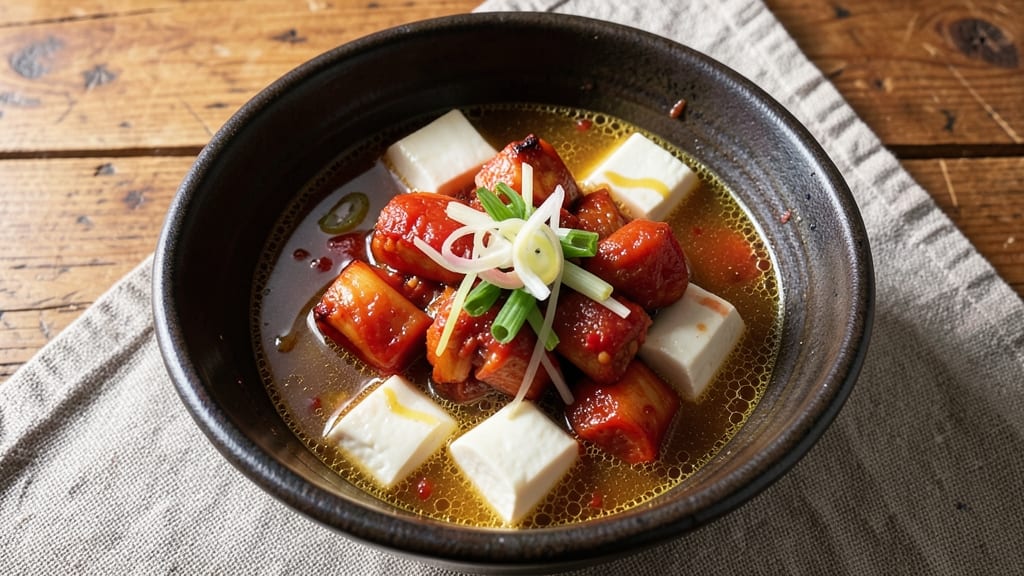
This authentic kimchi soup recipe delivers the bold, fermented heat and comforting depth of traditional Korean cooking—where every spoonful balances spicy, tangy, and umami flavors in perfect harmony. 🔥 The secret lies in fermented kimchi's natural complexity, paired with silky tofu ribbons that melt into the broth, creating a dish that's both restaurant-quality and deeply satisfying at home.
What sets this recipe apart is the broth foundation—whether you use a classic anchovy-dashi base or a simpler vegetable stock, the key is building layers of flavor through slow simmering.
The kimchi's acidity brightens the broth while infusing it with fermented depth, while aromatics like garlic, ginger, and scallions add warmth without overpowering the dish's signature tang.
By the time you're done, you'll have a steaming bowl of soup with tender tofu ribbons, crisp vegetables, and kimchi that's both spicy and sweet.
The broth will be rich yet light, with just enough heat to linger on your palate—proof that authenticity doesn't require shortcuts, just the right techniques.
Perfect for chilly days, meal prep, or sharing with friends, this kimchi soup adapts beautifully to dietary needs while staying true to its roots. Let's get cooking—your taste buds will thank you.
Ingredients for authentic kimchi soup
Bold flavors and silky textures—just eight ingredients transform into restaurant-quality kimchi soup.
| Ingredient | Amount | Notes |
|---|---|---|
| Kimchi 🥬 | 3 cups | Fermented, spicy-sweet variety |
| Silken Tofu 🧀 | 1 block | Firm, not soft |
| Dashi Broth 💧 | 4 cups | Anchovy-based or vegetable stock |
| Garlic Cloves 🧄 | 4 cloves | Minced, fresh preferred |
| Fresh Ginger 🌿 | 1 ½ tbsp | Grated, peeled |
| Green Onions 🧅 | 3 whole | Thinly sliced, white and green parts |
| Carrots 🥕 | 2 medium | Julienned, about 1 cup |
| Daikon Radish 🥕 | 1 medium | Julienned, about 1 cup |
| Sesame Oil 🫒 | 1 tbsp | Toasted, for finishing |
| Soy Sauce 🥄 | 2 tbsp | Light or dark preferred |
| Sesame Seeds 🌰 | 1 tbsp | Toasted, for garnish |
| Salt 🧂 | 1 tsp | Kosher or sea salt |
| Black Pepper 🌶️ | ¼ tsp | Freshly ground |
The kimchi is non-negotiable here—look for vibrant, spicy-sweet varieties at Korean markets or the refrigerated section of well-stocked grocery stores. Maeil or Gochu-Garu brands are my go-to for that authentic kick. Fresh ginger and garlic? Buy them whole and grate/mince yourself—pre-minced loses flavor fast. For the tofu, firm silken tofu (not soft) holds its shape better when sliced into ribbons. If you can't find it, regular tofu works too—just press it first.
No dashi broth? Vegetable stock with a splash of soy sauce works in a pinch, though anchovy-based dashi gives that unmistakable umami depth. Pre-minced garlic and ginger from jars are fine if you're in a rush, but fresh is always better. The carrots and daikon? Baby carrots or pre-shredded bags save time—just measure out about 1 cup each. For extra richness, add a spoonful of miso paste to the broth. And if you're feeling lazy, pre-sliced green onions from the produce section are perfectly fine.
This soup tastes even better the next day—flavors meld beautifully when reheated. Store leftovers in an airtight container for up to 4 days or freeze for 3 months. I like to double the batch and freeze half for lazy weeknights. The tofu ribbons stay silky if you reheat gently, and the kimchi adds a tangy punch that just gets more complex over time.
Why You'll Love This Recipe
- Here’s what sold me: the way the fermented kimchi tang meets the silken tofu’s melt-in-your-mouth softness, all balanced by that sharp ginger-garlic punch. It’s the kind of flavor that lingers like a good memory—savory, bright, and impossible to ignore.
- No-Chop Nightmare: I swear by this—just dump the kimchi, slice the tofu while you wait for the broth to simmer, and call it a day. That’s it. No dicing, no mincing, no stress. The dashi handles the work while you sip tea.
- Umami Bomb: Here’s what sold me: the way the fermented kimchi tang meets the silken tofu’s melt-in-your-mouth softness, all balanced by that sharp ginger-garlic punch. It’s the kind of flavor that lingers like a good memory—savory, bright, and impossible to ignore.
- Leftover Hero: Between us, this soup only gets better the next day. The flavors meld into this deep, complex harmony, and the tofu soaks up all the good stuff. I make a double batch on Sundays—lunch, dinner, and packed lunches covered.
Step-by-step instructions for authentic kimchi soup
This is how I make kimchi soup that balances spicy, umami, and silky textures perfectly every time.
🍳 Step 1: Sauté Aromatics Until Fragrant
Heat a large pot over medium-high heat and add the 1 tbsp sesame oil. Once shimmering, add the 4 cloves minced garlic cloves and 1.5 tbsp grated fresh ginger. Sauté for 30-45 seconds until the garlic turns golden and you can smell that pungent, aromatic punch.
Here's the thing—don't let the garlic burn. It should smell sweet and nutty, not bitter. If it starts to darken too quickly, reduce heat slightly. These aromatics form the flavor foundation, so take your time getting them right.
🍳 Step 2: Build the Spicy-Sweet Kimchi Base
Add the 3 cups kimchi (including some of its fermented juice) to the pot. Stir well and cook for 3-4 minutes until the kimchi softens slightly and releases its vibrant liquid. You'll see the colors deepen—this is when the natural sugars caramelize just enough to balance the heat.
I like to press down gently with a wooden spoon to help break up any large chunks. This ensures even distribution of those spicy, tangy flavors throughout the soup. The kimchi should be glossy from its own juices by now—this indicates proper fermentation and flavor development.
🥘 Step 3: Add Vegetables and Simmer
Pour in the 4 cups dashi broth and bring to a gentle boil. Add the 2 medium julienned carrots, 1 medium julienned daikon radish, and 2 tbsp soy sauce. Reduce heat to medium-low and let it simmer for 8-10 minutes until the vegetables are tender but still hold their shape.
Stir occasionally to prevent sticking, especially at the bottom where those beautiful caramelized bits are forming. The soup should smell like a perfect marriage of umami from the dashi, sweetness from the vegetables, and that distinctive kimchi funk. This is where the authentic flavors really start to come together.
👨🍳 Step 4: Prepare and Add Silken Tofu
While the soup simmers, drain and rinse the 1 block silken tofu to remove any excess water. Using a sharp knife, slice it into ¼-inch thick ribbons—this creates those elegant, delicate strands that melt beautifully into the soup. Set aside.
Just before serving, add the tofu ribbons to the simmering soup. They'll cook for just 1-2 minutes—enough to warm through but not enough to turn rubbery. The tofu should look translucent and silky, not opaque or firm. This is the moment that matters: timing is everything for that perfect texture.
🍽️ Step 5: Finish and Serve Authentically
Remove from heat and stir in the 1 tsp salt and 0.25 tsp black pepper. Taste and adjust seasoning—you might need a bit more soy sauce for saltiness or a splash of water if it's too thick. The soup should be vibrant with layers of flavor: spicy from the kimchi, sweet from the vegetables, umami from the dashi, and salty from the soy and salt.
Ladle into bowls and garnish with 3 whole thinly sliced green onions (white and green parts) and 1 tbsp toasted sesame seeds. Drizzle with an extra ½ tsp sesame oil for that final aromatic touch. Serve immediately while the tofu is still silky and the broth is steaming hot—this is when kimchi soup shines brightest.
Pro Tips For Making Authentic Kimchi Soup
- Simmer Slowly: Kimchi soup needs time to marry flavors—don’t rush the simmer. After adding garlic and ginger, keep the heat at a gentle bubble for at least 10 minutes. I used to crank it up for speed, but the flavors never melded right. Let it breathe, and the broth will taste deeper, not bitter.
- Rinse, Don’t Drain: Silken tofu holds moisture like a sponge, and that’s your enemy here. After slicing, rinse the cubes under cold water for 30 seconds to remove excess surface starch, then pat very dry with a towel. This keeps them from turning to mush in the broth—trust me, you’ll notice the difference.
- Mince, Don’t Chop: Garlic and ginger in kimchi soup need to dissolve, not sit as chunks. Use a microplane for ginger (no peeling needed—just zest the whole knob) and finely mince the garlic with a knife until it’s almost paste-like. This ensures the broth absorbs their flavor evenly, not just at the bottom of the pot.
- Strain the Dashi: Store-bought dashi often has grit or sediment that ruins the soup’s silky texture. Pour it through a fine-mesh sieve or coffee filter into your pot before adding kimchi. It’s a 30-second step that makes the broth taste cleaner and richer—no one will guess you took the shortcut.
Regional styles of authentic kimchi soup
Korean Classic Style
In traditional Korean homes, kimchi soup—called "kimchi jjigae"—is a staple for cold weather. The key difference is using fermented seafood stock (like anchovy-based dashi) for deeper umami, and often adding pork belly or spam for richness.
I like to include 1 cup diced pork belly cooked with the kimchi for that authentic meaty depth. The broth is simmered longer, about 15-20 minutes, to let the flavors meld. 🌶️
Japanese-Inspired Miso Twist
For a lighter take, Japanese-style kimchi soup often incorporates white miso paste (about 1 tbsp) into the broth for a smoother, less spicy profile. Swap the dashi for miso-based kombu broth and add shiitake mushrooms (about 4 slices) for earthy notes.
The tofu remains silky, but the overall flavor leans more savory than spicy. Garnish with crispy fried shallots for texture. ✨
Modern Vegan Adaptation
Skip the dashi and use 4 cups vegetable broth infused with 1 tbsp soy sauce and 1 tsp miso paste. Boost umami with 1 tbsp nutritional yeast and 1 tbsp gochujang (Korean chili paste) for heat.
The tofu still shines, but add 1 cup baby spinach at the end for a vibrant green touch. This version keeps the spicy-sweet balance while being completely plant-based. 🌱
Spicy Szechuan Fusion
For a bold twist, stir in 1 tbsp Szechuan chili paste with the kimchi and add 1 tsp toasted sesame oil at the end. The result? A numbing-spicy broth with deep, smoky notes.
Garnish with crushed peanuts (about 2 tbsp) and thinly sliced scallions for crunch. This fusion keeps the silky tofu but turns the soup into a fiery, aromatic experience. 🔥
Thai-Inspired Lemongrass Boost
Infuse the broth with 3 stalks lemongrass (bruised and removed before serving) and add 1 tsp fish sauce (or soy sauce for vegan) for depth. The lemongrass brightens the kimchi’s tang, while 1 tsp palm sugar balances the heat.
Serve with lime wedges and fresh cilantro for a refreshing, aromatic twist. 💛
Nutrition facts
Frequently asked questions
Why does my kimchi soup taste too spicy?
Fermented kimchi packs serious heat, but you can balance it by adding 1-2 tbsp sugar or 1 tsp honey to the broth while simmering. For a milder version, use less spicy kimchi (like baechu instead of gochugaru-heavy varieties) or add ½ cup coconut milk at the end to cool the heat.
Can I make kimchi soup without tofu?
Swap the silken tofu for 1 cup sliced mushrooms (shiitake or button) or 1 cup thinly sliced zucchini for texture. For protein, add ½ lb shrimp or diced pork—just cook them separately and add at the end to avoid overcooking. The soup will still be hearty and flavorful.
How do I store kimchi soup leftovers?
Let the soup cool to room temperature, then transfer to an airtight container. It keeps well in the fridge for 4-5 days—the flavors actually improve as the kimchi's tanginess develops. For freezing, portion into single-serving containers and freeze for up to 3 months. Reheat gently on the stove (never microwave) to preserve the silky tofu texture.
What’s the difference between kimchi soup and kimchi stew?
Kimchi soup is light and broth-based, focusing on silky textures (like tofu ribbons) and bright flavors. Kimchi stew (kimchi jjigae) is thicker, with chunkier ingredients like pork belly, potatoes, or tofu cubes, and simmers longer for deeper richness. Think of soup as a quick, comforting meal and stew as a hearty, slow-cooked dish.
Can I use store-bought kimchi for this recipe?
Yes! Store-bought kimchi works perfectly—just check for bright color and tangy aroma (avoid watery or dull-smelling jars). For extra authenticity, look for Korean brands like Maeil or Gochu-Garu, which have a more complex flavor. If your kimchi is very dry, add 1-2 tbsp water while cooking to restore moisture.