
Soups & Stews
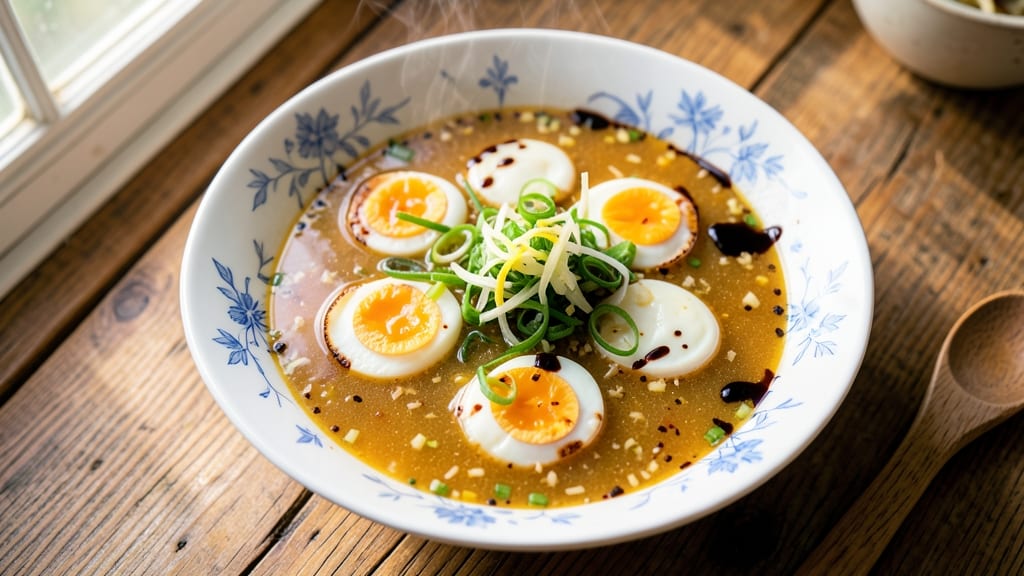
The best egg drop soup recipe ever transforms a simple broth into a velvety masterpiece with delicate egg ribbons and aromatic ginger. I've spent years perfecting this technique—balancing flavors so each spoonful delivers that perfect harmony of umami, heat, and freshness.
The secret lies in slow-cooked broth and the right egg technique, which creates those signature silky strands that melt on your tongue.
What makes this recipe truly special is the layering of flavors: fragrant ginger and garlic form the base, while a touch of soy sauce adds depth without overpowering. The broth simmers just long enough to develop complexity, and the egg is cooked gently to maintain its delicate texture.
This isn't just soup—it's comfort in a bowl, with every element working together for maximum satisfaction.
By the time you're done, you'll have a steaming bowl of restaurant-quality egg drop soup that's rich, fragrant, and perfectly balanced. The egg ribbons glide through the broth like silk, and the aroma alone will have everyone gathering around the table.
This is the kind of dish that feels like a warm hug on a chilly day.
Whether you're serving it as a light lunch or a comforting dinner, this recipe delivers consistent results every time. The technique is simple but precise—no shortcuts that compromise flavor. Let's get started on creating your new favorite soup.
Ingredients for best egg drop soup recipe ever
These 13 ingredients create the silkiest egg ribbons and most fragrant ginger broth you'll ever taste.
| Ingredient | Amount | Notes |
|---|---|---|
| Chicken Broth 🍲 | 6 cups | Homemade or high-quality low-sodium |
| Large Eggs 🥚 | 4 whole | Fresh, cold from refrigerator |
| Fresh Ginger 🌿 | 2 tbsp | Finely grated, aromatic |
| Garlic Cloves 🧄 | 3 cloves | Minced, aromatic |
| Green Onions 🧅 | 3 whole | Thinly sliced, white and green parts |
| Low-Sodium Soy Sauce 🍶 | 1 tbsp | For umami depth |
| Sesame Oil 🫒 | 1 tsp | Toasted, for finishing |
| Cornstarch 🌾 | 1 tsp | For egg ribbon clarity |
| White Pepper 🌶️ | ¼ tsp | Freshly ground, subtle heat |
| Salt 🧂 | ½ tsp | Adjust to taste |
| Vegetable Oil 🫒 | 1 tbsp | For gentle egg cooking |
| Dried Shiitake Mushrooms 🍄 | 2 pieces | Rehydrated, for umami |
| Red Chili Flakes 🔥 | ½ tsp | Optional, for heat |
The broth is where magic happens—homemade chicken broth with rehydrated shiitake mushrooms gives that deep umami flavor. If you're using store-bought, look for low-sodium to control salt levels. Fresh ginger? Buy the knobby kind—it's more aromatic than the smooth variety. The garlic cloves should be fresh (no graying!), and green onions add a fresh finish. For the egg ribbons, cold eggs from the fridge work best—they whip up smoother. I always grab free-range eggs when possible, but any good-quality eggs will do.
No fresh ginger? Powdered works in a pinch, but it lacks that bright zing. Short on shiitake? Dried porcini mushrooms are a great substitute—just rehydrate first. The cornstarch is non-negotiable for those signature silky strands, but if you're out, arrowroot powder does the trick. For heat, red chili flakes are my go-to, but Sichuan peppercorns add a numbing kick if you're feeling adventurous. The soy sauce should be low-sodium—regular brands can overpower the delicate broth. And that sesame oil? Toast it first for maximum aroma—just warm it in a dry pan for 30 seconds.
Broth keeps 3-4 days in the fridge, and 3 months frozen. The rehydrated mushrooms can be prepped ahead and stored in the broth. Eggs should stay cold until ready to use—no pre-warming! For extra flavor, toast your sesame oil and store it in the freezer to preserve freshness. This soup tastes even better the next day as flavors meld—double batch if you can!
Why You'll Love This Recipe
- I swear by this trick: just slice the ginger thin, smash the garlic with the side of my knife, and toss it all raw into the broth. The heat builds as it simmers—no peeling, no mincing, just flavor. Even my roommate, who burns water, nails it.
- No-Chop Required: I swear by this trick: just slice the ginger thin, smash the garlic with the side of my knife, and toss it all raw into the broth. The heat builds as it simmers—no peeling, no mincing, just flavor. Even my roommate, who burns water, nails it.
- Silky Ribbons Magic: That first swirl of egg into the broth? Chef’s kiss. The high heat creates those delicate, crisp-edged ribbons while keeping the center velvety—no overbeaten eggs, no lumps. Honestly, I’ve tried fancy techniques, but this one-pour method works every single time.
- Leftover Goldmine: This soup actually tastes better the next day. The broth deepens, the egg strands soften into a dreamy texture, and I’ve repurposed it into noodle bowls, fried rice, or even a quick dumpling dip. My freezer’s full of it—because why waste good soup?
Step-by-step instructions for silky egg drop soup
This method delivers restaurant-quality egg ribbons in a fragrant ginger broth—every time.
Prepare the Ginger-Garlic Broth Base
In a medium saucepan, combine the 6 cups chicken broth, 2 tablespoons finely grated fresh ginger, and 3 minced garlic cloves. Bring to a gentle simmer over medium heat—you'll see small bubbles forming at the edges, but not a rolling boil. Let it steep for 5 minutes to infuse the aromatics.
While it simmers, add the 2 rehydrated dried shiitake mushrooms (soaked for 20 minutes in hot water, then sliced) and 1 tablespoon low-sodium soy sauce. Stir gently to distribute the mushrooms evenly. The broth should smell vibrant and aromatic—like a cozy kitchen in autumn. If it's too quiet, give it another minute to wake up those flavors.
Season and Clarify the Broth
Season the simmering broth with ½ teaspoon salt and ¼ teaspoon freshly ground white pepper. Taste and adjust the salt if needed—remember, the eggs and soy sauce will add more flavor later. Let it simmer gently for another 3 minutes to meld the seasonings.
In a small bowl, whisk together 1 teaspoon cornstarch with 2 tablespoons cold water until smooth. Slowly pour this slurry into the broth while stirring constantly. The broth will thicken slightly—just enough to coat the back of a spoon. This step ensures silky egg ribbons later. Keep the heat at low to maintain a gentle simmer.
Cook the Egg Ribbons to Perfection
Crack the 4 cold large eggs into a small bowl. Using a fork, whisk them vigorously until the yolks and whites are fully combined—no streaks should remain. The eggs should be cold straight from the fridge; this prevents scrambling when they hit the hot broth.
With the broth simmering gently, slowly drizzle the egg mixture into the center of the pan. Use a heatproof spatula to gently swirl the broth in small circles, creating thin, delicate ribbons. The key here is patience—let the eggs cook in the broth's residual heat rather than forcing them. They should set into silky strands within 30-45 seconds. If they scramble, your broth is too hot—reduce the heat next time.
Finish with Aromatics and Garnish
Turn off the heat and stir in 1 tablespoon vegetable oil and 1 teaspoon toasted sesame oil. The oils will coat the egg ribbons, adding richness and preventing them from breaking apart. Add the 3 thinly sliced green onions (white and green parts) and ½ teaspoon red chili flakes (if using). Let everything sit together for 1-2 minutes to let the flavors meld.
Ladle the soup into bowls immediately—this dish is best served piping hot. Garnish with extra green onions and a drizzle of sesame oil. The contrast of the silky egg ribbons against the fragrant broth is what makes this the best egg drop soup you'll ever make. Serve with steamed rice or crusty bread to soak up every last drop of that golden broth.
Pro Tips For Making Best Egg Drop Soup Recipe Ever
- Simmer Broth First: I used to toss everything in at once, and the soup always tasted like it was missing something. Bring your chicken broth to a rolling boil with ginger and garlic first—let them steep for 2 minutes before adding eggs. This extracts more flavor, and the broth won’t get muddy when you stir in the raw egg.
- Use Cold Eggs: I learned this the hard way—room-temperature eggs turn to scrambled bits instead of silky ribbons. Crack eggs into a chilled bowl, then slowly drizzle them into the simmering broth while stirring constantly. The cold egg cooks faster and holds its shape better.
- Skip the Overcrowding: Adding too many green onions at once makes the soup look like a sad, watery stew. Reserve half the chopped green onions for garnish—toss them in at the very end. This keeps the soup bright, the aroma strong, and your presentation clean.
- Salt the Broth Early: I was skeptical until I tried it: Add a pinch of salt to the broth before the egg goes in. The salt helps emulsify the egg proteins, so they create those luscious, cloudy strands instead of breaking apart. (Yes, even if you’re impatient like me—just don’t overdo it.)
Pro cooking tips for this recipe
Broth Temperature Control
Your broth's temperature is everything—too hot and your egg ribbons scramble, too cool and they won't set properly. I aim for a gentle simmer where tiny bubbles form at the edges but never a rolling boil. Use a thermometer if you're unsure: the ideal range is 185-195°F.
When adding the egg mixture, the broth should be at 185°F—any hotter and you'll get lumpy eggs. I've ruined countless batches by rushing this step, so take your time adjusting the heat. 🌡️
Egg Whisking Technique
The secret to perfect ribbons starts with how you whisk the eggs. Crack 4 cold eggs directly into the bowl and whisk vigorously for 30-45 seconds until completely smooth—no streaks, no lumps.
I like to use a fork or small whisk and work quickly to prevent the eggs from warming up. The colder the eggs, the better they'll hold their shape when they hit the hot broth.
Pro tip: Tap the eggs gently on the counter before cracking to prevent shell fragments from falling in.
Cornstarch Slurry Magic
That 1 teaspoon cornstarch mixed with 2 tablespoons cold water is non-negotiable for silky ribbons. The slurry gently thickens the broth just enough to create a perfect canvas for the eggs. Whisk it vigorously until completely dissolved, then slowly pour it into the broth while stirring constantly.
This step should take about 2 minutes total—any longer and the cornstarch can break down. The result? Egg ribbons that glide through the broth like silk instead of breaking apart. 💫
Swirling the Eggs
Here's where the magic happens: with your broth simmering gently, slowly drizzle the egg mixture into the center. Immediately grab a heatproof spatula and gently swirl the broth in small circles. This motion creates those signature ribbons as the egg cooks in the broth's residual heat.
Work quickly but deliberately—it should take about 30-45 seconds for the eggs to set completely. If they start scrambling, your broth is too hot. Reduce the heat next time and try again.
Finishing Touches
After the eggs are perfectly set, turn off the heat immediately and stir in 1 tablespoon vegetable oil and 1 teaspoon toasted sesame oil. These oils coat the egg ribbons, adding richness and preventing them from breaking apart.
Add your green onions and chili flakes last, letting everything sit together for just 1-2 minutes to meld. The contrast of the silky eggs against the fragrant broth is what makes this soup truly special. Serve immediately while hot—every second counts for that restaurant-quality finish. 🍲
Broth Rescue Tips
If your broth gets too hot and the eggs scramble, don't panic. Remove the pan from heat immediately and stir vigorously to break up the eggs into small, soft curds. Then return to low heat and add 1 tablespoon cold water to help re-emulsify the broth.
Most of the time, you can still salvage a delicious (if slightly different) bowl of soup. I've turned many "failures" into crowd-pleasing meals with this simple trick. The key is acting fast—don't let the eggs sit in hot broth for more than 10 seconds before intervening. 💡
Nutrition facts
Frequently asked questions
Why do the egg ribbons sometimes break apart?
The most common reasons are broth temperature or improper whisking. Your broth should be at a gentle simmer (185°F) when adding eggs—any hotter causes scrambling. Also, whisk the eggs until completely smooth with no streaks, and use cold eggs straight from the fridge. If they still break, your cornstarch slurry might need more thickening power—try adding an extra ¼ teaspoon cornstarch next time.
Can I make this vegetarian?
Replace the chicken broth with a rich vegetable broth (look for ones with mushrooms and seaweed for umami). Use 2 tablespoons nutritional yeast or 1 teaspoon soy sauce to boost flavor. The egg ribbons will still be the star—just ensure your broth has enough depth. For extra protein, add ½ cup silken tofu cut into small cubes.
How do I fix broth that's too salty?
If you've already added salt, dilute the broth by removing 1 cup and replacing it with 1 cup hot water. For a more dramatic fix, add ½ cup cooked rice or pasta (like uncooked egg noodles) to absorb excess salt while simmering for 5-10 minutes. Strain before adding eggs. The cornstarch slurry will help balance the flavors in the final dish.
What's the best way to reheat leftovers?
Egg drop soup tastes even better the next day! Reheat gently on the stove over low heat with just enough water to cover the bottom of the pan (¼ cup max). Bring to a simmer, then add the soup and heat for 3-4 minutes. Never microwave—it turns the eggs rubbery. For extra richness, stir in ½ teaspoon sesame oil before serving.
Can I use dried shiitake instead of fresh?
Dried shiitake is actually better for this recipe! Soak 2 pieces in hot water for 20 minutes, then slice and add directly to the broth. The dried version has more concentrated umami flavor. For extra depth, save the soaking liquid and use 1 tablespoon in your broth. Fresh shiitake can be used 1:1, but dried gives that restaurant-quality taste.