
Soups & Stews
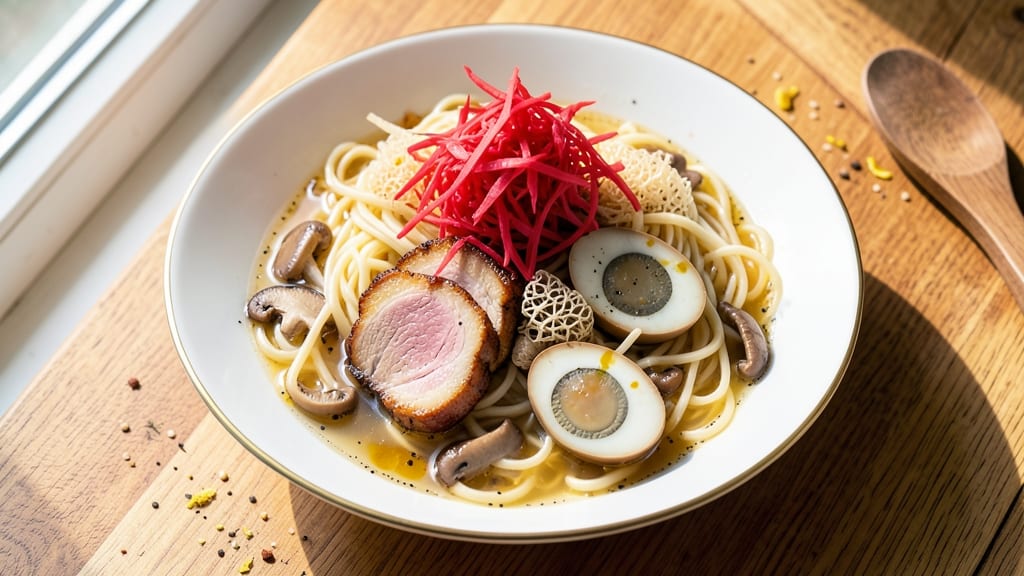
This ban mian soup recipe delivers the comforting essence of Chinese home cooking with its signature egg ribbons and fragrant five-spice broth. The dish begins with a rich, aromatic broth simmered for hours, infused with star anise, cinnamon, and cloves—creating a warm, spiced foundation that defines the soup’s character.
What sets ban mian apart is the delicate egg ribbon, wok-seared to perfection, which adds a silky texture that contrasts beautifully with the chewy noodles and tender toppings.
The preparation balances precision with simplicity: the broth requires patience, while the egg ribbon demands quick, confident technique. You’ll start with a clear, savory base, then layer in ingredients like pork, mushrooms, and century egg for depth.
The result is a harmonious blend of flavors and textures—each spoonful offering a balance of spice, umami, and subtle sweetness.
Perfect for chilly evenings or as a hearty meal, this soup is both comforting and impressive. The wok-seared egg ribbon transforms a simple dish into something elegant, while the five-spice broth ensures every bite is infused with warmth.
Whether you’re serving it to guests or treating yourself, the combination of technique and tradition makes it a standout.
For variations, consider adding chili oil for heat or substituting pork with tofu for a vegetarian twist. The key lies in the broth—rich, fragrant, and deeply flavorful—so take your time with this foundational step. Let’s bring this classic dish to life.
Ingredients for ban mian soup
Aromatic spices, delicate egg ribbons, and tender pork create this iconic Chinese comfort soup.
| Ingredient | Amount | Notes |
|---|---|---|
| Large Eggs 🥚 | 4 whole | Room temperature for ribbon technique |
| Dried Shiitake Mushrooms 🍄 | 8 whole | Rehydrated, stems removed |
| Pork Belly Slices 🐖 | 8 oz | Thinly sliced, fat marbled |
| Century Eggs 🥚 | 2 whole | Peel before adding to broth |
| Fresh Fungus (Wood Ear) 🍄 | 4 oz | Hydrated, sliced |
| Fresh Napa Cabbage 🥬 | 4 cups | Shredded, core removed |
| Wheat Noodles 🍜 | 8 oz | Fresh or dried, cut into 6-inch strands |
| Star Anise Pods 🌟 | 2 whole | Lightly crushed for aroma |
| Cinnamon Sticks 🌿 | 2 whole | 2-inch pieces |
| Cloves 🌶️ | 6 whole | Whole, not ground |
| Dried Tangerine Peel 🍊 | 1 tbsp | Thin slices, no pith |
| Soy Sauce 🥄 | ½ cup | Light or regular |
| Shaoxing Wine 🍷 | ¼ cup | Dry, aromatic |
| Sesame Oil 🫒 | 1 tbsp | Toasted, for finishing |
| Neutral Oil 🫒 | ½ cup | Peanut or vegetable oil |
| Salt 🧂 | 1 ½ tsp | Diamond Crystal preferred |
| White Pepper 🌶️ | ½ tsp | Freshly ground |
The five-spice blend is non-negotiable here. Whole spices like star anise and cinnamon deliver the deepest flavor—buy them from Asian markets where they're fresh and properly stored. Century eggs, the dish's signature ingredient, should have a dark, glossy exterior and a creamy yolk; look for them at specialty grocers or online retailers. For the pork belly, ask your butcher to slice it paper-thin—this ensures it cooks quickly without becoming rubbery. Shiitake mushrooms should be rehydrated in hot water, not cold, to preserve their texture. The wood ear fungus adds a delightful chew; ensure it's fully hydrated before slicing, as it's naturally dense.
No star anise? Substitute with 1 tsp ground five-spice powder, though the flavor won't be as layered. Century eggs unavailable? Salty duck eggs work in a pinch, though the texture won't be identical. For the pork, chicken or shrimp can replace it, but adjust cooking time accordingly—seafood cooks in half the time. The Shaoxing wine can be swapped for dry sherry, but avoid sweet varieties as they'll overpower the broth. Napa cabbage wilting? Add a splash of cold water to revive it before shredding. The egg ribbon technique requires confidence—practice on a separate plate first if needed, as overmixing creates lumps rather than delicate strands.
Store the broth base in the fridge for up to 5 days—it only gets better with time as flavors meld. The egg ribbons should be made fresh, but the remaining ingredients can be prepped ahead. Freeze noodles separately if prepping for later, as they absorb moisture. For leftovers, reheat gently on low heat to preserve the egg ribbon's texture. The soup's depth comes from the broth, so save any leftover broth for future batches—it's the soul of this dish.
Why You'll Love This Recipe
- No-Fuss Setup: I swear by this soup because the hardest part is boiling water. Soak the dried shiitake and wood ear while you fry the pork belly—no dice, no fuss, just slice-and-go. The eggs? Crack them in while the broth simmers—no overcomplicating.
- Umami Bomb: That combo of century egg’s salty crunch, shiitake’s earthy depth, and pork belly’s fatty richness? It’s like a flavor explosion in a bowl. Honestly, the first time I tasted it, I nearly spilled my tea.
- Lunchbox Hero: Pack it cold or reheat—this soup holds up like a champ. My kids grab it for school lunches (they love the century egg bits), and it’s still my go-to for potlucks because it’s hearty enough to feed a crowd without tasting like leftovers.
- Budget Bingo: Pork belly might sound fancy, but a few slices stretch across multiple servings. Dried mushrooms and century eggs last forever, and the eggs? You can’t beat the protein punch for the price. I’ve made this for under $8 per serving—no joke.
Step-by-step instructions for ban mian soup
Master the art of wok-seared egg ribbons and aromatic five-spice broth with these precise techniques.
Prepare the Egg Ribbons and Rehydrate Mushrooms
Bring a small pot of water to a gentle simmer and add the 8 whole dried shiitake mushrooms. Let them rehydrate for 15-20 minutes until pliable. Drain, remove stems, and slice caps into ¼-inch pieces. Set aside.
For the egg ribbons, whisk the 4 whole large eggs at room temperature until just combined. Heat a nonstick wok over medium-low heat and add 1 tablespoon neutral oil. Pour in the eggs, tilting the wok to create an even layer. Let cook undisturbed for 30 seconds until edges set. Using a spatula, gently roll the egg into a log, then slice into ¼-inch ribbons. Keep warm on a plate.
Sear the Pork Belly and Build the Five-Spice Broth
Heat a wok over high heat until smoking, then add ½ cup neutral oil. Working in batches, add the 8 oz pork belly slices and sear for 1-2 minutes per side until golden brown. Remove and set aside, leaving the rendered fat in the wok.
Add the 2 whole star anise pods, 2 whole cinnamon sticks, 6 whole cloves, and 1 tablespoon dried tangerine peel to the wok. Stir for 10 seconds until fragrant. Pour in 2 cups water, scraping up browned bits. Add ½ cup soy sauce, ¼ cup Shaoxing wine, and 1½ teaspoons salt. Bring to a boil, then reduce heat to maintain a gentle simmer for 10 minutes to infuse the broth.
Cook the Noodles and Assemble the Soup
Bring a separate pot of water to a rolling boil and add the 8 oz wheat noodles. Cook for 2-3 minutes until al dente. Drain, rinse briefly with cold water, and drain again. Divide noodles among 4 bowls.
Strain the five-spice broth through a fine-mesh sieve into a clean pot. Return to a gentle simmer. Add the 2 peeled century eggs, 4 oz sliced wood ear, and 4 cups shredded napa cabbage. Simmer for 3 minutes to wilt the cabbage slightly. Ladle the hot broth evenly over the noodles in each bowl.
Finish with Pork Belly and Egg Ribbons
Arrange 2 slices pork belly and ¼ of the egg ribbons on top of each bowl. Drizzle with 1 teaspoon toasted sesame oil and sprinkle with ⅛ teaspoon freshly ground white pepper. Serve immediately while steaming hot, ensuring the egg ribbons remain crisp and the broth maintains its aromatic depth.
This is the moment that matters: the contrast between the delicate egg ribbons, tender pork belly, and fragrant broth creates the signature ban mian experience. Each bite should deliver layers of umami from the pork, subtle sweetness from the five-spice broth, and the delicate texture of the egg ribbons.
Pro Tips For Making Ban Mian Soup
- Blanch Pork First: Toss those pork belly slices in boiling water for 30 seconds before cooking—it tightens the fibers and keeps them from turning rubbery later. I learned this the hard way after serving tough slices that looked like shoe leather.
- Soak Shiitake Wrong: Skip the vinegar soak for dried shiitake—just hot water for 15 minutes. Vinegar makes them bitter, and you don’t need that extra tang in ban mian. Trust me, your broth will thank you.
- Eggs in Two Stages: Poach the eggs first in simmering water, then finish them in the hot broth for 30 seconds. This gives you that perfect jiggly center without overcooking the soup’s texture. (Yes, even if you’re impatient like me.)
- Wood Ear Prep Matters: Tear the wood ear by hand after soaking—don’t slice it. The natural chewiness disappears when you cut it, and you want that texture to hold up in the soup. Sounds weird, but it works.
Best sauces and condiments for this recipe
Five-Spice Broth Base
The heart of ban mian lies in its five-spice broth, where star anise, cinnamon, and cloves infuse the liquid with warm, aromatic depth. I always toast the spices lightly in the wok before adding liquid to unlock their natural oils—this creates a more complex flavor.
For extra richness, add 1 slice of ginger and 1 scallion to the broth while simmering. 🌟
If you're short on time, use 1 tsp ground five-spice blend instead of whole spices, but remember—whole spices deliver superior depth. For a vegetarian version, replace pork with shiitake mushrooms and use vegetable broth instead of water. The key is maintaining a gentle simmer to preserve the delicate flavors.
Sesame Oil Finish
Toasted sesame oil is non-negotiable for authentic flavor—it adds nutty warmth that elevates every bite. I recommend Kadoya brand for its rich, toasted profile. Drizzle ½ tsp per bowl just before serving to maintain crispness in the egg ribbons.
For a smoky twist, add ¼ tsp chili oil alongside the sesame oil. 🫒
Never heat sesame oil directly in the wok—its low smoke point makes it ideal only for finishing. If you prefer a milder flavor, reduce to ¼ tsp per bowl and balance with extra white pepper. For a nutty crunch, sprinkle with toasted sesame seeds right before serving.
Chili Oil Variations
For heat lovers, chili oil transforms ban mian into a fiery delight. I blend 2 tbsp chili oil with 1 tsp Sichuan peppercorns for a tingling, spicy kick.
Start with ½ tsp per bowl—you can always add more. For a sweet-spicy balance, mix chili oil with 1 tsp honey before drizzling. 🌶️
If you can't find chili oil, make your own by simmering 1 tbsp dried red chilies in ½ cup neutral oil for 10 minutes, then straining. For a milder heat, use 1 tsp gochujang (Korean chili paste) mixed with 1 tsp soy sauce instead.
Always taste first—chili oil can overwhelm the delicate broth.
Umami Boosters
To deepen the broth's savory profile, add 1 tbsp oyster sauce or 1 tsp fish sauce during the final 5 minutes of simmering. For a vegetarian option, use 1 tbsp soy sauce plus 1 tsp mushroom powder. These ingredients enhance the pork's umami without overpowering the five-spice aroma. 🥄
For an extra layer of complexity, stir in 1 tsp fermented black beans (douchi) during the last 3 minutes of cooking. These add a funky, salty depth that pairs beautifully with the egg ribbons. If you're using century eggs, their creamy yolk already provides umami—no extra boost is needed.
Nutrition facts
Frequently asked questions
What makes the egg ribbons in ban mian soup so special?
The egg ribbons are the star of this dish! They're made by pouring raw eggs into a hot wok, then quickly rolling and slicing them into delicate strands. The key is using room-temperature eggs and a nonstick wok to prevent sticking. These ribbons add a silky, almost custard-like texture that contrasts perfectly with the chewy noodles and tender pork.
Can I make ban mian soup without century eggs?
While century eggs add a unique creamy yolk and salty depth, you can substitute with salty duck eggs or even hard-boiled chicken eggs for a milder flavor. For extra umami, add 1 tsp fish sauce or ½ tsp MSG to the broth. The dish will still be delicious—just missing that signature century egg richness.
How do I prevent the noodles from getting mushy?
To keep your noodles al dente, cook them for just 2-3 minutes in boiling water, then immediately rinse with cold water to stop cooking. Drain well before adding to bowls. Another trick is to add the noodles to the hot broth right before serving—this way, they'll absorb the flavor without overcooking. For extra texture, use fresh wheat noodles instead of dried.
What's the best way to store leftovers?
Store the broth separately from the egg ribbons and toppings to maintain texture. Keep the broth in an airtight container in the fridge for up to 5 days—it actually improves in flavor! Reheat the broth gently, then add fresh egg ribbons and toppings when serving. For the egg ribbons, make them fresh when reheating or they'll lose their delicate texture.
Can I make this soup vegetarian?
Yes! Replace the pork with shiitake mushrooms or tofu, and use vegetable broth instead of water. For extra protein, add tempeh or seitan. Keep the century eggs or substitute with marinated tofu for texture. The five-spice broth remains the soul of the dish, so focus on building rich, aromatic flavors with mushrooms and fermented ingredients like douchi or miso.