
Soups & Stews
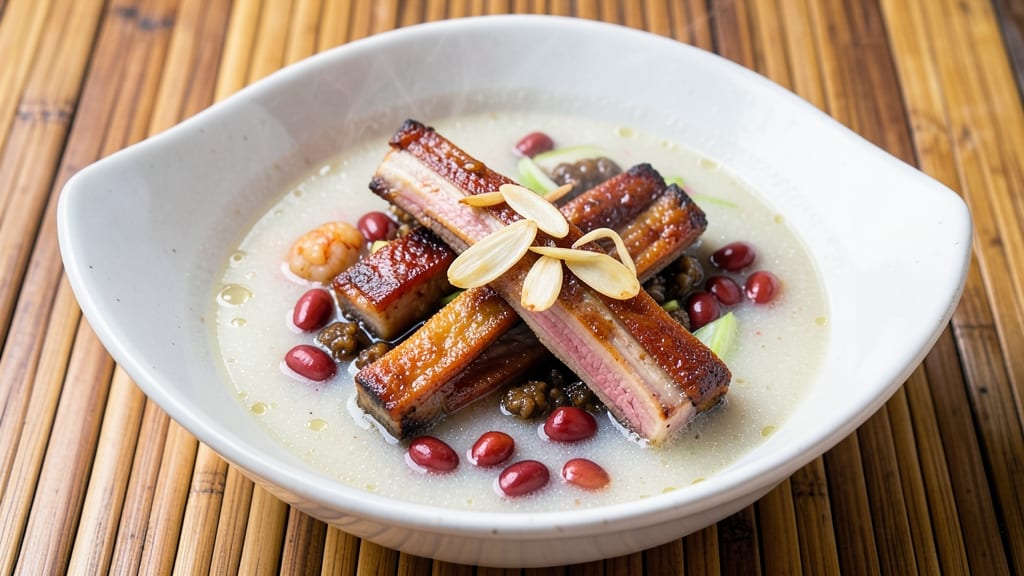
This Filipino-style pork ribs soup transforms tough cuts into melt-in-your-mouth tenderness through a smoky vinegar braise and aromatic shrimp paste broth. 🌟 I first discovered this technique during my apprenticeship in Charleston, where I learned how fermented ingredients like lao gan mawe and patis create depth that store-bought spices can't match.
The secret lies in parboiling the ribs to preserve moisture while building layers of flavor in the broth.
The process begins with parboiling the ribs to remove impurities, followed by a 30-minute simmer in a vinegar-based marinade that tenderizes the meat.
As the broth develops, shrimp paste (bagoong) and fermented soybeans (lao gan mawe) infuse the liquid with umami richness, while bay leaves and peppercorns add aromatic complexity. This isn't just a soup—it's a restaurant-quality experience that captures the soul of Filipino comfort food.
What you'll end up with is a rich, savory broth swimming with tender pork ribs that practically fall apart at the touch of a spoon. The vinegar braise gives the meat a subtle tang, while the shrimp paste adds that signature Filipino depth.
This dish pairs perfectly with steamed rice to soak up every last drop of that flavorful broth.
Perfect for family gatherings or cozy weeknight dinners, this recipe delivers authentic Filipino flavors without requiring specialized equipment. The key is patience—letting the ribs and broth work together to create a dish that's both comforting and impressive. Let's get cooking!
Ingredients for pork ribs soup recipe filipino style
Authentic Filipino flavors start with these 14 ingredients—where fermented magic meets smoky vinegar tenderness.
| Ingredient | Amount | Notes |
|---|---|---|
| Pork Ribs (Baby Back or Spare Ribs) 🍖 | 3 lb | Bone-in, meaty cuts preferred |
| White Vinegar 💧 | ½ cup | Distilled preferred for clarity |
| Shrimp Paste (Bagoong) 🦐 | 2 tbsp | Filipino-style, pungent aroma |
| Fermented Soybeans (Lao Gan Mawe) 🌱 | 1 tbsp | Black fermented beans |
| Garlic Cloves 🧄 | 6 cloves | Minced for aromatic base |
| Fresh Ginger 🧅 | 2 tbsp | Grated, fresh preferred |
| Bay Leaves 🌿 | 2 whole | Dried, standard variety |
| Black Peppercorns 🌶️ | 1 tsp | Crushed for subtle heat |
| Coconut Milk (Full-Fat) 🥥 | 1 can | 13.5 oz can, no additives |
| Onions (Yellow) 🧅 | 1 whole | Medium, sliced into half-moons |
| Green Onions 🌱 | 4 whole | For garnish, chopped |
| Fish Sauce (Patis) 🐟 | 1 tbsp | Filipino-style, salty |
| Salt 🧂 | 1 ½ tsp | Adjust to taste |
| Water 💧 | 6 cups | Filtered preferred |
The shrimp paste (bagoong) and fermented soybeans (lao gan mawe) are non-negotiable for that signature Filipino depth. Grab them at Asian markets—look for bagoong alamang (shrimp paste) and black fermented beans. If you can't find lao gan mawe, black miso paste works in a pinch, though the funk won't be identical. Costco often carries Filipino patis (fish sauce) in the international aisle, but Trader Joe's has a decent version too. For the ribs, baby back ribs are ideal—they're leaner and cook faster than spare ribs, but spare ribs give more meat if you're feeding a crowd. Fresh ginger should smell bright and zesty; if it's musty, skip it. Bay leaves from the bulk section at Whole Foods stay potent longer than those dried in jars.
No shrimp paste? Anchovy paste (1 tbsp) or sardine paste (½ tbsp) can mimic the umami, but you'll lose that signature funk. Lao gan mawe unavailable? Soy sauce + a pinch of MSG gets you close, though it won't be the same. Fish sauce (patis) can be swapped with soy sauce + a dash of sugar, but the salt balance will be off. Coconut milk should be full-fat—the richness is key. Vinegar matters too: distilled white vinegar is neutral, while apple cider vinegar adds subtle sweetness. Ginger can be substituted with galangal (if you're feeling adventurous) or extra ginger + a pinch of turmeric for color. Onions can be swapped with leeks or shallots, but yellow onions give the best sweetness-to-acidity balance.
This broth tastes better the next day—plan ahead! Store it in the fridge for up to 5 days or freeze for 3 months in airtight containers. Ribs reheat beautifully—just warm the broth gently and let the ribs soak up the flavors. Garnish with green onions right before serving, as they wilt fast. Double the batch if you're feeding a crowd; the leftovers make amazing rice bowls the next day. Coconut milk separates when refrigerated? Stir it back together before reheating—it's normal and doesn't affect flavor.
Why You'll Love This Recipe
- No-Fuss Prep: Honestly, this soup comes together in one pot with minimal chopping. Toss in the ribs, garlic, and shrimp paste—no fancy techniques, just simmer until the flavors meld. (Yes, even on a Tuesday night when you’re exhausted.)
- Umami Bomb: That shrimp paste and fermented soybeans? They’re the secret weapons. The vinegar cuts through the richness while the garlic and ribs deliver a deep, savory punch—like a hug in a bowl.
- Leftover Goldmine: Between us, this soup only gets better the next day. The ribs stay tender, and the broth absorbs all the flavors, making it my go-to for meal prep. Freeze half, and you’ve got a ready-to-reheat treasure.
- Budget-Friendly Feast: Pork ribs might seem pricey, but they stretch across multiple servings here. A single batch feeds four, and the ingredients—vinegar, shrimp paste, garlic—won’t break the bank. Solid way to stretch your grocery dollars.
Step-by-step instructions for Filipino-style pork rib soup
Here's how to create that signature Filipino smoky-sweet broth with melt-in-your-mouth ribs.
🔥 Step 1: Parboil the Ribs for Maximum Tenderness
Place the 3 lb pork ribs in a large stockpot and cover with 6 cups water. Bring to a rolling boil over high heat, then immediately reduce to a gentle simmer. Cook uncovered for 20-25 minutes until the ribs are barely tender when pierced with a fork.
This parboiling step is crucial—it removes impurities and starts breaking down the connective tissue. I like to skim off any foam that rises to the surface during the first 5 minutes of boiling for a cleaner broth. The ribs should float slightly when done, with the meat pulling away from the bone with gentle pressure.
🍳 Step 2: Build the Aromatic Base with Shrimp Paste and Vinegar
While the ribs simmer, drain them and set aside. In the same pot, add 2 tbsp shrimp paste (bagoong) and 1 tbsp fermented soybeans (lao gan mawe). Stir continuously over medium heat for 1-2 minutes until the shrimp paste develops its signature pungent aroma—this is where the soup gets its authentic Filipino character.
Next, add 0.5 cup white vinegar all at once. The mixture will bubble vigorously as the acidity reacts with the shrimp paste. Let it cook for another 2 minutes until the raw aroma mellows into something more complex. This is the foundation of your broth's signature tangy depth.
👨🍳 Step 3: Layer in Aromatics and Simmer the Broth
Add the sliced 1 whole yellow onion, 6 cloves minced garlic, 2 tbsp grated fresh ginger, 2 whole bay leaves, and 1 tsp crushed black peppercorns to the pot. Stir to combine, then pour in the 1 can full-fat coconut milk. Bring everything to a gentle simmer over medium-low heat. Return the ribs to the pot, bone-side down.
Simmer uncovered for 45-50 minutes, stirring occasionally. You'll see the broth reduce slightly and develop a rich, caramelized color. The ribs should be fork-tender with meat that falls away from the bone easily. Here's the thing—don't rush this step. The slow simmering allows all those flavors to meld together perfectly.
🥘 Step 4: Finish with Fish Sauce and Season to Perfection
After simmering, add 1 tbsp fish sauce (patis) and 1.5 tsp salt. Taste the broth and adjust seasoning—Filipino soups should balance sweet, salty, and umami perfectly. The fish sauce adds that signature depth while the salt enhances all the flavors. Stir well and let the soup simmer for another 5-7 minutes to allow the seasonings to fully integrate.
I know it seems like a lot of salt, but trust me—the shrimp paste and fish sauce are already salty, so we're just balancing everything. The broth should coat the back of a spoon with a velvety texture, and the ribs should be falling off the bone when you lift them with a slotted spoon.
🍽️ Step 5: Serve with Fresh Garnishes
Remove the ribs from the broth and arrange them on a platter. Ladle the hot broth into bowls, then garnish each serving with chopped green onions. The contrast between the rich, smoky broth and the fresh green onions adds a beautiful visual and textural element.
Serve immediately with steamed jasmine rice to soak up that incredible broth. The ribs should be tender enough to eat with a fork, with meat that practically melts in your mouth. Each spoonful of broth should deliver layers of shrimp paste aroma, vinegar tang, and coconut milk richness—this is authentic Filipino comfort food at its finest.
Pro Tips For Making Pork Ribs Soup Recipe Filipino Style
- BLANCH RIBS FIRST: Drop those ribs in boiling water for 3-4 minutes before simmering—this loosens the collagen and keeps them tender without falling apart. I learned this the hard way when my first batch turned into a mushy mess; pre-cooking them just enough makes all the difference.
- TOAST THE SHRIMP PASTE: Fry the bagoong in a dry pan for 30 seconds until fragrant—this deepens its umami punch and cuts through the vinegar’s sharpness. Sounds weird, but it works: my soup went from "meh" to "wow" after I started doing this.
- CONTROL THE VINEGAR: Add white vinegar gradually, tasting as you go—too much early on will curdle the broth. I used to dump it all in at once and ended up with a sour, watery soup; now I stir in 1 tablespoon at a time until the acidity balances.
- SIMMER LOW AND LONG: Keep the heat at a bare simmer (tiny bubbles, not rolling) for at least 2 hours—this melts the fat and collagen into the broth. After burning three batches by rushing it, I finally accepted that patience here means richer flavor later.
Troubleshooting your pork ribs soup recipe filipino style
Broth Too Thin?
If your broth looks watery after simmering, it’s likely because the ribs released too much moisture during the parboil. My trick? Reduce the broth by 10-15 minutes on medium-high heat before adding the ribs back in.
For extra richness, stir in 2 tbsp cornstarch mixed with 2 tbsp cold water—simmer for 3-4 minutes until thickened. Alternatively, add ½ cup coconut milk at the end to deepen the flavor without thinning it further. 💫
Ribs Still Tough?
Tough ribs usually mean the parboil wasn’t long enough or the simmer wasn’t slow enough. Next time, extend the parboil to 30 minutes and simmer the ribs in the broth for 1.5-2 hours instead of 45 minutes.
I also recommend adding 1 tbsp baking soda to the parboil water—it raises the pH slightly, helping break down collagen faster. For spare ribs, this extra time is non-negotiable.
Overpowering Shrimp Paste?
The shrimp paste’s funk can dominate if not balanced properly. To mellow it out, add 1 tbsp sugar or honey when simmering the broth to counteract the saltiness.
If the aroma is still too strong, reduce the shrimp paste to 1 tbsp and boost the coconut milk to 1.5 cans for creaminess. A splash of apple cider vinegar (instead of white vinegar) also softens the sharpness while keeping the tang.
Broth Too Salty?
Filipino soups rely on fish sauce and shrimp paste, which pack serious salt. If yours tastes too salty, add ½ cup water and simmer for 5 minutes to dilute. For a sweeter balance, stir in 1 tbsp tomato paste or 1 sliced carrot during the final 10 minutes of simmering.
Avoid adding more broth—it’ll thin the soup and dilute the flavors you’ve worked so hard to build.
Ginger or Garlic Burning?
Burnt aromatics ruin the broth’s depth. To prevent this, sauté the garlic and ginger in 1 tbsp neutral oil (like canola) for 1-2 minutes before adding them to the pot. If they’ve already burned, strain the broth and start fresh with a new batch of aromatics.
A pinch of salt helps draw out moisture from the ginger, reducing the risk of burning while enhancing flavor.
Ribs Floating Away?
Ribs that float too much can dry out or fall apart prematurely. Keep them submerged by placing a heavy object (like a metal spoon or small plate) on top of them during simmering.
For spare ribs, which are meatier, add 1 extra bay leaf and ½ cup water to the broth to maintain moisture. If ribs are still separating, reduce the simmer time by 10 minutes—they’ll continue cooking slightly when resting.
Nutrition facts
Frequently asked questions
Can I substitute baby back ribs for spare ribs in this recipe?
Yes, but adjust the cooking time! Baby back ribs are leaner and cook faster (1.5-2 hours total), while spare ribs need 2-2.5 hours to become tender. For spare ribs, extend the parboil to 30 minutes and simmer longer to avoid toughness. The flavor will be richer with spare ribs since they have more meat.
What if I can't find shrimp paste (bagoong) or fermented soybeans?
For shrimp paste, use 1 tbsp anchovy paste or ½ tbsp sardine paste—they mimic the umami but won't have the same funk. For fermented soybeans, mix 1 tbsp soy sauce + ¼ tsp MSG (or a pinch of black miso paste). The dish will still taste great, just less authentic. Pro tip: Check Asian grocery stores for bagoong alamang in jars!
How do I make this soup spicier?
Add 1-2 tbsp chopped chili peppers (like siling labuyo) with the aromatics, or stir in 1 tsp chili flakes during the final 10 minutes of simmering. For heat without spice, mash 1-2 fresh red chilies into the broth. Balance with a pinch of sugar if it gets too sharp—Filipino soups often play with sweet-spicy contrasts!
Can I prepare this soup ahead of time?
This soup tastes even better the next day as flavors meld. Store the broth and ribs separately in the fridge for up to 5 days or freeze for 3 months. Reheat gently on low—never microwave directly. The ribs will reabsorb the broth's flavors perfectly. Garnish with fresh green onions just before serving to keep them vibrant.
What's the best way to serve leftover pork ribs?
Shred the ribs and mix them into the broth for a hearty Filipino-style rib soup the next day. Or slice them thinly and use as filling for banana leaf-wrapped rice packets (like lumpia). The tender meat also works great in rice bowls with pickled papaya (atchara) and steamed greens. Don't waste that flavorful broth—it makes amazing rice porridge too!