
Soups & Stews
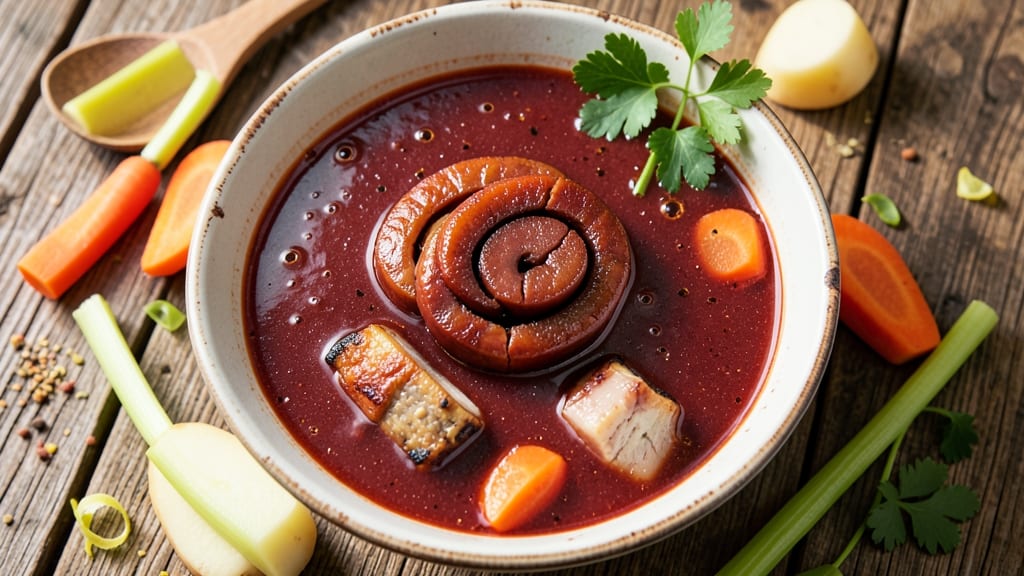
This blood sausage soup recipe delivers a rich, iron-packed broth with deep umami flavors that warm the soul. 💛 The secret lies in slow-cooked blood sausage—its earthy, slightly metallic taste transforms into a velvety, hearty soup that's both comforting and nutritious.
Perfect for chilly evenings, this recipe balances tradition with approachable technique, making it accessible without sacrificing authenticity.
The foundation of this soup begins with browning pork bones and blood sausage in a Dutch oven, unlocking layers of flavor that simmer into a deeply aromatic broth. Unlike lighter soups, this one thrives on its rustic, meaty richness—think tender pork, savory herbs, and just the right amount of spice.
The key is patience; letting the broth develop over 2-3 hours ensures a depth that can't be rushed.
What makes this recipe stand out is its versatility—serve it with crusty bread to soak up every last drop of that iron-rich broth, or pair it with a simple green salad for balance.
The blood sausage adds protein and a unique texture, while root vegetables like carrots and potatoes round out the meal. Each spoonful delivers warmth, heartiness, and a taste of tradition.
For those new to blood sausage, start with a small batch to gauge your preference for its distinct flavor. This soup is a gateway to exploring Eastern European and Balkan culinary traditions, where such dishes are staples.
Ready to try it? The instructions will guide you through every step for a foolproof, restaurant-worthy result at home.
Ingredients for blood sausage soup
Rich, rustic ingredients that transform into a velvety broth with deep umami and iron-packed warmth.
| Ingredient | Amount | Notes |
|---|---|---|
| Blood Sausage 🥓 | 1 ½ lb | Fresh, skin-on preferred |
| Pork Bones 🦴 | 2 lb | Knuckle or neck bones |
| Yellow Onion 🧅 | 2 whole | Chopped into 1/2-inch pieces |
| Carrots 🥕 | 4 medium | Peeled, cut into 1-inch chunks |
| Russet Potatoes 🥔 | 3 medium | Peeled, cut into 1-inch cubes |
| Celery Stalks 🧅 | 4 whole | Chopped into 1-inch pieces |
| Garlic Cloves 🧄 | 6 cloves | Crushed with side of knife |
| Fresh Parsley 🌿 | ¼ cup | Chopped, for garnish |
| Fresh Thyme 🌿 | 2 sprigs | Or 1 tsp dried thyme |
| Fresh Bay Leaves 🌿 | 2 whole | Removed before serving |
| Red Wine Vinegar 🍷 | 2 tbsp | For brightness |
| Tomato Paste 🍅 | 2 tbsp | Smooth, not chunky |
| Black Peppercorns 🌶️ | 1 tsp | Freshly cracked |
| Salt 🧂 | 1 ½ tsp | Kosher or sea salt |
| Vegetable Oil 🫒 | ¼ cup | For browning |
The blood sausage is non-negotiable here—its unique, earthy flavor is what makes this soup special. Look for fresh blood sausage at Eastern European markets or specialty butchers; it's often sold in casings and needs to be removed before cooking. Pork bones are the secret to a deeply flavorful broth—knuckle or neck bones work best. If you can't find them, substitute with pork shanks, but expect a slightly less gelatinous result. The vegetables should be fresh but don't need to be organic—just firm and free of blemishes. Carrots and celery form the classic 'holy trinity' base that builds the soup's aromatic foundation.
No blood sausage? Substitute with extra pork shoulder or smoked sausage, but reduce the amount by half to avoid overpowering the broth. Fresh herbs are ideal, but dried thyme at one-third the amount works in a pinch. Running short on red wine vinegar? Apple cider vinegar or lemon juice keeps the tang. The tomato paste can be tricky—stick with smooth varieties like those in squeeze tubes from Trader Joe's or Whole Foods to avoid graininess. For the bones, if you're using pre-cut knuckles, pat them dry with paper towels before browning to get maximum crispiness.
This soup tastes even better the next day as flavors meld. Store in the fridge for up to 5 days, covered with a tight lid. For longer storage, freeze portions for 3 months—the broth thickens slightly when thawed, which is actually a bonus. I like to make a double batch and freeze half immediately; portion into meal-sized containers so you can grab and reheat exactly what you need. The bones and sausage can be prepped ahead and refrigerated for 2 days before cooking, saving you time on busy weeknights.
Why You'll Love This Recipe
- One-Pot Wonder: I swear by this recipe because it’s all in one pot—no chopping chaos, no extra pans. Toss in the pork bones and blood sausage, let them simmer, and the broth basically does the work while you prep the onions and potatoes. Honestly, the only real effort is stirring occasionally.
- Deep Umami Magic: That blood sausage? It’s the secret weapon—earthy, rich, and just slightly metallic in the best way. Pair it with the slow-cooked pork bones, and you’ve got a broth so flavorful it turns even the potatoes into something special. (Yes, even my picky husband asks for seconds.)
- Weeknight Workhorse: This soup is my go-to when I need something hearty but don’t want to slave over it. Double the batch on Sunday, and you’ve got lunch for the next two days. Freeze half if you’re feeling extra, and boom—future you is happy.
- Budget-Friendly Feast: Pork bones and blood sausage stretch this recipe into a full meal without breaking the bank. A few dollars’ worth of ingredients feeds four, and the leftovers? Even better the next day. Between us, this is how I trick myself into eating vegetables.
Step-by-step instructions for blood sausage soup
Here's how to craft a deeply flavorful blood sausage broth with rich texture and balanced seasoning.
🔥 Step 1: Brown the Pork Bones and Sausage
Heat the 0.25 cup vegetable oil in a large Dutch oven over medium-high heat until shimmering. Add the 2 lb pork bones in a single layer, ensuring they don't overlap. Let them brown undisturbed for 8-10 minutes until deeply golden and crispy in spots.
Remove the bones and set aside. In the same pot, add the 1.5 lb blood sausage (skin-on if possible) and brown on all sides for 4-5 minutes until the skin develops a rich, mahogany crust. This browning step creates the foundational depth of flavor through the Maillard reaction. Transfer the sausage to a plate and set aside with the bones.
🍳 Step 2: Sauté the Vegetable Base
In the same Dutch oven, add the 2 whole chopped yellow onion, 4 chopped celery stalks, and 4 peeled carrot chunks. Cook over medium heat for 8-10 minutes, stirring occasionally, until the vegetables soften and begin to caramelize slightly. This process releases their natural sugars, which will contribute to the soup's depth.
Add the 6 crushed garlic cloves and cook for 30 seconds until fragrant. Stir in the 2 tbsp tomato paste and cook for another 1 minute to deepen the color. This step builds complexity that will carry through the entire broth.
🥘 Step 3: Build the Broth Foundation
Pour in 12 cups cold water (enough to cover the vegetables by 2 inches) and bring to a boil over high heat. Once boiling, reduce heat to low-medium and add the 3 peeled potato cubes, 2 sprigs fresh thyme, 2 whole bay leaves, 1.5 tsp salt, and 1 tsp cracked black peppercorns.
Return the 2 lb pork bones and 1.5 lb blood sausage to the pot. Skim any foam that rises to the surface during the first 15 minutes of simmering. This ensures a clear, clean broth. The soup should simmer gently for 1.5 hours until the vegetables are tender and the broth develops a rich, earthy flavor.
⏰ Step 4: Finish and Season
After 1.5 hours, remove the blood sausage and pork bones from the broth. Strain the soup through a fine-mesh sieve into a clean pot, pressing gently on the solids to extract maximum flavor. Discard the vegetables and aromatics.
Return the strained broth to the pot and stir in the 2 tbsp red wine vinegar. This bright acidity cuts through the richness of the blood sausage and pork, balancing the flavors. Taste and adjust seasoning with additional salt if needed. The broth should be deeply flavorful with a subtle tang.
🍽️ Step 5: Serve with Garnish
Ladle the hot broth into bowls and garnish each serving with 1 tablespoon chopped fresh parsley. The vibrant green contrasts beautifully with the deep red broth and adds a fresh finish. Serve immediately with crusty bread to soak up every last drop of this iron-rich, hearty soup.
This soup delivers a perfect balance of earthy pork, rich blood sausage, and bright vegetables. The long simmering process develops layers of flavor that make this more than just a simple broth—it's a deeply satisfying meal in itself.
Pro Tips For Making Blood Sausage Soup
- Brown the Bones First: Blood sausage soup starts with flavor from the bones, not just the broth. Char those pork bones in a dry pot over medium-high heat for 8-10 minutes before adding liquid—this caramelization sticks to the pot and builds depth. I used to skip this, and the soup always tasted flat until I tried it.
- Slice Blood Sausage Thin: Cut the blood sausage into ¼-inch thick rounds, not thick coins. Thinner slices cook faster and absorb the broth better, so they don’t turn rubbery or release too much blood into the soup. (Yes, even if you’re impatient like me—this isn’t the step to rush.)
- Add Potatoes Last: Toss the Russet potatoes into the simmering broth just 10 minutes before serving. They’ll soak up flavor and stay creamy without turning to mush. I learned this the hard way—overcooked potatoes make the soup watery, and no one wants that.
- Use a Splatter Screen: Blood sausage releases splatter when searing, and onions caramelize aggressively. Pop a splatter screen over the pot for the first 5 minutes of cooking—it keeps your stove clean and prevents a mess. (Your future self will thank you when you’re not scrubbing grease off the range.)
Regional styles of this recipe
Eastern European Roots
This soup traces its origins to Eastern European and Balkan traditions, where blood sausage—known as krvavica in Croatia or kroviena in Serbia—has been a staple for centuries. The dish reflects the region's resourcefulness, using every part of the animal, including blood, to create deeply flavorful meals.
I first encountered it in a small village in Romania, where it was served as a winter warmer with crusty bread. 🗺️
Hungarian Gulyás Style
In Hungary, this soup takes on a heartier form called vérkolbász leves, where blood sausage is simmered with smoked paprika and caraway seeds. The key difference? A generous sprinkle of 1 tsp sweet paprika and ½ tsp caraway seeds added during the final 30 minutes of cooking.
This version is thicker, almost stew-like, and pairs perfectly with sour cream swirled into each bowl.
Romanian Ciorbă de Sânger
Romania's ciorbă de sânger is a lighter, tangier variation where the broth includes a splash of sour cream (about ¼ cup) stirred in at the end. The soup also incorporates 1 cup chopped dill instead of parsley for a brighter finish.
The blood sausage is often pre-cooked and sliced into the broth just before serving, adding a firmer texture. 🌿
Balkan Smoky Twist
In Bosnia and Serbia, this soup is often infused with smoky flavors by adding 2-3 slices of smoked bacon during the browning stage. The bacon fat renders into the pot, deepening the richness.
Some versions also include 1 tbsp tomato paste mixed with 1 tsp smoked paprika for a bold, slightly charred taste. Serve with a side of homemade pickles to cut through the richness.
Modern American Adaptation
For a contemporary take, swap the blood sausage for Italian sweet sausage (like Calabrese) and add 1 cup diced mushrooms to the vegetable base.
Use chicken broth instead of water for a lighter broth, and finish with a splash of white wine (about ¼ cup) deglazed from the pot after browning. This version keeps the soul of the original while making it more approachable for everyday meals.
Nutrition facts
Frequently asked questions
Why does blood sausage give this soup its unique flavor?
The blood sausage adds an earthy, slightly metallic depth that traditional pork broths can't match. Its iron-rich composition creates a velvety texture and umami richness that pairs perfectly with the broth's savory vegetables. The key is browning it properly to develop that deep, caramelized crust before simmering.
Can I substitute blood sausage if I can't find it?
For a similar effect, use 1 lb smoked sausage or 1.5 lb Italian sweet sausage (like Calabrese). Reduce the amount by half to avoid overpowering the broth. The texture will differ slightly, but the flavor profile remains rich and satisfying.
How do I know when the broth is ready?
The broth is ready when the vegetables are fork-tender and the liquid has reduced slightly, creating a concentrated flavor. This typically takes 1.5 hours of simmering. Taste the broth before straining—it should be deeply savory with a subtle tang from the red wine vinegar.
What's the best way to store leftovers?
Store in an airtight container in the fridge for up to 5 days. For longer storage, freeze portions for 3 months. The broth thickens slightly when thawed, which actually enhances the texture. Reheat gently on the stove to preserve the flavors.
Can I make this soup in a slow cooker?
Yes! Brown the bones and sausage in a skillet first, then transfer everything to the slow cooker with 12 cups water. Cook on low for 6-8 hours or high for 3-4 hours. The slow cooker method develops even more depth, though you may need to reduce the broth slightly at the end for ideal consistency.