
Soups & Stews
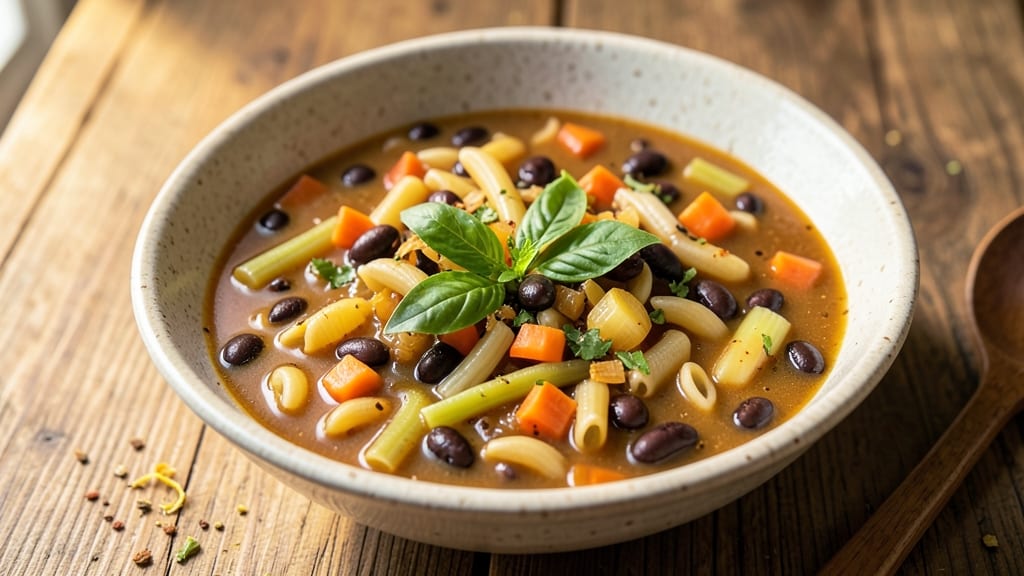
This black bean minestrone soup recipe transforms simple pantry staples into a hearty, vegetarian one-pot meal that simmers into rich, comforting perfection. The secret lies in building layers of flavor—sautéing aromatic vegetables, letting them caramelize before adding broth and beans—while keeping the process straightforward enough for weeknight dinners.
Every spoonful delivers tender beans, al dente pasta, and a medley of vegetables in a broth so flavorful, it tastes like it simmered all day.
The beauty of this recipe is its flexibility—swap in kale for spinach, add mushrooms for extra umami, or keep it classic with carrots and celery. The one-pot method means minimal cleanup, and the 20–30 minute simmer ensures dinner is ready when you are.
Whether you're feeding a family or meal prepping for the week, this soup delivers restaurant-quality depth without the fuss.
By the time it's done, you'll have a vegetarian powerhouse with creamy beans, hearty vegetables, and pasta that soaks up every bit of flavorful broth. Garnish with parmesan, fresh basil, or a sprinkle of chili flakes for a finish that elevates the dish even further.
This isn't just soup—it's a complete, satisfying meal that proves homemade can taste better than takeout.
Perfect for chilly evenings, potlucks, or as a freezer-friendly staple, this recipe adapts to your needs while keeping the core technique simple and foolproof. Let's get cooking—your taste buds (and leftovers) will thank you.
Ingredients for black bean minestrone soup
Pantry staples meet fresh veggies for this soul-warming, one-pot vegetarian masterpiece.
| Ingredient | Amount | Notes |
|---|---|---|
| Black Beans 🌱 | 1 ½ cups | Cooked or canned, drained and rinsed |
| Ditalini Pasta 🍝 | 1 ½ cups | Uncooked, small shells preferred |
| Vegetable Broth 💧 | 4 cups | Low-sodium preferred, homemade or store-bought |
| Carrots 🥕 | 1 ½ cups | Medium, diced into 1/4-inch pieces |
| Yellow Onion 🧅 | 1 whole | Medium, diced into 1/4-inch pieces |
| Celery Stalks 🥬 | 3 whole | Medium, diced into 1/4-inch pieces |
| Garlic Cloves 🧄 | 4 cloves | Fresh, minced or finely chopped |
| Canned Diced Tomatoes 🍅 | 1 cup | San Marzano preferred, with juices |
| Spinach Leaves 🌿 | 4 cups | Fresh, roughly chopped |
| Extra-Virgin Olive Oil 🫒 | 2 tbsp | For sautéing vegetables |
| Dried Oregano 🍃 | 1 tsp | Mexican preferred for depth |
| Ground Cumin 🌿 | ½ tsp | Toasted for richer flavor |
| Bay Leaves 🌿 | 2 whole | Fresh preferred, removed before serving |
| Salt 🧂 | 1 ½ tsp | Diamond Crystal kosher salt |
| Black Pepper 🌶️ | ½ tsp | Freshly cracked preferred |
| Fresh Basil Leaves 🌿 | ¼ cup | Chopped for garnish, optional |
| Parmesan Cheese 🧀 | ¼ cup | Freshly grated, for serving |
The vegetables are the backbone here—Trader Joe's or Whole Foods carry the freshest carrots and celery, but any crisp produce works. Look for carrots with bright orange color and firm texture—those with soft spots or green tops mean they've been sitting too long. The onion should be heavy for its size, and the celery should snap cleanly when bent. For the beans, canned Goya or Bush's are my go-tos—they're consistently tender and flavorful. If using dried beans, soak them overnight for perfect texture. The spinach should be vibrant green with no wilting, and the garlic cloves should be plump and firm—none of that shriveled stuff.
No fresh basil? Dried oregano at half the amount works in a pinch, though fresh is ideal. Swap spinach for kale or Swiss chard if you prefer—just chop it smaller since it's heartier. The tomatoes can be fire-roasted if you're feeling fancy, but San Marzano in a can is perfect for convenience. For extra umami, add mushrooms or a splash of soy sauce. The pasta? Ditalini or small shells hold up best, but any short pasta shape works. If you're short on time, use pre-cooked pasta—just add it later to avoid mushiness. The broth matters too—low-sodium or homemade ensures you control the salt level.
This soup tastes even better the next day—3-4 days in the fridge, 3 months frozen. Portion into containers for easy lunches, and freeze with a splash of water to prevent ice crystals. For serving, keep the Parmesan and basil separate so everyone can customize. The pasta gets softer with reheating, so add a splash of broth when warming. Garnish with extra basil and chili flakes for a restaurant-worthy finish.
Why You'll Love This Recipe
- One-Pot Wonder: I swear by this soup—just toss everything into one pot, stir, and let it simmer. No chopping small or measuring fuss; the ditalini pasta even cooks right in the broth. My lazy Sundays just got a whole lot easier.
- Earthy & Rich: The black beans add that deep, satisfying meatiness without any actual meat, while the caramelized onion (I let it go until it’s golden) brings this soup to life. Honestly, the first bite makes me want to skip dinner and just eat a bowl straight from the pot.
- Meal Prep MVP: This soup tastes better the next day—yes, really. I make a big batch on Sundays, and it’s my go-to for lunches all week. The flavors meld beautifully, and the ditalini holds up perfectly. Even my picky-eating teen asks for seconds.
- Budget-Friendly Powerhouse: A can of black beans, a bag of carrots, and some onion? This recipe costs me less than $5 for four servings. It’s the kind of soup that makes grocery bills feel a little lighter while still feeling like a proper meal. (Yes, even on a Tuesday night.)
Step-by-step instructions for black bean minestrone soup
This hearty soup comes together in one pot with minimal cleanup—perfect for busy weeknights.
Sauté the Vegetable Base
Heat the 2 tablespoons extra-virgin olive oil in a large Dutch oven or deep pot over medium heat. Add the 1 whole yellow onion, 3 whole celery stalks, and 1.5 cups carrots, all diced into ¼-inch pieces. Cook for 8-10 minutes, stirring occasionally, until the vegetables soften and the onion becomes translucent.
Here's the thing—don't rush this step. You want those vegetables to develop some color and lose their raw bite. Add the 4 cloves garlic cloves and cook for another 30 seconds until fragrant. The garlic should sizzle gently but not burn. If it starts to darken too quickly, lower the heat slightly and give it a few more seconds to infuse its flavor into the vegetables.
Build the Flavor Foundation
Stir in the 1 tsp dried oregano, 0.5 tsp ground cumin, 1.5 tsp salt, and 0.5 tsp black pepper. Let the spices toast for 30 seconds until you can smell their aromatic oils releasing. This quick toasting deepens their flavor and prevents a metallic taste in the finished soup.
Next, add the 1 cup canned diced tomatoes (with their juices) and the 4 cups vegetable broth. Bring the mixture to a gentle boil, then reduce the heat to medium-low and let it simmer for 10 minutes. This allows the flavors to meld and the vegetables to soften further. The soup should smell rich and inviting—like a warm hug in a bowl.
Add the Black Beans and Pasta
Add the 1.5 cups black beans (drained and rinsed) and the 2 whole bay leaves to the simmering broth. Stir gently to combine, then add the 1.5 cups uncooked ditalini pasta. The pasta will absorb some of the liquid as it cooks, so don't worry if it looks like too much at first—it's designed to finish cooking in the broth.
Simmer the soup for 12-15 minutes, stirring occasionally, until the pasta is al dente—just tender enough to bite through with a slight resistance. You'll know it's ready when the edges of the pasta start to curl slightly. If the soup gets too thick before the pasta is done, add ½ cup water to loosen it. The goal is a hearty, brothy consistency with plenty of liquid to coat each bite.
Finish with Spinach and Fresh Herbs
Remove the 2 whole bay leaves from the soup and discard them. Stir in the 4 cups spinach leaves, adding them in batches if needed. Cook for 2-3 minutes until the spinach wilts completely and disappears into the soup. This ensures you get all that vibrant, fresh flavor without any bitter stems.
Finally, taste and adjust the seasoning. You might need a little more salt or pepper to balance the flavors, especially if you used low-sodium broth. Remove the pot from heat and let the soup sit for 5 minutes to allow the flavors to settle. This resting period makes a noticeable difference in how the soup tastes.
Serve Warm with Garnishes
Ladle the soup into bowls and top each serving with ¼ cup freshly grated Parmesan cheese and 1 tablespoon chopped fresh basil leaves. The Parmesan adds a salty, umami richness, while the basil brightens the dish with its fresh, herbal notes. Serve immediately while the soup is steaming hot—this is when it tastes best, with all the flavors at their peak.
This minestrone is designed to be customizable. Feel free to add extras like diced zucchini, chopped kale, or even a sprinkle of red pepper flakes if you like a little heat. The beauty of this one-pot meal is that it's forgiving—even if you don't measure perfectly, the soup will still turn out delicious. Enjoy it with crusty bread or a simple side salad for a complete meal.
Pro Tips For Making Black Bean Minestrone Soup
- SOAK THE BEANS: I learned this the hard way—skipping the soak means your black beans stay stubbornly firm, no matter how long you simmer. Toss them in warm water for at least 30 minutes (or overnight if you’re patient), then drain before adding to the pot. They’ll soften faster and blend into the broth instead of sitting like pebbles.
- SAUTÉ THE ONIONS LOW: High heat turns onions into ash before they sweeten. Start your soup with onions on medium-low, stirring often, until they’re golden and translucent—about 8-10 minutes. This builds flavor without burning, and you’ll taste the difference when the broth comes together.
- ADD PASTA LATE: Ditalini needs just 8-10 minutes in the soup to cook perfectly. If you add it too early, it turns mushy while the beans finish. Drop it in during the last 10 minutes of simmering, or even straight into bowls of soup when serving—it’s a game-changer for texture.
- UPGRADE WITH AROMATICS: Skip the basic onion-carrot combo and throw in a crushed garlic clove, a bay leaf, and a pinch of red pepper flakes while sautéing. These small additions layer depth without extra effort—your grandmother’s trick for soup that feels like a hug.
Pro cooking tips for this dish
Vegetable Sauté Mastery
Don’t skip the 8-10 minute sauté of your onion, celery, and carrots—this is where the magic happens. Use medium heat to let the vegetables soften and develop a golden hue without burning. I like to add a pinch of salt during this step to draw out moisture and intensify flavor.
The goal is to create a flavorful base that will infuse the entire soup. 🌱
Spice Toasting Trick
Toast your oregano and cumin for just 30 seconds after adding them to the pot. This releases their essential oils and prevents a bitter, metallic taste in the finished soup. I’ve found that pre-toasting spices enhances their aromatic depth significantly—it’s a small step that makes a big difference. 💫
Pasta Timing Secrets
Add your uncooked pasta directly to the simmering broth with the beans. This ensures the pasta absorbs all the rich flavors while cooking. If your soup gets too thick before the pasta is done, simply add ½ cup water to maintain that perfect brothy consistency.
I always check for al dente by tasting—it should have a slight bite to it. ⏰
Spinach Integration
Add your spinach in batches during the final 2-3 minutes of cooking. This prevents overcrowding and ensures it wilts completely without turning mushy. The spinach should melt into the soup, adding vibrant color and freshness. I like to stir gently to distribute it evenly throughout the pot. 🌿
Resting for Balance
Let your soup rest for 5 minutes off the heat before serving. This allows flavors to meld and the seasoning to settle. I’ve noticed that this resting period makes the soup taste more cohesive and well-rounded. Don’t skip it—it’s a game-changer for depth of flavor. 💡
Broth Boosters
If your broth tastes flat, try adding a ½ teaspoon soy sauce or a splash of balsamic vinegar during the simmer. These ingredients add umami depth without overpowering the dish. I keep a small bottle of balsamic on hand specifically for this purpose—it’s a secret weapon for extra richness. 🍷
Nutrition facts
Frequently asked questions
Can I make this minestrone soup without pasta?
For a lower-carb version, simply omit the pasta and add more vegetables like zucchini, kale, or mushrooms. The soup will still be hearty and flavorful—just adjust cooking times for any added veggies (about 5-7 minutes for mushrooms or zucchini). You could also use cooked quinoa or brown rice for a grain alternative.
How do I make this soup vegan?
Swap the Parmesan for nutritional yeast or vegan cheese, and use vegetable broth instead of chicken broth. For extra richness, stir in 1 tablespoon soy sauce or ½ teaspoon miso paste during simmering. The umami boost will keep the soup satisfying without dairy or meat.
Why did my soup turn out too thick?
This usually happens when the pasta absorbs too much liquid. To fix it, stir in ½ cup water or broth and simmer for another 2-3 minutes. For next time, add the pasta slightly later in the cooking process or use a smaller pasta shape like orzo that cooks faster.
Can I prepare this soup ahead of time?
Yes! This soup actually tastes better the next day. Store in an airtight container in the fridge for up to 4 days or freeze for 3 months. When reheating, add a splash of water or broth to restore the perfect consistency—microwaving in 1-minute intervals prevents soggy pasta.
What's the best way to reheat leftovers?
For best results, reheat on the stovetop over medium-low heat with the lid slightly ajar. Stir frequently to prevent sticking, and add 2-3 tablespoons water or broth if it gets too thick. If using the microwave, cover with a damp paper towel and heat in 1-minute bursts, stirring between each.