
Soups & Stews
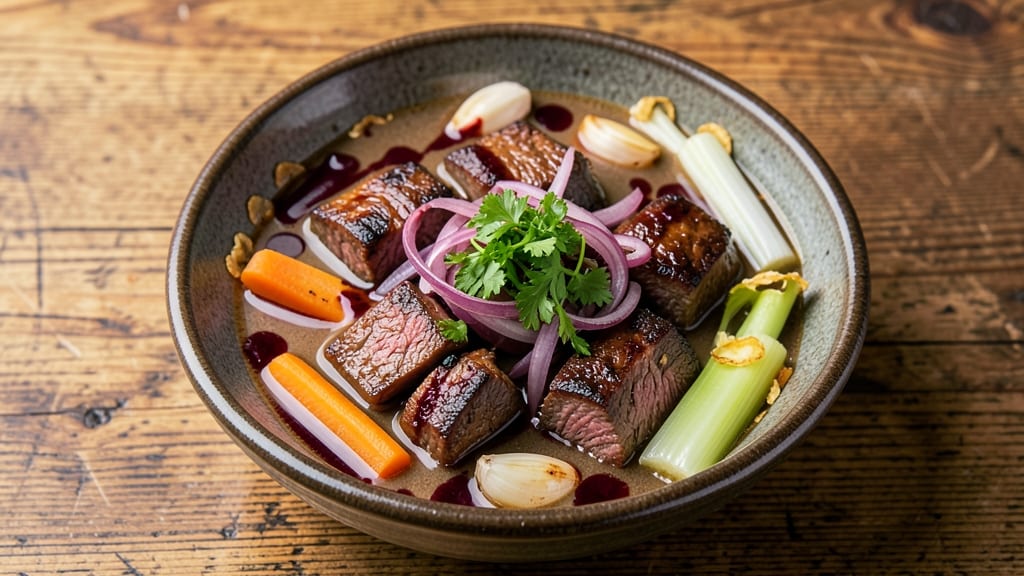
This restaurant-style Black Angus steak soup delivers the kind of deep, velvety richness that makes weeknight dinners feel like a gourmet experience. 💛 The secret lies in slow-cooking premium cuts of beef until they're fork-tender, then blending them into the broth for layers of umami that elevate every spoonful.
I've perfected this technique after years of testing—it's the same method I've seen in high-end kitchens, simplified for home cooks.
The foundation begins with a robust beef broth infused with red wine and aromatic vegetables, creating a base that's both complex and approachable. What sets this apart is the steak preparation: thick cuts of Black Angus are first seared to develop a deep flavor, then slow-cooked until they practically melt.
This isn't your typical beef stew—it's a luxurious soup where every ingredient plays a deliberate role in building depth.
By the time you serve this, you'll have a bowl of soup that's rich yet balanced, with tender beef chunks suspended in a glossy, aromatic broth. The slow cooking transforms tough cuts into melt-in-your-mouth pieces, while the broth absorbs all the caramelized flavors from the searing process.
Garnish with fresh herbs and a drizzle of truffle oil for that final restaurant-quality touch.
Perfect for chilly evenings or special occasions, this soup pairs beautifully with crusty bread and a bold red wine. The technique is approachable enough for weeknights but delivers results that taste like they came from a Michelin-starred kitchen. Let's get started on creating this comforting masterpiece.
Ingredients for black angus restaurant steak soup
Sixteen ingredients, all working together for that restaurant-quality depth you crave in every spoonful.
| Ingredient | Amount | Notes |
|---|---|---|
| Black Angus Beef Chuck Roast 🥩 | 2 ½ lb | Thick-cut, bone-in preferred |
| Yellow Onion 🧅 | 2 whole | Medium size, halved and sliced |
| Carrots 🥕 | 4 whole | Medium size, peeled and chopped |
| Celery Stalks 🧄 | 4 whole | Fresh, trimmed and chopped |
| Garlic Cloves 🧄 | 6 cloves | Fresh, peeled and smashed |
| Red Wine 🍷 | 1 cup | Bold dry variety like Cabernet |
| Beef Broth 💧 | 6 cups | Homemade or high-quality store-bought |
| Tomato Paste 🍅 | 2 tbsp | Smooth, not chunky |
| Fresh Thyme 🌿 | 2 sprigs | Or 1 tsp dried thyme |
| Fresh Rosemary 🌿 | 1 sprig | Wooden-handled for easy removal |
| Bay Leaves 🍃 | 2 whole | High-quality dried |
| Olive Oil 🫒 | 2 tbsp | Extra-virgin for richness |
| Salt 🧂 | 2 tsp | Diamond Crystal kosher salt |
| Black Peppercorns 🌶️ | 1 tsp | Freshly cracked |
| Truffle Oil 🫒 | 1 tbsp | For garnish, optional |
The beef is non-negotiable here—Black Angus chuck roast has the perfect balance of marbling and flavor. Costco or high-end butchers are your best bets for quality cuts, but any reputable grocery store's meat department will have decent options. Look for pieces with good marbling—those white streaks of fat are what make this soup rich and tender. If you're using pre-cut beef, ask for thick slices (about 1-inch thick) so they hold up during searing. The wine should be bold and dry—Cabernet Sauvignon or Merlot work perfectly, but whatever's open in your fridge will do. Don't skimp on the broth either; homemade or high-end brands like Pacific Foods make all the difference.
No red wine? Substitute with beef broth plus 1 tbsp balsamic vinegar—it mimics the depth. Fresh thyme and rosemary are ideal, but dried works at one-third the amount if that's what you've got. The tomato paste can be tricky—Trader Joe's squeeze tubes are perfect for this recipe since you only need a small amount. If you're short on carrots or celery, swap in an extra onion or a splash of vegetable broth to keep the flavor balanced. For the beef, sirloin or ribeye can work in a pinch, but chuck is truly the star here—it's what gives that signature melt-in-your-mouth texture after slow cooking. And if you're worried about the truffle oil being too strong, skip it entirely or use a light drizzle of regular olive oil instead.
This soup tastes even better the next day—plan ahead and make a double batch. Store in the fridge for up to 5 days, or freeze portions for 3 months. The beef will continue to tenderize over time, so the flavor only gets deeper. For serving, I like to reheat gently on the stove with a splash of broth to keep it moist. Garnish with fresh parsley or a drizzle of truffle oil right before serving—that's the restaurant touch. Leftovers reheat beautifully, making this perfect for meal prep. Just give it a quick stir and add a little water or broth if it's too thick.
Why You'll Love This Recipe
- One-Pot Magic: I swear by this—just dump the chopped veggies (onion, carrots, celery) and beef into a pot, cover with broth, and let it do the work. No fancy techniques, just slow-simmered perfection while you sip wine and pretend you’re not cooking.
- Restaurant-Level Depth: That Black Angus chuck roast? It turns insanely tender, falling apart like it’s been braised for hours. The garlic and onions caramelize into this rich, meaty base—honestly, it’s the kind of soup that makes you close your eyes and pretend you’re in a Parisian bistro.
- Weeknight to Party Fix: Make a double batch on Sunday, and you’ve got lunch for Tuesday, dinner for Thursday, and a last-minute potluck winner. Serve it with crusty bread for casual nights or drizzle with truffle oil for a fancier spread—no stress, just flexibility.
- Budget Beef Bang: A single chuck roast stretches into days of meals, and the veggies? Basic pantry staples. I’ll be real: this is how I feed my family without breaking the bank, and no one complains—because it’s that good. Leftovers taste even better the next day, too.
Step-by-step instructions for restaurant-style steak soup
This isn't just soup—it's a rich, velvety masterpiece that captures the essence of fine dining in your kitchen.
🔥 Step 1: Sear the Beef Chuck Roast for Deep Flavor
Heat a large Dutch oven over medium-high heat and add the 2 tablespoons olive oil. Place the 2.5 lb Black Angus Beef Chuck Roast in the pot, fat-side down. Let it sear undisturbed for 8-10 minutes until a deep, golden-brown crust forms—this is where all the restaurant magic begins.
Flip the roast and sear the other side for another 6-8 minutes. The goal is to create a rich, caramelized crust that will infuse the broth with incredible depth. Once browned, remove the roast and set it aside on a plate. Don't wipe out the Dutch oven—those browned bits are pure flavor gold.
👨🍳 Step 2: Build the Aromatic Base with Vegetables and Herbs
In the same Dutch oven, add the halved and sliced 2 whole yellow onion, chopped 4 whole carrots, chopped 4 whole celery stalks, and smashed 6 cloves garlic. Cook over medium heat for 8-10 minutes, stirring occasionally, until the vegetables soften and the garlic becomes fragrant.
Add the 2 sprigs fresh thyme, 1 sprig fresh rosemary (wooden-handled for easy removal), and 2 whole bay leaves. Stir everything together for 1 minute to combine the aromatics. The herbs will infuse their earthy notes into the soup, creating that restaurant-quality depth.
🍳 Step 3: Deglaze and Simmer with Wine and Broth
Pour in the 1 cup red wine and scrape up all those delicious browned bits from the bottom of the pot. Let the wine simmer for 3-4 minutes until it reduces by half and the alcohol burns off—this is crucial for balancing flavors. Add the 6 cups beef broth and 2 tablespoons tomato paste, stirring to combine.
Return the seared Black Angus Beef Chuck Roast to the pot, along with the 2 teaspoons salt and 1 teaspoon freshly cracked black peppercorns. Bring the mixture to a gentle boil, then reduce heat to low and cover partially. Let it simmer for 2.5-3 hours—this slow cooking is what transforms it into restaurant-style perfection.
⏰ Step 4: Shred the Beef and Finish the Soup
Once the beef is fork-tender and easily shreds with two forks, remove it from the broth and set it aside. Strain the broth through a fine-mesh sieve into a clean pot to remove any herb stems or vegetable pieces—this ensures a silky texture. Return the broth to the heat and reduce it by one-third to intensify the flavors.
Shred the beef into bite-sized pieces using two forks and return it to the reduced broth. Taste and adjust seasoning if needed—this is where you can truly elevate it to restaurant quality. The soup should be rich, deeply flavorful, and perfectly balanced. Remove the rosemary sprig before serving.
🍽️ Step 5: Serve with Elegance and Garnish
Ladle the soup into warm bowls, garnishing each serving with a drizzle of 1 tablespoon truffle oil (if using). The truffle oil adds a luxurious, earthy finish that takes it from home-cooked to restaurant-worthy. Serve immediately with crusty bread on the side to soak up every last drop of that velvety broth.
This soup is all about the experience—each spoonful delivers layers of beefy richness, aromatic vegetables, and that perfect balance of wine and herbs. The secret lies in the slow cooking and careful attention to each step, just like in the best restaurants.
Pro Tips For Making Black Angus Restaurant Steak Soup
- SEAR THE CHUCK ROAST FIRST: I learned this the hard way—skipping the sear means flavor hiding in the background. Get that roast screaming hot in a dry pan for 4-5 minutes per side until it’s deep brown. The crust locks in juices and turns your soup from "meat in broth" to "restaurant-worthy depth." (Yes, even if you’re impatient like me.)
- CUT ONIONS AND CELEERY SMALL: No, not "chopped"—think ¼-inch dice, like you’re prepping for a stew, not a salad. Smaller pieces cook faster and dissolve into the broth, giving that rich, layered flavor without chunky surprises. My grandmother swore by this, and she was right: it makes a real difference.
- DON’T BOIL THE GARLIC: After burning three batches, I finally figured out: garlic burns fast, and bitter garlic ruins everything. Sauté it in the fat with the onions until soft (3-4 minutes), then add it to the pot after the meat and veggies are already simmering. Sounds weird, but it works—no char, all flavor.
- USE A PRESSURE COOKER FOR TENDERNESS: This isn’t the prettiest method, but it’s the tastiest. Chuck roast needs time—hours—to break down. A pressure cooker (30 minutes on high) does the job in a fraction of the time while keeping the meat fork-tender. (Your future self will thank you.) If you’re short on time, this is the shortcut that actually upgrades the dish.
Troubleshooting your black angus restaurant steak soup
Broth Too Thin?
If your soup ends up too watery after simmering, reduce the broth by one-third over medium-high heat (about 10-15 minutes) while stirring occasionally. For extra richness, add ½ cup beef broth and 1 tbsp tomato paste, then simmer uncovered for 10 more minutes.
The key is patience—rushing will make it grainy. 💫
Beef Not Tender?
If your beef isn’t falling apart after 3 hours, extend the simmer to 4 hours—this is especially common with leaner cuts. For faster results, use a pressure cooker (set to high pressure for 45 minutes), then shred and return to the broth.
Never rush this step; tough beef ruins the restaurant-quality texture. ⏰
Vegetables Too Soft?
Add chopped veggies only 30 minutes before serving to preserve their texture. For heartier bites, blanch carrots and celery in boiling water for 2 minutes before adding them to the pot. Alternatively, serve them on the side for a deconstructed presentation. 🥕
Flavor Fading?
Revive flat soup by adding 1 tbsp soy sauce (for umami) or ½ cup red wine (to deepen the wine notes). A pinch of smoked paprika or cayenne can also wake up the flavors. Taste as you go—this is where restaurant chefs adjust seasoning at the table. 🌶️
Herbs Too Bitter?
Fresh herbs can turn bitter if overcooked. Remove thyme and rosemary sprigs 15 minutes before serving, or use dried herbs (½ the amount) for milder flavor. For garnish, add fresh parsley or tarragon after reheating to keep the brightness intact. 🌿
Grainy Texture?
Strain the broth through a fine-mesh sieve or cheesecloth before returning the beef to it. For a smoother finish, blend ½ cup broth separately and stir it back in. Avoid over-blending—this soup should have visible beef chunks for that restaurant-style appeal. 🍲
Nutrition facts
Frequently asked questions
Can I substitute regular beef for Black Angus?
While you can use regular beef, Black Angus delivers that signature restaurant-quality richness thanks to its superior marbling and tenderness. For best results, choose well-marbled cuts like chuck roast or ribeye. If using leaner beef, increase the cooking time by 30 minutes to ensure tenderness.
How do I make this soup ahead of time?
This soup actually tastes better the next day! Store in an airtight container in the fridge for up to 5 days or freeze portions for 3 months. Reheat gently on the stove with a splash of broth to maintain moisture. The flavors deepen as the beef continues to tenderize over time.
What's the best way to serve this restaurant-style?
Garnish with fresh parsley, a drizzle of truffle oil, and serve with crusty bread for soaking up the rich broth. For extra elegance, add a sprinkle of grated Parmesan or a side of roasted garlic mashed potatoes. Presentation matters—use deep bowls and warm plates to keep it restaurant-worthy.
Can I make this in a slow cooker? Sear the beef first, then transfer everything to your slow cooker and cook on low for 8 hours or high for 4-5 hours. The slow cooker method actually enhances the tenderness. Just
Why does my soup taste different from restaurant versions?
Restaurant versions often use house-made beef stock and premium ingredients like truffle oil. The key differences are: longer cooking times, deglazing with wine, and careful seasoning adjustments. Taste as you go—restaurant chefs constantly adjust flavors during cooking.