
Soups & Stews
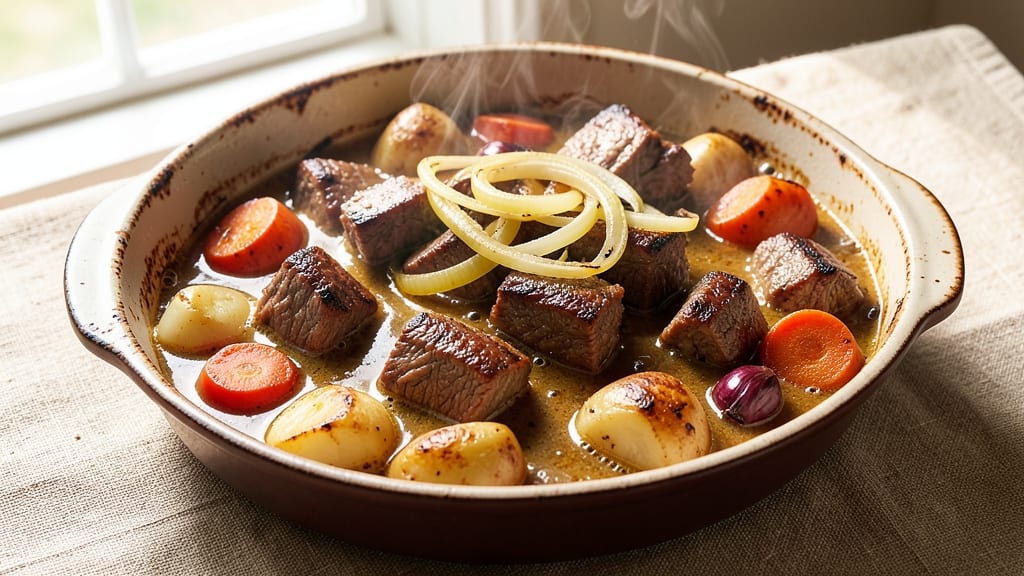
This beef stew recipe using Lipton Onion Soup Mix transforms simple ingredients into a rich, hearty meal that smells like home. The secret lies in proper browning and slow simmering, where that familiar onion soup flavor becomes the foundation for deep, savory layers.
I first discovered this technique during a particularly cold winter when I needed comfort food fast—this version delivers restaurant-quality results in one pot.
What makes this recipe work is the balance between convenience and homemade quality. The onion soup mix provides instant depth, but the real magic happens when you brown the beef in batches and deglaze the pan to capture all those flavorful bits.
This technique creates a rich, velvety broth that coats every piece of tender beef and vegetable. The result is a stew that tastes like it simmered all day, even when you're working with a busy schedule.
By the time you're done, you'll have a pot of beef stew with melt-in-your-mouth beef, perfectly softened vegetables, and a sauce so rich it practically disappears on every spoonful. The onion soup mix adds that comforting, savory backbone without overpowering the natural flavors of the beef and vegetables.
This is the kind of meal that disappears quickly and leaves everyone asking for seconds.
Serve with crusty bread for dipping or alongside roasted root vegetables for a complete dinner. The beauty of this recipe is its versatility—it works equally well as a weeknight dinner or a Sunday family meal. Let's create this comforting classic that brings warmth to any table.
Ingredients for beef stew recipe using lipton onion soup mix
Simple ingredients that pack a flavor punch—this stew smells like home in minutes.
| Ingredient | Amount | Notes |
|---|---|---|
| Chuck Roast 🥩 | 2 lb | Cut into 1.5-inch cubes |
| Lipton Onion Soup Mix 🧅 | 2 tbsp | Granulated or powdered |
| Carrots 🥕 | 4 medium | Cut into 1-inch chunks |
| Russet Potatoes 🥔 | 3 medium | Cut into 1-inch cubes |
| Yellow Onion 🧅 | 1 whole | Diced, medium size |
| Garlic Cloves 🧄 | 4 cloves | Minced, fresh preferred |
| Beef Broth 💧 | 3 cups | Low-sodium preferred |
| Tomato Paste 🍅 | 2 tbsp | Squeeze tube or can |
| Olive Oil 🫒 | 2 tbsp | For browning beef |
| Salt 🧂 | 1 tsp | Kosher or sea salt |
| Black Pepper 🌶️ | ½ tsp | Freshly ground preferred |
| Bay Leaves 🍃 | 2 whole | For aromatic depth |
| Thyme Leaves 🌿 | 1 tsp | Fresh or dried |
The chuck roast is your secret weapon here. Look for good marbling at the grocery store—it means more flavor and tenderness. I always grab mine from Costco when I'm making a big batch, but the regular supermarket stuff works fine for a weeknight. Cut it into 1.5-inch cubes so it cooks evenly. The onion soup mix is the star—Lipton's granulated version dissolves best, but the powdered kind works too. Just make sure it's fresh; old packets lose their punch. The carrots and potatoes should be firm and free of soft spots—store-brand or organic both work, but avoid anything that looks wilted.
No chuck roast? Brisket or stew beef works just as well—just ask the butcher to cube it for you. Short on beef broth? Water plus 1 extra tbsp of onion soup mix gets you close. Fresh thyme is ideal, but dried at one-third the amount is fine in a pinch. The tomato paste can be from a squeeze tube (Trader Joe's has great ones) or a can—just measure it out carefully. For extra richness, add a splash of red wine when you deglaze the pan. The bay leaves add depth, but don't skip them—they're what makes this taste like grandma's version.
This stew tastes even better the next day, so make extra if you can. Keeps for 4-5 days in the fridge and freezes beautifully for 3 months. I portion mine into containers so lunches are sorted for the week. For reheating, start with a splash of water or broth—it helps revive the sauce. The potatoes will soften more the second time around, which is actually perfect for leftovers. Store the broth separately if you want to use it for other recipes later.
Why You'll Love This Recipe
- Pantry Magic: I swear by this trick—just toss in that onion soup mix packet, and boom, depth of flavor without measuring spices. The chuck roast melts into tender shreds while the mix dissolves into a rich, savory broth that needs zero extra work.
- Crowd-Pleaser Simplicity: Between us, this is the dish I make when my mom-in-law visits or the soccer team shows up. The potatoes soak up the broth perfectly, and even picky eaters go back for seconds—no fancy twists required.
- Leftovers That Don’t Suck: Honestly, I double the batch because the second day is better. The flavors meld even more, and reheating it with a splash of water keeps it from drying out. My lunchbox gets packed for days.
- Budget Beef Boost: A chuck roast on sale? Yes, please. Stretch it with potatoes and carrots, and the onion soup mix stretches the flavor further. It’s my go-to for feeding four on $15—no guilt, all satisfaction.
Step-by-step instructions for beef stew using Lipton onion soup mix
This hearty stew comes together in one pot with minimal effort but maximum flavor.
Brown the Chuck Roast for Deep Flavor
Heat the 2 tablespoons olive oil in a large, heavy pot over medium-high heat. Add the 2 lb chuck roast cut into 1.5-inch cubes, spreading them out in a single layer. Let them sear undisturbed for 3-4 minutes until they develop a deep golden-brown crust on all sides.
This browning step is crucial—it creates the Maillard reaction that builds rich, caramelized flavor. Don't rush it; you'll know it's ready when the meat releases easily from the pot. Once browned, transfer the beef to a plate and set aside.
Sauté Vegetables and Build the Base
In the same pot, add the 1 whole yellow onion (diced) and cook for 3-4 minutes until softened. Stir in the 4 cloves garlic cloves (minced) and cook for 30 seconds until fragrant. Add the 4 medium carrots (cut into 1-inch chunks) and 3 medium russet potatoes (cut into 1-inch cubes), tossing to coat in the rendered beef fat.
Sauté for 2-3 minutes until the vegetables begin to soften slightly. Sprinkle in the 2 tablespoons Lipton onion soup mix, 2 tablespoons tomato paste, 1 teaspoon salt, and 0.5 teaspoon black pepper. Stir well to combine, letting the spices toast for 1 minute—this deepens their flavor before adding liquid.
Simmer the Stew Until Tender
Pour in the 3 cups beef broth and bring the mixture to a gentle boil. Return the browned beef to the pot, along with the 2 whole bay leaves and 1 teaspoon thyme leaves. Reduce the heat to low, cover, and let it simmer for 2.5 hours, stirring occasionally.
Here's the thing—low and slow is key. The stew should bubble gently, not vigorously. Check occasionally to ensure the liquid doesn't reduce too much; if it gets too thin, add a splash of water. The meat is done when it's fork-tender and easily pulls apart with minimal resistance.
Adjust Seasoning and Serve Warm
Once the beef is tender, taste the stew and adjust seasoning if needed. Remove the bay leaves and discard them—they've served their purpose. If the stew is too thick, stir in a splash of water or broth to reach your preferred consistency.
Ladle the stew into bowls and serve immediately with crusty bread or over mashed potatoes. The flavors will only get better as it sits, but the texture is best enjoyed fresh from the pot. This one-pot wonder delivers rich, comforting flavors with minimal cleanup—perfect for busy weeknights or cozy weekends.
Pro Tips For Making Beef Stew Recipe Using Lipton Onion Soup Mix
- Brown the Chuck First: Don’t just toss in raw chuck roast—this isn’t a slow-cooker shortcut. Sear it in batches over medium-high heat until deep brown on all sides (about 3-4 minutes per side). The Maillard reaction kicks in, turning that bland roast into the flavor base for your stew. I learned this the hard way when my first batch tasted like boiled beef instead of rich, savory goodness.
- Cut Potatoes Last: Add your russet potatoes when the beef has 30-45 minutes of cooking left. They’ll absorb the broth and soften perfectly without turning to mush or releasing too much starch too soon. I used to add them early, and my stew would always end up gluey—now I wait, and the texture is just right.
- Bloom the Onion Mix: Sprinkle the Lipton onion soup mix over the seared beef and let it sit for 30 seconds before adding liquid. This lets the spices wake up and release their aromas, making the broth smell like it’s been simmering for hours. I was skeptical until I tried it—I now add it dry first, then deglaze with beef broth.
- Deglaze Aggressively: After browning the meat, don’t just splash in water. Use 1-2 cups of beef broth (or even a splash of red wine if you’re feeling fancy) and scrape every last bit of browned bits from the pot with a wooden spoon. Those bits are pure flavor—skip this, and your stew tastes like it’s missing something. (Yes, even if you’re impatient like me.)
Best sauces and condiments for this dish
Classic Horseradish Cream
This tangy, creamy sauce adds a bold kick that cuts through the richness of the stew beautifully. I make mine with ½ cup sour cream, 2 tablespoons prepared horseradish (like Gourmet Garden), 1 tablespoon fresh lemon juice, and a pinch of salt.
Mix everything together and chill for 30 minutes before serving. The horseradish brightens the onion soup flavors while adding a refreshing contrast. 💛
Garlic Yogurt Sauce
For a lighter option, blend ½ cup Greek yogurt, 2 cloves roasted garlic, 1 tablespoon fresh dill, 1 teaspoon lemon zest, and a splash of beef broth to thin.
This sauce adds a cooling, herby element that balances the hearty stew. I love drizzling it over individual portions right before serving—it keeps the dish feeling fresh and vibrant.
Red Wine Reduction
If you want to elevate this stew to restaurant-quality, a quick red wine reduction takes it to the next level. Simmer 1 cup dry red wine (like Cabernet Sauvignon) with 1 tablespoon tomato paste and 1 teaspoon sugar until reduced by half.
Strain and drizzle over the stew just before serving. The acidity and depth of the wine complement the onion soup mix perfectly. 🍷
Crispy Onion Topping
For a textural contrast, try topping the stew with crispy fried onions. Thinly slice 1 large yellow onion and fry in 2 tablespoons olive oil over medium heat for 8-10 minutes until golden and crisp.
Sprinkle them over the stew right before serving—they add a delightful crunch that makes every bite exciting. Store-bought fried onions work in a pinch, but homemade taste so much better.
Mustard-Dill Sauce
This sauce is a game-changer for adding brightness. Whisk together 3 tablespoons Dijon mustard, ¼ cup mayonnaise, 1 tablespoon fresh dill, 1 teaspoon apple cider vinegar, and a pinch of salt.
The mustard enhances the savory notes of the onion soup mix while the dill adds a fresh herbal note. Serve it on the side for dipping crusty bread or spooning over the stew. ✨
Cheesy Mashed Potato Mix-In
For a comforting twist, stir 1 cup mashed potatoes (homemade or instant) into the stew during the last 30 minutes of cooking. Add ¼ cup shredded cheddar cheese and 1 tablespoon butter to create a creamy, cheesy element that feels like a hug in a bowl.
This variation is perfect for colder days when you crave extra warmth and richness. 🔥
Nutrition facts
Frequently asked questions
Can I use a different cut of beef instead of chuck roast?
Yes! Brisket or stew beef work beautifully—they're both well-marbled cuts perfect for slow cooking. Ask your butcher to cube it for you to save time. Round steak is leaner and will need extra time to tenderize, but it can work if you add 1 extra hour to the simmering time. The key is choosing a cut with good marbling for flavor.
What if I don't have Lipton Onion Soup Mix?
No problem! Make your own quick substitute by mixing 1 tbsp onion powder, ½ tsp garlic powder, ½ tsp dried parsley, and ¼ tsp celery salt. For extra depth, add 1 tsp beef bouillon powder. This mimics the savory, umami profile of the soup mix while keeping the recipe balanced. The onion soup mix is just a shortcut for that classic flavor.
Can I make this stew in a slow cooker?
Brown the beef first in a skillet, then transfer everything to your slow cooker. Use low heat for 7-8 hours or high heat for 4-5 hours. The slow cooker's gentle heat works perfectly for tenderizing the beef. Just check the liquid level halfway through—add a splash of broth if needed to prevent drying out. The flavors will meld beautifully!
Why does my stew taste watery even after simmering?
This usually happens when the liquid wasn't reduced enough during cooking. For a richer texture, let the stew simmer uncovered for the last 10-15 minutes to thicken naturally. If it's still too thin, remove the lid and cook on medium heat for another 5-10 minutes. You can also mash some of the potatoes to thicken the broth. The onion soup mix helps, but proper reduction is key for that classic stew consistency.
Can I add frozen vegetables to this stew?
Yes, but add them in the last 30 minutes of cooking. Frozen veggies like peas or corn will cook quickly and maintain their texture. For heartier veggies like carrots or potatoes, stick to fresh—frozen versions tend to get mushy. If using frozen, don't thaw them first; just add them directly to the simmering stew.