
Soups & Stews
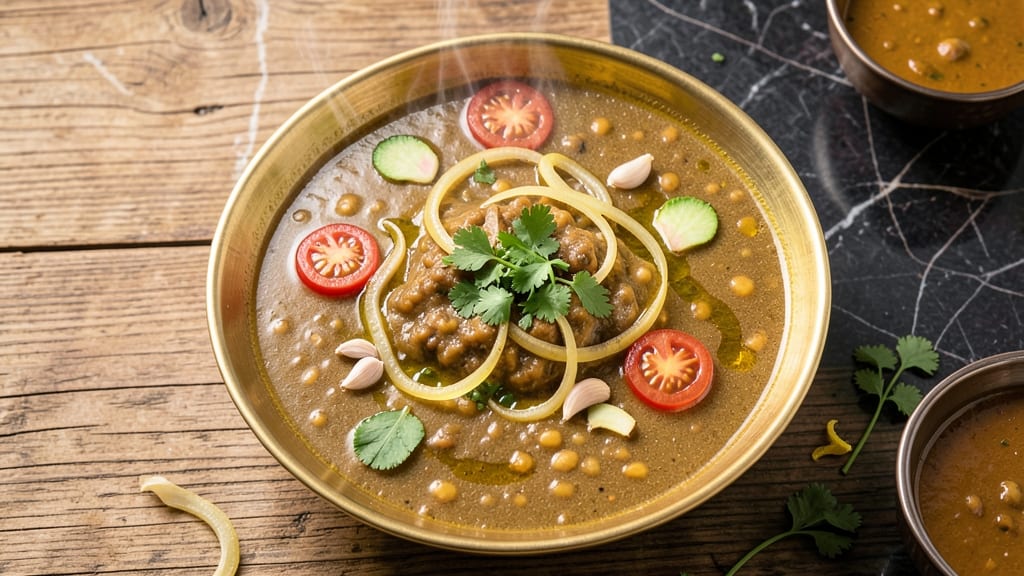
This Bengali soup recipe brings the soul-warming flavors of West Bengal to your kitchen, where fragrant mustard oil meets tender lentils in a symphony of spices. 🌟 The key lies in slow-cooked lentils and aromatic mustard oil, which infuse every spoonful with rich, earthy depth—perfect for chilly evenings or when you crave comfort food that feels like home.
The beauty of this dish is its adaptability—traditionally made with fish (Macher Jhol), it also shines as a vegetarian or vegan lentil soup. The mustard oil, lightly tempered with cumin and red chili, adds a signature smoky aroma, while onions, ginger, and garlic form the flavorful base.
The lentils soften into a creamy, satisfying texture that pairs beautifully with steamed rice or crispy luchi (Bengali fried bread).
What makes this recipe special is the balance of flavors: the heat of mustard oil, the earthiness of lentils, and the subtle sweetness of tomatoes and spinach. Each ingredient plays a role in creating a harmonious broth that’s both comforting and complex.
The slow simmering allows spices to meld, resulting in a soup that’s deeply flavorful without being overpowering.
Whether you're serving it as a main dish or a side, this Bengali soup delivers warmth and tradition in every bowl. The technique is simple but rewarding—perfect for those who appreciate the art of slow-cooked, spice-infused comfort food. Let’s get cooking!
Ingredients for bengali soup
Fragrant mustard oil and earthy lentils create the heart of this Bengali-inspired dish.
| Ingredient | Amount | Notes |
|---|---|---|
| Yellow Lentils (Masoor Dal) 🌾 | 1 ½ cups | Rinsed before cooking |
| Mustard Oil 🫒 | ½ cup | Lightly tempered, not burnt |
| Yellow Onions 🧅 | 1 whole | Finely chopped, medium size |
| Fresh Ginger 🧄 | 2 tbsp | Grated finely, fresh preferred |
| Garlic Cloves 🧄 | 6 cloves | Minced, fresh preferred |
| Medium Tomatoes 🍅 | 2 whole | Chopped, ripe preferred |
| Fresh Spinach 🌿 | 4 cups | Chopped, stems removed |
| Ground Cumin Seeds 🌿 | 1 tbsp | Toasted lightly for aroma |
| Red Chili Powder 🌶️ | 1 tsp | Adjust for heat preference |
| Turmeric Powder 🌿 | ½ tsp | Freshly ground preferred |
| Ground Black Pepper 🌶️ | ½ tsp | Freshly ground for best flavor |
| Garam Masala 🌶️ | ½ tsp | Store-bought or homemade blend |
| Salt 🧂 | 1 tsp | Adjust to taste |
| Water 💧 | 6 cups | Filtered preferred for clarity |
Mustard oil is the soul of this soup—look for pure, cold-pressed varieties at Indian grocery stores like Patel Brothers or Apna Bazaar. If you can't find it, vegetable oil works in a pinch, though it lacks that signature smoky aroma. The lentils should be yellow or red varieties—they hold their shape better than brown or green. For the onions, yellow or red onions work best, but white will do if that's what you have. Fresh ginger and garlic are non-negotiable here—frozen works in a pinch, but fresh gives that bright, zesty punch that makes all the difference.
No mustard oil? Vegetable oil plus 1/2 tsp mustard seeds mimics the flavor somewhat. The tomatoes can be canned San Marzano if fresh aren't available, but they won't have the same sweetness. For spinach, frozen chopped works perfectly—just thaw and drain well. The spices are flexible: swap garam masala for curry powder at half the amount if needed. For heat, cayenne powder works instead of red chili powder. The key is balancing the spices—start with less and adjust as you go. If you're making this ahead, skip the spinach until reheating to keep it vibrant.
This soup tastes even better the next day as flavors meld—reheat gently on low heat with a splash of water. Keeps for 4-5 days in the fridge or 3 months in the freezer. For freezing, cool completely first and store in airtight containers. The mustard oil will separate—just stir it in when reheating. Pairs perfectly with steamed basmati rice or warm naan. Make a double batch—it disappears fast, especially when you're craving that comforting, spiced warmth.
Why You'll Love This Recipe
- One-Pot Magic: I swear by this—just toss the lentils, onions, and spices into one pot, let it simmer, and boom, you’ve got a meal. No chopping boards full of scraps, no fussing with multiple pans. The mustard oil does the heavy lifting while you sip tea and pretend you’re in a Kolkata kitchen.
- Ginger-Garlic Punch: That first bite? Chef’s kiss. The raw garlic and ginger sizzling in mustard oil—it’s like a warm hug for your taste buds. The lentils soak up all the aromatic goodness, turning into something rich and satisfying that tastes like home, even if you’re making it alone on a Tuesday.
- Leftover Hero: Between us, this soup only gets better the next day. The flavors meld overnight, and reheating it? Zero effort. I make a big batch on Sundays, and suddenly I’ve got lunch and dinner covered for the week—no takeout menus needed.
- Pocketbook Friendly: A bag of yellow lentils and a bottle of mustard oil will feed my family for days. Honestly, it’s the kind of recipe that makes me feel like I’m winning at life—nutritious, filling, and costing less than a fancy coffee. Plus, the leftovers stretch into snacks, sandwiches, or even a quick dal fry.
Step-by-step instructions for Bengali lentil soup
Here's how to create this aromatic, spice-infused soup with perfect lentil texture and balanced flavors.
🔥 Step 1: Temper the Mustard Oil
Heat the 0.5 cup mustard oil in a heavy-bottomed pot over low heat. I use low heat here because mustard oil has a low smoke point and burns easily. Add the 1 tablespoon ground cumin seeds and let them sizzle for 30 seconds until they release their deep, earthy aroma.
The moment the cumin seeds begin to pop and darken slightly, add the 1 whole finely chopped yellow onion. Cook for 3-4 minutes until the onions turn translucent and the oil becomes infused with their sweet flavor. This tempering process is crucial—it develops the soup's aromatic foundation.
🍳 Step 2: Build the Spice Base
Add the 2 tablespoons finely grated fresh ginger and 6 minced garlic cloves to the pot. Stir for 1 minute until the raw garlic smell disappears and they become fragrant. Here's where the magic happens: add the 1 teaspoon red chili powder, 0.5 teaspoon turmeric powder, and 0.5 teaspoon ground black pepper all at once.
Stir continuously for 30 seconds until the spices bloom and fill your kitchen with their warm, earthy aroma. The spices should look evenly distributed and slightly darkened from the oil. This is your spice base—the heart of the soup's flavor profile. Don't rush this step; proper blooming ensures maximum flavor extraction.
🍳 Step 3: Cook the Lentils and Tomatoes
Add the 1.5 cups rinsed yellow lentils (masoor dal) and 6 cups water to the pot. Bring to a boil over medium-high heat, then reduce to medium-low heat and simmer uncovered for 15 minutes. Stir occasionally to prevent sticking—this is where the lentils begin to soften and release their nutty flavor.
After 15 minutes, add the 2 chopped medium tomatoes and continue simmering for another 10 minutes until the lentils are tender but still hold their shape. The tomatoes should break down completely, creating a rich, slightly tangy base. You'll know it's ready when the lentils are soft enough to crush between your fingers but not mushy.
🥘 Step 4: Finish with Spinach and Garam Masala
Stir in the 4 cups chopped fresh spinach and cook for 2-3 minutes until the spinach wilts completely. The spinach should disappear into the soup, creating a vibrant green color. Add the 1 teaspoon salt and 0.5 teaspoon garam masala, stirring well to distribute these final flavor elements.
Taste and adjust seasoning if needed—this is your chance to balance the flavors. The soup should be aromatic, slightly spicy, and have a perfect balance of earthy lentils, sweet onions, and fresh spinach. The mustard oil should add a subtle, nutty depth that ties everything together.
⏰ Step 5: Rest and Serve Warm
Remove from heat and let the soup sit covered for 5 minutes. This resting period allows the flavors to meld and the spinach to fully incorporate. Serve immediately with steamed rice or roti for the full Bengali experience.
The soup should be thick but not paste-like, with visible lentils and spinach throughout. Each spoonful should deliver layers of flavor: the nutty lentils, aromatic mustard oil, warm spices, and fresh spinach. The perfect bowl of Bengali soup balances heartiness with delicate flavors—exactly what makes this dish so comforting.
Pro Tips For Making Bengali Soup
- FRY ONIONS LOW: Mustard oil burns fast—keep the heat low when frying onions until they’re golden. I learned this the hard way after a kitchen filled with smoke and bitter-tasting soup. Once they’re caramelized, you can crank the heat for ginger-garlic, but not before.
- GRIND GINGER-GARLIC FINE: Skip the chunky paste—grind ginger and garlic into a smooth, almost liquid consistency. This blends seamlessly into the soup instead of sitting as distinct pieces. (Yes, even if you’re impatient like me.)
- SALT LENTILS FIRST: Add salt to the raw masoor dal before cooking—it prevents blandness later. I used to add it at the end, and the soup always tasted flat. Trust me, the lentils absorb flavor better early.
- SKIM THE FOAM: After frying onions in mustard oil, skim off the foam that rises—it’s the oil’s impurities. Leaving it in makes the soup taste bitter. (Does it look weird? Yes. Does it work? Every single time.)
Regional styles of this dish
West Bengal’s Classic
In West Bengal, this soup is often called "Dal with Spinach" or "Palak Dal", a staple in homes where mustard oil is the star. The region’s version uses yellow lentils for their delicate texture and pairs them with fresh spinach for a vibrant green hue.
The key difference? West Bengal cooks often add a pinch of asafoetida (hing) to the mustard oil for a deeper umami kick—about ⅛ teaspoon—that transforms the soup’s complexity. 🌿
Assam’s Spicier Twist
Across the border in Assam, this soup takes on a bolder, smokier profile thanks to the region’s love of dried red chilies and black pepper.
Assamese cooks frequently add 1-2 dried red chilies directly to the mustard oil during tempering, along with extra black pepper (up to 1 teaspoon). The result? A soup with a lingering, fiery warmth that pairs perfectly with steamed bamboo shoot rice (bansh bhata).
Bangladesh’s Mustard Oil Ritual
In Bangladesh, this soup is a weeknight comfort staple, often called "Dal with Mustard" (Sarson Dal in winter months).
The Bengali-Bangladeshi version elevates the mustard oil by slow-cooking it with cumin seeds and a splash of water (about ¼ cup) to create a smooth, nutty paste before adding onions. This technique, called "mustard oil tempering", gives the soup a richer, almost buttery texture.
Serve it with fluffy paratha for a hearty meal. 🔥
Odisha’s Coastal Adaptation
Along Odisha’s coast, fishermen’s families adapt this soup by adding fresh river prawns or shrimp (about ½ cup) during the final 5 minutes of cooking.
The briny seafood contrasts beautifully with the earthy lentils, while a splash of coconut milk (¼ cup) replaces some water for a creamy, tropical twist. Garnish with fresh coriander and lemon wedges for a lighter, coastal-inspired version.
Modern Urban Variations
In cities like Kolkata and Dhaka, modern chefs are reimagining this classic. Try adding roasted garlic and cumin powder to the mustard oil for a nutty depth, or swap spinach for kale or Swiss chard for a bold, slightly bitter note.
For a vegan protein boost, stir in ½ cup cooked chickpeas at the end. These tweaks keep the soul of the dish while making it fresh for contemporary palates.
Nutrition facts
Frequently asked questions
Can I substitute mustard oil in this Bengali soup?
Yes! If you can't find mustard oil, use vegetable oil and add ½ teaspoon mustard seeds during tempering for a similar aroma. For extra depth, try sesame oil (toasted) or ginger oil, though the flavor will differ slightly. The key is balancing the oil's earthiness with the spices.
How do I adjust the spice level for kids or sensitive stomachs?
Reduce the red chili powder to ¼ teaspoon or omit it entirely. For warmth without heat, add ½ teaspoon ground coriander instead. Always taste as you go—spices can be adjusted even after cooking. The mustard oil's natural nuttiness remains even with milder seasoning.
Why did my lentils turn mushy instead of staying firm?
Overcooking is the most common cause. Lentils should simmer for 15 minutes max—they're done when tender but still hold shape. If using older lentils, reduce cooking time by 2-3 minutes. For extra insurance, add 1 extra cup water to prevent sticking, which can also make them break down faster.
Can I make this soup vegetarian or vegan?
This recipe is already vegetarian. For vegan, ensure your garam masala contains no dairy (some blends include yogurt powder). The mustard oil is typically vegan, but check labels. The spinach and lentils provide all the protein needed—no animal products required for a hearty bowl.
What's the best way to store and reheat leftovers?
Store in an airtight container in the fridge for up to 5 days or freeze for 3 months. Reheat gently on low heat with 1-2 tablespoons water to restore thickness. The mustard oil may separate—just stir it back in. For best texture, reheat only until warm, then serve immediately.