
Soups & Stews
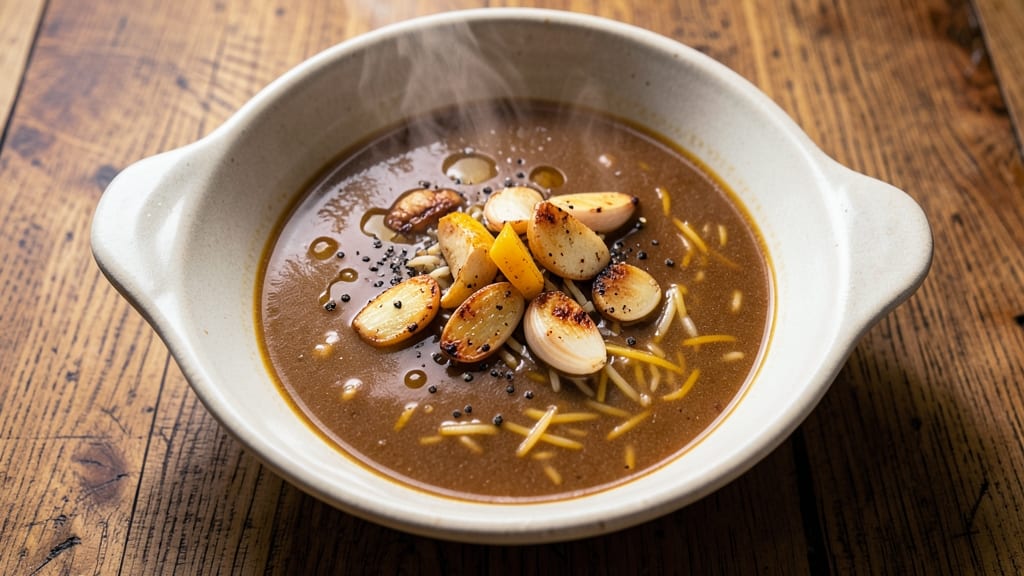
This ancient ginger and garlic soup recipe carries centuries of healing wisdom in every steaming bowl. 🌿 The combination of fresh ginger and garlic—long revered in traditional medicine—creates a broth that soothes the body while awakening the senses with its aromatic depth.
What makes this recipe special is its balance: the sharp bite of garlic mellows into warmth, while ginger’s natural sweetness harmonizes with savory spices. The foundation begins with slow-simmered broth, where garlic cloves soften into sweet, mellow flavor rather than overpowering.
Fresh ginger, sliced into thin coins, releases its fiery essence gradually, infusing the broth with layers of complexity. A touch of turmeric and black pepper adds earthy warmth, while a splash of rice vinegar brightens the finish—just enough acidity to cut through the richness.
What you’ll achieve is a restaurant-quality broth that’s deeply comforting yet sophisticated—perfect for chilly evenings or as a restorative meal. The soup’s golden hue and fragrant steam signal its healing properties, while the texture remains silky-smooth, with just enough body to coat the spoon.
Serve it as a light lunch or a hearty starter, knowing every sip carries the essence of ancient culinary traditions. The beauty of this recipe lies in its versatility: use chicken or vegetable broth for dietary preferences, or add a protein like shredded chicken or tofu for extra substance.
Garnish with green onions and sesame seeds for freshness and crunch. Let’s bring this timeless remedy to your table.
Ingredients for ancient ginger and garlic soup
Six cups of fragrant broth and aromatic roots create this ancient healing soup.
| Ingredient | Amount | Notes |
|---|---|---|
| Chicken Broth 🍲 | 6 cups | Low-sodium preferred, homemade or quality store-bought |
| Fresh Ginger Root 🌿 | ½ cup | Peeled, thinly sliced into coins |
| Garlic Cloves 🧄 | 8 cloves | Peeled, lightly crushed |
| Turmeric Powder 🌶️ | 1 tsp | Freshly ground preferred |
| Ground Black Pepper 🌶️ | ½ tsp | Freshly cracked for potency |
| Rice Vinegar 🍶 | 1 tbsp | White or seasoned variety |
| Vegetable Oil 🫒 | 1 tbsp | For sautéing garlic and ginger |
| Green Onions 🧅 | ¼ cup | Sliced, for garnish |
| Sesame Seeds 🌰 | 1 tsp | Toasted lightly for garnish |
| Chicken Breast 🍗 | 1 lb | Boneless, skinless, shredded optional |
| Fresh Cilantro 🌿 | ¼ cup | Chopped, optional garnish |
| Sea Salt 🧂 | 1 tsp | Adjust to taste |
The ginger and garlic are the soul of this dish. Fresh ginger with vibrant color and no soft spots is key—skip the powdered stuff. For garlic, Whole Foods or local markets often have the freshest bulbs, but any grocery store variety works if the cloves are firm. The turmeric should be a bright, golden yellow—Penzeys or bulk bins offer the best quality. Chicken broth is non-negotiable for depth, but vegetable broth works equally well for a vegetarian version. Toast the spices in the oil for 30 seconds to release their essential oils—this simple step transforms the flavor profile.
No fresh ginger? Powdered will work in a pinch, but it lacks the complexity. Short on garlic? Garlic powder at half the amount gets you close, though the texture will differ. The rice vinegar adds brightness—substitute apple cider vinegar if needed. For extra protein, shredded chicken or tofu adds heartiness without overpowering the broth. Garnishes like green onions and sesame seeds are optional but recommended for freshness and crunch. If you're using pre-shredded chicken, pat it dry first to avoid a watery soup.
This soup reheats beautifully—simmer gently to maintain its silky texture. Store leftovers in airtight containers in the fridge for up to 4 days or freeze for 3 months. For meal prep, double the broth and freeze in portions. The flavors deepen overnight, so it's even better the next day. Garnish just before serving to preserve the freshness of the herbs and seeds. A sprinkle of black pepper right before eating enhances the warmth of the spices.
Why You'll Love This Recipe
- Five-Ingredient Magic: I swear by this—just broth, ginger, garlic, turmeric, and pepper. That’s it. No chopping mountains of veggies or hunting for obscure spices. The ginger and garlic practically melt into the broth, so you’re not stuck peeling or mincing forever.
- Warmth in a Bowl: Honestly, the first sip hits like a hug. The turmeric gives it that golden, earthy glow, while the garlic and ginger sing together—fresh but not overpowering. It’s the kind of soup that makes you slow down, even on a busy day.
- Leftovers That Don’t Suck: Between us, most soups turn sad after day two. Not this one. The flavors deepen overnight, and reheating it? Just add a splash of water, stir, and boom—still rich and comforting. I’ve had it for lunch three days in a row, no problem.
- Budget Meal for Busy Nights: This is my go-to when I’m low on cash or time. Chicken broth is cheap, ginger and garlic last forever, and a pinch of turmeric stretches a long way. Plus, it’s the kind of dish that tastes like you put in hours, even if you threw it together in 15 minutes.
Step-by-step instructions for ancient ginger and garlic soup
Transform simple ingredients into a fragrant, warming broth with layers of spice and depth.
🍳 Step 1: Sauté Aromatics Until Fragrant
Heat the 1 tablespoon vegetable oil in a large pot over medium heat. Add the 0.5 cup fresh ginger root (sliced coins) and 8 cloves garlic (lightly crushed), stirring constantly for 2-3 minutes until the ginger softens slightly and the garlic releases its aroma. You'll know it's ready when the mixture smells intensely aromatic and the ginger begins to turn translucent.
Here's the thing—don't let the garlic burn. Watch closely as it goes from pale to golden, then immediately remove from heat if it starts to darken. Burnt garlic makes the whole soup bitter, and we're aiming for that perfect balance of sweet and pungent. Add the 1 teaspoon turmeric powder and 0.5 teaspoon ground black pepper, stirring for 30 seconds to toast the spices and deepen their flavors.
🍳 Step 2: Simmer Chicken and Build the Broth
Add the 1 lb chicken breast (cut into bite-sized pieces if not pre-shredded) to the pot. Pour in the 6 cups chicken broth and bring to a gentle boil over high heat. Once boiling, reduce heat to low and let it simmer uncovered for 15 minutes, stirring occasionally to prevent sticking. The broth should reduce slightly, concentrating the flavors.
I like to check for doneness by testing a piece of chicken—it should be fork-tender with no pink center. If it's not quite there, simmer for another 5 minutes. Real talk: Overcooking chicken turns it rubbery, so aim for just tender rather than fully falling apart. After the chicken is done, remove it from the pot and set aside to shred later.
🥘 Step 3: Finish with Vinegar and Season
Return the pot to medium heat and stir in the 1 tablespoon rice vinegar. This brightens the broth and balances the richness of the chicken. Taste the broth now—it should be flavorful but need a touch more salt. Add the 1 teaspoon sea salt and adjust to taste, remembering that the chicken will contribute additional saltiness when shredded back in.
Strain the broth through a fine-mesh sieve into a clean pot if you prefer a smoother texture, or leave it slightly chunky for more rustic appeal. Return the broth to low heat and let it simmer for another 5 minutes to meld all the flavors together. The aroma at this point should be intoxicating—warm, spicy, and deeply comforting.
👨🍳 Step 4: Shred Chicken and Garnish
Using two forks, shred the cooked chicken breast back into the pot. Stir gently to distribute the chicken evenly throughout the broth. If you prefer a smoother soup, use a slotted spoon to remove the chicken pieces before shredding and then mix the shredded chicken back in at the end.
Ladle the soup into bowls and garnish with 0.25 cup sliced green onions and 1 teaspoon toasted sesame seeds. For an extra touch of freshness, sprinkle with 0.25 cup chopped fresh cilantro. The contrast of the bright green garnishes against the golden broth makes this soup visually stunning, but more importantly, it adds a final layer of complexity to each spoonful.
Pro Tips For Making Ancient Ginger And Garlic Soup
- Sear the Ginger: Toss raw ginger slices in a dry pan for 30 seconds until fragrant and slightly charred before adding broth—this unlocks a depth of flavor that raw ginger alone can’t match. I used to just chop and drop, but the difference is like night and day, especially when paired with the garlic.
- Peel Garlic Whole: Leave the garlic cloves whole and smash them lightly with the flat side of your knife before adding to the broth—this keeps them intact but releases their oils better than mincing. I learned this the hard way when my soup turned into a mushy garlic paste that overpowered everything.
- Bloom the Turmeric: Toast the turmeric powder in the dry pan for 30 seconds before adding liquid—it deepens its earthy aroma and prevents that chalky aftertaste. I was skeptical until I tried it; now I won’t skip it.
- Simmer, Don’t Boil: Keep the broth at a gentle simmer (small bubbles, occasional swirls) for at least 20 minutes—boiling burns off the delicate ginger and garlic flavors. Sounds weird, but it works: the soup stays vibrant and complex, not bitter or flat.
Wine and beer pairings for this dish
White Wine Pairings
This aromatic ginger and garlic soup pairs beautifully with crisp, dry white wines that complement its spicy warmth. I always reach for a Sauvignon Blanc—its bright acidity and citrus notes cut through the ginger’s heat while enhancing the garlic’s sweetness.
Look for a bottle from New Zealand or Loire Valley for that perfect balance. The wine’s herbal undertones echo the soup’s fresh ginger, creating a harmonious match. 🍷
Light Beer Options
For beer lovers, a Japanese lager like Asahi Super Dry or Sapporo offers a clean, refreshing contrast. The subtle crispness won’t overpower the soup’s depth but will cleanse your palate between bites.
Alternatively, try a wheat beer with a hint of citrus—like Blue Moon—to highlight the rice vinegar’s brightness. Avoid heavy, malty beers that could clash with the soup’s delicate spices.
Red Wine for Hearty Versions
If you’ve added extra protein like shredded chicken or tofu, a light Pinot Noir from Oregon or Burgundy works surprisingly well. Its earthy notes and subtle fruitiness complement the turmeric and black pepper without competing.
Keep the wine cool—around 55-60°F—to preserve its crispness and let it shine alongside the soup’s aromatic layers.
Non-Alcoholic Alternatives
For a refreshing non-alcoholic pairing, serve the soup with a sparkling yuzu soda or ginger beer—the effervescence and citrus notes mirror the soup’s flavors. If you prefer something simpler, a cucumber-mint infused water with a squeeze of lime adds a refreshing contrast.
The key is to balance the soup’s warmth with something bright and cooling. ✨
Nutrition facts
Frequently asked questions
Can I use powdered ginger instead of fresh?
Fresh ginger is ideal for its vibrant flavor and aroma, but you can substitute with powdered in a pinch. Use 1/4 teaspoon powdered ginger for every 1 tablespoon fresh ginger called for. However, the texture and depth won't be quite the same—fresh ginger releases its oils gradually during cooking, creating layers of flavor that powdered can't match.
How do I adjust the spice level for sensitive palates?
Reduce the black pepper to 1/4 teaspoon and skip the extra vinegar if you're sensitive to heat. For extra mildness, strain out some of the ginger slices before serving. The turmeric adds warmth without spice, so keep that at 1 teaspoon for color and earthiness. Taste as you go—you can always add more salt or a splash of broth later.
What if I don't have rice vinegar?
Apple cider vinegar or white wine vinegar work perfectly as substitutes. Use the same amount (1 tablespoon) for brightness. If you're avoiding vinegar entirely, a squeeze of lemon juice can add acidity, though it won't have the same depth of flavor. The key is balancing the soup's richness—some acidity is essential to prevent heaviness.
Can I make this soup vegetarian?
Replace the chicken with 1 block firm tofu (pressed and cubed) or 1 cup mushrooms for umami depth. Use vegetable broth instead of chicken broth, and add an extra 1/2 teaspoon turmeric to enhance the earthy flavors. The soup will still be deeply satisfying with these plant-based swaps.
Why does my soup taste bitter?
Bitterness usually comes from burnt garlic or overcooked ginger. Keep the heat at medium when sautéing and remove the pan from heat as soon as garlic turns golden. If you've already overcooked it, strain out the burnt pieces and add a splash of vinegar or a pinch of sugar to balance the flavor. Fresh broth and proper seasoning can also mask bitterness.