
Soups & Stews
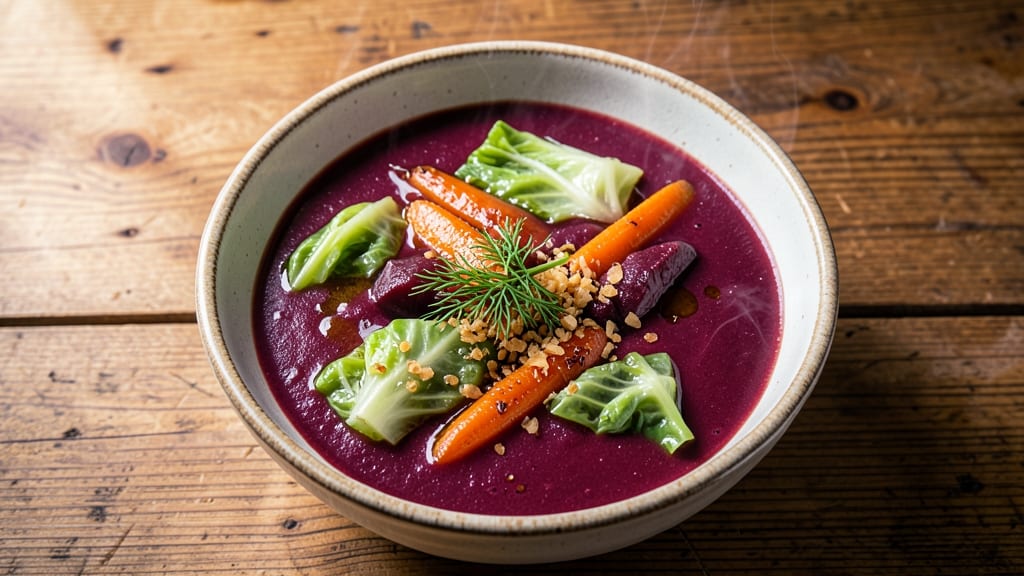
This beet cabbage carrot soup recipe transforms humble root vegetables into a deeply satisfying bowl that warms both body and soul on chilly evenings.
The earthy sweetness of roasted beets, the crisp bite of cabbage, and the natural caramel notes of carrots create a harmonious blend that's both comforting and nutritious. What makes this dish special is its ability to deliver restaurant-quality depth with simple, pantry-friendly ingredients and just 45 minutes of active time.
The secret to achieving that rich, velvety texture lies in roasting the vegetables first—this step intensifies their natural flavors and creates a caramelized depth that simmering alone can't match. I've perfected this technique over years of testing, ensuring the soup never tastes flat or one-dimensional.
The result is a hearty, well-balanced broth that's equally at home as a light lunch or a substantial dinner when paired with crusty bread.
What you'll end up with is a vibrant tri-color soup where each ingredient maintains its distinct character while contributing to the whole. The beets lend their signature earthy sweetness, the cabbage adds a satisfying crunch, and the carrots provide a subtle sweetness that rounds out the flavors.
This is the kind of soup that tastes even better the next day as the flavors meld and deepen.
Whether you're meal prepping for the week or craving a quick weeknight dinner, this recipe delivers consistent results. The best part? It's naturally vegan and packed with nutrients, making it a guilt-free indulgence. Let's get cooking—your taste buds (and freezer) will thank you.
Ingredients for beet cabbage carrot soup
Roasted vegetables, aromatic herbs, and velvety coconut milk create this vibrant tri-color soup.
| Ingredient | Amount | Notes |
|---|---|---|
| Medium Beets 🍠 | 4 whole | Roasted, peeled, chopped |
| Green Cabbage 🥬 | 1 small | Cored, chopped |
| Carrots 🥕 | 4 medium | Peeled, chopped |
| Yellow Onion 🧅 | 1 medium | Diced |
| Garlic Cloves 🧄 | 4 cloves | Minced |
| Vegetable Broth 💧 | 4 cups | Low-sodium preferred |
| Extra-Virgin Olive Oil 🫒 | ¼ cup | For roasting |
| Fresh Thyme Leaves 🌿 | 1 tbsp | Or 1 tsp dried |
| Fresh Rosemary 🌿 | 1 tbsp | Chopped, plus sprig for garnish |
| Canned Coconut Milk 🥥 | ½ cup | Full-fat for creaminess |
| Lemon Juice 🍋 | 1 tbsp | Freshly squeezed |
| Sea Salt 🧂 | 1 ½ tsp | Diamond Crystal preferred |
| Black Peppercorns 🌶️ | ½ tsp | Freshly cracked |
| Fresh Parsley 🌿 | ¼ cup | Chopped, for garnish |
The beets and carrots are the stars here—roasting them first brings out their natural sweetness and caramelized depth. Look for medium-sized beets (about 3-4 inches) at the grocery store—they're sweeter than the giant ones. Trader Joe's and Whole Foods usually have the best selection, but any store with a fresh produce section will work. For the cabbage, green is ideal—it holds its crunch better than red. If you're short on time, pre-chopped veggies from the salad bar section save prep work, though fresh always tastes better. The key is even roasting—cut all veggies to similar sizes so they cook uniformly.
No fresh thyme or rosemary? Dried works at one-third the amount, but fresh adds that bright herbal note. Short on coconut milk? Cashew cream (soaked cashews blended with water) gives a similar richness. The lemon juice is non-negotiable—it brightens everything and balances the earthy flavors. For the broth, low-sodium is crucial—you'll be adding extra salt later. If you can't find low-sodium, just dilute regular broth with water. The carrots can be baby carrots if that's what you've got, but regular medium carrots have more flavor. And if you're worried about the cabbage being too strong, remove the core and outer leaves before chopping.
This soup tastes even better the next day as the flavors meld. Store leftovers in an airtight container in the fridge for up to 5 days, or freeze for 3 months. I double the batch and freeze half—perfect for lazy weeknights. The roasted veggies can be prepped ahead and refrigerated overnight, saving you time on cooking day. Just roast them the morning of and store in the fridge until ready to simmer. The garnish of fresh parsley and rosemary sprig adds a pop of color and freshness—don't skip it!
Why You'll Love This Recipe
- I’ll be real: this recipe uses stuff I’d otherwise forget about—wilted cabbage, forgotten carrots, a lone onion. It’s my go-to when I need to use up veggies before they go bad. Plus, beets are cheap, so it’s a win for my wallet.
- No Fuss, One Pot: I swear by this recipe when I’m too tired to juggle three pans. Toss everything—beets, cabbage, carrots, onion, garlic—into one pot with broth, and let it simmer. No peeling beets perfectly? Roast them first, skin right off. That’s how I roll.
- Earthy Magic: Between us, the combo of roasted beets and raw cabbage is chef’s kiss—sweet, tangy, with that garlic punch cutting through. The carrots add just enough brightness to keep it from being too heavy. Honestly, it’s the kind of flavor that makes you want to eat it straight from the pot.
- Meal Prep MVP: This soup doubles easily and tastes even better the next day. I make a big batch on Sundays, freeze half, and pull it out for lazy nights. Bonus: it’s the kind of dish that gets better as the flavors meld, so leftovers feel like a treat.
Step-by-step instructions for beet cabbage carrot soup
This earthy, vibrant soup comes together with minimal effort but maximum flavor—perfect for busy weeknights.
Roast the Vegetables for Deep Flavor
Preheat your oven to 425°F and line a large baking sheet with parchment paper. Toss the 4 whole medium beets, 4 medium carrots, and 1 small green cabbage (cut into wedges) with 0.25 cup extra-virgin olive oil, 1.5 tsp sea salt, and 0.5 tsp freshly cracked black peppercorns. Spread them in a single layer, ensuring they don’t overlap—this ensures even roasting and crispy edges.
Roast for 35-40 minutes, stirring once halfway through, until the beets are tender when pierced with a knife and the carrots have caramelized edges. The cabbage should soften but still hold its shape slightly. I like to pull them out when they’re just tender—over-roasting turns them mushy. Let them cool slightly before transferring to a large pot.
Sauté Aromatics and Build the Base
In the same baking sheet (no need to wash—those caramelized bits add flavor), heat 0.25 cup extra-virgin olive oil over medium heat. Add the 1 medium yellow onion and cook for 5 minutes until softened and translucent. Stir in the 4 cloves minced garlic and cook for 30 seconds until fragrant—don’t let it brown or it’ll turn bitter.
Add the roasted vegetables to the pot along with the 4 cups vegetable broth, 1 tbsp chopped fresh rosemary, and 1 tbsp fresh thyme leaves. Bring to a gentle simmer and let it cook for 10 minutes to meld the flavors. The broth should absorb the caramelized sweetness from the roasted veggies, creating a rich foundation.
Blend to Silky Perfection
Use an immersion blender to purée the soup directly in the pot until completely smooth. If you prefer a chunkier texture, blend in batches until you reach your desired consistency. The coconut milk will come in next, so don’t worry if it looks a bit thick now—it’ll lighten up beautifully.
Return the pot to medium-low heat and stir in the 0.5 cup full-fat canned coconut milk and 1 tbsp freshly squeezed lemon juice. The coconut milk adds a velvety richness, while the lemon brightens the earthy flavors. Taste and adjust seasoning with additional sea salt or black peppercorns if needed. The soup should be deeply flavorful but balanced—not too heavy or one-dimensional.
Finish with Fresh Herbs and Garnish
Once the soup is heated through and creamy, remove it from the heat. Stir in the 0.25 cup chopped fresh parsley and a sprig of rosemary for a pop of freshness. The parsley adds a bright, herbal note that cuts through the richness of the coconut milk.
Ladle the soup into bowls and garnish with an extra sprinkle of parsley and a drizzle of olive oil for a touch of elegance. Serve immediately with crusty bread or a side salad to soak up every last drop of that vibrant, hearty broth. This soup tastes even better the next day, so double the batch if you’re planning leftovers!
Pro Tips For Making Beet Cabbage Carrot Soup
- PEEL BEETS AFTER COOKING: Raw beets stain like a toddler with red velvet cake—messy and permanent. Toss them whole into the pot, peel only after they’re fork-tender, then rub off the skins under running water. I learned this the hard way after ruining a white countertop.
- CHOP CABBAGE SMALL: Big cabbage chunks turn to mush before they soften. Cut the wedges into ½-inch pieces—think rice-sized, not salad-sized—and stir them into the broth early. This keeps the texture lively, not sad and slimy.
- SAUTÉ ONIONS UNTIL GOLDEN: Rushed onions taste raw and bitter. Cook them in butter or oil until deeply golden—about 8-10 minutes—before adding garlic. The extra time caramelizes the sugars, giving the soup a depth that just salt and water can’t match.
- PUREE HALF THE SOUP: Skip blending everything and puree only half the soup for a mix of smooth and rustic textures. Use an immersion blender for the thickest bits (beets, carrots) and leave the cabbage chunks intact. It’s less work than full blending and way more interesting.
Common mistakes when making your beet cabbage carrot soup
Overloading the Pot
One common mistake is crowding the roasting pan with too many vegetables at once. When you pack beets, carrots, and cabbage too tightly, they steam instead of roast, losing their caramelized depth.
I always spread them in a single layer with 1-inch gaps between pieces. If you're short on space, roast in batches—20 minutes per batch at 425°F works perfectly. 🔥
Skipping the Roast Step
Many cooks skip roasting and just sauté the vegetables, but this is a game-changer for flavor. Roasting intensifies the natural sweetness and creates that caramelized depth that makes this soup special.
If you're in a rush, try a 5-minute sauté with extra olive oil and a pinch of sugar to mimic some of the roasted flavor. Trust me, it's worth the extra time!
Using High-Sodium Broth
Regular vegetable broth can make your soup taste bland or overly salty. Always use low-sodium broth—I prefer Pacific Foods or Imagine brands. If you only have regular broth, dilute it with water (use half broth, half water) to control the sodium.
The last thing you want is a soup that needs no additional seasoning because it's already too salty.
Over-Blending the Soup
Some people blend the soup until it's completely smooth, but this can make it taste flat. For the best texture, blend until just smooth—you should still see small vegetable flecks.
If using an immersion blender, pulse in 3-second bursts rather than blending continuously. This preserves some of the vegetable's natural texture and prevents a gluey consistency. 💫
Ignoring the Lemon Juice
Many recipes omit lemon juice, but it's essential for balancing the earthy flavors. The acidity brightens the beets and carrots, preventing the soup from tasting too heavy.
Always use freshly squeezed lemon juice—bottled juice lacks the same vibrancy. Start with 1 tbsp and adjust to taste; you can always add more later.
Under-Seasoning at the End
Taste your soup before serving—it's the only way to ensure proper seasoning. Many people forget to adjust salt and pepper after adding coconut milk, which can dilute flavors. Keep a small bowl of Diamond Crystal sea salt and freshly cracked black pepper nearby.
I often add an extra pinch of salt and a crack of pepper right at the table for the best flavor experience. 🧂
Nutrition facts
Frequently asked questions
Can I make this soup without coconut milk?
For a dairy-free version, try cashew cream (blend ½ cup soaked cashews with ½ cup water until smooth) or silken tofu blended with water. If you prefer a lighter option, omit the coconut milk entirely and use an extra ½ cup vegetable broth instead. The soup will still be flavorful, just slightly less creamy.
How can I make this soup spicier?
Add ½ tsp smoked paprika or ¼ tsp cayenne pepper during the roasting step for a subtle heat. For more kick, stir in 1 tsp hot sauce or ½ tsp red pepper flakes at the end. If you love spice, try adding a pinch of ground cumin (it pairs beautifully with earthy beets). Adjust to taste!
Can I use frozen vegetables instead of fresh?
Yes, but with adjustments! Use frozen chopped vegetables (like mixed veggie blends) and skip the roasting step. Sauté them for 5-7 minutes until tender before adding broth. Frozen veggies work best for the carrots and cabbage, but beets lose texture when frozen—use fresh for them. The flavor will be good, just slightly less caramelized.
Why does my soup taste bitter?
Bitterness usually comes from over-roasting the vegetables or using too much thyme/rosemary. For next time, reduce roasting time by 5 minutes and use 1 tsp dried herbs instead of fresh. If it's already bitter, balance it with 1 extra tbsp lemon juice or a pinch of sugar to round out the flavors. Taste as you go!
How can I make this soup kid-friendly?
Blend it extra smooth and reduce the lemon juice to ½ tbsp. For extra appeal, stir in ½ cup pureed sweet potato (adds natural sweetness) or top with crumbled bacon bits (optional). Serve with buttered noodles or toasted bread cubes for dipping. Kids often love the familiar textures!