
Soups & Stews
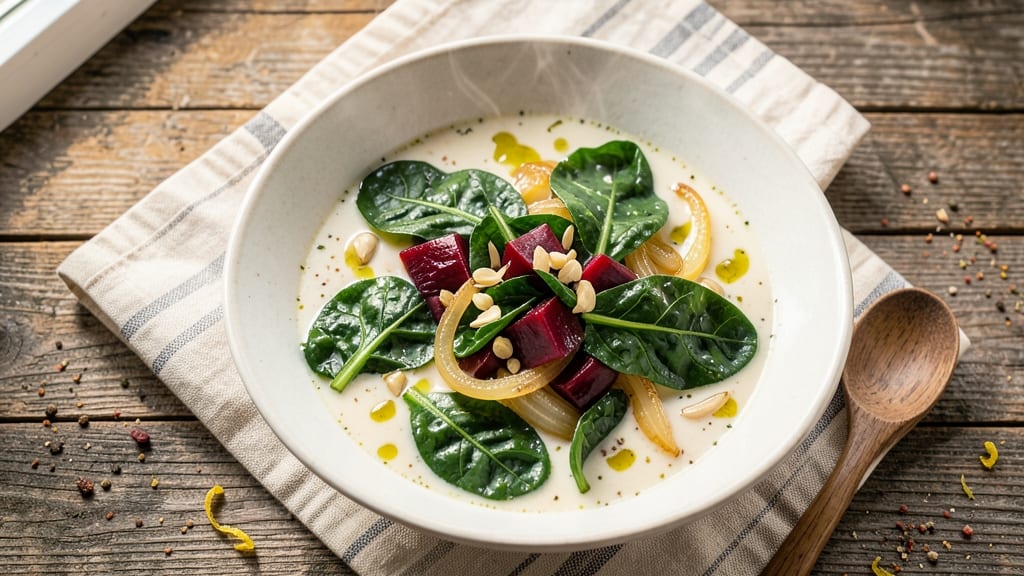
This beet leaves soup recipe transforms humble greens into a velvety, earthy masterpiece that balances sweetness and depth. 💛 The secret lies in properly prepping the leaves—removing tough stems and wilting them just enough to concentrate their natural flavors.
What starts as a simple vegetable becomes a restaurant-quality bowl of soup with layers of umami from garlic, caramelized onions, and a touch of smoky paprika.
The beauty of this recipe is its versatility—it works as a comforting solo dish or pairs perfectly with crusty bread and a sprinkle of toasted nuts.
I developed this method after discovering how often beet leaves go to waste when harvesting roots, and it’s become a staple in my kitchen for its ability to turn something overlooked into something extraordinary. The broth builds flavor gradually, allowing the beet leaves to shine without overpowering the dish.
By the time you finish simmering, you’ll have a soup that’s rich in color and texture—creamy yet light, with a subtle sweetness from the beets that harmonizes beautifully with the greens.
The result is a dish that’s as nutritious as it is delicious, packed with vitamins and minerals while delivering deep, satisfying flavors. This is the kind of soup that feels like a hug in a bowl.
Serve it warm with a drizzle of olive oil and a sprinkle of fresh herbs for an elegant finish, or keep it simple with a dash of red pepper flakes for a touch of heat.
The possibilities are endless, but the foundation remains the same: a perfect balance of earthy, sweet, and savory. Let’s get cooking!
Ingredients for beets leaves soup
Earthy greens meet sweet beets in this velvety vegan soup—just 14 ingredients for restaurant-quality flavor.
| Ingredient | Amount | Notes |
|---|---|---|
| Beet Leaves 🌿 | 8 cups | Stems removed, roughly chopped |
| Yellow Onions 🧅 | 1 whole | Thinly sliced for caramelizing |
| Garlic Cloves 🧄 | 4 cloves | Minced for aromatic base |
| Extra-Virgin Olive Oil 🫒 | ½ cup | For sautéing and finishing |
| Vegetable Broth 💧 | 4 cups | Low-sodium preferred |
| Cooked Beets 🍠 | 1 cup | Diced, roasted or boiled |
| Smoked Paprika 🌶️ | 1 tsp | For subtle smoky depth |
| Ground Cumin 🌿 | ½ tsp | Toasted for warmth |
| Salt 🧂 | 1 tsp | Kosher or sea salt |
| Black Pepper 🌶️ | ½ tsp | Freshly ground |
| Fresh Thyme Leaves 🌿 | ¼ cup | Chopped, for brightness |
| Raw Cashews 🥜 | ¼ cup | Soaked for creamy texture |
| Lemon Juice 🍋 | 1 tbsp | Freshly squeezed |
| Red Pepper Flakes 🔥 | ¼ tsp | Optional for heat |
Beet leaves are the star, so pick fresh ones with vibrant green leaves—no yellowing or wilted spots. Local farmers markets usually have the freshest, but the grocery store produce section works too. If you're harvesting from your own beets, wash thoroughly to remove any dirt. The stems are tough, so snip those off before chopping. For the beets themselves, roasted ones add natural sweetness, but boiled works too—just dice them into small pieces so they blend into the soup. The cashews? Soak them for 15 minutes in hot water for that ultra-creamy texture.
No fresh thyme? Dried works at one-third the amount, but fresh has that bright, floral note. Smoked paprika can be swapped for regular paprika if you're avoiding smoke, though I love that subtle depth it adds. Out of cashews? Silken tofu or blended white beans create creaminess too. The vegetable broth is where flavor builds, so low-sodium or homemade is key—otherwise, you'll need to adjust the salt. And if you're feeling adventurous, swap half the beet leaves for Swiss chard or kale for a different earthy twist.
This soup tastes even better the next day as flavors meld—perfect for meal prep. Store in an airtight container in the fridge for 4-5 days or freeze for 3 months. I like to portion it into jars with a little olive oil swirled on top before sealing. For serving, a sprinkle of red pepper flakes or extra thyme adds freshness. And if you've got crusty bread or toasted nuts on hand, you've got the ultimate comfort meal.
Why You'll Love This Recipe
- No-Waste Magic: I swear by this recipe—it turns something I’d normally toss (beet greens!) into a soup so rich and earthy, you’d never guess it’s from scraps. The onions caramelize right in the pot while you chop garlic, and by the time the broth simmers, you’ve got a pot of gold.
- Garlic-Kissed Depth: That slow-sautéed garlic in olive oil? It’s the secret weapon. The leaves wilt into the broth, soaking up all that golden, toasty flavor—like a hug in a bowl. Honestly, my partner asks for seconds just for the garlic alone.
- Lunchbox Hero: Between us, this is my go-to for meal prep. It reheats beautifully, and the flavors only get better the next day. Pack it in a thermos for work, or freeze it in portions—perfect for when you’re too tired to cook but still need something nourishing.
Step-by-step instructions for beet leaves soup
Here's how to transform humble beet greens into a rich, velvety soup that balances earthy sweetness.
🍳 Step 1: Build the Flavor Base with Onions and Garlic
Heat 0.5 cup extra-virgin olive oil in a large pot over medium heat. Add the thinly sliced yellow onions and cook for 8-10 minutes until they turn golden brown and caramelized. You'll smell that sweet onion aroma—this is your foundation.
Push the onions to one side of the pot and add the minced garlic cloves. Stir for 30 seconds until fragrant—don't let it burn, or it'll turn bitter. Here's the thing—garlic burns faster than you think, so keep an eye on it. Once golden, add 1 tsp smoked paprika and 0.5 tsp ground cumin, stirring for 10 seconds to toast the spices.
🍳 Step 2: Sauté the Beet Leaves and Beets
Add the 8 cups roughly chopped beet leaves and 1 cup diced cooked beets to the pot. Stir everything together and cook for 3-4 minutes until the leaves begin to wilt. You'll see them soften and shrink—this is when they release their rich, earthy flavors.
Pour in the 4 cups vegetable broth and bring the mixture to a gentle boil. Reduce heat to medium-low and let it simmer uncovered for 15-20 minutes until the leaves are completely tender. If the soup gets too thick, add a splash of water—it should be easy to stir without resistance.
🥘 Step 3: Create the Creamy Cashew Base
While the soup simmers, soak the 0.25 cup raw cashews in hot water for 10 minutes to soften. Drain them and blend with 1 tbsp lemon juice and 0.25 cup fresh thyme leaves in a food processor until smooth. You want a velvety texture—this will replace heavy cream.
Once the cashew mixture is ready, stir it into the simmering soup. Add 1 tsp salt and 0.5 tsp black pepper, then taste. The cashews should give it a rich, creamy texture without overpowering the earthy beet flavors. If you like heat, add the 0.25 tsp red pepper flakes now.
⏰ Step 4: Finish and Serve with Confidence
Simmer the soup for another 5-7 minutes to let all the flavors meld together. The cashew cream should be fully incorporated, and the soup should coat the back of a spoon. If it's too thick, thin it with a little more broth or water.
Ladle the soup into bowls and drizzle with a little extra extra-virgin olive oil if you like. The contrast of the creamy soup with the earthy beets and bright lemon is what makes this dish special. Serve with crusty bread to soak up every last drop—you'll want seconds, I promise.
Pro Tips For Making Beets Leaves Soup
- Wilt Leaves Low and Slow: Don’t toss beet greens into boiling broth—they’ll turn to mush. Instead, sauté them gently in olive oil over medium-low heat for 3–4 minutes until just wilted, then add broth. They’ll soften perfectly without disintegrating.
- Trim Stems for Clean Bites: Those thick stems on beet leaves are tough and bitter. Cut them off at the base before chopping, then slice the leaves into ribbons. It’s a little extra work upfront, but your soup won’t have chewy surprises.
- Toast Onions Until Golden: Skip the rush—cook the onions in olive oil until they’re deep golden, not just soft. That caramelization adds sweetness that makes the whole soup sing. (Yes, it takes 10–12 minutes, but it’s worth it.)
- Salt Broth Early: Add a pinch of salt to the vegetable broth before combining it with the greens. The leaves absorb less liquid, so your soup stays thick and flavorful—not watery. (Trust me, you’ll taste the difference.)
Serving suggestions for leftovers
Bread Pairings
This velvety soup pairs beautifully with crusty sourdough or freshly baked baguettes—their chewy texture soaks up every last drop of the creamy cashew broth. For extra flair, toast the bread with garlic-infused olive oil and sprinkle with flaky sea salt before serving.
I love using a baguette from the local bakery that's still warm from the oven. 🥖
Herb Garnishes
Fresh herbs elevate the dish with brightness. A sprinkle of chopped parsley or dill adds a pop of color, while thyme leaves enhance the earthy flavors. For a bolder touch, try microgreens or nasturtium flowers—they add a peppery kick and stunning visual appeal.
I keep a small pot of fresh herbs on my windowsill for easy access.
Toppings Galore
Crunchy toppings balance the soup’s creaminess. Toasted pine nuts or walnuts add richness, while crumbled feta (if not vegan) or vegan parmesan brings a salty contrast. For heat lovers, a dash of chili crisp or extra red pepper flakes finishes the bowl perfectly.
I often keep a jar of toasted nuts on hand for quick garnishes.
Drizzle Finishes
A final drizzle of high-quality olive oil (like California extra-virgin) adds silkiness, while a squeeze of lemon juice brightens the flavors. For a smoky twist, a drizzle of smoked paprika-infused oil ties back to the soup’s spices.
I like to swirl the oil in a figure-eight pattern for an elegant touch. 💛
Side Dish Pairings
Serve with roasted potatoes or wild rice to round out the meal. A simple arugula salad with balsamic glaze adds freshness, while grilled asparagus brings a touch of sophistication.
For a heartier option, crusty polenta or quinoa pilaf works beautifully. I often prep sides alongside the soup for a full spread.
Beverage Pairings
A crisp white wine like Sauvignon Blanc complements the soup’s bright lemon and herbal notes, while a light lager (such as Peroni) balances the earthiness. For non-alcoholic options, sparkling water with lemon or hibiscus tea refreshes the palate.
I reach for whatever’s in my fridge—sometimes it’s just a cold glass of iced hibiscus tea on a hot day.
Nutrition facts
Frequently asked questions
Can I substitute beet leaves with other greens?
Swiss chard, kale, or spinach work beautifully—just adjust cooking times slightly since leafy greens wilt at different rates. For example, kale needs 5-7 minutes longer to soften. The flavor profile will shift slightly, but the creamy cashew base keeps the dish cohesive. Use the same quantity by volume.
Why do beet leaves taste bitter?
Beet leaves can taste bitter due to their natural compounds, especially if they're older or wilted. To reduce bitterness, blanch the leaves in boiling water for 1 minute before using them in the soup. This process softens them and mellows the flavor. Fresh, young leaves will always be milder than mature ones.
How do I store beet leaves for later use?
Wrap the leaves in a damp paper towel, place them in an airtight container, and refrigerate for up to 5 days. For longer storage, freeze them in a single layer on a tray before transferring to a freezer bag for 3 months. Thaw in the fridge overnight before using in your soup.
Can I make this soup without cashews?
Yes! For a creamy texture without cashews, blend 0.5 cup silken tofu or 0.5 cup cooked white beans with the lemon juice and thyme. Silken tofu blends smoothly, while beans add a subtle earthiness that pairs well with the beets. Adjust the lemon juice to taste—beans need more acidity to balance their flavor.
What's the best way to prep beet leaves quickly?
Start by rinsing the leaves under cold water, then pat them dry. Snip off the tough stems at the base where they meet the leaves. Stack the leaves and roll them like a cigar, then slice into 0.5-inch strips for even cooking. This method keeps prep under 5 minutes and ensures tender, bite-sized pieces in your soup.