
Soups & Stews
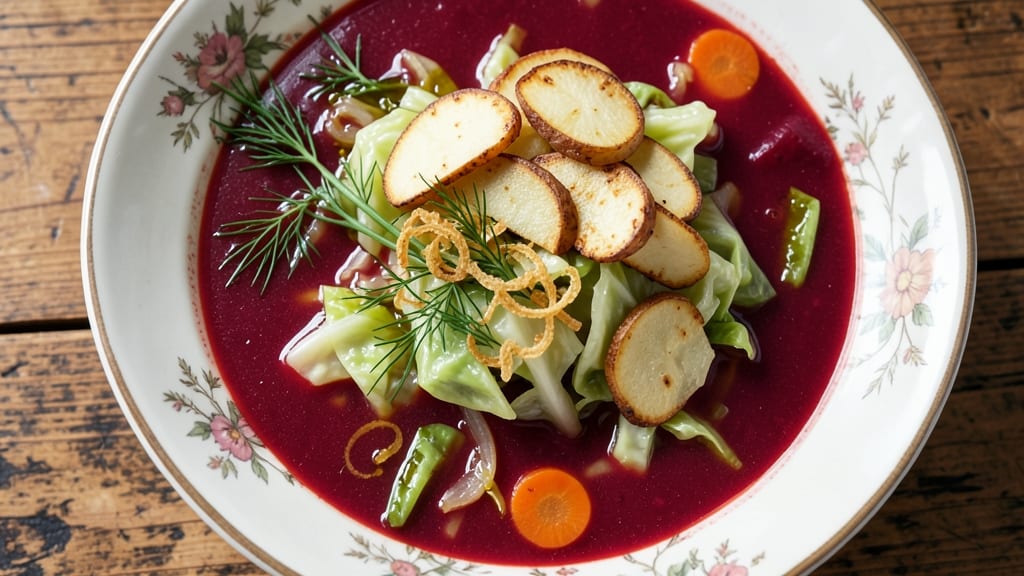
This beet and cabbage borscht soup recipe delivers the rich, earthy flavors of Eastern European tradition with a vibrant ruby color that instantly elevates any meal. The secret lies in slow-cooking beets until tender, then blending them into a velvety base that harmonizes with cabbage's crisp bite and aromatic spices.
What makes this version special is its balance—deeply savory yet bright, hearty yet light enough for summer or warming enough for winter.
Traditional borscht relies on a few key techniques: simmering vegetables until they meld into a cohesive broth, balancing sweet and sour elements, and finishing with fresh herbs that cut through the richness. I've simplified the process without sacrificing authenticity, so you can achieve restaurant-quality results in under an hour.
The beauty of this soup lies in its versatility—it works as a standalone dish or pairs perfectly with crusty bread or a dollop of sour cream.
What you'll end up with is a bowl of soup that's not just visually stunning but packed with layered flavors—earthy beets, fresh cabbage, and aromatic spices that dance on your palate. The texture is perfectly balanced: tender vegetables in a smooth, slightly thickened broth that coats every spoonful.
This is comfort food at its finest, with enough depth to satisfy even the most discerning soup lovers.
The best part? This recipe adapts beautifully to dietary preferences. For a vegan version, simply omit the sour cream and use plant-based alternatives, while traditionalists can add a touch of vinegar or a dollop of cream for that classic tang.
Serve it piping hot for a cozy meal or chilled for a refreshing summer dish. Let's get cooking!
Ingredients for beet and cabbage borscht soup
Six vibrant ingredients blend into this ruby-hued borscht, where beets meet cabbage in a symphony of earthy flavors.
| Ingredient | Amount | Notes |
|---|---|---|
| Beets 🍠 | 1 ½ lb | Medium-sized, peeled and cubed |
| Green Cabbage 🥬 | 1 small head | Shredded, outer leaves removed |
| Russet Potatoes 🥔 | 2 medium | Peeled and quartered |
| Yellow Onion 🧅 | 1 whole | Chopped, medium size |
| Carrots 🥕 | 3 medium | Peeled and sliced |
| Fresh Dill 🌿 | ¼ cup | Chopped, stems removed |
| Fresh Parsley 🌿 | 0.2 cup | Chopped, for garnish |
| Garlic Cloves 🧄 | 4 cloves | Minced |
| Tomato Paste 🍅 | ¼ cup | Smooth, not chunky |
| Vegetable Broth 💧 | 6 cups | Low-sodium preferred |
| Apple Cider Vinegar 🍏 | 1 tbsp | For tangy brightness |
| Olive Oil 🫒 | 2 tbsp | Extra-virgin for richness |
| Salt 🧂 | 1 ½ tsp | Adjust to taste |
| Black Pepper 🌶️ | ½ tsp | Freshly ground |
| Sour Cream 🧀 | ½ cup | For serving (optional) |
The beets are the star—pick medium-sized ones that stay tender when roasted. Trader Joe's or Whole Foods often carry the pre-washed kind, which saves time. If using raw beets, roast them first at 400°F for 45 minutes to soften them up. For cabbage, green is classic, but red adds a pretty contrast. Shred it yourself—pre-shredded gets soggy fast. The potatoes should be russet or Yukon Gold for that creamy texture. Costco sells them in bulk if you're making a big batch.
No fresh dill? Dried works at one-third the amount, but fresh is ideal for that bright finish. Short on vinegar? Lemon juice at the same amount works too. The tomato paste can be from a tube—no need for fancy jars. If you're making this vegan, skip the sour cream and add a splash of coconut cream instead. For extra depth, toast the garlic cloves lightly in olive oil before adding them to the pot. The broth? Low-sodium is key—you can always add more salt later.
This soup tastes even better the next day—reheats beautifully in 3-4 minutes. Keeps for 5 days in the fridge, or 3 months frozen. I like to freeze it in portions so I can grab a bowl anytime. For serving, crusty bread and extra sour cream are non-negotiable. The color gets more vibrant as it sits, so if it looks pale, add a splash of vinegar or a pinch of beet powder.
Why You'll Love This Recipe
- One-Pot Wonder: I swear by this recipe because it’s a single-pot operation. No chopping chaos—just dice the beets and cabbage roughly, toss them in with the potatoes and onions, and let the broth work its magic. The potatoes soften while the cabbage crisps just enough at the edges, and honestly? That’s the kind of hands-off cooking I didn’t know I needed.
- Earthy & Tangy Magic: The beets give it that deep, almost wine-like richness, while the cabbage adds a satisfying crunch that disappears with every sip. Between us, the carrots caramelize just enough to sweeten the whole bowl—no extra sugar needed. It’s the kind of flavor that lingers, making you reach for seconds before you even realize you’re still eating.
- Weeknight & Meal Prep Hero: This soup is my go-to when I’m not in the mood to fuss. Make a big batch on Sunday, and you’ve got lunch or dinner covered for days—it reheats beautifully, and the flavors only deepen. Plus, it’s the kind of dish that feels fancy enough for guests but zero-pressure enough for a Tuesday night. (Yes, even on a Tuesday night.)
- Budget-Friendly Pantry Staple: Beets and cabbage last forever, and potatoes? Cheap as chips. I’ve made this soup for under $5 a serving, and it still feels like a restaurant-worthy meal. The leftovers taste just as good the next day, so you’re not wasting a thing—just simmering up savings.
Step-by-step instructions for beet and cabbage borscht soup
Here's how to craft a deeply flavorful borscht with vibrant ruby hues and layers of earthy, tangy goodness.
Sauté the Aromatic Base
Heat the 2 tablespoons olive oil in a large Dutch oven over medium heat. Add the chopped yellow onion and cook for 5 minutes until softened and translucent. Stir in the minced garlic cloves and cook for another 30 seconds until fragrant—this prevents the garlic from burning.
Next, add the 3 medium carrots and cook for 4 minutes until they begin to soften. This step builds the flavor foundation by caramelizing the vegetables before adding liquids. The onions should be golden without browning, signaling they're ready for the next addition.
Add Root Vegetables and Tomato Paste
Increase heat to medium-high and add the 1.5 lb beets and 2 medium russet potatoes. Stir to coat the vegetables with the oil and caramelized aromatics. Pour in the 6 cups vegetable broth and 1 tablespoon apple cider vinegar, then bring to a gentle boil.
Reduce heat to low, cover, and simmer for 20 minutes until the beets and potatoes are fork-tender. The vinegar adds brightness while the broth infuses the vegetables with deep flavor. If the soup reduces too much, add a splash of water to maintain the proper consistency.
Incorporate Cabbage and Simmer
Add the shredded green cabbage to the pot and stir gently. Return to a simmer and cook uncovered for 15-20 minutes until the cabbage is tender but still holds its shape. The cabbage should soften while retaining some texture—overcooking turns it mushy.
Taste and adjust seasoning with 1.5 teaspoons salt and 0.5 teaspoon black pepper. The soup should be well-seasoned but not overly salty. This is the moment to taste and balance flavors before adding fresh herbs, which will brighten the dish.
Finish with Fresh Herbs
Remove the pot from heat and stir in the 0.25 cup chopped fresh dill and 0.25 cup tomato paste. The dill adds a bright, herbal note that cuts through the earthiness of the beets and cabbage. Let the soup sit for 5 minutes to allow the flavors to meld together.
Ladle the borscht into bowls and top each serving with a dollop of 0.5 cup sour cream and a sprinkle of 0.2 cup chopped fresh parsley. The sour cream adds a creamy contrast to the tangy, earthy broth, while the parsley provides a fresh finish. Serve immediately while warm for the best experience.
Pro Tips For Making Beet And Cabbage Borscht Soup
- COOK BEETS SEPARATELY: I learned this the hard way—throwing beets in whole with everything else turns your soup into muddy, waterlogged sludge. Peel and slice them small (¼-inch thick), then boil them in salted water for 10-12 minutes until fork-tender. Drain and reserve the liquid (it’s liquid gold for depth). This keeps their texture firm and their flavor concentrated where it matters.
- SHRED CABBAGE FINE: Big chunks of cabbage? Nope. For borscht, you want it to melt into the broth, not sit like soggy ravioli. Quarter the head, remove the core, and shred it as thin as you can—almost like coleslaw. The more surface area, the faster it softens and the smoother the texture. (Yes, even if you’re impatient like me.)
- DON’T BOIL THE ONIONS: After burning three batches of borscht, I finally figured out onions need low-and-slow love. Sauté them in oil over medium-low heat for 8-10 minutes until deep golden, not browned. This builds flavor without bitterness. High heat turns them into charred hockey pucks—trust the process.
- ADD POTATOES LAST: Potatoes in early? Your soup will turn into a thick, gluey mess. Toss them in raw during the final 10 minutes of simmering so they absorb flavor but stay creamy, not mushy. Russets break down fast—check for doneness with a fork, not just time. (Your future self will thank you.)
Essential equipment for great beet and cabbage borscht soup
Dutch Oven Essentials
A large Dutch oven (like the Le Creuset 6-quart) is my go-to for borscht because it handles the soup's volume while distributing heat evenly. The deep sides prevent spills when stirring, and the heavy base maintains consistent medium-low heat during simmering.
I've found that enamel-coated pots distribute heat better than stainless steel, preventing hot spots that could scorch the beets. 🔥
Immersion Blender
For a silky-smooth borscht texture, an immersion blender (I recommend the Ninja NB200) is a game-changer. After simmering, blend half the soup directly in the pot to maintain the right thickness. This avoids transferring hot liquid to a separate blender, which can be messy.
The variable speed control lets you adjust consistency—just pulse for a rustic look or blend longer for velvety smoothness. ⚡
Fine-Mesh Strainer
A fine-mesh strainer (like the OXO Good Grips) is crucial if you prefer a strain-free borscht. After roasting the beets, strain them through the mesh to remove skins and fibrous bits, resulting in a cleaner broth.
For cabbage, I use it to remove any tough stems before shredding. The sturdy handle makes it easy to hold over a bowl while rinsing vegetables under cold water. 💫
Measuring Cups & Spoons
Precision matters in borscht, so I use stainless steel measuring cups (like Pyrex) for broth and vinegar, and spoon rests (from Amazon Basics) to keep my utensils organized. The 1-tablespoon vinegar and 2-tablespoon olive oil measurements are critical—they balance the soup's sweetness and richness.
A magnetic measuring spoon set on my stovetop keeps these tools within reach while cooking. ✨
Wooden Spoon & Ladle
A heat-resistant wooden spoon (I love OXO's 12-inch version) prevents scratching the Dutch oven while stirring. Its shape helps scrape up any stuck bits from the bottom. For serving, a stainless steel ladle (like Farberware's) ensures even portions.
The wooden spoon also helps gauge soup consistency—if it leaves a clear trail, it's ready to eat. 🥄
Optional: Mandoline Slicer
For perfectly even cabbage shreds, a mandoline slicer (such as Benriner's) saves time and ensures consistent texture. Set it to 2mm thickness for ideal borscht cabbage. The safety guard prevents accidents, and the non-slip base keeps it steady.
I use it only for cabbage—beets and potatoes are easier to chop by hand for this recipe. 🌟
Nutrition facts
Frequently asked questions
Can I make this borscht without roasting the beets first?
Yes, but roasting enhances the flavor and texture. For a quicker version, boil peeled and cubed beets in water for 15-20 minutes until tender, then drain before adding to the pot. The color will be slightly less vibrant, but the soup will still taste delicious with a slightly different depth of flavor.
What can I substitute if I don't have fresh dill?
Use 1/3 teaspoon dried dill instead of 1/4 cup fresh. For a different herbal note, try 1 tablespoon chopped chives or 1 teaspoon dried marjoram. Fresh dill provides the best flavor, but dried works in a pinch—just remember it's more concentrated.
How do I make this soup vegan?
Omit the sour cream and replace it with 2 tablespoons coconut cream or vegan yogurt when serving. Also, use vegetable broth (which you're already doing) and ensure any added vinegar is plant-based. The soup will still be rich and flavorful without dairy.
Why does my borscht taste too sweet?
Beets naturally contain sugar, which can make the soup taste sweet if not balanced. Add 1/2 teaspoon black pepper and 1 tablespoon apple cider vinegar to cut the sweetness. Taste as you go—more vinegar or a pinch of salt can help achieve the perfect balance of sweet and tangy.
Can I add meat to this vegetarian borscht?
For a traditional version, add 1/2 lb smoked sausage or 1 cup shredded chicken during the final 10 minutes of simmering. You can also use mushrooms or lentils for a meat-free protein boost. Just adjust the seasoning after adding these ingredients.