
Soups & Stews
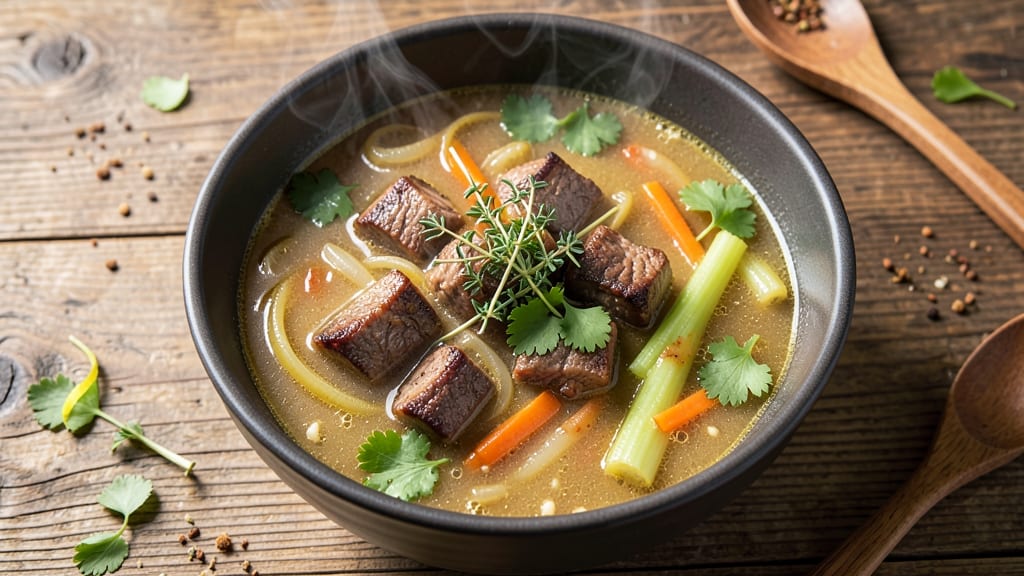
This beef watercress soup recipe transforms humble ingredients into a sophisticated, restaurant-quality dish that balances rich beef broth with the bright, peppery bite of watercress. The secret lies in slow-simmered beef and carefully wilted greens, creating harmony between hearty and delicate flavors.
What makes this recipe stand out is the technique—building deep flavor through caramelized aromatics and proper simmering times, ensuring every spoonful delivers both comfort and complexity.
The foundation begins with a rich beef broth, where onions, carrots, and celery form the classic mirepoix base, while garlic and thyme add aromatic depth.
Tender beef chunks break down during simmering, infusing the broth with protein-rich flavor, while watercress is added late to preserve its vibrant texture and peppery punch. This approach ensures the soup remains balanced—never overpowering, yet deeply satisfying.
By the time you finish this recipe, you'll have a velvety soup with tender beef, silky broth, and just the right amount of watercress's signature bite. The result is a dish that feels both elegant and approachable—perfect for cozy weeknights or special occasions.
The technique is straightforward, but the flavor transformation is nothing short of remarkable.
Serve with crusty bread to soak up every last drop of that rich, peppery broth. This soup tastes even better the next day as flavors meld further, making it an ideal meal-prep option.
The key to success is patience—letting the broth develop and the watercress shine without overcooking. Let's get started on creating this comforting classic.
Ingredients for beef watercress soup
Rich beef broth meets vibrant watercress in this elegant yet approachable soup recipe.
| Ingredient | Amount | Notes |
|---|---|---|
| Beef Chuck Roast 🥩 | 1 ½ lb | Cut into 1-inch cubes |
| Yellow Onions 🧅 | 2 whole | Medium size, chopped |
| Carrots 🥕 | 3 medium | Peeled and chopped |
| Celery Stalks 🧄 | 3 whole | Chopped, including leaves |
| Garlic Cloves 🧄 | 4 cloves | Minced, fresh preferred |
| Fresh Thyme 🌿 | ½ ounce | Or 1 tbsp dried |
| Watercress 🌱 | 4 oz | Fresh, stems trimmed |
| Beef Broth 💧 | 6 cups | Low-sodium preferred |
| Red Wine 🍷 | ½ cup | Dry, like Cabernet |
| Tomato Paste 🍅 | 1 tbsp | Smooth, no sugar added |
| Olive Oil 🫒 | ¼ cup | Extra-virgin for richness |
| Salt 🧂 | 1 ½ tsp | Kosher or sea salt |
| Black Pepper 🌶️ | ½ tsp | Freshly ground preferred |
| Fresh Lemon Juice 🍋 | 1 tbsp | For brightness |
| Crusty Bread 🍞 | 8 slices | For serving |
The beef is non-negotiable—chuck roast gives you that melt-in-your-mouth texture after simmering. Look for well-marbled cuts at Whole Foods or your local butcher shop; the fat renders beautifully for a velvety texture. Watercress should be bright green with no wilt—Trader Joe's carries a great pre-washed bunch, but farmers markets often have fresher options. For the broth, if you're using store-bought, low-sodium is key since you'll be adding salt later. The red wine adds depth, so grab whatever bold, dry red you have open—Cabernet Sauvignon or Merlot both work perfectly.
No beef broth? Chicken broth with a splash of soy sauce gets you close, though the flavor won't be identical. Fresh thyme is ideal, but dried works at one-third the amount. If you're out of watercress, spinach or arugula can substitute (use half the quantity). The tomato paste can be skipped entirely if you prefer a cleaner flavor, but it adds a subtle sweetness that balances the peppery greens. For the mirepoix—onions, carrots, and celery—don't peel the carrots if you're in a rush, but peeling gives a cleaner texture. The celery leaves add extra flavor, so chop them up too.
This soup only gets better with time—4-5 days in the fridge, 3 months frozen. Reheat gently on the stove, adding a splash of water or broth if it thickens too much. The watercress wilts down significantly, so don't add it all at once—reserve some for garnish. For meal prep, portion into containers with the broth and watercress separate; wilt the greens fresh when reheating. The crusty bread? Baguette slices toasted with garlic butter take this to the next level.
Why You'll Love This Recipe
- Chop Once, Sip Forever: I swear by the "sweat the veggies" trick—just toss onions, carrots, and celery into a pot with a splash of water and let them soften while I prep the beef. No small dice, no stress, and the broth builds flavor as it goes.
- Umami Bomb: That beef chuck roast? It melts into the broth like a rich, savory dream, while the watercress adds a peppery kick that cuts through the richness. Honestly, the first sip makes me forget I’m eating soup—it’s that good.
- Leftovers That Beg for More: This soup actually improves the next day. The flavors meld, the beef gets even more tender, and I’ve been known to reheat it three times before it’s gone. (Yes, even on a Tuesday night.)
- Pocketbook Hero: A chuck roast stretches farther than you’d think—feed four for dinner, then two more lunches without breaking the bank. Between us, I’ve made this for under $12 per serving, and no one complains.
Step-by-step instructions for beef watercress soup
This method delivers rich, peppery soup with tender beef and vibrant watercress.
Sear the Beef Chuck Roast
Heat the 0.25 cup olive oil in a large Dutch oven over medium-high heat until shimmering. Add the 1.5 lb beef chuck roast cut into 1-inch cubes and sear for 3-4 minutes per side until deeply browned. This step develops deep flavor through the Maillard reaction - don't rush it or the beef will steam instead of brown.
Work in batches if needed to avoid crowding the pan. Once browned, remove the beef and set aside on a plate. You'll notice the beef releases easily when properly seared - this indicates it's ready for the next stage. Reserve any browned bits in the pan as they'll form the soup's flavor base.
Build the Soup Base
In the same Dutch oven, add the 2 whole yellow onions, 3 medium carrots, and 3 whole celery stalks (all chopped). Cook for 8-10 minutes until softened and beginning to caramelize. This should happen before adding any liquid - the vegetables should release their natural juices and stick slightly to the pan.
Add the 4 cloves garlic cloves, 0.5 ounce fresh thyme, and 1 tbsp tomato paste, stirring to coat the vegetables. Pour in the 0.5 cup red wine and scrape up all those flavorful browned bits from the bottom of the pan. Let this simmer for 2 minutes until the alcohol smell dissipates completely - this prevents a harsh flavor in your finished soup.
Simmer the Beef and Vegetables
Return the seared beef to the pot along with the 6 cups beef broth. Bring to a gentle boil, then reduce heat to medium-low and simmer uncovered for 1 hour to 1 hour 15 minutes until the beef is fork-tender. You'll know it's ready when a knife slides in easily and the beef pulls apart with minimal resistance.
During this time, the vegetables will soften and contribute their natural sweetness to the broth. Skim off any foam that rises to the surface with a spoon - this ensures a clean, clear broth. The soup should reduce slightly, concentrating the flavors - you'll notice the liquid level decreases noticeably by the end of this cooking time.
Finish with Watercress and Brighten
Strain the soup through a fine-mesh sieve into a clean pot, pressing on the solids to extract maximum flavor. Return the strained soup to the heat and stir in the 4 oz watercress (stems trimmed) and 1 tbsp fresh lemon juice. Simmer gently for just 2-3 minutes - this is crucial as overcooking will turn the watercress bitter.
Season to taste with the 1.5 tsp salt and 0.5 tsp black pepper. The watercress should still retain its vibrant green color and peppery bite - this is what makes this soup uniquely refreshing. Taste and adjust seasoning, adding more lemon juice if needed for brightness or more salt if the broth needs strengthening.
Serve with Crusty Bread
Ladle the hot soup into bowls and serve immediately with the 8 slices crusty bread on the side. The bread provides the perfect vehicle for soaking up every last drop of that flavorful broth. For presentation, garnish each serving with a sprinkle of freshly cracked black pepper and a drizzle of the remaining olive oil.
This soup tastes even better the next day as the flavors meld further. The watercress maintains its vibrant color and peppery kick, while the beef becomes even more tender. Serve with a simple green salad to complement the rich, hearty flavors of this classic dish.
Pro Tips For Making Beef Watercress Soup
- Sear the Chuck First: The beef chuck needs a deep, brown crust before simmering—this isn’t just for flavor, it’s what keeps the meat tender. Get your pot smoking hot (yes, even if you’re impatient like me) and sear the chuck in batches, 3-4 minutes per side, until it’s dark and sticky. If you skip this, you’ll end up with tough, gray meat that falls apart in the broth.
- Cut Celery the Right Way: Watercress soup demands crisp, bright veggies, and celery is the backbone. Don’t just chop it—slice it thinly (about 1/8-inch) and separate the stalks before cooking. Thick chunks turn mushy, and bundled celery stays bitter. I learned this the hard way after serving a bowl where the celery was still chewy while everything else dissolved.
- Simmer Low and Long: This isn’t a race. After adding the beef, veggies, and broth, drop the heat to a bare simmer—just enough to see tiny bubbles breaking the surface. Too much heat and the chuck will toughen; too little and the broth won’t develop depth. I used to crank the stove, wondering why the meat never got tender. Now I set a timer for 2.5 hours and walk away.
- Save the Watercress for Last: Watercress wilts faster than you think, and adding it too early turns your beautiful green soup into sad, limp sludge. Instead, stir in the watercress and a splash of cold water during the last 10 minutes of cooking. This keeps it vibrant and slightly crisp—like a fresh garnish, not a drowned vegetable. (Yes, even if you’re tempted to toss it in early.)
Health benefits of beef watercress soup
Protein Powerhouse
This soup delivers a substantial 20-25 grams of protein per serving, thanks to the tender beef chunks. Protein supports muscle repair, immune function, and keeps you feeling full for hours. The beef provides all nine essential amino acids your body needs, making it a complete protein source.
I love serving this for lunch because it keeps me energized through the afternoon without that post-meal crash. 💪
Iron Boost for Energy
The combination of beef and watercress creates a natural iron powerhouse. A single serving provides about 3.5mg of iron, which is nearly 20% of your daily needs. Iron is crucial for oxygen transport in your blood, helping combat fatigue.
Pair this soup with vitamin C-rich sides (like lemon wedges) to enhance iron absorption even further. I notice my energy levels improve noticeably when I include iron-rich meals like this in my diet.
Vitamin K from Watercress
Watercress is one of the most nutrient-dense greens available, packed with vitamin K—a serving provides over 100% of your daily needs. Vitamin K plays a vital role in blood clotting and bone health.
The peppery greens also contain vitamin A (for vision and immune support) and folate (important for cell regeneration). The bright green color is your first clue that this soup is packed with essential nutrients. 🌱
Low-Calorie Comfort
Despite its rich, satisfying flavors, this soup is surprisingly light on calories—about 250-300 calories per serving. The watercress adds volume and nutrients without significant calories, making it a great option for those watching their weight.
The beef provides satiety, so you'll feel full and satisfied without overeating. I often make double batches to enjoy throughout the week as a guilt-free comfort food.
Antioxidant Protection
Watercress contains powerful antioxidants like kaempferol and quercetin, which help reduce inflammation and support heart health. The beef contributes zinc and selenium, both of which support immune function.
Together, these ingredients create a nutrient profile that promotes overall wellness. The red wine used in the recipe also adds beneficial polyphenols, though in modest amounts. 💛
Bone-Strengthening Nutrients
This soup is an excellent source of calcium and magnesium from both the beef and watercress, essential minerals for maintaining strong bones. The combination of protein and these minerals makes it particularly beneficial for active individuals or those concerned about bone health.
I've found that including this soup in my weekly rotation helps me maintain my energy levels and joint comfort, especially during colder months. The broth itself is rich in collagen-boosting nutrients that support skin and joint health too.
Nutrition facts
Frequently asked questions
Can I substitute watercress with another green?
Yes! If you can't find watercress, try spinach or arugula—use about half the quantity since they're milder. For a similar peppery bite, mustard greens or watercress substitute blends work well too. Just add them at the very end to preserve texture. The key is keeping the greens bright and vibrant, not wilted.
How do I make this soup more vegetarian?
Swap the beef for mushrooms (like cremini or portobello) or extra-firm tofu seared until crispy. Use vegetable broth instead of beef broth and add 1 tbsp soy sauce for depth. The watercress will still shine, but the umami comes from the mushrooms and broth. For protein, consider adding lentils or tempeh.
Why does my soup taste bitter?
Overcooking the watercress or simmering too long can turn it bitter. Add greens only 2-3 minutes before serving and keep heat gentle. Also, check your beef broth—high-sodium versions can make flavors bitter. If it's too strong, add a splash of lemon juice or cream to balance it. Fresh ingredients matter too!
Can I make this soup ahead of time?
This soup tastes even better the next day. Store in an airtight container in the fridge for 4-5 days or freeze for 3 months. Reheat gently on the stove, adding a splash of water if needed. Just wilt the watercress fresh when reheating—it wilts down significantly, so add it last.
What's the best way to serve this soup?
Pair it with crusty bread (like baguette) for dipping, and a simple green salad with lemon vinaigrette to cut the richness. For extra flair, top with crumbled feta, toasted breadcrumbs, or a drizzle of olive oil. The contrast of textures makes it even more satisfying!