
Soups & Stews
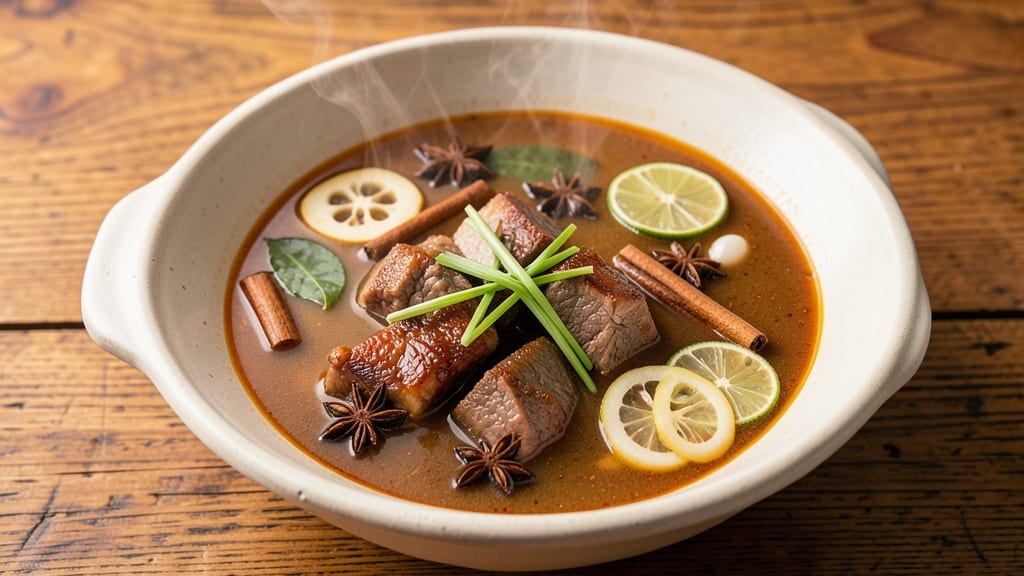
This Singapore beef soup recipe delivers the aromatic, spice-infused comfort of a bustling hawker stall—tender beef simmered in a fragrant five-spice broth that balances heat, sweetness, and herbal depth.
The secret lies in slow-cooking beef brisket with lemongrass, galangal, and kaffir lime leaves until the meat falls apart, while star anise and cinnamon build layers of complexity.
I developed this after years of searching for a home version that matched the soul-warming quality of Singaporean eateries, where every spoonful feels like a hug.
The broth starts with a fragrant base of ginger, garlic, and shallots, toasted spices, and a splash of coconut milk for richness—no heavy cream here. The beef cooks low and slow, absorbing flavors while the lemongrass and galangal infuse the liquid with citrusy, peppery notes.
This isn't just soup; it's a restaurant-quality experience that transforms tough cuts into melt-in-your-mouth bites, all while keeping the broth clear and deeply aromatic. The result? A bowl that's equally comforting on a rainy day or as a light yet satisfying meal.
What sets this apart is the balance of textures: tender beef that shreds easily, soft noodles or rice for soaking up the broth, and fresh garnishes like cilantro and fried shallots for crunch.
The five-spice blend—star anise, cinnamon, cloves, fennel, and peppercorns—creates a signature warmth that lingers, while a touch of tamarind or lime brightens the finish. This recipe serves as both a cultural homage and a weeknight staple, proving that home cooking can rival the best street food.
Perfect for feeding a crowd or meal prepping, the flavors only deepen as it sits. Serve with crusty bread or steamed jasmine rice to soak up every last drop of that fragrant broth. Let's get cooking—your taste buds will thank you.
Ingredients for beef soup recipe singapore
Here's what you need to recreate that fragrant Singapore beef soup experience at home.
| Ingredient | Amount | Notes |
|---|---|---|
| Beef Brisket 🥩 | 2 lb | Tough cut for slow cooking |
| Lemongrass Stalks 🌿 | 4 whole | Bruised for flavor release |
| Galangal Root 🧅 | 2 inches | Substitute ginger if unavailable |
| Kaffir Lime Leaves 🍋 | 4 whole | Fresh for authentic aroma |
| Star Anise Pods 🌶️ | 4 whole | Whole pods for easy removal |
| Cinnamon Sticks 🌿 | 2 whole | For warm spice depth |
| Cloves 🌶️ | 6 whole | Freshly ground preferred |
| Fennel Seeds 🌿 | 1 tbsp | Toasted for extra flavor |
| Black Peppercorns 🌶️ | 1 tsp | Freshly cracked |
| Ginger Root 🧅 | 2 inches | Peeled and sliced |
| Garlic Cloves 🧄 | 6 cloves | Minced for aromatic base |
| Shallots 🧅 | 3 whole | Sliced for sweetness |
| Coconut Milk 🥥 | 1 can (13.5 oz) | Full-fat for richness |
| Tamari or Soy Sauce 🍶 | 2 tbsp | For umami depth |
| Lime Juice 🍋 | 1 tbsp | Freshly squeezed |
| Fresh Cilantro 🌿 | ¼ cup | Chopped for garnish |
| Fried Shallots 🧅 | 2 tbsp | For crunchy topping |
| Jasmine Rice 🍚 | 1 ½ cups | Uncooked for serving |
| Water 💧 | 8 cups | For broth base |
| Salt 🧂 | 1 tsp | Adjust to taste |
The beef is the star—brisket is ideal because it stays tender when slow-cooked. Asian markets often carry it pre-cut, but if you're at a regular grocery store, look for beef chuck roast and ask the butcher to trim it. The galangal and kaffir lime leaves are the secret to that authentic hawker stall aroma. Asian grocery stores usually stock both fresh, but if you can't find galangal, ginger works in a pinch. For the spices, whole spices are best—you can toast them lightly in a dry pan before adding to the pot for deeper flavor. I always grab extra star anise and cinnamon sticks because they're great for other recipes too.
No galangal? Ginger plus a pinch of black pepper mimics its peppery kick. Fresh kaffir lime leaves? Lemon zest plus lime juice gets you close. The coconut milk should be full-fat—canned brands like Thai Kitchen or Aroy-D work perfectly. If you're serving this to a crowd, double the batch and freeze half—the flavors only get better overnight. The fried shallots add that signature crunch, but if you can't find them, regular shallots pan-fried in oil until crispy are a great substitute. And trust me, the tamari or soy sauce is non-negotiable for that umami punch.
This soup tastes even better the next day, so make extra if you can. Store it in the fridge for up to 5 days, or freeze portions for 3 months. The rice keeps separate until serving—just reheat the broth and beef together, then add fresh rice. For the cilantro, wash and dry it thoroughly before storing in a sealed container with a paper towel to keep it fresh. The lime juice should be added just before serving to keep the broth bright and tangy—don't add it too early or it'll turn bitter.
Why You'll Love This Recipe
- No Chopping Nightmare: I swear by this—just slice the brisket thin, toss in whole lemongrass stalks (no peeling needed), and the galangal stays chunky. The kaffir lime leaves? Tear them, no measuring, and the star anise pods? Drop them in whole. That’s it. My hands stay clean while the flavors build.
- Deep Umami Magic: Between us, the galangal and star anise give this soup a complexity that’s ridiculously satisfying. The beef brisket melts into tender strands, but the lemongrass and lime leaves add this bright, herbal punch that cuts through the richness—like a perfect balance of warmth and zing. Honestly, it’s the kind of flavor that makes you pause mid-sip.
- Leftovers That Beg for More: This soup only gets better the next day. The brisket stays juicy, the broth deepens, and the galangal’s sharpness mellows into something even more addictive. I make a double batch on Sundays, and by Wednesday, I’m reheating it with rice—no one ever skips seconds. (Yes, even on a Tuesday night.)
- Budget-Friendly Crowd-Pleaser: Brisket’s cheaper than you’d think, and the aromatics stretch the flavor across bowls. A single lemongrass stalk and a few galangal slices flavor everything—no wasted ingredients. Plus, it feeds six for under $20, and the leftovers turn into lunches or a quick stir-fry. My wallet and my family win.
Step-by-step instructions for Singapore beef soup
Here's how to build a rich, aromatic broth that melts into tender beef bites.
Prepare the Aromatics and Spices
First, bruise the 4 whole lemongrass stalks by gently pounding them with the side of a knife—this releases their essential oils. Peel the 2 inches galangal root and slice it into thin rounds. Peel the 2 inches ginger root and slice it as well. Finely mince the 6 cloves garlic and thinly slice the 3 whole shallots. Toast the 1 tbsp fennel seeds in a dry skillet over medium heat for 1 minute until fragrant, then grind them lightly with a mortar and pestle or in a spice grinder.
Crack the 1 tsp black peppercorns and set aside. You're building layers of flavor here—the toasted fennel adds warmth, while the galangal and lemongrass bring that signature Southeast Asian brightness. Keep all your prepped aromatics together so nothing gets lost in the process.
Sear the Beef and Build the Broth
Heat a large pot over medium-high heat and add the 2 lb beef brisket, searing on all sides until deeply browned—about 5-6 minutes total. This step develops deep, caramelized flavors that form the foundation of your soup. Remove the beef and set it aside.
In the same pot, add 1 tbsp oil and sauté the sliced shallots for 2 minutes until soft. Add the minced garlic, sliced ginger, and galangal, cooking for 30 seconds until fragrant. Pour in the 8 cups water and bring to a boil. Add the 4 whole lemongrass stalks, 4 whole kaffir lime leaves, 4 whole star anise pods, 2 whole cinnamon sticks, 6 whole cloves, toasted fennel seeds, and 1 tsp salt. Return the beef to the pot and reduce heat to low, covering partially to allow some steam to escape.
Simmer the Beef Until Fork-Tender
Let the beef simmer for 2 to 2.5 hours, skimming any foam that rises to the surface during the first 30 minutes. The broth should reduce slightly and develop a deep, spiced aroma. You'll know the beef is ready when a fork slides in easily—this means it's tender but not falling apart. If the broth reduces too much, add hot water as needed to maintain a 1-inch liquid level above the beef.
Here's the thing—patience is key. The slow simmer breaks down the collagen in the beef, transforming it into gelatin that thickens the broth naturally. Don't rush this step; the longer it cooks, the richer the flavor becomes.
Finish with Coconut Milk and Seasonings
Once the beef is tender, remove it from the broth and set it aside. Strain the broth through a fine-mesh sieve to remove all the aromatics and spices. Return the broth to the pot and stir in the 1 can (13.5 oz) coconut milk and 2 tbsp tamari or soy sauce. Simmer for 5 minutes to let the flavors meld—this balances the richness of the coconut milk with the umami from the tamari.
Return the beef to the pot and add the 1 tbsp lime juice. Taste and adjust the seasoning with more salt if needed. The soup should be fragrant, slightly sweet, and deeply savory. If it's too thick, thin it with a little hot water to reach your desired consistency.
Serve with Jasmine Rice and Garnishes
Cook the 1.5 cups jasmine rice separately according to package instructions—it should be fluffy and slightly sticky. To serve, divide the rice among bowls and ladle the hot beef soup over the top. Garnish each serving with 2 tbsp fried shallots and 0.25 cup chopped fresh cilantro. The fried shallots add a delightful crunch, while the cilantro brightens the dish with a fresh finish.
This soup is best enjoyed immediately while the beef is still warm and the broth is steaming. The combination of tender beef, fragrant broth, and aromatic rice creates a harmonious balance of flavors that's both comforting and deeply satisfying.
Pro Tips For Making Beef Soup Recipe Singapore
- CHAR THE BRISKET FIRST: Skip the slow simmer until everything’s in—sear the brisket in two batches over medium-high heat until it’s deep brown on all sides. This locks in flavor and prevents the soup from tasting like boiled beef. (Yes, even if you’re impatient like me, don’t rush this.)
- SLICE GALANGAL THINLY: Galangal’s tough fibers need a sharp knife and a firm hand—cut it into ¼-inch slices, not chunks. If you’re using the root’s outer layer (which is milder), peel it first, but don’t skip the inner, peppery core—it’s the thing that matters most.
- DON’T BOIL THE LIQUOR: Once the soup hits a simmer, drop the heat to the lowest setting you can tolerate. Boiling burns off the delicate aromas from lemongrass and kaffir lime leaves, turning your rich broth into something flat. (Your future self will thank you.)
- USE WHOLE STAR ANISE: Crack the star anise pods with the flat side of your knife before adding them—this releases the oils without making the soup taste like licorice overkill. Remove them after 20 minutes of simmering, or you’ll regret it. (I learned this the hard way.)
Storing and reheating your beef soup recipe singapore
Refrigerator Storage
Let your Singapore beef soup cool to room temperature for no more than 2 hours before transferring to airtight containers—I prefer glass containers with snap-on lids for easy reheating. Store it in the fridge at 40°F or below for up to 5 days.
The flavors actually deepen overnight as the spices meld further, making it even more aromatic. The beef and broth separate slightly, so give it a good stir before reheating. 💛
Freezer Storage
For longer storage, freeze the soup in quart-sized freezer bags or airtight containers, leaving 1-inch headspace for expansion. It keeps well for up to 3 months without losing its signature fragrant qualities.
I recommend freezing the broth and beef separately from the jasmine rice—reheat the soup components together and add fresh rice when serving. Label your containers with the date to track freshness. ❄️
Reheating on Stovetop
My preferred method is stovetop reheating to maintain the soup's rich texture. Pour the soup into a pot over medium-low heat and bring to a gentle simmer. Add 2-3 tablespoons of water or beef broth if it looks too thick.
Stir occasionally until heated through—about 10-15 minutes. Taste and adjust seasoning, as reheating can concentrate flavors. The beef should be piping hot and the broth steaming. 🔥
Microwave Reheating
For quick reheating, transfer the soup to a microwave-safe bowl and cover loosely with a microwave-safe lid or damp paper towel. Heat on medium power (50%) in 2-minute intervals, stirring between each interval, until steaming hot.
Avoid overcooking, which can make the broth watery. If the soup seems too thick after reheating, add a splash of hot water to restore consistency. 💡
Reviving Stale Broth
If your soup tastes flat after storage, revive it by adding 1 teaspoon of fish sauce or an extra splash of lime juice for brightness. A pinch of white pepper can also enhance the aromatic profile.
For extra richness, stir in 1 tablespoon of coconut milk before serving. The key is balancing the flavors—don't overdo it, or you'll lose the delicate balance of the original recipe. ✨
Serving Leftovers
Serve reheated soup over freshly cooked jasmine rice to maintain the perfect texture contrast. Garnish with extra fried shallots and cilantro to restore that fresh-from-the-stall experience. For a modern twist, top with a drizzle of chili oil or a sprinkle of crushed peanuts for added crunch and heat.
Leftovers make a fantastic lunch the next day! 🌟
Nutrition facts
Frequently asked questions
What cut of beef works best for this Singapore beef soup?
Use beef brisket or beef chuck roast for the best results—they stay tender when slow-cooked. These cuts have just enough fat and connective tissue to create a rich, gelatinous broth while remaining fork-tender. Avoid lean cuts like sirloin, as they'll dry out during the long simmering process.
Can I substitute any of the hard-to-find ingredients?
Galangal can be swapped for ginger plus a pinch of black pepper. Kaffir lime leaves can be replaced with lemon zest and lime juice. For lemongrass, use the juice from 1 lime plus 1 tsp lime zest. The five-spice blend (star anise, cinnamon, cloves, fennel, peppercorns) can be found in Asian grocery stores or online.
How do I make this soup vegetarian?
Replace the beef with mushrooms (shiitake or oyster) or tofu for texture. Use vegetable broth instead of water, and add 1 tbsp soy sauce for umami. The same aromatic base of lemongrass, galangal, and kaffir lime leaves will still shine. For protein, consider adding tempeh or seitan instead of beef.
Why does my broth turn cloudy after simmering?
Cloudiness usually means the broth needs more time to clarify. Skim off any foam or impurities during the first 30 minutes of simmering. If it's still cloudy, strain the broth through a cheesecloth-lined sieve for a clearer result. For extra richness, add 1 tbsp cornstarch mixed with water as a slurry at the end of cooking.
Can I make this soup in an Instant Pot?
Yes! Sear the beef first, then add all ingredients except lime juice. Cook on high pressure for 60 minutes, followed by a 10-minute natural release. Finish with coconut milk, tamari, and lime juice. The Instant Pot reduces cooking time but may slightly alter the broth's depth of flavor compared to stovetop simmering.