Soups & Stews
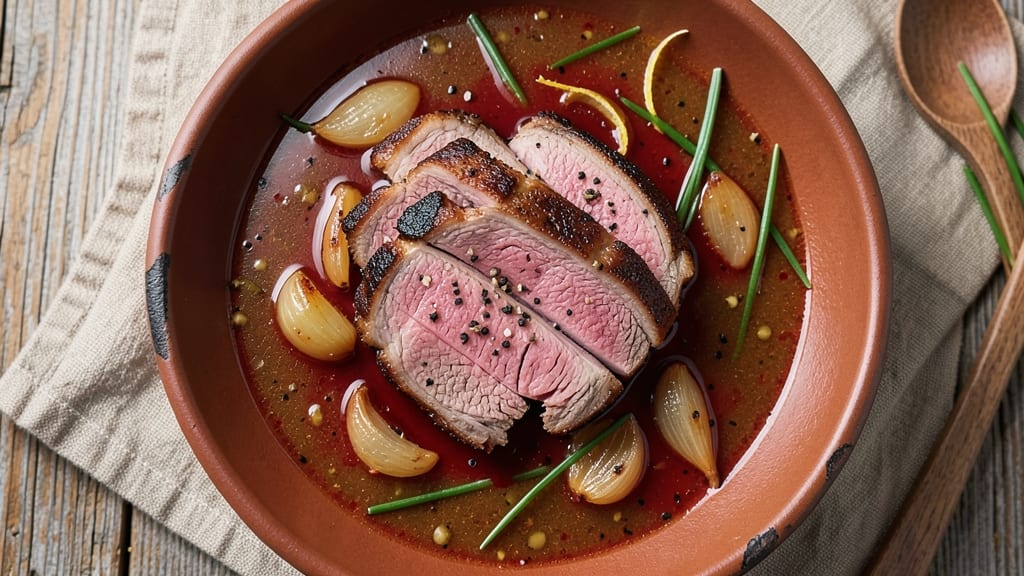
This beef roast onion soup recipe transforms humble ingredients into a deeply comforting masterpiece—caramelized onions layered with tender beef and crowned with melty Gruyère.
The secret lies in slow-roasting onions until they're sweet, jammy, and rich enough to stand alone, then building depth with a rich beef broth and velvety sauce.
Every spoonful delivers that perfect balance of savory beef, sweet onions, and umami-packed broth that makes this more than just soup—it's a heartwarming experience.
What sets this recipe apart is the technique: beef is seared to perfection before simmering in the broth, ensuring maximum flavor extraction, while the onions roast low and slow until their natural sugars caramelize into golden perfection.
The Gruyère topping isn't just decorative—it melts into the soup, creating pockets of creamy, cheesy goodness that elevate every bite. This is the kind of soup that transforms a simple weeknight into a memorable dining experience, all while being straightforward enough for any home cook.
The result is a soup with layers of texture and flavor—tender beef chunks, melt-in-your-mouth onions, and a velvety broth that coats your spoon. The Gruyère forms a golden, bubbling crust when broiled, adding both visual appeal and that irresistible cheesy pull.
It's the kind of dish that warms you from the inside out, perfect for chilly evenings or when you need a comforting meal that feels like a hug in a bowl.
Serve it with crusty bread to soak up every last drop of that rich, caramelized broth, or pair it with a simple green salad to balance the meal.
The beauty of this recipe is its versatility—it's hearty enough for a main course but satisfying enough to enjoy as a lighter dinner. Let's get started on creating this restaurant-quality beef roast onion soup at home.
Ingredients for beef roast onion soup
Six core ingredients transform into restaurant-quality beef roast onion soup with melty Gruyère magic.
| Ingredient | Amount | Notes |
|---|---|---|
| Yellow Onions 🧅 | 6 whole | Yellow or sweet onions preferred |
| Beef Chuck Roast 🥩 | 2 lb | Cut into 1-inch cubes |
| Beef Broth 💧 | 6 cups | Low-sodium preferred |
| Dry Red Wine 🍷 | 1 cup | Bold variety like Cabernet |
| Tomato Paste 🍅 | 2 tbsp | Smooth texture preferred |
| Garlic Cloves 🧄 | 6 cloves | Minced for even distribution |
| Fresh Thyme 🌿 | 2 sprigs | Or 1 tsp dried thyme |
| Gruyère Cheese 🧀 | 1 ½ cups | Freshly grated, not pre-shredded |
| Unsalted Butter 🧈 | 3 tbsp | Cold for topping |
| All-Purpose Flour 🌾 | 2 tbsp | For thickening |
| Salt 🧂 | 2 tsp | Kosher or sea salt |
| Black Pepper 🌶️ | 1 tsp | Freshly ground preferred |
| Crusty Bread 🍞 | 1 package | For serving, optional |
The onions are the foundation—yellow or sweet onions work best for their natural sweetness. Whole Foods or Trader Joe's usually carry the sweetest varieties, but regular grocery store onions will do in a pinch. Look for firm, dry onions with no sprouting. The beef should be chuck roast—it's the most flavorful and tender cut for slow cooking. If you can't find chuck, chuck-eye or bottom round work too, though chuck is ideal. The Gruyère is non-negotiable for that perfect melt—avoid pre-shredded (it gets gummy) and grate it yourself from a wedge.
No red wine? Beef broth with 1 tbsp balsamic vinegar mimics the depth. Fresh thyme is ideal but dried works at one-third the amount. For the tomato paste, Trader Joe's squeeze tubes are perfect—they're convenient and last months. The butter should be cold when topping—cut it into small cubes so it melts into little pools. If you're short on time, baguette slices can replace the crusty bread for serving. The flour is just for thickening—don't skip it, but don't overdo it either.
This soup tastes even better the next day as flavors meld. Store in the fridge for 4-5 days or freeze for 3 months. For freezing, portion into containers and leave room at the top—broth expands when frozen. Reheat gently on the stove, stirring occasionally. The Gruyère topping is best added fresh after reheating—5 minutes under the broiler creates that perfect golden crust. Leftovers reheat beautifully, making this an ideal make-ahead meal for busy weeknights.
Why You'll Love This Recipe
- One-Pot Magic: The chuck roast and onions caramelize right in the pot—no extra pans, no extra mess. I swear, I’ve made this while scrolling through my phone; it’s that hands-off.
- Deep Umami Bomb: That red wine and tomato paste combo? It’s like a flavor time machine—rich, slightly tangy, and so satisfying. The beef broth ties it all together with a warmth that just won’t quit.
- Crowd-Pleaser Flex: Bring it to potlucks, game days, or even a fancy dinner—it’s hearty enough for meat lovers but simple enough for picky eaters. My uncle, who “doesn’t like onions,” asked for seconds.
- Budget Win: A whole roast feeds six for less than takeout, and leftovers reheat like a dream. I’ve had this soup three days in a row—still delicious, still filling, still a steal.
Step-by-step instructions for beef roast onion soup
Master this rich, layered soup with deep caramelized flavors and velvety Gruyère topping.
🔥 Step 1: Caramelize the Onions Slowly
Peel and halve the 6 whole yellow onions lengthwise, leaving the roots intact to hold them together. Place them cut-side down in a large Dutch oven over medium-low heat. Add the 3 tablespoons unsalted butter and let it melt completely before adding the onions.
Cook undisturbed for 20 minutes until the onions release their moisture and begin to soften. Here's the key: resist the urge to stir during the first 15 minutes—this prevents them from browning too quickly. After 20 minutes, gently flip the onions and cook another 15 minutes until they're deeply golden and caramelized. You're building layers of sweetness that will form the soup's foundation.
Once the onions are caramelized to a rich amber color, remove them from the Dutch oven and set aside. You'll add them back later, but first we need to develop the rich beef base.
🍳 Step 2: Brown the Beef and Build the Base
Increase heat to medium-high and add the 2 lb beef chuck roast cut into 1-inch cubes. Brown the beef in batches if needed—don't overcrowd the pan or it will steam instead of sear. You want deep, golden-brown crusts on each piece, which adds incredible depth of flavor.
Once the beef is browned, remove it from the Dutch oven and set aside. Reduce heat to medium and add the 6 cloves minced garlic cloves, cooking for 30 seconds until fragrant. Stir in the 2 tablespoons tomato paste and cook for 1 minute to deepen the flavor.
Deglaze the pan with the 1 cup dry red wine, scraping up all the browned bits from the bottom. Let it simmer for 2 minutes until reduced by half. This step captures all the meaty, caramelized flavors that will infuse the soup.
🥘 Step 3: Simmer the Soup to Perfection
Return the caramelized onions and browned beef to the Dutch oven. Add the 6 cups beef broth, the 2 sprigs fresh thyme, 2 teaspoons salt, and 1 teaspoon black pepper. Bring to a gentle boil, then reduce heat to low and let it simmer uncovered for 1 hour 30 minutes.
The soup should reduce slightly, creating a concentrated, rich flavor. Stir occasionally and add a splash of water if it gets too thick. You're looking for the beef to become fork-tender—it should pull apart easily when pierced with a fork. The onions should be completely tender and infused with all the beefy flavors.
Once the beef is tender, remove the thyme sprigs and discard them. Taste and adjust seasoning if needed—this is where you can really fine-tune the balance of flavors.
🍽️ Step 4: Thicken and Prepare the Gruyère Topping
In a small bowl, whisk together the 2 tablespoons all-purpose flour and a pinch of salt. Gradually whisk this into the simmering soup, stirring constantly for 2 minutes to prevent lumps from forming. The soup will begin to thicken immediately.
For the Gruyère topping, combine the 1.5 cups freshly grated Gruyère cheese with the remaining 1 tablespoon unsalted butter in a small bowl. Mix until it forms a crumbly, pea-sized texture. This ensures even distribution when topping the soup.
Keep the soup warm over low heat while you prepare serving bowls. Ladle the soup into individual bowls, then sprinkle each portion generously with the Gruyère butter mixture. Place bowls under a broiler for 2-3 minutes until the cheese is bubbly and golden brown.
🍞 Step 5: Serve with Crusty Bread
Remove the broiled soups from the oven and serve immediately with slices of the crusty bread. The contrast between the warm, melty cheese topping, the rich beef broth, and the crisp bread creates the perfect balance of textures and temperatures.
Each spoonful should deliver layers of flavor: the deep caramelized sweetness of the onions, the rich umami from the beef, the wine's acidity cutting through the richness, and the nutty, melty Gruyère topping tying it all together. The bread soaks up any remaining broth for the ultimate dining experience.
Pro Tips For Making Beef Roast Onion Soup
- Sear the Chuck First: That beef chuck roast won’t caramelize properly if you’re gentle—get it screaming hot in a Dutch oven with 1 tablespoon of oil until deep brown on all sides. I used to skip this and wondered why the soup tasted flat; the crust adds flavor that simmers into the broth.
- Slice Onions Evenly: Cut those yellow onions into ¼-inch thick rings, not random chunks. Even slices soften at the same rate, so you won’t end up with some mushy and others raw. (Yes, it takes 10 extra minutes, but the texture is worth it.)
- Deglaze with Wine Early: As soon as you remove the roast, pour in that dry red wine before adding broth—let it bubble for 2 minutes to lift all the browned bits from the pan. I learned this the hard way when I rushed and missed half the flavor.
- Simmer Low and Long: After adding broth and tomato paste, reduce heat to a gentle simmer—just small bubbles breaking the surface—and cover partially. Too much heat = cloudy soup; too little = tough meat. (I set my stove to the second-lowest mark and forget it for 2.5 hours.)
Regional styles of these flavors
French Classic
In France, this dish is known as soupe à l'oignon au bœuf, where the focus is on slow-cooked beef and ultra-caramelized onions. The French version often uses beef marrow bones for extra richness, and the onions are roasted for 45-60 minutes until completely jammy.
I love adding a splash of Cognac when deglazing the pan—just ¼ cup—for a subtle brandy note that elevates the depth. Serve with a baguette and a sprinkle of Gruyère (or Comté for a local twist). The French version is all about patience—no rushing the caramelization. 🍷
Italian Hearty Style
Italy transforms this into a ribollita-inspired beef soup, where onions are simmered with san marzano tomatoes and rosemary instead of wine. Start by sautéing 4 minced garlic cloves with the onions, then add 1 can (28 oz) crushed tomatoes and 1 cup beef broth.
The Italians often finish with pecorino romano instead of Gruyère—its sharpness cuts through the richness beautifully. I add ½ cup cooked farro for texture and a handful of kale wilted in at the end. This version is lighter but still deeply satisfying. 🌿
American Comfort Twist
The American adaptation leans into bold flavors with a bourbon or whiskey deglaze (use ½ cup bourbon) and a touch of smoked paprika in the broth. Many recipes call for potatoes—add 1 lb Yukon Golds, diced, when simmering the beef.
The topping often includes sharp cheddar mixed with the Gruyère for a tangy kick. I like serving it with cornbread on the side for a Southern-inspired meal. The key here is smoke and heat—don’t skip the 1 tsp smoked paprika when browning the beef. 🔥
German-Inspired Version
In Germany, this soup often incorporates dark beer (like Dunkel lager) instead of wine, adding a malty depth. Start by browning the beef, then deglaze with 1 cup beer instead of red wine. Add 2 tbsp caraway seeds when simmering the broth for a subtle anise note.
The Germans also use sauerkraut—add 1 cup chopped sauerkraut in the last 15 minutes of cooking. For the topping, mix the Gruyère with 1 tbsp caraway seeds and 1 tbsp fresh parsley. This version is hearty and complex, perfect for cold weather. 🍺
Modern Fusion Approach
For a contemporary take, try a miso-beef roast onion soup—add 1 tbsp white miso paste when simmering the broth for umami richness. Swap the red wine for 1 cup dry sherry, and finish with a drizzle of chili oil and scallions.
The miso balances the sweetness of the onions beautifully. I also like adding shitake mushrooms (sliced) when browning the beef for extra depth. This fusion version is bold and unexpected, yet still comforting. 🌶️
Nutrition facts
Frequently asked questions
Can I substitute wine with another liquid?
Yes! For a non-alcoholic version, use 1 cup beef broth plus 1 tbsp balsamic vinegar to mimic the depth. For a richer flavor, try ½ cup beef broth + ½ cup tomato paste—this adds umami without alcohol. Just remember, wine's acidity helps balance the richness, so adjust seasoning if needed.
How do I make this soup ahead of time?
Prepare the soup up to 2 days in advance—just skip the Gruyère topping until serving. Store in an airtight container in the fridge. Reheat gently on the stove, stirring occasionally. The onions will soften further but still taste delicious. Add fresh Gruyère topping (broiled for 2-3 minutes) just before serving for that perfect melty texture.
What's the best way to reheat leftovers?
Reheat on the stove over low-medium heat, stirring occasionally to prevent scorching. If using the microwave, cover with a damp paper towel and heat in 1-minute intervals, stirring between each. For best results, add a splash of beef broth (about ¼ cup) to restore richness. Never reheat with the Gruyère topping—add it fresh after warming.
Can I use a different cut of beef?
Yes, but choose tender cuts like chuck-eye or bottom round for best results. Avoid lean cuts like sirloin—they won't become as tender during simmering. If using a tougher cut, increase simmering time to 2 hours. For quick cooking, try beef short ribs—they stay tender and add even more flavor to the broth.
Why did my onions burn instead of caramelize?
This happens when heat is too high or onions are stirred too soon. Keep heat at medium-low and resist stirring for the first 15 minutes. If they start browning too quickly, reduce heat immediately. For next time, try adding a splash of water or broth to create steam and slow the process. Patience is key—caramelization takes time!