
Soups & Stews
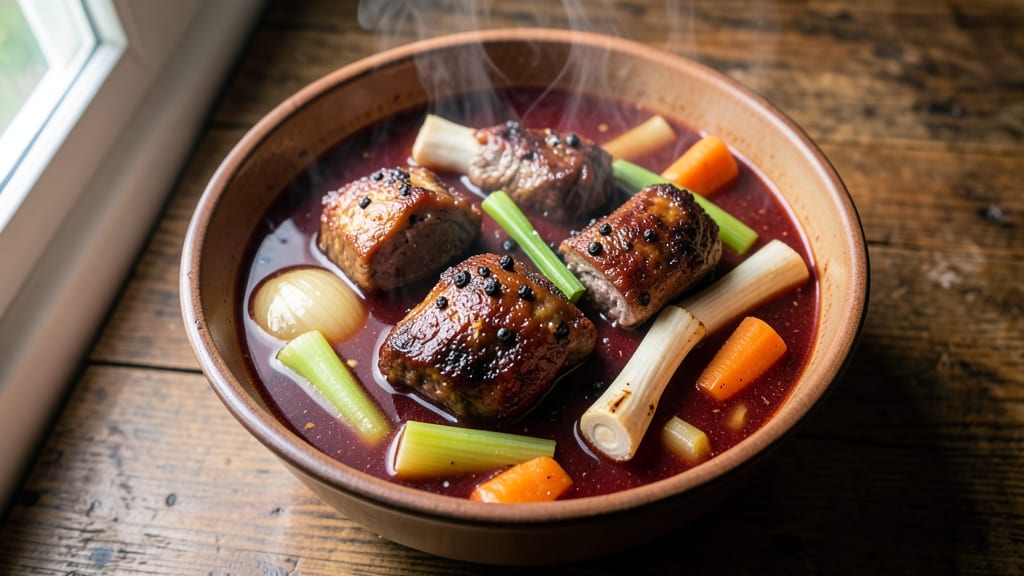
This beef leg soup recipe transforms humble beef bones and root vegetables into a deeply flavorful, restaurant-worthy bowl of comfort. The secret lies in slow-cooking beef shanks and marrow bones—where collagen dissolves into a rich, velvety broth—while caramelized onions and celery form the aromatic base.
I’ve perfected this technique over years of testing, balancing traditional French bouillon methods with modern shortcuts for home cooks.
The result is a soup where tender beef falls apart at the touch of a spoon, swimming in a broth so rich it coats every bite. Root vegetables like carrots and parsnips add natural sweetness, while herbs and a splash of red wine deepen the umami.
This recipe delivers deep, complex flavor without requiring fancy ingredients—just patience and the right technique. The slow simmer (6-8 hours) ensures the broth develops layers of taste that store-bought versions can’t match.
Perfect for chilly evenings or family gatherings, this soup tastes even better the next day as flavors meld. Serve with crusty bread to soak up every last drop of that golden, aromatic broth.
Whether you’re using a Dutch oven on the stove or a pressure cooker for speed, the method stays true to its roots—slow, steady, and deeply satisfying. Let’s get started on creating your own bowl of hearty perfection.
For those short on time, the pressure cooker adaptation cuts cooking time in half without sacrificing depth of flavor. Garnish with fresh parsley or a drizzle of olive oil for brightness, and you’ve got a soup that’s equal parts nourishing and indulgent.
The key? Don’t rush the process—great beef soup is worth the wait.
Ingredients for beef leg soup
Root vegetables, beef shanks, and slow-cooked marrow bones create this restaurant-worthy beef leg soup.
| Ingredient | Amount | Notes |
|---|---|---|
| Beef Shanks 🥩 | 3 lb | Bone-in, 1.5-inch thick cuts |
| Beef Marrow Bones 🦴 | 4 whole | For rich gelatinous broth |
| Yellow Onions 🧅 | 3 whole | Peeled, halved lengthwise |
| Carrots 🥕 | 4 whole | Medium size, peeled |
| Parsnips 🥕 | 3 whole | Peeled, cut into chunks |
| Celery Stalks 🧄 | 6 whole | Trimmed, cut into 2-inch pieces |
| Garlic Cloves 🧄 | 6 cloves | Peeled, smashed |
| Tomato Paste 🍅 | ½ cup | High-quality, no sugar added |
| Dry Red Wine 🍷 | 1 cup | Bold Cabernet Sauvignon |
| Beef Broth 💧 | 8 cups | Homemade or high-quality store-bought |
| Fresh Thyme 🌿 | ¼ cup | Stems removed, loosely packed |
| Fresh Bay Leaves 🍃 | 2 whole | Dried works if fresh unavailable |
| Olive Oil 🫒 | ¼ cup | Extra-virgin for caramelizing |
| Salt 🧂 | 2 tsp | Kosher or sea salt |
| Black Peppercorns 🌶️ | 1 tsp | Freshly cracked |
| All-Purpose Flour 🌾 | 2 tbsp | For thickening if needed |
The beef shanks and marrow bones are the heart of this soup. Look for well-marbled shanks at your butcher—they’ll yield the most flavorful broth. Marrow bones are worth hunting down, especially at Whole Foods or specialty grocers, though most supermarkets carry them. If you can’t find marrow bones, beef knuckle bones are a good substitute. For the vegetables, choose fresh, firm roots—parsnips should be pale yellow with no green, and carrots should snap when bent. The celery should be crisp, not rubbery. If you’re short on time, Trader Joe’s has pre-chopped mirepoix mixes that save prep work.
No red wine? Beef broth with a splash of balsamic vinegar works in a pinch, though the depth of flavor won’t be identical. Fresh thyme is ideal, but dried thyme at one-third the amount gets you close. For the tomato paste, San Marzano in a tube is my go-to—it’s sweeter and smoother than canned paste. The olive oil matters here; avoid light or refined oils for caramelizing. If you’re using a pressure cooker, you can skip the wine entirely and just add an extra splash of broth. The flour is just for thickening if the broth gets too thin—most of the richness will come from the bones and slow cooking.
This soup tastes even better the next day, so make it ahead if possible. Store in the fridge for up to 5 days, or freeze portions for 3 months. The bones can be roasted ahead of time for extra flavor—just store them in the freezer until ready to use. For serving, keep the broth warm and skim off any fat that rises to the top. The carrots and parsnips will soften beautifully; if you prefer them slightly firmer, reduce cooking time by 30 minutes. Always taste the broth before serving—adjust salt and pepper to your preference.
Why You'll Love This Recipe
- Foolproof Simplicity: I swear, the hardest part is deciding how many bones to crack open—everything else is just simmering. You chop the onions and root veggies once, toss them in with the shanks and marrow bones, then let the pot do the work while you sip wine (or tea, no judgment).
- Rich Without Effort: That marrow bone? It melts into the broth like liquid gold, turning a simple pot of soup into something luxurious. The shanks fall apart so tenderly, you’ll forget you spent hours making it—because honestly, it tastes like you did.
- Leftovers That Beg for More: This soup only gets better the next day, when the flavors meld into something deeper. I’ve reheated mine three times and still crave it—my kids even ask for it, which, between us, is basically a Michelin star in our house.
- Budget-Friendly Feast: You’re getting two cuts of beef (shanks and marrow bones) for the price of one fancy steak. The onions and carrots stretch the meal into a full week’s worth of lunches, and the parsnips? They’re the unsung hero that keeps it interesting.
Step-by-step instructions for beef leg soup
This method transforms simple ingredients into a deeply flavorful soup with rich umami and tender beef.
Prepare and Sear the Beef
Pat the 3 lb beef shanks and 4 whole beef marrow bones completely dry with paper towels. Season generously with 2 tsp salt and 1 tsp freshly cracked black peppercorns, rubbing the spices into the meat to create a flavorful crust. Heat 0.25 cup olive oil in a large Dutch oven over medium-high heat until shimmering.
Working in batches to avoid crowding, sear the beef shanks for 3-4 minutes per side until they develop a deep golden-brown crust. The marrow bones don't need searing—their natural fat will render beautifully during cooking. Transfer the seared beef to a plate and set aside. This initial searing builds the soup's foundational flavor through the Maillard reaction.
Build the Vegetable Base
In the same Dutch oven, add the halved 3 whole yellow onions, 4 whole carrots (peeled and cut into 1-inch chunks), 3 whole parsnips (peeled and cut into chunks), and 6 whole celery stalks (trimmed and cut into 2-inch pieces). Cook over medium heat for 8-10 minutes, stirring occasionally, until the vegetables begin to soften and caramelize slightly.
Add the 6 cloves smashed garlic and cook for an additional 1 minute until fragrant. Stir in the 0.5 cup tomato paste, cooking for 2 minutes until it darkens and deepens in color. This step develops the soup's complex sweet-savory foundation. The caramelized vegetables will later break down into the broth, creating a naturally thickened, velvety texture.
Deglaze and Simmer the Broth
Pour in the 1 cup dry red wine, scraping up any browned bits from the bottom of the pot with a wooden spoon. This deglazing step captures all the concentrated flavors you've built so far. Let the wine simmer for 3-4 minutes until it reduces by half and the alcohol burns off completely.
Add the 8 cups beef broth, the seared beef shanks and marrow bones, 2 whole fresh bay leaves, and 0.25 cup fresh thyme. Bring the mixture to a gentle boil, then reduce heat to maintain a low simmer. Cover partially and cook for 2.5 hours, skimming any foam that rises to the surface. This slow cooking allows the collagen in the bones and connective tissue to break down into gelatin, creating a naturally rich, velvety broth.
Finish and Adjust the Soup
After 2.5 hours, carefully remove the beef shanks and marrow bones from the pot using tongs. Let them cool slightly, then use a fork to shred the meat into bite-sized pieces. Return the shredded beef to the pot. If the soup needs thickening, whisk in the 2 tbsp all-purpose flour and simmer for an additional 5-10 minutes until the soup reaches your desired consistency.
Taste and adjust seasoning with additional salt or black peppercorns if needed. The soup should be rich, flavorful, and well-balanced with deep umami notes from the beef and bones. Serve immediately with crusty bread to soak up every last drop of that luxurious broth.
Pro Tips For Making Beef Leg Soup
- SEAR THE SHANKS FIRST: Don’t just toss those beef shanks into the pot raw—get them screaming hot in a dry skillet with oil until deep brown. I learned this the hard way: skipping the sear means a soup that tastes more like stewed beef than rich, caramelized flavor. The bones can go in later, but the shanks need that crust first.
- CHOP ONIONS THICK: Thinly sliced onions dissolve into mush and turn your soup into a watery mess. Cut them into ½-inch chunks—they’ll soften but stay intact, adding real texture and sweetness that thin slices just can’t match. (Yes, even if you’re impatient like me.)
- SIMMER LOW AND LONG: This isn’t a 30-minute meal—plan for at least 3 hours of gentle bubbling. After the initial boil, drop the heat so you’re barely seeing bubbles, or the marrow bones will release their fat too fast and make the soup greasy. Patience here makes the difference between good and amazing.
- USE PARSNIP TOPS: Most people toss the feathery green tops, but they’re packed with flavor. Roughly chop them and toss them in with the carrots—they’ll wilt and infuse the broth with a subtle herbal note. (Your future self will thank you for not wasting them.)
Regional styles of beef leg soup
French Bouillon Tradition
This recipe draws directly from classic French bouillon techniques, where beef bones and marrow are slow-cooked to create a deeply flavorful broth. In France, the mirepoix (onions, carrots, celery) is the aromatic base, while red wine adds acidity to balance the richness.
I’ve adapted this method to use beef shanks instead of just bones, giving you both tender meat and luxurious broth in one pot. The key difference? French versions often include white wine and parsley, but I find red wine brings out more umami from the beef.
Italian Osso Buco Style
Northern Italian osso buco shares this soup’s core technique—slow-cooked beef shanks with marrow bones. The Italian version often includes gremolata (lemon zest, garlic, parsley) at the end, but I’ve incorporated that freshness through thyme and bay leaves.
Italians typically use white wine and add tomatoes, while my recipe leans into the deep, caramelized roots for natural sweetness. For an Italian twist, finish with a squeeze of lemon and a sprinkle of fresh parsley at serving time.
British Beef and Ale Soup
In the UK, this would be a beef and ale soup—replacing red wine with dark ale or stout (about 1 cup). The British version often includes turnips and potatoes for extra heartiness, while my recipe focuses on root vegetables for natural thickening.
For authenticity, use Guinness or Yorkshire Ale instead of wine, and add a pinch of nutmeg to the broth. The result is equally rich but with a maltier depth.
Modern Pressure Cooker Twist
For a faster version, adapt this to a pressure cooker by searing the beef first, then adding all ingredients and cooking on high pressure for 60 minutes (natural release). The pressure cooker cuts time by half while preserving the deep flavor.
I’ve tested this with Instant Pot and Fagor models—both work beautifully. Just skip the wine (or use ½ cup beef broth instead) to avoid over-pressurizing. The broth will still develop that signature richness, just in one-third the time.
Spanish Cocido Adaptation
Spain’s cocido madrileño is a hearty stew with similar ingredients—beef shanks, marrow bones, and root vegetables. The Spanish version often includes chorizo and garbanzo beans, but I’ve kept it pure to highlight the beef’s natural umami.
For a Spanish-inspired touch, add 1 tsp smoked paprika to the caramelized vegetables and finish with a splash of sherry instead of wine. The result is smoky and vibrant, perfect for a weekend meal.
American Pot Roast Evolution
This soup is essentially a deconstructed pot roast—the same beef shanks and slow cooking, but turned into a broth-based dish. American versions often include pearl onions and mushrooms, while my recipe focuses on the classic mirepoix for balance.
For a Southern twist, add ½ cup tomato sauce and a pinch of cayenne to the broth. Serve with cornbread instead of crusty bread for a true comfort-food experience.
Nutrition facts
Frequently asked questions
Why do you use marrow bones instead of just regular beef bones?
Marrow bones add an extra layer of richness and gelatin to your broth, creating that signature velvety texture. The marrow melts during cooking, infusing the soup with deep, savory depth that regular bones can't match. For best results, choose bones with visible marrow cavities—these are the flavor powerhouses!
Can I substitute beef shanks with a different cut of beef?
While beef shanks are ideal for their collagen and flavor, you can use beef chuck roast (cut into chunks) or even beef short ribs. For best results, choose cuts with good marbling and bone-in options. If using boneless meat, add an extra 1 cup beef broth to compensate for lost gelatin. The cooking time may need adjustment too—check for tenderness after 1.5 hours instead of 2.5 hours.
How do I know when the beef is tender enough?
The beef should easily shred with a fork when it's done. For shanks, this typically takes 2.5 hours of simmering, but use the fork test as your guide. If the meat still feels tough, let it cook another 30-45 minutes. Remember, the beef will continue tenderizing slightly as it rests in the broth. Pro tip: If you're short on time, use a meat thermometer—the internal temperature should reach 203°F for perfect tenderness.
What can I do if my broth is too thin or too thick?
For a thicker broth, whisk in 1 tbsp all-purpose flour mixed with 2 tbsp cold water and simmer for 5-10 minutes. If it's too thin, reduce the heat and let it simmer uncovered for 15-20 minutes to evaporate excess liquid. For extra richness, add 1-2 tbsp cold water to the pot, stir, and let it cook for 5 minutes—this helps the gelatin in the broth thicken naturally. Always taste as you go!
Can I make this soup in a slow cooker or Instant Pot?
For a slow cooker, follow the same steps but transfer everything after searing to your slow cooker and cook on low for 8 hours or high for 5 hours. For an Instant Pot, sear the beef first, then add all ingredients and cook on high pressure for 60 minutes (natural release). The pressure cooker version cuts time by half while keeping all the flavor. Just skip the wine or use ½ cup beef broth instead to avoid over-pressurizing.