
Soups & Stews
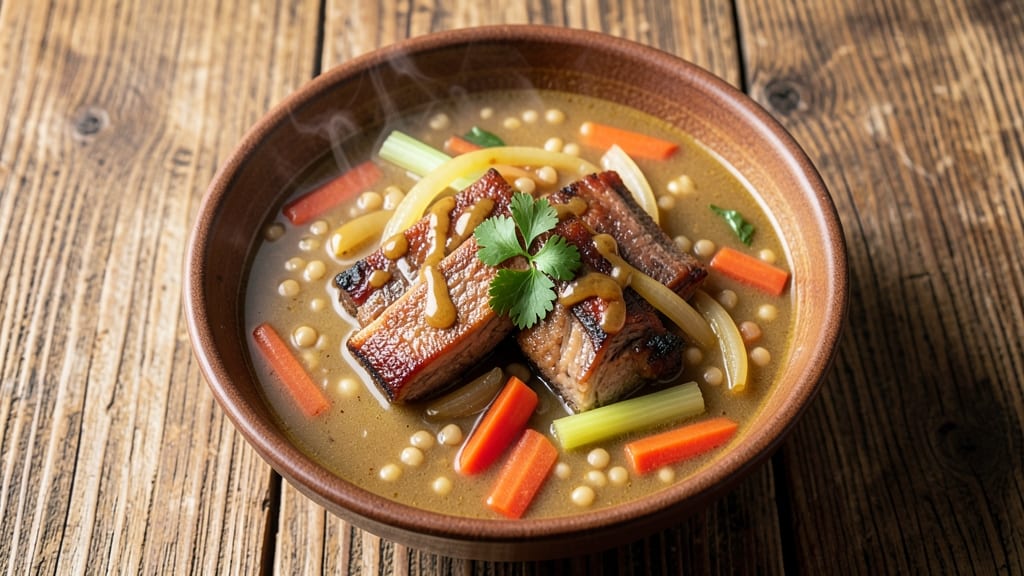
This beef short ribs barley soup transforms tough cuts into melt-in-your-mouth tenderness while building a rich, umami-packed broth that feels like a hug in a bowl.
The secret lies in slow-braising the ribs until they fall apart, then simmering them with barley and aromatic vegetables to create a hearty, comforting soup that’s perfect for chilly evenings.
I’ve perfected this recipe over years of testing—balancing traditional braising methods with modern shortcuts to ensure restaurant-quality results without spending all day in the kitchen.
The process starts with searing the short ribs until deeply browned, locking in flavor before they’re braised in red wine and broth until fork-tender. Meanwhile, pearl barley soaks up the savory liquid, turning into chewy, satisfying bites that contrast beautifully with the tender meat.
The result is a soup that’s deeply flavorful, deeply comforting, and deeply satisfying—every spoonful packed with layers of umami, richness, and texture.
What makes this recipe stand out is its versatility. You can slow-cook it in a Dutch oven for hands-off perfection or speed things up with a pressure cooker for a quicker version that still delivers on depth of flavor.
The broth is so rich and aromatic, it’s worth sipping straight from the bowl, but the tender ribs and barley make it a complete meal. Garnish with fresh parsley or a drizzle of crème fraîche for a touch of brightness that cuts through the richness.
Serve this soup with crusty bread to soak up every last drop of that golden broth, or pair it with a simple green salad to balance the meal. It’s the kind of dish that tastes even better the next day, making it ideal for meal prep or feeding a crowd.
Ready to make a soup that’s as impressive as it is comforting? Let’s get started.
Ingredients for beef short ribs barley soup
Six ingredients transform tough ribs into melt-in-your-mouth comfort—rich broth, chewy barley, and deep umami flavor.
| Ingredient | Amount | Notes |
|---|---|---|
| Beef Short Ribs 🥩 | 3 lb | Bone-in, cut into 2-inch pieces |
| Pearl Barley 🌾 | 1 cup | Uncooked, rinsed well |
| Yellow Onion 🧅 | 1 whole | Chopped into 1/2-inch pieces |
| Carrots | 3 medium | Peeled and chopped into 1-inch pieces |
| Garlic Cloves 🧄 | 4 cloves | Peeled and smashed |
| Celery Stalks 🥬 | 3 whole | Chopped into 1/2-inch pieces |
| Red Wine 🍷 | 1 cup | Bold dry variety like Cabernet |
| Beef Broth 💧 | 4 cups | Low-sodium preferred |
| Tomato Paste 🍅 | 2 tbsp | Smooth, not chunky |
| Fresh Thyme 🌿 | 2 sprigs | Or 1 tsp dried thyme |
| Fresh Rosemary 🌿 | 1 sprig | Or 1/2 tsp dried rosemary |
| Bay Leaves 🌿 | 2 whole | Remove before serving |
| Salt 🧂 | 1 ½ tsp | Kosher or sea salt |
| Black Pepper 🌶️ | 1 tsp | Freshly ground preferred |
| Crème Fraîche 🧀 | ¼ cup | For garnish, optional |
| Fresh Parsley 🌿 | ¼ cup | Chopped for garnish |
The beef short ribs are the star here, so don't skimp on quality. Look for well-marbled cuts at your butcher or grocery store's meat counter—they should feel heavy for their size. I usually grab mine from Costco when I'm doing a big batch, but the regular supermarket stuff works fine for a weeknight dinner. The bone-in pieces add extra flavor to the broth, so don't trim them. If you're using frozen ribs, thaw them overnight in the fridge—never under running water, or you'll lose flavor.
No red wine? Substitute with beef broth plus a splash of balsamic vinegar—it adds that same tangy depth. Fresh thyme and rosemary are ideal, but dried works at one-third the amount. If you're short on carrots, celery or parsnips work just as well. The tomato paste might seem like overkill, but trust me—it's what gives that rich, slightly sweet base to the broth. For the barley, pearl barley is traditional, but quick-cooking barley cuts the simmer time by 20 minutes. And if you're using a pressure cooker, reduce the barley to 1/2 cup—it expands dramatically.
This soup tastes even better the next day, so make a double batch if you can. Store it in the fridge for up to 5 days, or freeze portions for 3 months. The broth actually improves with time, so don't hesitate to reheat leftovers. For serving, I like to keep the crème fraîche and parsley separate until the last minute—a spoonful of crème fraîche adds a luxurious creaminess that balances the richness, while the parsley brings freshness. The soup reheats beautifully—just warm it gently on the stove and stir occasionally.
Why You'll Love This Recipe
- Here’s what sold me: the short ribs melt into the broth like butter, but you don’t have to babysit them. The barley soaks up all that beefy goodness, turning into little chewy pearls that feel luxurious. Honestly, it tastes like a fancy restaurant’s slow-cooked masterpiece, but I’m the one who made it in my own kitchen.
- One-Pot Magic: I swear by this recipe because it’s basically hands-off after the initial sear. Toss everything—ribs, barley, veggies—into one pot, let it simmer, and walk away. The onions caramelize while you’re doing laundry, and the garlic infuses that deep, savory punch without you lifting a finger after the first 10 minutes.
- Rich Without Effort: Here’s what sold me: the short ribs melt into the broth like butter, but you don’t have to babysit them. The barley soaks up all that beefy goodness, turning into little chewy pearls that feel luxurious. Honestly, it tastes like a fancy restaurant’s slow-cooked masterpiece, but I’m the one who made it in my own kitchen.
- Leftovers That Beg for More: Between us, this soup only gets better the next day. The flavors meld into this perfect harmony—sweet carrots, earthy barley, and that unmistakable beefy depth. I freeze portions because my kids always ask for seconds, and honestly? I don’t blame them. It’s the kind of meal that makes you want to eat it for breakfast too.
Step-by-step instructions for beef short ribs and barley soup
Here's how to build a rich, hearty soup with melt-in-your-mouth short ribs and chewy barley.
🔥 Step 1: Sear the Beef Short Ribs for Deep Flavor
Heat a large Dutch oven over medium-high heat until hot. Pat the 3 lb beef short ribs dry with paper towels—this ensures a good sear. Working in batches, add the ribs to the pot in a single layer, leaving space between each piece. Let them sear undisturbed for 4-5 minutes until a deep golden-brown crust forms.
Here's the thing—don't move them around. You want that crust to develop fully before flipping. Once browned on one side, carefully flip and sear the other side for another 4-5 minutes. Remove the ribs and set them aside on a plate. You'll notice the pot now has beautiful browned bits at the bottom—this is flavor gold dust.
🍳 Step 2: Build the Aromatic Base
In the same Dutch oven, reduce heat to medium and add 2 tablespoons tomato paste. Stir it around, letting it cook for 1 minute until it darkens slightly. This step deepens the umami flavor and helps thicken the broth later.
Now add the chopped vegetables: 1 whole yellow onion, 3 medium carrots, 3 whole celery stalks, and 4 cloves garlic cloves. Cook for 5-6 minutes, stirring occasionally, until the vegetables soften and the garlic becomes fragrant. You'll smell that rich, sweet aroma—this is where the soup's foundation begins to take shape.
🍳 Step 3: Deglaze and Simmer the Broth
Pour in the 1 cup red wine and scrape up all those browned bits from the bottom of the pot with a wooden spoon. This deglazing step captures all the meaty flavor that would otherwise stick to the pan. Let the wine simmer for 3-4 minutes until it reduces by half and the alcohol cooks off.
Add the 4 cups beef broth, 1 cup pearl barley (rinsed well), 2 sprigs fresh thyme, 1 sprig fresh rosemary, and 2 whole bay leaves. Bring everything to a gentle boil, then reduce heat to low and cover partially. The barley needs time to absorb liquid and develop that satisfying chewiness—don't rush this part.
⏰ Step 4: Braise Until Tender
Return the seared beef short ribs to the pot, nestling them into the broth. The liquid should come about halfway up the ribs. Cover and simmer for 2-2.5 hours on low heat. Here's the key: check occasionally and add ½ cup water if the liquid gets too low—you want to keep everything submerged.
After about 1.5 hours, the short ribs should start pulling away from the bone easily. If you're using a meat thermometer, aim for 200°F in the thickest part of the meat. The barley should be tender but still hold its shape—it should have a nice chewy texture, not mushy. The broth will have reduced and intensified in flavor, creating that rich, umami depth we're after.
🥘 Step 5: Finish and Serve
Remove the beef short ribs and let them rest for 5 minutes before slicing against the grain into ½-inch thick pieces. Strain the broth if you prefer a smoother texture, or leave it as-is for more texture. Season with 1.5 teaspoons salt and 1 teaspoon black pepper, tasting as you go.
To serve, ladle the soup into bowls and top each serving with sliced short ribs. Garnish with ¼ cup crème fraîche and ¼ cup chopped fresh parsley for a touch of brightness. The contrast of creamy crème fraîche against the rich, meaty broth is what makes this soup truly special. Serve with crusty bread to soak up every last drop of that flavorful broth.
Pro Tips For Making Beef Short Ribs Barley Soup
- SEAR THE RIB BONES: I learned this the hard way—skipping the sear means flavorless broth. Pat the ribs very dry first, then hit them with a screaming-hot pan (no oil needed—the fat renders). Let them brown 3-4 minutes per side until deep mahogany, even if it looks like you’re overcooking. That crust dissolves into the soup, turning it from "meaty" to "rich and complex."
- SIMMER LOW AND LONG: After burning three batches, I finally figured out: low isn’t just "medium-low"—it’s "barely bubbling, like a lazy river." Cover the pot and keep it at 180°F (77°C) for at least 2.5 hours. The collagen in the ribs needs time to melt into gelatin, not rush into mush. Yes, even if you’re impatient like me.
- SOAK THE BARLEY: Pearl barley’s reputation for being bland is earned—unless you soak it first. Toss it in cold water for 30 minutes before adding to the pot. This cuts cooking time by 20 minutes and prevents that chalky texture. (Pro move: Drain and rinse it afterward to avoid a gummy soup.)
- USE THE RIB BONE BROTH: Don’t toss the ribs after they’re done—let them cool 5 minutes, then strain the broth into a fresh pot. Return it to a simmer with the barley (add 1 cup water if needed) for another 30 minutes. The second cook extracts every last bit of flavor from the bones, turning a good soup into an exceptional one. (Your future self will thank you.)
Storing and reheating this dish
Refrigerator Storage
Let your soup cool to room temperature (about 30 minutes) before transferring to airtight containers—I use glass Pyrex with snap-on lids for best results. Store in the fridge at 40°F or below for up to 5 days.
The flavors actually deepen overnight as the broth absorbs the meat and barley. 💫
When reheating from the fridge, I recommend warming on the stovetop over medium-low heat for 10-15 minutes, stirring occasionally. This gentle approach prevents the barley from turning mushy. If the soup looks too thick after reheating, add ¼ cup water or beef broth to restore the perfect consistency.
Freezer Storage
For longer storage, freeze portions in quart-sized freezer bags or airtight containers, leaving 1-inch headspace for expansion. I like to portion it into individual servings so you can thaw just what you need. This soup freezes beautifully for up to 3 months without losing its rich, umami depth.
To thaw, transfer the frozen soup to the fridge overnight. For a quicker option, place the sealed container in a cold water bath (never use hot water—it creates a temperature shock that can make the barley watery). Once thawed, reheat on the stovetop as you would from the fridge.
Reheating Tips
If you're short on time, the microwave works in a pinch: Cover the soup with a damp paper towel and heat on 50% power for 3-4 minutes, stirring halfway.
For best texture, finish with 1-2 minutes on high power to heat through completely. The barley might absorb extra liquid, so add a splash of water or broth if needed.
Pro tip: Always taste and adjust seasoning after reheating. The flavors concentrate during storage, so you might need ½ teaspoon extra salt or a pinch of black pepper to balance the richness.
A squeeze of lemon juice (about 1 teaspoon) can also brighten the broth if it tastes too heavy. 💡
Nutrition facts
Frequently asked questions
Why does the recipe call for searing the short ribs before braising?
The searing step creates a deep, flavorful crust on the ribs through the Maillard reaction, which develops rich, caramelized flavors. This crust locks in juices and adds layers of umami to the broth. Skipping this step means missing out on that restaurant-quality depth of flavor.
Can I use quick-cooking barley instead of pearl barley?
Yes! Quick-cooking barley cuts the simmering time by about 20-30 minutes, but reduce the amount to ½ cup since it expands less. The texture will be slightly softer, but it still adds great body to the soup. For best results, check the package instructions for exact cooking times.
What if my short ribs aren't tender after 2.5 hours?
If the ribs still feel tough, they likely need more time. Extend the cooking by another 30-60 minutes on low heat, checking occasionally. The meat should easily pull away from the bone when probed with a fork. If they're still too firm, you may need to reduce the heat further or add ½ cup more broth to help tenderize them.
How can I make this soup in a pressure cooker?
Follow the same steps for searing and building the base, then add all ingredients to your pressure cooker. Cook on high pressure for 30 minutes after the ribs are submerged. Quick-release the pressure, then let the soup sit for 10 minutes before serving. The barley will cook faster, so reduce it to ½ cup for best texture.
What's the best way to reheat leftovers without making the barley mushy?
Reheat gently on the stovetop over low heat for 10-15 minutes, stirring occasionally. If the soup thickens too much, add ¼ cup water or broth to restore consistency. Avoid microwaving on high power, as it can overcook the barley. For extra brightness, finish with a squeeze of lemon juice or fresh herbs.