
Soups & Stews
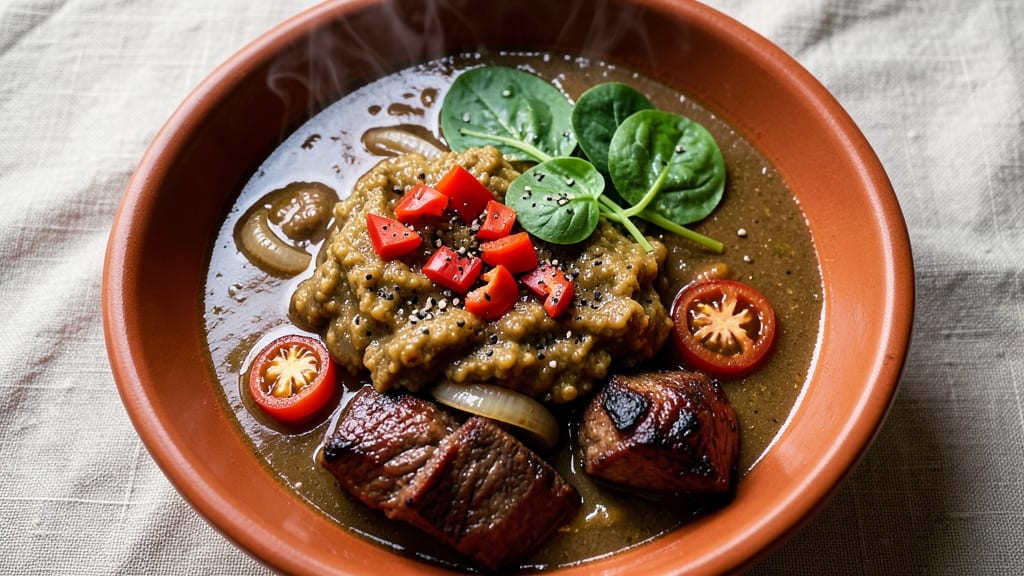
This beef egusi soup recipe brings the rich, nutty essence of West African cuisine to your kitchen with every hearty spoonful. 🌟 The secret lies in the egusi paste—a blend of ground melon seeds that transforms a simple broth into a velvety, flavor-packed masterpiece.
I've perfected this recipe over years of cooking, ensuring the beef remains tender while the soup develops deep, earthy notes from slow simmering.
What sets this dish apart is its balance of textures and flavors: the crispy beef, the creamy egusi, and the fresh vegetables all come together in a single pot.
Traditional recipes call for hours of simmering, but I've streamlined the process without sacrificing authenticity. The result? A soup so rich and satisfying, it becomes the centerpiece of any meal.
This recipe delivers restaurant-quality depth with simple techniques—browning the beef for caramelized flavor, blending the egusi paste smoothly, and adjusting seasoning to taste. The aroma alone will draw everyone to the table, while the first bite reveals layers of umami, nutty richness, and subtle spice.
Perfect for family gatherings or cozy weeknight dinners, this soup is a celebration of African culinary tradition.
Serve it with pounded yam, rice, or fufu for the full experience, and let the nutty, savory flavors transport you to a bustling West African marketplace. Here’s how to bring this classic dish to life in your own kitchen.
Ingredients for beef egusi soup
Six hearty ingredients create this West African classic, where nutty egusi meets tender beef in a velvety broth.
| Ingredient | Amount | Notes |
|---|---|---|
| Beef Chuck Roast 🥩 | 2 lb | Cut into 1-inch cubes |
| Egusi Paste 🌰 | 1 cup | Store-bought or homemade |
| Red Bell Pepper 🌶️ | 1 whole | Deseeded and chopped |
| Onion 🧅 | 1 whole | Medium, chopped |
| Fresh Tomatoes 🍅 | 4 whole | Medium, blended |
| Fresh Spinach 🍃 | 2 cups | Chopped, packed |
| Fresh Uli Leaves 🌿 | 1 cup | Chopped, optional |
| Coconut Milk 🥥 | 1 can | 13.5 oz can, full-fat |
| Fresh Ginger 🌿 | 1 inch | Piece, peeled and sliced |
| Garlic Cloves 🧄 | 6 cloves | Peeled and minced |
| Fish Stock 🐟 | 4 cups | Homemade or quality brand |
| Vegetable Oil 🫒 | ½ cup | For browning beef |
| Salt 🧂 | 1 ½ tsp | Adjust to taste |
| Black Pepper 🌶️ | 1 tsp | Freshly ground |
| Ground Nutmeg 🌿 | ½ tsp | Freshly grated preferred |
| Locust Beans 🌰 | ½ cup | Soaked and chopped |
The beef is non-negotiable—chuck roast delivers that deep, meaty flavor. Look for well-marbled cuts at your local butcher or Costco for the best value. The egusi paste is the soul of this dish; store-bought from African markets works, but homemade (toasted and ground melon seeds) adds authenticity. For the tomatoes, San Marzano if , but frozen works in a pinch (thaw and drain well). The uli leaves, if , add a unique peppery note—otherwise, skip without sacrificing flavor.
No coconut milk? Full-fat canned coconut cream thickens beautifully, though the flavor will be slightly sweeter. Fresh ginger loses potency fast, so buy it within a week of cooking—or use powdered at half the amount. Garlic can be roasted ahead for extra depth (wrap whole cloves in foil, bake at 400°F for 20 minutes). The fish stock is essential—store-bought brands like Knorr are fine, but homemade (simmered fish bones with veggies) elevates the dish. For locust beans, soak them overnight to soften; they add a unique earthy texture but aren’t mandatory.
This soup tastes even better the next day—double the batch if you’re feeding a crowd. Store in the fridge for up to 5 days, or freeze portions for 3 months (leave room at the top for expansion). Reheat gently on the stove, stirring often, and add a splash of water if it thickens too much. The egusi paste separates when cold, so stir vigorously before serving. Serve with pounded yam or jollof rice for the full experience—trust me, it’s worth the effort.
Why You'll Love This Recipe
- One-Pot Magic: I swear by this recipe because it’s literally one pot—no chopping boards overflowing, no pan clutter. The beef chuck roast slow-cooks right in the soup, so the flavors meld into something rich and tender without extra effort. Honestly, I’ve made it on nights when I’m too tired to clean up, and it still tastes like I put in hours.
- Deep Umami Bomb: That beef chuck roast? It’s the star—fall-apart tender after simmering with the egusi paste, which adds this nutty, earthy depth that just hits. The red bell pepper and tomatoes bring a bright, slightly sweet contrast, but the real kick comes from the way the egusi thickens the soup into a velvety, almost custard-like texture. (Yes, even my picky husband licks the bowl.)
- Weeknight & Weekend Ally: This soup is my go-to for lazy Mondays and Sunday dinners with company. For weeknights, I make a big batch and freeze portions—just reheat and serve with rice or pounded yam. For gatherings, it’s the dish that disappears first because it’s hearty enough to feed a crowd but still feels special. Between us, it’s the only soup I trust to impress without stress.
- Budget Stretch: Beef chuck roast is cheaper than cuts like ribeye, and the egusi paste stretches the soup into generous servings. I’ve fed six people for under $15 with leftovers that taste just as good the next day. Plus, the tomatoes and bell pepper add freshness without breaking the bank—no fancy ingredients, just honest, satisfying flavor. (My wallet thanks me.)
Step-by-step instructions for beef egusi soup
Here's how to craft a rich, nutty stew that captures West African soul in every spoonful.
🔥 Step 1: Brown the Beef for Deep Flavor
Heat the 0.5 cup vegetable oil in a large, heavy-bottomed pot over medium-high heat. Add the 2 lb beef chuck roast cut into 1-inch cubes and sear undisturbed for 3-4 minutes per side until deeply browned. This caramelization builds the soup's foundation.
You'll know it's ready when the beef releases easily from the pan with a gentle nudge. Transfer the browned beef to a plate and set aside. I like to leave the browned bits in the pot—they'll dissolve into the soup later, adding layers of umami flavor.
🍳 Step 2: Sauté Aromatics Until Fragrant
In the same pot, reduce heat to medium and add the 1 whole onion and 1 whole red bell pepper, both chopped. Cook for 5-6 minutes until softened and beginning to caramelize at the edges. Add the 6 cloves garlic and 1 inch ginger, both minced, and cook for another 1 minute until the garlic turns golden.
Here's where the magic starts—those aromatics should perfume your kitchen. If they start to brown too quickly, reduce heat slightly. The goal is to develop their flavors without burning them. Stir occasionally to ensure even cooking.
🥘 Step 3: Build the Soup Base
Add the 4 whole fresh tomatoes (blended) to the pot and cook for 3-4 minutes until the raw tomato flavor mellows. Pour in the 4 cups fish stock and bring to a gentle boil. Stir in the 1 cup egusi paste and 0.5 cup locust beans, then reduce heat to low-medium.
Simmer for 15-20 minutes while stirring occasionally. You'll see the egusi paste thicken the soup and develop its signature nutty aroma. This is where patience pays off—the soup needs time to meld all these flavors together. If it gets too thick, add a splash of water or stock.
🍳 Step 4: Incorporate Leafy Greens and Seasonings
Add the 2 cups fresh spinach and 1 cup fresh uli leaves (if using) to the simmering soup. Stir gently to wilt the greens, which should take about 3-4 minutes. Add the browned beef back to the pot along with the 1 can coconut milk, 1.5 tsp salt, 1 tsp black pepper, and 0.5 tsp ground nutmeg.
Bring the soup back to a gentle simmer and cook for another 10-12 minutes. The coconut milk will create a velvety texture while the nutmeg adds warmth. Taste and adjust seasoning—this is where you can really make the soup your own. The nutmeg should be present but not overpowering.
⏰ Step 5: Rest and Serve with Perfect Texture
Remove the pot from heat and let the soup rest for 5 minutes. This allows the flavors to fully meld and the texture to set. Serve immediately with pounded yam, fufu, or rice to soak up every nutty, savory bite.
The perfect beef egusi soup should have a thick, almost porridge-like consistency with visible chunks of beef and locust beans. Each spoonful should deliver a balance of nutty egusi, rich coconut, and tender beef. If it's too thick when served, stir in a little hot water or stock to reach your desired consistency.
Pro Tips For Making Beef Egusi Soup
- Sear the Beef First: After slicing your chuck roast into chunks, don’t toss them straight into the pot—sear them in batches over high heat with a splash of oil until they brown deeply. This isn’t just for looks; it builds flavor that’ll carry through the long simmer, especially since egusi can sometimes overpower if the beef tastes bland.
- Toast the Egusi Paste: Skip the raw egusi paste—it’ll make your soup taste bitter and chalky. Dry-toast the paste in a separate pan over medium heat for 2-3 minutes, stirring constantly, until it smells nutty and smells like toasted seeds. This step cuts the bitterness and makes the soup richer.
- Blanch Tomatoes First: Your fresh tomatoes will bleed color and water into the soup if you chop them raw. Give them a quick 30-second blanch in boiling water, then shock in ice water before dicing. This keeps the soup vibrant and prevents a watery, diluted base—especially important when balancing the thick egusi paste.
- Simmer Low and Long: After adding the egusi paste to the broth, resist the urge to rush. Let it simmer uncovered at a gentle bubble for at least 45 minutes, stirring occasionally to prevent sticking. This lets the flavors meld without the paste turning into a grainy paste or the beef drying out.
Best sauces and condiments for beef egusi soup
Coconut Milk Magic
The 1 can full-fat coconut milk is non-negotiable for that signature creamy texture that makes this soup irresistible. I always use Aroy-D brand from the Asian market—its rich, slightly sweet flavor complements the earthy egusi perfectly.
For a lighter version, substitute with ½ cup coconut cream plus ½ cup water, but expect a slightly thinner consistency. 🥥
Spicy Pepper Paste
For an extra kick, add 1 tbsp fresh shito (black pepper) paste or 1 tsp cayenne when incorporating the leafy greens. This West African staple adds heat without overpowering the nutty base.
I keep a small jar of Penzeys brand shito paste in my pantry—it's a game-changer for depth and spice. Adjust to taste, especially if serving kids or sensitive eaters.
Uli Leaf Infusion
When available, uli leaves (also called African spinach) provide a unique peppery brightness that elevates the soup. If you can't find them, 1 cup chopped regular spinach works fine, though the flavor profile shifts slightly.
For extra authenticity, add ½ tsp uli leaf powder (available at African markets) when seasoning the soup. This ingredient is optional but adds that signature West African touch.
Smoky Locust Bean Twist
For a smoky depth, lightly toast the locust beans in a dry pan for 2-3 minutes before adding them to the soup. This caramelization enhances their earthy flavor and adds complexity. If you're short on time, skip toasting—they'll still contribute texture, just with a milder taste.
I like to crush a few beans slightly with my hands to release their nutty oils during cooking. 🌰
Ginger-Garlic Boost
For maximum aromatic impact, roast the garlic cloves whole at 400°F for 20 minutes before mincing. This technique transforms their flavor from sharp to sweet and mellow. Pair with fresh ginger (never powdered) for a bright, zesty contrast.
The combination creates a flavor bridge between the nutty egusi and rich coconut milk that's simply irresistible.
Finishing Touches
Brighten the soup with 1 tbsp lemon juice or ½ tsp palm oil (available at African markets) just before serving. The acidity cuts through the richness while palm oil adds a distinctive golden hue and subtle earthiness.
For a modern twist, garnish with chopped scallions or toasted melon seeds—they provide visual appeal and a satisfying crunch. 💫
Nutrition facts
Frequently asked questions
Can I substitute beef with another protein?
For a lighter option, use chicken thighs (bone-in for flavor) or goat meat (traditional in some regions). If you prefer seafood, shrimp or smoked fish work beautifully—simmer them for 5-7 minutes instead of the beef's 1.5-2 hours. The key is to brown the protein first for maximum flavor.
How do I make homemade egusi paste?
Toast 1 cup cleaned melon seeds in a dry pan over low heat for 5-7 minutes until fragrant. Grind them into a fine paste using a food processor or mortar and pestle. For extra richness, add 1 tbsp palm oil while grinding. Store in an airtight container for up to 3 months.
Why does my soup turn too thick?
This happens when the egusi paste absorbs too much liquid during simmering. To fix it, stir in ½ cup hot water or stock gradually until you reach a creamy but spoonable consistency. For prevention, reduce the simmering time to 15 minutes or add an extra ½ cup broth before cooking.
What's the best way to reheat leftovers?
Gently reheat on the stove over low heat with 2-3 tbsp water or stock to prevent separation. Stir constantly for 5-7 minutes until fully heated. Microwaving isn't recommended as it can make the egusi paste separate. The soup actually tastes better the next day!
Can I make this soup in an Instant Pot?
Yes! Sauté the beef and aromatics as directed, then add all ingredients except the leafy greens. Cook on high pressure for 20 minutes, then quick-release. Stir in greens and coconut milk at the end. The texture will be slightly thinner—adjust with a cornstarch slurry if needed.