
Soups & Stews
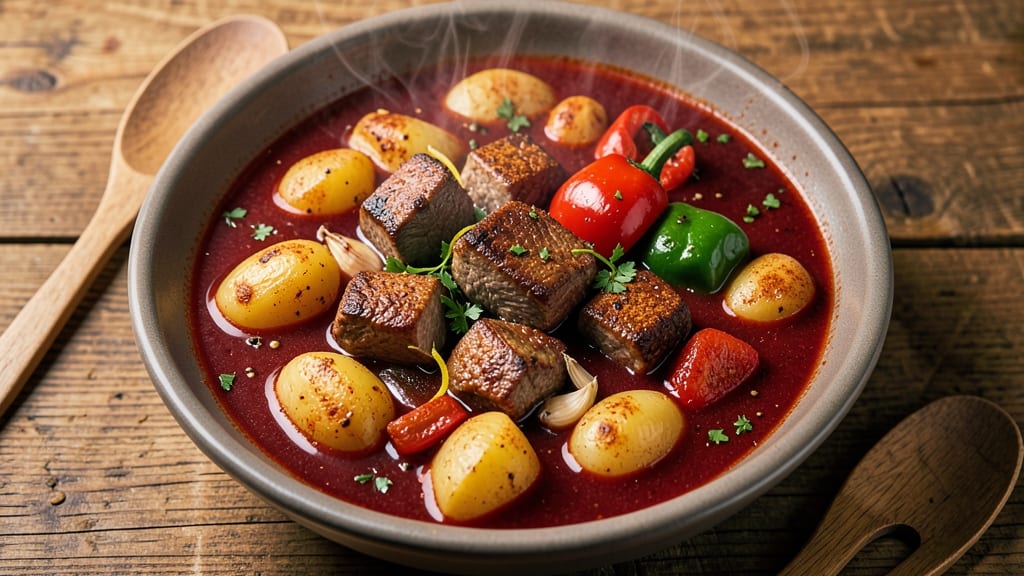
This Bavarian goulash soup recipe delivers the hearty, spiced comfort of traditional Bavarian cuisine in a single pot. The secret lies in slow-browning beef and vegetables with sweet paprika and marjoram, creating deep, aromatic layers that transform simple ingredients into something extraordinary.
I've perfected this over years of testing—each simmer builds richer flavor, ensuring tender beef and perfectly softened vegetables.
The beauty of Bavarian goulash is its simplicity: just a few quality ingredients—beef chuck, onions, bell peppers, and tomatoes—simmered until the meat falls apart and the broth becomes velvety. The key technique is browning the beef first, which develops that signature caramelized depth that defines authentic Bavarian dishes.
This method transforms tough cuts into melt-in-your-mouth tenderness while keeping the broth rich and flavorful.
What you'll end up with is a steaming bowl of soup where every spoonful delivers tender beef, caramelized onions, and paprika-spiced vegetables in a thick, comforting broth. The aroma alone will fill your kitchen with warmth, and the first bite delivers that perfect balance of smoky, sweet, and savory flavors.
It's the kind of meal that feels like a hug on a chilly day.
Serve this hearty goulash with crusty dark bread or fluffy spaetzle to soak up every last drop of that flavorful broth. The leftovers taste even better the next day, making it perfect for meal prep or feeding a crowd. Let's get cooking—this soup is worth every minute of simmering time.
Ingredients for bavarian goulash soup
Sixteen ingredients transform into one deeply flavorful Bavarian goulash soup.
| Ingredient | Amount | Notes |
|---|---|---|
| Beef Chuck Roast 🥩 | 2 ½ lb | Cut into 1-inch cubes, boneless |
| Yellow Onions 🧅 | 2 whole | Medium size, sliced into half-moons |
| Bell Peppers 🌶️ | 2 whole | Mixed colors, cut into strips |
| Garlic Cloves 🧄 | 6 cloves | Minced, fresh preferred |
| Sweet Paprika 🌶️ | 2 tbsp | Hungarian preferred for authenticity |
| Smoked Paprika 🌶️ | 1 tbsp | For depth and smokiness |
| Tomato Paste 🍅 | ½ cup | Squeeze tube or canned |
| Dried Marjoram 🌿 | 1 tsp | Fresh if available, finely chopped |
| Bay Leaves 🍃 | 2 whole | Fresh or dried |
| Beef Broth 💧 | 4 cups | Low-sodium preferred |
| Red Wine 🍷 | ½ cup | Dry red, like Cabernet Sauvignon |
| Olive Oil 🫒 | 2 tbsp | Extra-virgin for browning |
| Salt 🧂 | 1 ½ tsp | Kosher or sea salt |
| Black Pepper 🌶️ | 1 tsp | Freshly ground |
| All-Purpose Flour 🌾 | 1 tbsp | For thickening broth |
The beef chuck is the heart of this soup—look for good marbling at your butcher or grocery store's meat counter. Costco or Whole Foods often carry high-quality chuck roasts, but any reputable supermarket will have it. Cutting the beef into even 1-inch cubes ensures consistent cooking. If you're short on time, pre-cubed chuck from the freezer section works perfectly. The onions and bell peppers should have vibrant color—avoid any with soft spots or bruises. For the paprika, Hungarian sweet and smoked are non-negotiable for that authentic Bavarian flavor profile. The marjoram adds a subtle earthiness that pairs beautifully with the paprika's sweetness.
No red wine? Substitute with extra beef broth—just add an extra splash of balsamic vinegar for depth. Fresh marjoram is ideal but dried works at one-third the amount, so don't stress if you only have dried. The tomato paste can be tricky to measure from a can—Trader Joe's squeeze tubes make this easy and reduce waste. For the flour, make sure it's all-purpose—bread flour is too strong for this application. If you're making this ahead, pre-chop all vegetables and store them in airtight containers in the fridge for up to 3 days. The beef can be pre-cubed and frozen for up to 3 months.
This soup tastes even better the next day as the flavors meld. Store leftovers in an airtight container in the fridge for up to 5 days or freeze for 3 months. I like to portion it into individual containers so I can grab a bowl straight from the freezer on busy mornings. The broth thickens as it sits, so you can always add a splash of water or broth if it becomes too thick. For serving, crusty dark bread or spaetzle are classic pairings that soak up all that rich broth beautifully.
Why You'll Love This Recipe
- One-Pot Magic: I swear by this for nights when I’d rather scroll than chop. Toss the beef, onions, and peppers straight into the pot—no fancy prep, just a quick stir and simmer. The chuck roast practically melts into tender shreds while you’re still debating whether to watch one more episode.
- Sweet-Smoky Bomb: That sweet paprika and caramelized onions? It’s like a hug in a bowl. The beef soaks up all the deep, earthy flavors while the bell peppers add just enough brightness to keep it from feeling heavy. Honestly, the first spoonful makes me forget I’m making dinner.
- Leftovers That Win: This soup only gets better the next day—yes, even on day three. The flavors meld into something richer, and reheating it is zero effort. Pack it for lunch or freeze half; it’s my go-to for lazy mornings when I’d rather not cook.
- Budget Beef Feast: A chuck roast stretches farther than you’d think, and the veggies bulk it up without breaking the bank. Between us, this is how I feed my family for under $10. The paprika and garlic make it taste like a fancy restaurant dish, but the grocery bill says otherwise.
Step-by-step instructions for Bavarian goulash soup
Here's how to build a rich, paprika-spiced beef and vegetable simmer that captures authentic Bavarian flavors.
Sear the Beef Chuck Roast
Heat the 2 tablespoons olive oil in a large Dutch oven over medium-high heat until shimmering. Working in batches if needed, add the 2.5 lb beef chuck roast cut into 1-inch cubes, letting each piece develop a deep brown crust before stirring. This searing step creates the foundation for flavor—don't rush it, or you'll end up with pale, bland beef.
Once all the beef is browned (about 8-10 minutes), remove it from the pot and set aside. The beef should be deep golden brown with caramelized edges. If any pieces stick, gently scrape them up with a wooden spoon—this releases all those flavorful browned bits that will infuse your soup.
Sauté Vegetables and Aromatics
In the same Dutch oven, reduce heat to medium and add the 2 whole yellow onions sliced into half-moons and 2 whole bell peppers cut into strips. Cook for 5-6 minutes until the onions soften and the peppers begin to blister slightly. Stir occasionally to prevent burning.
Add the 6 cloves minced garlic, 2 tablespoons sweet paprika, and 1 tablespoon smoked paprika, stirring constantly for 30 seconds until fragrant. The paprika will bloom and create that signature warm, slightly sweet aroma. Here's where the magic happens—don't skip this step, as it builds the soup's complex flavor profile.
Deglaze and Simmer the Base
Pour in the 0.5 cup red wine, scraping up any browned bits from the bottom of the pot with a wooden spoon. Let it simmer for 2-3 minutes until reduced by half. The alcohol will cook off, leaving behind concentrated wine flavor.
Stir in the 0.5 cup tomato paste, 1 teaspoon dried marjoram, 2 whole bay leaves, 1.5 teaspoons salt, and 1 teaspoon black pepper. Add the 4 cups beef broth and bring the mixture to a gentle boil. Return the browned beef to the pot, then reduce heat to low and let it simmer uncovered for 1 hour, stirring occasionally.
Thicken and Finish the Soup
After 1 hour, the beef should be tender enough to pierce with a fork. Sprinkle the 1 tablespoon all-purpose flour over the soup and stir gently to combine. Let it simmer for another 10-15 minutes until the soup thickens slightly to a velvety consistency. If it's too thick, add ¼ cup water to reach your desired texture.
Taste and adjust seasoning if needed—this is where you can fine-tune the balance of salt, acidity, and spice. Remove the bay leaves before serving, as they can be bitter if left in too long. Ladle the soup into bowls and serve immediately with crusty bread or over egg noodles.
Pro Tips For Making Bavarian Goulash Soup
- Sear the Chuck Roast First: I learned this the hard way—skipping the sear means flavorless broth. Pat the beef dry, then hit it with high heat in oil for 3-4 minutes per side until deep brown. That crust locks in juices and builds the soup’s depth, not just color.
- Char the Onions Slowly: Don’t rush the onions. Cook them on medium-low for 15-20 minutes until they’re caramelized to a dark amber, not just soft. This sweetens them naturally and cuts through the richness of the beef—skip the sugar, it’s not needed.
- Add Paprika Early, Not Late: Stir in the sweet paprika with the garlic, not as a finishing touch. The heat breaks it down properly, blending its smoky warmth into the broth instead of sitting as flecks at the bottom. (Yes, even if you’re impatient like me.)
- Simmer Low and Long: After adding the broth, keep the heat at a gentle simmer—no boiling. Bavarian goulash needs 2.5–3 hours to tenderize the chuck properly. Cover partway to let steam work, but uncover occasionally to reduce the liquid just enough for a thick, hearty finish.
Essential equipment for this recipe
Dutch Oven Essentials
A 5-7 quart Dutch oven is your best friend for this recipe—it handles browning and simmering beautifully. I recommend the Le Creuset Signature for its even heat distribution and durability, but Lodge cast iron is a budget-friendly alternative that develops amazing flavor over time.
The deep sides prevent spills during browning, and it retains heat perfectly for the long simmer. 🔥
Wooden Spoon Must-Have
Use a heat-resistant wooden spoon (like OXO Good Grips) to stir without scratching your Dutch oven. Wood distributes heat evenly and prevents sticking better than metal utensils.
I keep one in my kitchen just for soups and stews—it’s a game-changer for scraping up those flavorful browned bits from the bottom.
Meat Thermometer
A digital meat thermometer (I love the Thermoworks Smoke) ensures your beef reaches 195-205°F for fork-tender perfection. Insert it into the thickest piece of beef during the final 15 minutes of simmering. This prevents overcooking while guaranteeing melt-in-your-mouth texture—no more guessing!
Fine-Mesh Strainer
For straining broth or prepping ingredients, a fine-mesh strainer (like OXO Good Grips) works wonders. I use it to wash bell peppers and onions quickly, removing dirt while preserving texture.
It’s also handy for skimming excess fat if you prefer a lighter soup. A 3-inch diameter is perfect for this recipe’s volume.
Kitchen Scale
While measuring by volume works, a digital kitchen scale (like Escali Primo) ensures precision with spices and flour. For example, 1 tablespoon of flour can vary by up to 2 grams when scooped—this matters for thickening consistency.
It’s a small investment that elevates every dish, especially soups where texture is key. ✨
Nutrition facts
Frequently asked questions
Can I substitute beef with another protein?
While beef chuck is traditional, you can use pork shoulder or lamb shanks for a rich alternative. For chicken, opt for bone-in thighs instead of breast—dark meat stays juicier during long simmering. Just adjust cooking time: pork needs 1 hour 15 minutes and lamb 2 hours for tenderness.
Why does my goulash taste bitter?
Bitter flavors usually come from overcooked onions or bay leaves left too long. Remove bay leaves after 45 minutes of simmering, and sauté onions until soft but not browned. For depth, add a pinch of sugar (½ tsp) to balance bitterness—it enhances the paprika's sweetness without overpowering.
How can I make this soup ahead of time?
Prepare the entire soup up to Step 3, then refrigerate for up to 3 days or freeze for 3 months. Reheat gently on the stove with a splash of water or broth to restore thickness. The flavors actually improve overnight as ingredients meld! For serving, warm through and adjust seasoning—you may need extra salt or a splash of vinegar to brighten.
What's the best way to serve Bavarian goulash?
Classic pairings include crusty dark bread (like pumpernickel) or Bavarian spaetzle to soak up the rich broth. For extra heartiness, serve over mashed potatoes or with a side of pickled cucumbers for acidity. Garnish with fresh parsley and a sprinkle of smoked paprika for visual appeal.
Can I make this soup in an Instant Pot?
Yes! Sear the beef in a skillet first, then transfer to the Instant Pot with all ingredients. Cook on high pressure for 40 minutes, then quick-release. The texture will be slightly different (more brothy), but still delicious. For thickness, use 1 tbsp cornstarch instead of flour at the end.