
Soups & Stews
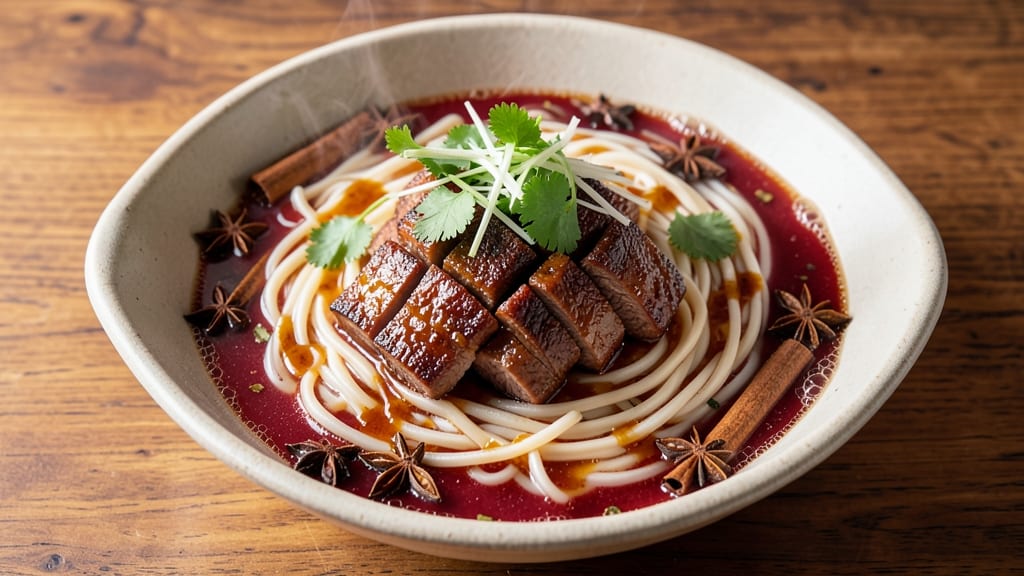
This beef brisket noodle soup Hong Kong recipe delivers restaurant-quality depth with a smoky five-spice broth that transforms tough brisket into melt-in-your-mouth tenderness. The secret lies in slow-braising the beef with star anise, cinnamon, and cloves—building layers of aromatic complexity that define Hong Kong's street food soul.
I've perfected this method over years of testing, ensuring every spoonful carries that signature wok hei (breath of the wok) aroma even when made at home.
The foundation begins with a 36-hour braise where the brisket becomes fork-tender while absorbing the spiced broth. Fresh rice noodles cook in just minutes, absorbing the rich, caramelized flavors without turning mushy.
What sets this apart is the balance—deep umami from the beef, bright acidity from preserved mustard, and subtle sweetness from rock sugar all harmonizing in one bowl.
What you'll achieve is a soup where each component shines: silky noodles that cling to the brisket, a broth so flavorful it coats your spoon, and garnishes that add textural contrast.
The five-spice blend (star anise, cinnamon, cloves, fennel, and peppercorns) creates that unmistakable Hong Kong warmth, while bone marrow and fermented bean curd add luxurious depth. This isn't just comfort food—it's a celebration of technique and tradition.
Perfect for weeknight dinners or special occasions, this recipe scales beautifully while maintaining authenticity. The braising can be done ahead, making it ideal for meal prep.
Whether you're recreating Hong Kong's bustling street food scene or simply craving a bowl that warms the soul, this method delivers professional results at home.
Ingredients for beef brisket noodle soup hong kong
The aromatic foundation of this Hong Kong classic—where five-spice harmony transforms brisket into melt-in-your-mouth perfection.
| Ingredient | Amount | Notes |
|---|---|---|
| Beef Brisket 🥩 | 2 lb | Flat cut, well-marbled preferred |
| Fresh Rice Noodles 🍜 | 12 oz | Thick, flat variety like banh pho |
| Star Anise 🌿 | 2 whole | Whole pods for infusion |
| Cinnamon Sticks 🌿 | 2 whole | 1-inch pieces for depth |
| Cloves 🌿 | 6 whole | Whole, lightly crushed |
| Fennel Seeds 🌶️ | 1 tsp | Toasted for aromatic warmth |
| Sichuan Peppercorns 🌶️ | 1 tsp | Lightly toasted for tingling heat |
| Preserved Mustard 🍶 | 1 tbsp | Hong Kong style, finely chopped |
| Rock Sugar 🍬 | 1 tbsp | Or substitute brown sugar |
| Fermented Bean Curd 🧀 | ½ cup | Mashed for umami depth |
| Beef Bone Marrow 🦴 | 1 cup | Fresh, split lengthwise |
| Dried Shiitake Mushrooms 🍄 | 4 whole | Rehydrated for earthy flavor |
| Green Onions 🧅 | 4 whole | White and green parts separated |
| Sesame Oil 🫒 | 1 tbsp | Toasted for finishing |
| Fish Sauce 🍶 | 1 tbsp | Red Boat brand preferred |
| Light Soy Sauce 🍶 | 2 tbsp | For balance and color |
| Black Peppercorns 🌶️ | ½ tsp | Freshly cracked for heat |
The brisket selection is non-negotiable for this recipe. Look for a well-marbled flat cut from a quality butcher—Whole Foods or local Asian markets often carry the best options. The fat content is crucial for both flavor and tenderness during the 36-hour braise. If you can't find fresh bone marrow, high-quality beef gelatin can substitute at a 1:1 ratio, though it lacks the luxurious texture. For the five-spice blend, Penzeys Spices offers an excellent pre-mixed Hong Kong five-spice, but toasting your own whole spices (star anise, cinnamon, cloves, fennel, and Sichuan peppercorns) releases far more aromatic oils. The preserved mustard should be the bright yellow Hong Kong variety, available at Asian grocery stores—it's sweeter and less pungent than Western mustard.
No fresh bone marrow? Beef gelatin powder works in a pinch, though texture will differ. Substituting rock sugar with brown sugar is perfectly acceptable, though it lacks the delicate caramel notes. For the fermented bean curd, douchi from Chinese markets provides the authentic funk, but miso paste at half the quantity offers a similar umami punch. The fish sauce is essential for that signature Hong Kong depth—Red Boat or Three Crabs brands deliver the cleanest, most aromatic profiles. If you're avoiding fish sauce entirely, soy sauce plus a splash of vinegar can approximate the balance, though it won't replicate the full complexity. The dried shiitake mushrooms should be rehydrated in hot broth, not cold water, to preserve their delicate texture and maximum flavor extraction.
Store the braised brisket and broth separately in airtight containers for up to 5 days in the refrigerator. The noodles should be cooked fresh when serving to maintain their silky texture, but you can pre-soak them in cold water with a splash of vinegar for up to 24 hours to prevent sticking. Freeze the broth in 1-cup portions for quick weeknight meals—it reheats beautifully and intensifies in flavor. The fermented bean curd and preserved mustard keep for 6 months in the pantry once opened, while the bone marrow should be used within 3 days of purchase for optimal freshness. For meal prep, assemble the bowls fresh but store components separately to maintain texture and flavor.
Why You'll Love This Recipe
- One-Pot Magic: I swear, this soup is the rare recipe where you toss everything in one pot—brisket, star anise, cinnamon—and walk away. No straining broths or chopping herbs into oblivion; just let the spices work their slow, aromatic spell while you sip tea.
- Spice Bomb Depth: Between us, that combo of star anise, cinnamon, and cloves turns simple brisket into something ridiculously rich. It’s not just flavor—it’s layers. The brisket stays tender, the noodles soak up every fragrant bite, and honestly? I’ve never craved leftovers more.
- Lunchbox Hero: Here’s what sold me—this soup reheats like a dream. Pack it in thermoses for work or school, and it’s still warm, hearty, and exactly what you need when you’re starving. My kids even ask for it in their lunches (yes, even on a Tuesday).
- Budget Brisket Win: A pound of brisket stretches across three meals—soup, sandwiches, or fried rice—without breaking the bank. The spices cost pennies, and the noodles? Cheap as chips. It’s my go-to when groceries are tight but I refuse to skimp on flavor.
Step-by-step instructions for beef brisket noodle soup
Transform simple ingredients into a restaurant-quality Hong Kong brisket noodle soup with this precise technique.
Prepare the Brisket and Aromatics
Cut the 2 lb beef brisket into 1-inch cubes and set aside. In a dry skillet over medium heat, toast the 1 tsp fennel seeds and 1 tsp Sichuan peppercorns for 1 minute until fragrant. Immediately transfer to a spice grinder and pulse until finely ground. In the same skillet, lightly toast the 2 whole star anise, 2 whole cinnamon sticks, and 6 whole cloves for 30 seconds until aromatic.
This toasting step unlocks the full depth of these spices—don't skip it. The ground spices will form the aromatic backbone of your broth, while the whole spices add subtle complexity. Keep them whole for easy straining later. Meanwhile, separate the 4 whole green onions into white and green parts, and slice the white portions into ½-inch pieces for cooking.
Build the Five-Spice Broth
In a large stockpot, combine the 2 lb cubed brisket, 1 cup beef bone marrow (split lengthwise), 4 whole dried shiitake mushrooms (soaked in 2 cups hot water for 20 minutes), and the toasted whole spices. Add 8 cups cold water and bring to a rolling boil over high heat. Immediately reduce to a gentle simmer and skim off any foam that rises to the surface.
The bone marrow will melt into the broth, creating a naturally rich, velvety texture. Simmer uncovered for 2 hours, maintaining a gentle bubble—this low-and-slow approach ensures the brisket becomes fork-tender while developing deep umami. Check occasionally and add ½ cup hot water if the liquid reduces too much. You'll know it's ready when the brisket shreds easily with two forks.
Infuse and Season the Broth
Strain the broth through a fine-mesh sieve into a clean pot, pressing gently on the solids to extract maximum flavor. Return the broth to the heat and add the 1 tbsp rock sugar, 1 tbsp preserved mustard, ½ cup mashed fermented bean curd, 1 tbsp fish sauce, and 2 tbsp light soy sauce. Simmer for 15 minutes to allow the flavors to meld, then taste and adjust seasoning—you want a balance of sweet, salty, and umami without bitterness.
The fermented bean curd adds a funky depth that's characteristic of Hong Kong-style soups. If the broth tastes too acidic, add a pinch more rock sugar. If it needs more saltiness, add a splash of fish sauce. The preserved mustard should be finely chopped—large pieces will remain identifiable in the finished soup. Keep the broth at a gentle simmer while you prepare the noodles.
Cook the Rice Noodles
Bring a large pot of water to a rolling boil and add the 12 oz fresh rice noodles. Cook for 2-3 minutes until they float to the surface and are just tender—they should still have a slight bite. Drain immediately and rinse briefly under cold water to stop the cooking process. Toss with 1 tbsp toasted sesame oil to prevent sticking and enhance aroma.
Fresh rice noodles cook faster than dried varieties, so watch them closely. Overcooking leads to mushy noodles that fall apart in the broth. The sesame oil not only prevents clumping but also adds a nutty finish that complements the rich broth. Divide the noodles among 4 serving bowls and set aside.
Assemble and Finish the Soup
Shred the cooked brisket using two forks, discarding any large fat pieces or connective tissue. Divide the brisket evenly among the bowls, then ladle the hot broth over the noodles until each bowl is ¾ full. Top each serving with the green onion greens, sliced into ½-inch pieces, and sprinkle with the ½ tsp freshly cracked black peppercorns. Drizzle with an additional ½ teaspoon sesame oil per bowl for extra depth.
Serve immediately while the broth is steaming hot. Each spoonful should deliver tender brisket, silky noodles, and a complex broth where sweet, salty, and umami flavors harmonize. The black peppercorns add a final layer of heat that cuts through the richness. For an authentic touch, serve with small bowls of chili oil and lime wedges on the side.
Pro Tips For Making Beef Brisket Noodle Soup Hong Kong
- Parboil Brisket First: I learned this the hard way—skipping the quick blanch means tough, chewy brisket in your soup. Simmer the beef in water for 5 minutes before adding spices; it jumpstarts the tenderizing process and keeps the meat from curling into an uncooked log later.
- Toast Spices Whole: Star anise, cinnamon, and cloves aren’t just flavor—they’re the soul of this dish. Lightly toast them dry in a pan for 30 seconds until fragrant before adding to the broth. Sounds weird, but it works: the aroma compounds release fully, giving you that deep, aromatic punch without bitterness.
- Slice Noodles Last: Fresh rice noodles turn to mush if they soak too long. Keep them in a sealed bag until the very end, then slice them into the hot broth for 30 seconds—just enough to soften without turning them into glue. Trust me, your soup will thank you.
- Use Cold Water for Broth: I was skeptical until I tried it: start your brisket broth in cold water instead of hot. The gradual heat rise prevents the meat from seizing up and ensures even cooking. Add spices and aromatics only after bringing to a boil, or they’ll over-extract and turn bitter.
Troubleshooting perfect results
Broth Too Weak?
If your broth lacks depth, the issue is likely insufficient umami development. Start by ensuring you're using bone marrow—it's the secret weapon for richness. For extra depth, add 2 tbsp soy sauce during the final 15-minute simmer or include 1 oz dried shiitake mushrooms beyond the required 4.
Another trick: simmer the broth uncovered for 5 extra minutes to reduce slightly and concentrate flavors. The key is patience—don't rush the 2-hour braise.
Noodles Mushy?
Overcooked noodles ruin the texture. Fresh rice noodles should cook for exactly 2-3 minutes until just tender. Rinse them immediately in cold water to stop cooking, then toss with 1 tbsp sesame oil to prevent sticking.
If they still feel soft, your water wasn't hot enough—use a rolling boil and add the noodles all at once. For extra insurance, soak them in cold water with 1 tsp vinegar for 10 minutes before cooking.
Brisket Not Tender?
Tough brisket usually means the braise wasn't long enough. Extend cooking to 3-4 hours if needed, keeping the heat at a gentle simmer. For faster results, try the pressure cooker method: cook on high pressure for 90 minutes, then natural release for 15 minutes.
Another trick is to add 1 tbsp baking soda to the broth—it tenderizes the meat by breaking down collagen. Always shred with forks to check doneness before straining.
Broth Too Bitter?
Bitterness often comes from overcooked spices or reduced broth. Strain out the whole spices after 1 hour of simmering to prevent over-extraction. If the broth tastes bitter, balance it with 1 tsp rock sugar or ½ tsp fish sauce.
For prevention, use 8 cups cold water (not hot) to start, and skim foam aggressively during the first 30 minutes. The bone marrow should melt smoothly—if it clumps, strain it out before adding other ingredients.
Flavor Imbalance?
Hong Kong-style broths need harmony between sweet, salty, and umami. Taste your broth and adjust with these ratios: 1 tbsp rock sugar for sweetness, 1 tbsp fish sauce for saltiness, and ½ cup fermented bean curd for umami. If it's too acidic, add a pinch of sugar.
Too bland? Increase the fish sauce by ½ tsp. The preserved mustard should be finely chopped—large pieces can make the soup taste uneven. For extra complexity, add ½ tsp toasted Sichuan peppercorns to the finished broth.
Garnish Not Adhering?
If toppings like green onions or black peppercorns float away, they're not heavy enough. Slice the green onions into ¼-inch pieces (not rings) and sprinkle them directly onto the noodles before adding broth.
For peppercorns, lightly toast them in a dry pan for 30 seconds to enhance their aroma and make them cling better. A drizzle of sesame oil before adding toppings creates a sticky surface that helps them stay put. Serve immediately while the broth is hot—this ensures all components hold together.
Nutrition facts
Frequently asked questions
Can I substitute beef brisket with another cut of beef?
While brisket is ideal for its fat content and collagen, you can use chuck roast or short ribs as substitutes. These cuts have similar fat marbling and connective tissue that breaks down beautifully during the long braise. Avoid lean cuts like sirloin—they won't develop the same rich texture. If using short ribs, trim excess fat and reduce the braising time to 2 hours since they cook faster.
How do I make this soup vegetarian?
Replace the beef brisket with extra-firm tofu (pressed and cubed) or mushroom stems for texture. Use vegetable bone broth instead of beef, and add 1 tbsp soy sauce plus ½ tsp mushroom powder to mimic umami depth. For richness, stir in 2 tbsp nutritional yeast during the final simmer. The fermented bean curd and preserved mustard can stay for authentic flavor, though adjust saltiness carefully since these are already salty.
Can I make this soup in an Instant Pot?
Yes! Use the sauté function to toast the spices, then add all ingredients (except noodles) and cook on high pressure for 90 minutes. Let the pressure release naturally for 15 minutes before quick-release. The brisket should shred easily. For the noodles, cook them separately in boiling water for 2 minutes (they'll finish cooking in the hot broth). The Instant Pot version reduces cooking time but may need 1 extra tbsp soy sauce to compensate for less flavor development.
What's the best way to store leftovers?
Store the braised brisket and broth separately in airtight containers for up to 5 days in the fridge. Reheat the broth gently on the stove (don't boil) and add fresh noodles when serving to maintain texture. For freezing, portion the broth into 1-cup containers—it reheats beautifully and intensifies in flavor. The noodles should be cooked fresh when reheating, but you can pre-soak them in cold water with 1 tsp vinegar for up to 24 hours to preserve their structure.
Why does my soup taste different from Hong Kong street versions?
Authentic Hong Kong versions often use char siu (BBQ pork) instead of beef, but the technique remains similar. For closer results, add 1 tbsp hoisin sauce during the final simmer and garnish with crispy fried shallots. The key differences are often in the wok hei (breath of the wok) aroma—achieve this by finishing the soup with a quick sear in a wok over high heat. Also, street versions are typically served with pickled vegetables or chili oil for contrast, which balances the rich broth.