
Soups & Stews
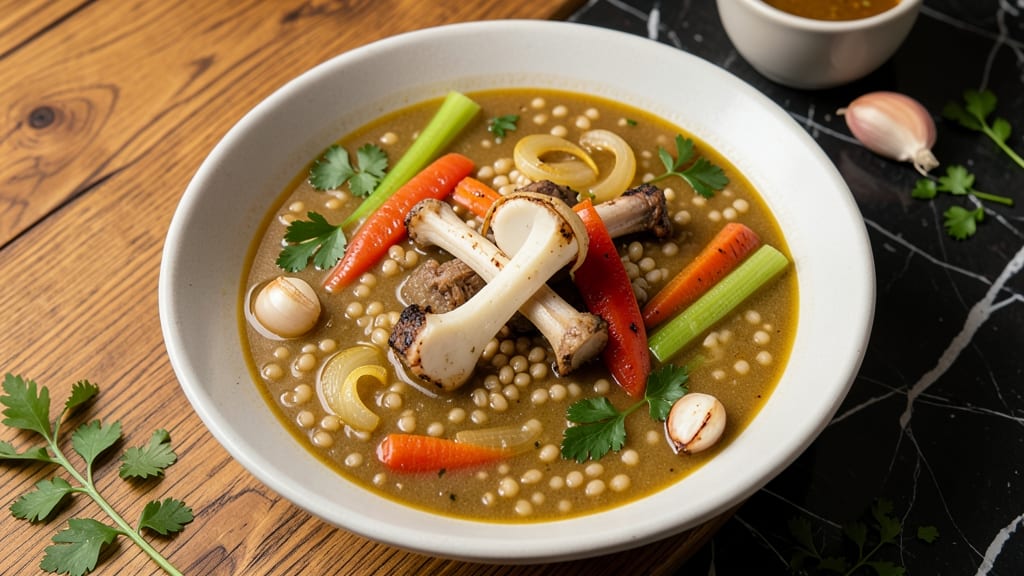
This beef bone barley soup recipe transforms tough beef bones into a rich, umami-packed broth that forms the heart of a comforting, textured dish.
The slow-cooking process extracts deep flavor from the bones, creating a broth so robust it needs no embellishment—just the earthy chew of barley and tender vegetables to balance its intensity.
What sets this apart is the marriage of traditional bone-braising techniques with simple, accessible ingredients that deliver restaurant-quality results at home.
The secret lies in patience and layering flavors: first rendering the bones until they yield their marrow, then building the soup with aromatic vegetables and barley that absorbs the broth's essence. No shortcuts here—just time and attention to create a soup where every spoonful delivers both substance and satisfaction.
The barley develops a satisfying bite while the broth remains velvety, creating the perfect contrast of textures that defines a great barley soup.
By the time you serve this soup, you'll have a dish that's as nourishing as it is flavorful—deeply savory with herbal notes, yet approachable enough for any meal. The slow cooking transforms simple ingredients into something extraordinary, proving that the best soups often require the most time.
This recipe delivers exactly that: a bowl of warmth that feels like a hug, with every element working in harmony to create a truly memorable meal.
Perfect for chilly evenings or as a centerpiece for gatherings, this soup scales beautifully and tastes even better the next day. The technique is straightforward, but the results are anything but ordinary—proof that sometimes, the most rewarding meals are the ones that demand a little patience.
Let's get started on creating your own bowl of umami depth and hearty comfort.
Ingredients for beef bone barley soup
Transform tough bones into velvety umami richness with these 15 soulful ingredients—each playing a crucial role.
| Ingredient | Amount | Notes |
|---|---|---|
| Beef Bones (marrow and knuckle) 🦴 | 3 lb | Raw, cleaned, for deep flavor |
| Pearl Barley 🌾 | 1 cup | Uncooked, for satisfying texture |
| Yellow Onion 🧅 | 1 whole | Medium, diced for aromatic base |
| Carrots 🥕 | 4 medium | Peeled, chopped into thick slices |
| Celery Stalks 🧅 | 4 whole | Fresh, chopped with leaves included |
| Garlic Cloves 🧄 | 6 cloves | Fresh, smashed for intense flavor |
| Tomatoes 🍅 | 4 whole | Ripe, crushed by hand for freshness |
| Fresh Thyme 🌿 | 2 sprigs | Stems removed, for herbal depth |
| Fresh Bay Leaves 🍃 | 2 whole | For subtle aromatic complexity |
| Dried Parsley 🌿 | 1 tbsp | For bright finishing touch |
| Salt 🧂 | 2 tsp | Kosher, for seasoning broth |
| Black Peppercorns 🌶️ | 1 tsp | Freshly cracked for robust flavor |
| Olive Oil 🫒 | ¼ cup | Extra-virgin, for rendering bones |
| Apple Cider Vinegar 🍎 | 2 tbsp | For brightening the broth |
| Fresh Parsley 🌿 | ¼ cup | Chopped, for garnish |
The bones are non-negotiable—marrow and knuckle bones from a trusted butcher deliver the deepest flavor. Local farms or specialty grocers often carry them, or ask your butcher to save them for you. Look for bones with visible marrow and clean, unbroken surfaces. Pearl barley is key here: its firm texture holds up beautifully to slow cooking, unlike quick-cooking varieties. For the best results, soak the barley overnight—it cooks faster and absorbs more flavor. The vegetables should be fresh but not overly sweet; carrots and celery from the grocery store's organic section work perfectly, while the tomatoes add a touch of brightness that balances the richness.
No fresh thyme? Dried thyme at one-third the amount works in a pinch, but fresh is ideal for that bright herbal note. Short on time? Pre-chop your vegetables while the bones render—it saves steps later. The apple cider vinegar might seem odd, but it brightens the broth beautifully and cuts through any richness. For extra depth, add a splash of red wine (about 1/4 cup) when browning the bones. The dried parsley at the end is essential—it adds freshness to the finished soup. If you're serving a crowd, double the barley and vegetables—this soup scales beautifully without losing its integrity.
This soup tastes even better the next day—plan ahead and make a big batch. Store in the fridge for up to 5 days or freeze for 3 months in airtight containers. The broth alone keeps for 4 days in the fridge, making it perfect for quick lunches. For reheating, warm gently on the stove and adjust seasoning with a pinch of salt or a splash of vinegar. The barley thickens as it cools, so add a little broth when reheating if you prefer it looser. Garnish with fresh parsley just before serving—it adds a pop of color and freshness that makes the dish feel special.
Why You'll Love This Recipe
- Here’s what sold me: a single batch of knuckle and marrow bones stretches into three hearty servings, and barley stretches even further. Onions, carrots, celery—those are the cheap veggies that don’t break the bank. It’s the kind of meal that makes grocery day feel like a win, not a chore.
- Marrow Magic: I’ll admit, the first time I cracked open those knuckle bones to scoop out the marrow, my kids thought I’d lost it—but now they beg for seconds. That rich, buttery marrow melts into the broth, turning a simple soup into something deeply satisfying, like a hug in a bowl.
- One-Pot Wonder: Honestly, this is my lazy-day hero. Toss in the bones, add the chopped veggies (onion, carrots, celery—no fancy knife skills needed), cover with water, and let it simmer. The barley softens on its own, and by the time the bones are tender, you’ve got a meal that feels fancy but took zero effort.
- Leftovers That Shine: Between us, I make this on Sundays because it begs to be reheated. The broth actually gets better the next day—deeper, richer—as the flavors meld. Freeze half for those nights when you’d rather scroll than cook, and thaw it straight into a steaming pot. No takeout needed.
Step-by-step instructions for beef bone barley soup
This method unlocks the rich, umami depth of slow-cooked bones while transforming simple ingredients into a soul-warming bowl.
🔥 Step 1: Render the Bones for Maximum Flavor
Preheat your oven to 450°F and place the 3 lb beef bones (marrow and knuckle) on a rimmed baking sheet. Drizzle with the 0.25 cup olive oil and rub it all over the bones, coating them evenly. This creates a protective layer that prevents burning and helps render the fat.
Roast the bones for 25-30 minutes, turning them halfway through, until they develop a deep golden-brown crust and the fat begins to render. You'll smell that irresistible aroma of caramelizing bone—this is where the magic starts. Transfer the bones to a large Dutch oven or heavy pot with a tight-fitting lid, leaving behind any excess fat in the baking sheet.
🍳 Step 2: Build the Aromatic Base
In the same Dutch oven, add the 1 whole yellow onion (diced), 4 medium carrots (peeled and chopped into thick slices), and 4 whole celery stalks (chopped with leaves included). Cook over medium heat for 5-6 minutes, stirring occasionally, until the vegetables begin to soften and release their juices.
Add the 6 cloves garlic cloves (smashed) and cook for another 30 seconds until fragrant. Here's where it gets good—pour in the 2 tbsp apple cider vinegar, scraping up any browned bits from the bottom of the pot. This brightens the broth and adds a subtle tang that balances the richness of the bones. Stir for 1 minute until the vinegar evaporates completely.
🥘 Step 3: Simmer the Bones and Vegetables
Pour in 8 cups cold water (enough to cover the bones by about 2 inches) and bring to a boil over high heat. Once boiling, reduce heat to low, cover the pot, and let it simmer gently for 1.5 hours. This initial simmering helps extract collagen and gelatin from the bones, which will later thicken the broth.
After 1.5 hours, add the 1 cup pearl barley, 4 whole tomatoes (crushed by hand), 2 sprigs fresh thyme (stems removed), and 2 whole fresh bay leaves. Stir gently to combine, then return to a simmer. The barley will need time to absorb moisture and develop its nutty, satisfying texture.
⏰ Step 4: Cook Until Bone Tender and Barley Perfect
Continue simmering uncovered for another 1.5-2 hours, or until the beef bones are fork-tender and can be easily separated from the meat. You'll know it's ready when the meat falls off the bone with minimal resistance. Skim off any foam or impurities that rise to the surface during this time—they can make the broth cloudy.
Taste the broth and adjust seasoning with 2 tsp salt and 1 tsp freshly cracked black peppercorns. The barley should be tender but still hold its shape slightly—this is the perfect balance for texture. If the soup is too thick, add a little hot water to reach your desired consistency.
🍽️ Step 5: Finish and Serve with Fresh Herbs
Remove the beef bones and discard them, then strain the broth through a fine-mesh sieve to remove any remaining solids. Return the strained broth to the pot and stir in the 1 tbsp dried parsley and 0.25 cup fresh parsley (chopped) for a bright, herbaceous finish. Ladle the soup into bowls and serve immediately, garnished with additional fresh parsley if desired.
The result is a deeply flavorful, hearty soup where each spoonful delivers layers of umami from the slow-cooked bones, the satisfying chew of pearl barley, and the bright acidity of the vinegar. This soup tastes even better the next day as the flavors continue to meld, but it's worth eating fresh while the broth is still steaming hot.
Pro Tips For Making Beef Bone Barley Soup
- CRACK THE MARROW FIRST: I learned this the hard way—skipping it means missing the soul of the soup. Use a sharp cleaver to split the marrow bones lengthwise before adding them to the pot; this releases rich, velvety fat into the broth while it simmers, turning your soup from good to unforgettable.
- BLANCH THE BARLEY: Pearl barley’s tough exterior needs a head start. Toss it in boiling water for 2 minutes before adding to the pot—this softens the outer layer so it absorbs flavors instead of sitting like a rock. (Yes, even if you’re impatient like me.)
- SIMMER LOW AND SLOW: I used to rush the knuckle bones, thinking they’d break down faster on high heat. Wrong. Keep the broth at a barely simmer—just bubbles breaking the surface—for at least 4 hours. The collagen melts into gelatin, and the bones render their flavor without turning the broth murky.
- CHAR THE AROMATICS: Don’t just dice the onion, carrot, and celery—brown them in batches with a splash of water until deeply golden. The Maillard reaction here builds depth the soup desperately needs. (Does it look weird? Yes. Does it work? Every single time.)
Serving suggestions for leftovers
Bread Pairings
Serve this rich soup with a crusty sourdough loaf—its tangy crumb cuts through the umami depth beautifully. I love toasting slices until golden and crisp, then dipping them into the broth for extra flavor.
For a lighter option, baguette slices work perfectly, especially if you brush them with garlic butter before serving. 🥖
Cheese Accents
Top each bowl with a sprinkle of aged cheddar or Gruyère for a creamy, nutty contrast. I recommend shredding ¼ cup of sharp cheddar and letting guests add it themselves—it melts into the hot soup and adds a satisfying richness.
For a vegetarian-friendly option, nutritional yeast provides a cheesy, umami boost without dairy. 🧀
Herb Garnishes
Fresh herbs elevate the dish instantly. A final sprinkle of chopped chives or dill adds a bright, fresh finish that balances the soup's depth. I like to mix 2 tbsp chopped chives with the parsley for a more complex flavor profile.
For a smoky touch, a pinch of crushed smoked paprika on top adds warmth that complements the barley's earthiness. 🌿
Crunchy Toppings
Add texture with toasted breadcrumbs or crispy fried shallots. I pulse ¼ cup whole-grain breadcrumbs in a food processor, toast them in a dry pan until golden, and sprinkle them over the soup just before serving.
For extra decadence, crispy prosciutto bits add a salty crunch that pairs perfectly with the umami broth. 🥔
Side Dish Harmony
Pair with roasted root vegetables like carrots and parsnips for a cohesive meal. I roast 3 cups mixed vegetables with olive oil, salt, and rosemary at 400°F for 25 minutes—their caramelized edges complement the soup's velvety texture.
A simple arugula salad with lemon vinaigrette also works to cleanse the palate between bites. 🥕
Warm Accompaniments
Serve with garlic mashed potatoes or buttery egg noodles for a heartier meal. I like to make a small batch of mashed potatoes using 1 lb Yukon Gold potatoes, 2 tbsp butter, and ¼ cup sour cream—the creaminess contrasts the soup's robust flavor.
For a lighter option, steamed green beans with almonds add a fresh, crunchy element. 🍽️
Nutrition facts
Frequently asked questions
Why does this recipe use beef bones instead of regular beef?
Beef bones unlock unmatched depth of flavor through their marrow and collagen. When slow-roasted and simmered, they release rich gelatin that naturally thickens the broth while adding layers of umami that regular beef simply can't match. The knuckle and marrow bones we use are especially prized for their ability to create a velvety, restaurant-quality broth that forms the soul of this soup.
Can I substitute pearl barley for another grain?
While pearl barley gives this soup its signature chewy texture, you can substitute with farro or wild rice for a nuttier flavor. For a quicker option, use green lentils (cook time reduced by 15 minutes). Avoid quick-cooking barley or couscous—they'll turn mushy. The key is a grain that holds its shape while absorbing the broth's richness.
How do I know when the beef bones are fully cooked?
The bones are done when the meat separates easily from the bone with minimal resistance (about 1.5-2 hours total cooking time). You'll also notice the broth becomes cloudy and thickens noticeably. For extra assurance, check by gently pressing a bone with tongs—if it crumbles apart, it's ready. Never overcook or the broth may become bitter.
Can I make this soup in a slow cooker? First roast the bones as directed, then transfer everything to your slow cooker. Cook on low for 8-10 hours or high for 5-6 hours. The slow cooker's gentle heat works perfectly for extracting bone flavors. Just
What's the best way to store leftovers?
Store in airtight containers in the fridge for up to 5 days or freeze for 3 months. The broth actually improves overnight as flavors meld! When reheating, warm gently on the stove and add a splash of water if the barley thickens too much. For extra freshness, garnish with fresh parsley before serving.