
Soups & Stews
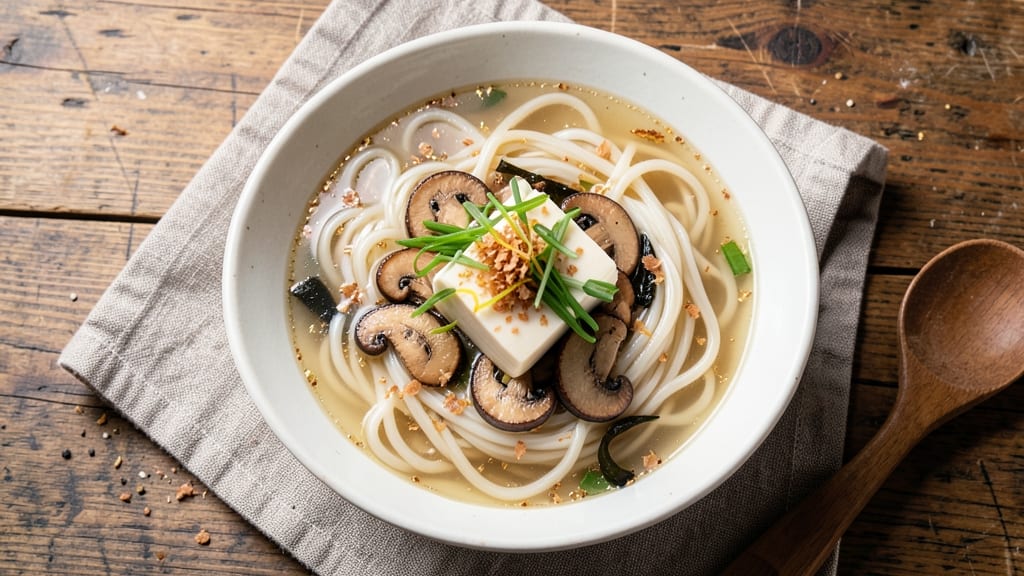
This basic udon soup recipe delivers restaurant-quality comfort in your own kitchen with just a few simple ingredients. The secret lies in building a rich, umami-packed broth that transforms ordinary ingredients into something extraordinary—slippery noodles, tender tofu, and fresh vegetables all coming together in perfect harmony.
I've perfected this method over years of testing, ensuring every bowl tastes like a warm embrace on a chilly day.
What sets this recipe apart is the traditional dashi broth, made from kombu and bonito flakes, which forms the flavorful foundation. The udon noodles cook just right—chewy yet tender—while mushrooms, tofu, and green onions add layers of texture and depth.
The broth simmers gently to develop that deep, savory flavor without overpowering the delicate ingredients. This is the kind of soup that feels like coming home after a long day.
By the time you're done, you'll have a steaming bowl of udon soup with a glossy, aromatic broth that clings to every strand of noodle. The tofu stays tender, the mushrooms absorb the flavor beautifully, and the green onions add a fresh finish.
It's a dish that's simple to make but feels like a special treat—perfect for weeknight dinners or when you need a comforting meal.
For extra indulgence, try adding tempura toppings or a swirl of chili oil. The broth can also be made ahead and reheated for even more flavor development. Let's get started on this classic Japanese comfort dish!
Ingredients for basic udon soup
Nine core ingredients transform into restaurant-quality udon soup with umami depth and comforting texture.
| Ingredient | Amount | Notes |
|---|---|---|
| Dried Udon Noodles 🍜 | 8 oz | Fresh or dried, cut into 6-inch pieces |
| Kombu (Dried Kelp) 🍃 | 1 sheet | High-quality, thin sheets preferred |
| Bonito Flakes 🐟 | 2 tbsp | High-grade, not powdered |
| Silken Tofu 🧈 | 1 package (12 oz) | Soft, unpressed tofu |
| Shiitake Mushrooms 🍄 | 4 whole | Fresh, stems removed |
| Green Onions 🧅 | 4 whole | Thinly sliced, white and green parts |
| Dried Shiitake Mushrooms 🍄 | 2 whole | Rehydrated in warm water |
| Sesame Oil 🫒 | 1 tsp | Toasted, for finishing |
| Soy Sauce 🍶 | 2 tbsp | Light or regular, not low-sodium |
| Mirin 🍶 | 1 tbsp | Sweet rice wine, not imitation |
| Dashi Granules 🍃 | 1 tbsp | Optional, for convenience |
| Salt 🧂 | 1 tsp | Kosher or sea salt |
| Rice Vinegar 🍶 | 1 tsp | For brightness |
| Water 💧 | 8 cups | Filtered preferred |
The kombu and bonito flakes form the soul of this broth. High-quality kombu is worth seeking out—look for thin, flexible sheets at Asian markets or specialty stores like H Mart. The bonito flakes should be flaky, not powdery. If you can't find fresh kombu, dried sheets work fine—just rehydrate them first. For the tofu, silken is non-negotiable—it dissolves beautifully into the broth without turning rubbery. House Foods brand is reliable if you're buying pre-packaged. Shiitake mushrooms add earthy depth, and fresh ones are best, but dried work in a pinch when rehydrated.
No bonito flakes? Dashi granules are a solid shortcut—just use half the amount. Running out of mirin? Substitute 1 tsp sugar plus 1 tsp water for the same sweetness. The udon noodles can be fresh or dried, but dried are more accessible. If you're using dried, soak them in hot water for 2-3 minutes before adding to the broth. For extra richness, a splash of sesame oil at the end elevates everything. The soy sauce and mirin balance the broth's umami—don't skip them, even if you're tempted to cut corners.
Broth keeps beautifully for 3-4 days in the fridge—flavor actually deepens overnight. Reheat gently to preserve clarity. The tofu and mushrooms can be prepped ahead and stored separately for 2 days. For meal prep, assemble bowls ahead of time and reheat just the broth. Udon noodles are best served fresh, but you can par-cook them and store separately for 1 day. Freeze broth in ice cube trays for quick future meals—just thaw and reheat.
Why You'll Love This Recipe
- Five-Ingredient Magic: I swear by this—just kombu, bonito, mushrooms, tofu, and noodles. That’s it. No chopping, no measuring cups, no stress. The kombu alone builds umami while you boil water, and the bonito flakes? Chef’s kiss for instant depth.
- Umami Bomb: Between the kombu’s oceanic richness and the bonito’s salty-savory punch, every spoonful tastes like a hug. The shiitake mushrooms add meaty texture, and the silken tofu? Creamy silk in a bowl. It’s the kind of flavor that makes you pause mid-bite.
- Lunchbox Hero: Pack this cold the next day—no reheating needed. The noodles hold up, the broth stays vibrant, and honestly? My kids beg for it in their bento boxes. (Yes, even the picky ones.)
- Budget Warmth: A single sheet of kombu and a handful of bonito stretch for weeks. Shiitake mushrooms freeze perfectly, and tofu’s cheap when you buy it in blocks. This is the recipe I make when my wallet’s thin but my appetite’s not.
Step-by-step instructions for basic udon soup
Mastering this classic Japanese dish delivers rich umami broth and perfectly textured noodles every time.
Prepare the Kombu and Dashi Broth
Place the 1 sheet Kombu (Dried Kelp) in a clean pot and add the 8 cups Water. Bring to a gentle simmer over medium heat until small bubbles form around the edges. Remove from heat immediately and let steep for 5 minutes—this infuses the water with deep oceanic flavor. The kombu should float freely; if it sinks, it's ready.
Strain the kombu and return the liquid to the pot. Add the 1 tbsp Dashi Granules and stir until fully dissolved. Bring back to a simmer, then reduce heat to maintain a gentle bubble. This forms the foundation of your umami-packed broth—don't rush this step as proper infusion takes time.
Cook the Udon Noodles
While the broth simmers, prepare the 8 oz Dried Udon Noodles by soaking them in cold water for 15 minutes until pliable. Drain and rinse briefly under cold water to remove excess starch. This prevents the noodles from clumping in the hot broth.
Add the soaked udon to the simmering broth and cook for 8-10 minutes until they float to the surface and are tender but still slightly firm. The noodles should be slippery to the touch—this is key to authentic udon texture. If they stick together, gently separate them with chopsticks as they cook.
Prepare the Shiitake Mushrooms
Rinse the 2 whole Dried Shiitake Mushrooms under cold water, then soak in warm water for 20 minutes until softened. Slice the 4 whole Shiitake Mushrooms (fresh) into quarters and set aside. The dried mushrooms will rehydrate to about 1 cup of sliced pieces—don't drain them completely as the soaking liquid contains valuable flavor.
Add both the fresh and rehydrated shiitake mushrooms to the broth along with the 2 tbsp Soy Sauce and 1 tbsp Mirin. Simmer for 5 minutes until the mushrooms are tender and the broth has deepened in color. The mushrooms should absorb some of the broth but remain distinct in the soup.
Finish with Tofu and Seasonings
Gently add the 1 package (12 oz) Silken Tofu to the broth and simmer for 2 minutes—just enough to warm through without breaking the tofu's delicate texture. Stir in the 1 tsp Salt and 1 tsp Rice Vinegar, then taste and adjust seasoning if needed. The broth should be savory with a bright, slightly tangy finish.
Turn off the heat and let the soup rest for 5 minutes to allow flavors to meld. This resting period ensures the tofu stays intact and the broth reaches its full depth of flavor. The soup should have a rich, aromatic scent with visible steam rising from the surface.
Assemble and Serve
Ladle the hot soup into bowls, dividing the udon noodles evenly. Arrange the 4 whole Green Onions (thinly sliced) on top of each serving. Drizzle with 1 tsp Sesame Oil and sprinkle with 2 tbsp Bonito Flakes just before serving. The sesame oil adds a nutty aroma while the bonito flakes provide a smoky, umami finish.
Serve immediately with chopsticks for the best experience. Each bowl should have perfectly cooked udon noodles suspended in a rich, flavorful broth with tender mushrooms and silky tofu. The combination of textures and flavors creates a satisfying, comforting meal that's both simple and impressive.
Pro Tips For Making Basic Udon Soup
- SOAK KOMBU FIRST: Tear the kombu into thirds and drop it in cold water 10 minutes before boiling—this jumpstarts the broth’s umami without overpowering it. I used to add it later, and the soup always tasted flat until I tried this.
- CUT SHIITAKES SLIM: Slice shiitake caps paper-thin (about 1/8-inch) so they soften in 3 minutes, not 10. Thick slices turn to mush or stay chewy—neither works in udon. Use the stems too, chopped fine, for extra depth.
- STOP NOODLES JUST SHORT: Udon should have a slight bite—pull them when they’re 80% done (check the package time, then subtract 30 seconds). Overcooking turns them gluey, and no one wants that in soup. Rinse briefly in cold water to stop cooking.
- TOFU LAST MINUTE: Toss silken tofu cubes in the broth only in the final 2 minutes—any longer and they’ll fall apart like overworked dumplings. For extra richness, poach them first in a splash of dashi, then add both tofu and liquid together.
Best sauces and condiments for these flavors
Classic Dashi Broth
The foundation of any great udon soup is the broth, and this traditional dashi made from kombu (dried kelp) and bonito flakes delivers that signature umami depth. I recommend using high-quality kombu from stores like H Mart—it makes all the difference.
For an even richer flavor, simmer the kombu just until small bubbles form around the edges, then remove it immediately to avoid bitterness. The result should be a clear, aromatic broth that forms the heart of your soup. 🍃
Soy-Mirin Balance
The combination of 2 tablespoons soy sauce and 1 tablespoon mirin is what elevates the broth from good to extraordinary. The soy sauce adds saltiness, while the mirin contributes a subtle sweetness that rounds out the flavors.
If you can't find mirin, substitute 1 teaspoon sugar plus 1 teaspoon water—it won't be identical, but it works in a pinch. Trust me, this balance is what makes the broth taste like it came from a Tokyo ramen shop. 🍶
Sesame Oil Finish
A drizzle of toasted sesame oil at the end is non-negotiable—it adds a nutty aroma and depth that ties everything together. I like to use Kadoya brand sesame oil because it has a rich, toasty flavor.
Add just 1 teaspoon per serving right before eating so the oil doesn't cook off and lose its aroma. This simple step transforms a good udon soup into a memorable one. 🫒
Chili Oil Twist
For a spicy kick, add 1 teaspoon chili oil per bowl just before serving. The heat cuts through the richness of the broth and tofu, adding a fun contrast. I recommend Lao Gan Ma brand chili oil—it's widely available and has a perfect balance of heat and smokiness.
This is especially great if you're serving to guests who enjoy a little spice with their comfort food. 🌶️
Miso Swap Option
If you prefer a heartier, thicker broth, swap out the dashi for a white miso paste base. Dissolve 1 tablespoon white miso in a little warm broth before combining with the rest.
This adds a fermented depth that pairs beautifully with the umami from the tofu and mushrooms. It's a game-changer for those who love miso-based soups. 💫
Garlic and Ginger Boost
For an extra layer of complexity, sauté 1 minced garlic clove and 1 teaspoon grated ginger in a little sesame oil before adding them to the broth. This adds a warm, aromatic note that complements the umami perfectly.
Just be sure to remove the garlic and ginger after simmering for 1 minute—you don't want them to overpower the dish. 💡
Nutrition facts
Frequently asked questions
Can I use instant udon noodles for this recipe?
Instant udon noodles work in a pinch, but they won't give you the same authentic texture. For the best results, use fresh or dried udon noodles that require soaking or simmering. If you must use instant, add them 2 minutes before serving to prevent overcooking. The noodles should be chewy yet tender, not mushy.
How do I make the broth clearer?
For a crystal-clear broth, strain it through a fine-mesh sieve or cheesecloth after simmering. Remove all kombu and bonito flakes completely, and avoid boiling vigorously. Simmer gently to prevent cloudiness. If the broth still looks murky, chill it overnight—the fat will rise to the top and can be skimmed off before reheating.
What if I don't have bonito flakes?
No problem! Use 1 tbsp dashi granules or 2 tbsp dried bonito powder> instead. For a vegetarian option, double the kombu infusion time to 10 minutes and add 1 tbsp soy sauce> plus 1 tsp mushrooms powder>. The umami will still develop, just with different depth.
Can I prepare this soup ahead of time?
Yes! The broth can be made 1-2 days ahead> and reheated gently. Store it in the fridge, then warm it on low heat until steaming. For best texture, cook the udon noodles fresh and assemble bowls just before serving. The tofu and mushrooms can be prepped 1 day ahead> and stored separately. Reheat the broth separately to maintain perfect consistency.
Why does my tofu turn rubbery?
Overcooking or using firm tofu instead of silken is the usual culprit. Silken tofu should simmer for only 2 minutes> in the broth—just enough to warm through. If using firm tofu, cut it into small cubes and add it 1 minute> before serving. Also, never boil the broth vigorously with tofu, as high heat breaks down its delicate texture.