
Soups & Stews
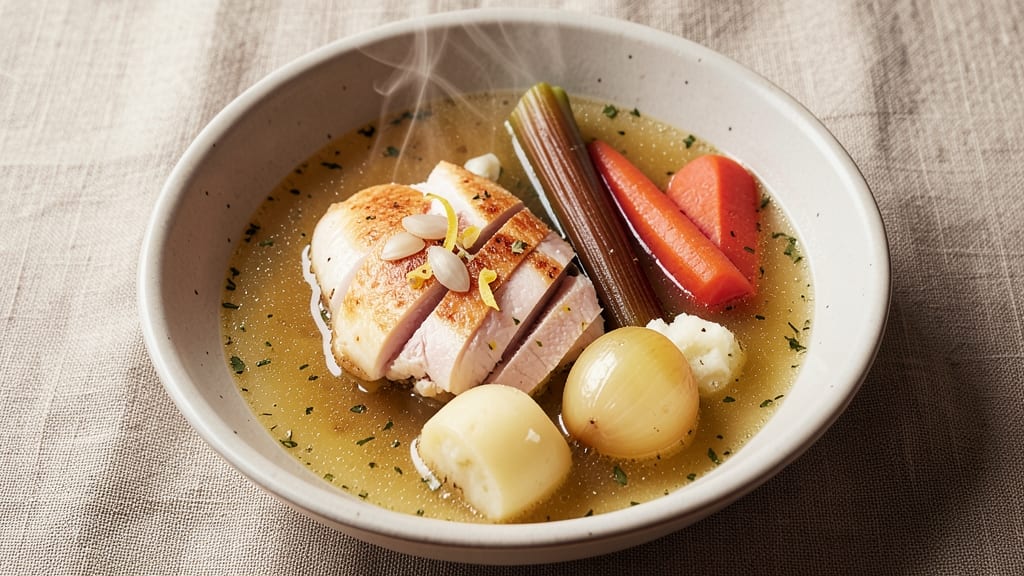
This basic chicken soup recipe from scratch transforms simple ingredients into a nourishing, comforting bowl that tastes like a hug in a mug. 💛 The secret lies in building rich, flavorful broth from scratch—no shortcuts, just deep, savory goodness that simmers for just 45 minutes to create a meal that’s both hearty and healing.
We start with a golden-brown chicken base, where caramelized aromatics (onion, garlic, celery) form the foundation of your broth. The chicken cooks low and slow until fork-tender, while vegetables like carrots, celery, and potatoes absorb the broth’s depth.
This isn’t just soup—it’s a restaurant-quality dish made with pantry staples and patience.
What you’ll end up with is a steaming bowl of tender chicken, perfectly cooked vegetables, and a broth so rich it clings to every spoonful. The aroma alone will fill your kitchen with warmth, while the texture—creamy potatoes, crisp carrots, and melt-in-your-mouth chicken—makes every bite satisfying.
This is the kind of soup that disappears faster than you can say “second helping.”
Best of all? It’s beginner-friendly—no fancy techniques, just a foolproof method that delivers results you’ll want to make again and again. Let’s get started on creating your homemade healing bowl.
Ingredients for basic chicken soup recipe from scratch
Transform simple pantry staples into restaurant-quality comfort with these healing ingredients.
| Ingredient | Amount | Notes |
|---|---|---|
| Whole Chicken 🍗 | 2 ½ lb | Bone-in, cut into 4 pieces |
| Yellow Onion 🧅 | 1 whole | Diced, medium size |
| Celery Stalks 🥬 | 3 whole | Chopped, medium size |
| Garlic Cloves 🧄 | 4 cloves | Minced, fresh preferred |
| Carrots 🥕 | 4 medium | Peeled, sliced into rounds |
| Russet Potatoes 🥔 | 2 medium | Peeled, cubed evenly |
| Chicken Broth 💧 | 6 cups | Homemade or low-sodium |
| Extra-Virgin Olive Oil 🫒 | 2 tbsp | For sautéing aromatics |
| Fresh Thyme 🌿 | 1 tbsp | Leaves only, chopped |
| Fresh Parsley 🌿 | ¼ cup | Chopped, for garnish |
| Salt 🧂 | 1 ½ tsp | Diamond Crystal preferred |
| Black Peppercorns 🌶️ | ½ tsp | Freshly cracked |
| Bay Leaves 🍃 | 2 whole | Remove before serving |
The chicken is your flavor anchor—bone-in pieces add richness to the broth. Look for organic or free-range at Whole Foods or your local butcher for better taste. If using store-bought, Trader Joe's has great pre-cut options. Caramelizing the aromatics (onion, garlic, celery) is non-negotiable—this builds the soup's depth. Fresh thyme and parsley elevate it from basic to restaurant-quality. For the carrots and potatoes, organic is ideal—peeling removes pesticides but also nutrients, so choose carefully.
No fresh thyme? Dried works at one-third the amount. Short on chicken broth? Vegetable broth plus 1 cup water keeps it vegetarian-friendly. The potatoes can be Yukon Golds for creamier texture—Russets work too. If you're in a rush, pre-chopped veggies from the salad bar save time (just rinse well). The olive oil matters—avoid light or refined oils—they lack flavor. For extra richness, add 1 tbsp butter at the end (optional).
Broth freezes beautifully—portion into ice cube trays for easy future use. Chicken keeps 3-4 days in the fridge; reheat gently. Potatoes and carrots can be prepped ahead and stored in water in the fridge for up to 2 days. Double the batch—this soup tastes even better the next day as flavors meld. Leftovers reheat in 2 minutes in the microwave, covered.
Why You'll Love This Recipe
- Pantry-Friendly Staples: I swear by this recipe because it uses things I always have—onions, carrots, celery—no fancy shopping needed. The whole chicken roasts while I chop veggies, so everything’s ready when it is.
- Rich Without Effort: That golden-brown chicken skin? Crispy, savory magic. Just roast the whole bird first, shred it into the broth, and—boom—instant depth. The garlic and carrots caramelize right in the pot.
- Leftovers That Save Me: Make a double batch, and I’ve got lunch for three days. The broth thickens overnight—even better the second day. Freeze half if you’re feeling extra, because this soup tastes like a hug.
- Budget Meal for Everyone: A whole chicken costs less than two breasts, and the veggies stretch into five servings. My kids fight over it (yes, even the carrots), and it’s the one meal where I never hear “I’m not hungry.”
Step-by-step instructions for homemade chicken soup
Here's how to create a comforting, aromatic broth-based masterpiece from scratch.
🔥 Step 1: Sear the Chicken for Maximum Flavor
Heat a large Dutch oven over medium-high heat and add the 2 tablespoons extra-virgin olive oil. Once shimmering, carefully add the 2.5 lb whole chicken (cut into 4 pieces) and sear for 4-5 minutes per side until the skin turns deep golden brown. This step develops the richest possible foundation for your soup.
I press down gently on each piece during the first minute to prevent curling—this ensures even contact with the pan. Remove the chicken and set aside on a plate. The browned bits (fond) will form the flavor base for your soup, so don't wipe the pot clean.
🍳 Step 2: Sauté the Aromatic Vegetables
In the same Dutch oven, add the diced yellow onion, chopped celery stalks, and minced garlic cloves. Cook over medium heat for 6-8 minutes, stirring occasionally, until the vegetables soften and the garlic becomes fragrant. You'll see the onions release their moisture and then begin to caramelize slightly—that's when you know they're ready.
Here's the thing—don't rush this step. The deeper the caramelization, the more complex your soup's flavor profile will be. If the vegetables start to stick, add a splash of chicken broth to deglaze and scrape up those flavorful browned bits from the bottom of the pot.
🥘 Step 3: Build the Soup Foundation
Return the seared chicken pieces to the pot. Add the 6 cups chicken broth, peeled and sliced carrots, peeled and cubed russet potatoes, 1 tablespoon fresh thyme, 1.5 teaspoons salt, 0.5 teaspoon freshly cracked black peppercorns, and 2 whole bay leaves. Bring to a gentle boil over high heat, then immediately reduce to a low simmer.
The reason we simmer gently is that a rolling boil can make the broth cloudy and break down the chicken too quickly. You want the chicken to cook through while maintaining its tenderness. Cover the pot and let it cook for 25 minutes—this gives the potatoes time to soften while keeping the broth clear.
⏰ Step 4: Finish and Season Perfectly
After 25 minutes, remove the chicken from the broth and let it rest on a cutting board for 5 minutes. Using two forks, shred the chicken into bite-sized pieces, discarding skin and bones. Return the shredded chicken to the pot and stir gently to combine.
Taste the broth and adjust seasoning if needed—I usually find it needs a touch more salt at this stage. Bring the soup back to a gentle simmer for another 5 minutes to heat through. Remove the bay leaves before serving, as they can become bitter when overcooked. Ladle into bowls and garnish with 0.25 cup chopped fresh parsley for a pop of color and freshness.
Pro Tips For Making Basic Chicken Soup Recipe From Scratch
- Brown the Chicken First: Don’t just toss the raw chicken into the pot—sear the pieces skin-side down in a hot pot or skillet until golden. This isn’t just for looks; it builds flavor that simmers into the broth. I used to skip it, and the soup always tasted flat until I realized how much difference crispy skin makes.
- Chop Celery and Carrots Small: Slice celery into ¼-inch pieces and carrots into ½-inch chunks—smaller than you’d think. Big pieces stay tough and turn to mush; tiny pieces soften perfectly and infuse flavor. (Yes, even if it looks like you’re making a salad.)
- Simmer, Don’t Boil: Keep the heat low enough that the broth bubbles gently, not violently. Boiling toughens the chicken and scatters the veggies into a mushy cloud. A steady simmer—about 1.5 hours for a whole chicken—keeps everything tender without falling apart.
- Save the Garlic for Later: Add minced garlic in the last 10 minutes, not at the start. Raw garlic burns easily and turns bitter; waiting until the end lets it mellow into the broth without overpowering. (Trust me, your soup will thank you.)
Storing and reheating this basic chicken soup recipe from scratch
Refrigerator Storage
Let your soup cool completely before transferring to airtight containers—I use glass Pyrex bowls with snap-on lids for easy reheating. Store in the fridge at 40°F or below for up to 4 days, though I always make extra because the flavors deepen overnight.
The broth will thicken slightly, creating a more concentrated taste. 💛
Freezer-Friendly Tips
Portion into freezer-safe bags (quart size works best) or glass containers, leaving 1-inch headspace for expansion. Label with the date—this soup keeps for 3 months without losing quality.
For quick meals, freeze in single-serving portions so you can grab and reheat just what you need. Thaw overnight in the fridge for best texture.
Stovetop Reheating
This is my go-to method because it preserves the soup’s texture beautifully. Heat over medium-low heat, stirring occasionally, until steaming (10-15 minutes). If it looks too thick, add ¼ cup water or broth to restore consistency.
Taste and adjust seasoning—soup often needs a pinch of salt or black pepper after reheating. Never boil vigorously, or the broth may turn cloudy.
Microwave Shortcuts
For faster reheating, transfer soup to a microwave-safe bowl and cover with a damp paper towel (this prevents drying). Heat on 50% power in 2-minute intervals, stirring between each, until reaching 165°F.
Avoid overcooking—microwaves can make the broth watery if pushed too hard. A splash of chicken broth can revive the flavor if needed.
Reviving Leftovers
If your soup tastes bland after reheating, boost it with a dash of lemon juice or a pat of butter—both brighten the flavors instantly. For extra richness, stir in 1 tablespoon cream or a sprinkle of fresh parsley right before serving.
The key is to treat reheating like a second chance to season—don’t be shy with herbs or acidity!
Broth Rescue
If the broth separates or looks cloudy after storage, strain it through a fine-mesh sieve to remove any impurities. For extra depth, toast 1 tsp onion powder or ½ tsp smoked paprika in a dry pan, then whisk it into the broth.
This trick adds complexity without extra effort. A little creativity goes a long way with leftovers! ✨
Nutrition facts
Frequently asked questions
Can I use chicken thighs instead of breasts for this recipe?
Chicken thighs are actually ideal for soup—they stay juicier and more flavorful during long simmering. Use 2.5 lbs bone-in, skin-on thighs instead, and reduce the cooking time to 20 minutes after adding to the pot (they cook faster than breasts). The skin will crisp beautifully when seared, adding extra richness to your broth.
What if I don't have fresh herbs like thyme or parsley?
No problem! Swap fresh thyme for 1 teaspoon dried thyme (use half the amount) and parsley for 1 teaspoon dried parsley or even ½ teaspoon dried oregano for a different but still delicious flavor. For garnish, try a sprinkle of grated Parmesan or a drizzle of olive oil instead—both add great texture and depth.
Why does my broth look cloudy after simmering?
Cloudy broth usually means the soup boiled too vigorously, breaking down the proteins and starches. To fix it, strain the soup through a fine-mesh sieve or cheesecloth, then return the broth to the pot. If you want to prevent it next time, keep the heat at a gentle simmer (small bubbles, not rolling) and avoid stirring too vigorously.
Can I make this soup in an Instant Pot or pressure cooker?
Yes! Sauté the chicken and aromatics as directed, then add all ingredients except parsley. Cook on high pressure for 12 minutes, then quick-release. Shred the chicken and finish with parsley. The broth will be even more flavorful since pressure cooking extracts more from the ingredients. Just watch the cooking time—don't overdo it or the chicken will turn tough.
What vegetables can I add for extra nutrition?
Try adding spinach or kale (wilt into the soup at the end), green beans (add with potatoes), or mushrooms (sauté with aromatics). For heartier texture, include diced zucchini or sweet potatoes. Just adjust cooking times—delicate veggies like spinach should go in last (5 minutes of cooking) to avoid mushiness.