
Soups & Stews
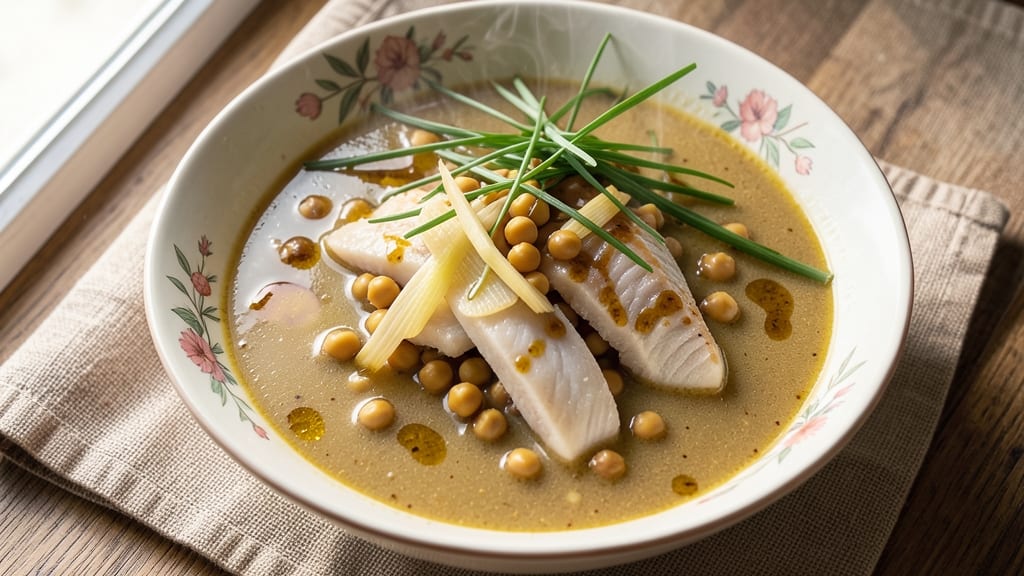
This Bangladeshi-style Thai soup recipe blends two distinct culinary traditions into a fragrant, comforting bowl that's both familiar and exciting. The marriage of mustard oil's pungent warmth with Thai lemongrass and coconut milk creates a broth that's complex yet balanced—herbaceous with a creamy undertone.
What makes this dish special is how it transforms simple ingredients like lentils, fish, and vegetables into something deeply satisfying through careful layering of flavors.
The foundation begins with a slow-simmered broth that infuses turmeric, cumin, and coriander into the bones of the soup. Unlike traditional Thai soups that rely solely on coconut milk, this version incorporates a touch of mustard oil—a Bangladeshi staple—that adds a distinctive depth.
The lemongrass and galangal root, staples in Thai cuisine, provide the aromatic backbone, while coconut milk lends a velvety richness that rounds out the dish.
What you'll end up with is a soup that's hearty yet light, packed with tender lentils, flaky fish, and vibrant vegetables all swimming in a fragrant broth. The texture is a perfect balance—creamy from the coconut, slightly spicy from the mustard oil, and fresh from the herbs.
This is the kind of soup that warms you from the inside out while offering a taste of both cultures in every spoonful.
Perfect for cool evenings or as a healing meal, this recipe scales easily for gatherings or leftovers. The beauty lies in its adaptability—swap in your choice of protein or vegetables while keeping the aromatic broth intact. Here's how to bring this fusion of flavors to your kitchen.
Ingredients for bangladeshi style thai soup
Simple ingredients that pack a punch of two cultures in one bowl.
| Ingredient | Amount | Notes |
|---|---|---|
| Yellow Lentils (Masoor Dal) 🌾 | 1 cup | Rinsed before cooking |
| White Fish Fillets 🐟 | 1 lb | Firm white fish like cod or snapper |
| Coconut Milk 🥥 | 1 can (13.5 oz) | Full-fat for creaminess |
| Galangal Root 🍃 | 2 pieces (2-inch) | Fresh, peeled and sliced |
| Lemongrass Stalks 🌿 | 3 whole | Lower halves, bruised |
| Mustard Oil 🫒 | 2 tbsp | For authentic flavor |
| Turmeric Powder 🌶️ | 1 tsp | Freshly ground preferred |
| Cumin Seeds 🌿 | 1 tsp | Toasted for aroma |
| Coriander Seeds 🍃 | 1 tsp | Ground or whole |
| Red Chili Powder 🌶️ | ½ tsp | Adjust to taste |
| Garlic Cloves 🧄 | 4 cloves | Minced for depth |
| Shallots 🧅 | 2 whole | Peeled and sliced |
| Tomatoes 🍅 | 2 whole | Medium, diced |
| Fresh Cilantro 🌿 | ¼ cup | Chopped for garnish |
| Lime Juice 🍋 | 1 tbsp | Freshly squeezed |
The galangal and lemongrass are your flavor anchors here. Indian grocery stores or Asian markets carry fresh galangal—look for firm, aromatic pieces. If you can't find it, ginger at half the amount works in a pinch (though it won't be identical). Lemongrass? Grab the whole stalks—they're more flavorful than pre-cut versions. For the fish, cod or snapper hold up best to the long simmer, but any firm white fish will do. The mustard oil is non-negotiable for that Bangladeshi depth—Kachi Ghani is the gold standard if you can find it, but any good mustard oil works.
No galangal? Ginger plus a pinch of cardamom gets you close. Coconut milk can be swapped for light coconut milk if you prefer less richness, but full-fat is what makes this soup sing. The lentils? Yellow lentils (masoor dal) hold their shape beautifully, but red lentils will turn creamier. Chili powder too spicy? Swap in cayenne at half the amount—it's hotter but more concentrated. And if you're short on time, pre-minced garlic from the jar is totally fine, though fresh always tastes better.
This soup tastes even better the next day as flavors meld. Store it in airtight containers for up to 4 days—the broth gets richer over time. For freezing, portion it into ice cube trays first, then transfer to bags. That way you can pull out just what you need. The fish will flake apart beautifully if you reheat gently—low heat or microwave only. Garnish with fresh cilantro right before serving, or it'll wilt in the heat.
Why You'll Love This Recipe
- No Chopping Needed: I swear by this—just smash the galangal and lemongrass with the side of your knife, no dice required. The fish fillets stay whole, the lentils soften in one pot, and honestly? The soup tastes richer for the lazy prep.
- Creamy Without the Guilt: That coconut milk makes it velvety, but the galangal and lentils keep it light—no heavy cream here. It’s the kind of soup that feels indulgent but still fits in my "eat this for lunch every day" rotation.
- Leftovers That Beg for More: The flavor actually deepens overnight, which is rare. I’ll make a big batch on Sunday, and by Wednesday, my coworkers are texting me for the recipe. (Yes, even the ones who hate soup.)
- Budget Meal That Feels Fancy: Fish fillets stretch across two meals, lentils bulk it up, and coconut milk adds luxury for pennies. Serve it with rice, or over noodles—suddenly, takeout doesn’t win. Between us, this is my secret for feeding guests without stress.
Step-by-step instructions for Bangladeshi-style Thai soup
This fragrant soup brings together bold spices and delicate fish for a perfect balance of flavors.
Prepare the Spiced Base
In a heavy-bottomed pot, heat the 2 tablespoons mustard oil over medium heat. Add the 1 teaspoon cumin seeds and toast for 30 seconds until they begin to sizzle and release their aroma. Immediately add the 1 teaspoon coriander seeds and toast for another 30 seconds—this unlocks their nutty depth.
Next, add the 2-inch slices of galangal root and 3 bruised lemongrass stalks. Cook for 2 minutes until the galangal softens slightly and the lemongrass releases its citrusy fragrance. Stir in the 4 minced garlic cloves and 2 sliced shallots, cooking for 1 minute until fragrant. Finally, add the 1 teaspoon turmeric powder and 0.5 teaspoon red chili powder, stirring constantly for 30 seconds to bloom the spices.
Build the Flavor Foundation
Pour in 1 cup yellow lentils (masoor dal) and stir to coat them in the spiced oil. Add 6 cups water and bring to a boil. Reduce heat to medium-low and simmer for 15 minutes, stirring occasionally, until the lentils are tender but not mushy. The soup should have a thick, stew-like consistency.
While the lentils cook, heat the 1 can (13.5 oz) coconut milk in a separate saucepan over low heat for 5 minutes—just enough to warm it without curdling. Stir in the 2 diced tomatoes and simmer for 5 minutes until they soften and break down, releasing their juices.
Combine and Simmer the Soup
Pour the tomato-coconut mixture into the lentil pot, stirring well to combine. Add the 1 lb white fish fillets (cut into 4 portions) and gently stir to submerge them in the broth. Cover and simmer for 8-10 minutes over low heat until the fish is just cooked through—it should flake easily with a fork but remain tender.
Taste and adjust seasoning with salt if needed. The soup should be rich, aromatic, and slightly spicy, with the coconut milk adding a velvety texture. If it's too thick, add 2-3 tablespoons water to reach your desired consistency.
Finish with Fresh Herbs and Lime
Remove the pot from heat and let the soup rest for 5 minutes. Stir in the 1 tablespoon freshly squeezed lime juice and 0.25 cup chopped fresh cilantro, folding gently to distribute the bright, herbal notes. The lime juice brightens the dish, cutting through the richness of the coconut and mustard oil.
Serve the soup immediately, garnished with an extra sprinkle of cilantro and a drizzle of mustard oil for that authentic Bangladeshi touch. The fragrant lemongrass and galangal will linger in every spoonful, while the tender fish adds a delicate contrast to the hearty lentil base.
Pro Tips For Making Bangladeshi Style Thai Soup
- Soak the Lentils: Skip the soaking if you’re short on time, but if you can spare 15 minutes, rinse the yellow lentils first—this cuts down on cooking time and keeps them from turning mushy. I used to ignore this, and my soup always ended up too thick and grainy.
- Char the Galangal: Lightly blacken the galangal slices in a dry pan before adding them to the broth—it deepens the flavor without bitterness. Sounds weird, but it works: the caramelized edges add a smoky note that balances the coconut milk’s sweetness.
- Add Fish Late: Don’t toss the fish in with the lentils; poach it separately in the finished broth for the last 2-3 minutes. Overcooking turns it rubbery, and you’ll end up with a sad, opaque fillet instead of tender, flaky pieces.
- Strain the Coconut Milk: If your coconut milk is too thick or has solids, strain it through a fine-mesh sieve before adding it to the pot. This keeps the soup silky and prevents clumps—no one wants a mouthful of coconut pulp while eating. (Yes, even if you’re impatient like me.)
Storing and reheating this recipe
Refrigerator Storage
Let your soup cool to room temperature (about 30-45 minutes) before transferring it to airtight containers. I use glass jars with snap-on lids—they preserve flavors better than plastic.
Store in the fridge at 40°F or below for up to 4 days. The broth actually deepens in flavor overnight, becoming even more aromatic. 🌿
When reheating, transfer the desired portion to a saucepan and warm over medium-low heat for 5-7 minutes, stirring occasionally. Add 1-2 tablespoons water if the soup thickens too much. Avoid boiling—just enough to restore warmth without breaking down the fish or lentils.
Freezer Storage
For longer storage, freeze the soup in quart-sized freezer bags or airtight containers, leaving ½ inch headspace for expansion. I like to portion it into 2-cup servings for easy single servings later. Label with the date—it keeps well for up to 3 months without significant texture changes. 🧊
To thaw, transfer the bag to the fridge overnight. For quick use, place the frozen bag in a bowl of warm water for 20-30 minutes. Once thawed, reheat gently on the stovetop as you would from the fridge—never microwave directly from frozen, or the fish may become rubbery.
Reheating Tips
This soup reheats best on the stovetop because it maintains the delicate balance of flavors. Use a heavy-bottomed pot to prevent scorching, and keep the heat at low-medium.
Stir frequently to distribute heat evenly. If the coconut milk starts to separate, whisk in 1 teaspoon cornstarch mixed with 1 tablespoon water to restore creaminess. 🔥
For extra richness after reheating, drizzle with ½ teaspoon mustard oil and sprinkle with fresh cilantro. The lime juice should be added fresh—don't reheat with it, as the heat will dull its brightness. Taste and adjust salt or chili powder as needed after reheating.
Nutrition facts
Frequently asked questions
What makes this soup different from traditional Thai or Bangladeshi soups?
This recipe uniquely blends Thai aromatic elements like lemongrass and galangal with Bangladeshi mustard oil and turmeric. While traditional Thai soups rely on coconut milk as the base, we incorporate a spiced lentil broth foundation—common in Bangladeshi cuisine—that creates a heartier texture. The mustard oil adds that signature Bangladeshi depth that Thai soups typically lack.
Can I substitute fish with another protein?
For a vegetarian version, use chickpeas or tofu (firm, pressed tofu works best). For meat lovers, try shrimp or chicken breast cut into bite-sized pieces. If using shrimp, add them only in the last 3-4 minutes of cooking to prevent overcooking. The cooking time will vary slightly based on protein type.
How do I adjust the spice level if I prefer milder flavors?
Reduce the red chili powder to ¼ teaspoon and skip adding extra chili during cooking. For a smoother heat, add ½ teaspoon sweet paprika instead. Taste the broth before adding fish—you can always adjust with more coconut milk or lime juice to balance the flavors. The mustard oil itself has a mild spiciness that's more aromatic than hot.
What's the best way to incorporate fresh herbs?
Add cilantro and lime juice only at the very end to preserve their bright flavors. Stir them in just before serving so they don't wilt in the hot broth. For extra freshness, reserve some cilantro to use as garnish. If you're short on time, dried cilantro (½ teaspoon) can be added during cooking, but fresh is always preferred.
Why does my soup taste too heavy after reheating?
This usually happens when coconut milk separates or the soup gets too thick. Reheat gently on low heat and stir frequently. If needed, whisk in 1 teaspoon cornstarch with 1 tablespoon water to restore creaminess. For extra freshness, finish with a drizzle of mustard oil and fresh herbs after reheating. Never microwave from frozen—always thaw first.