
Soups & Stews
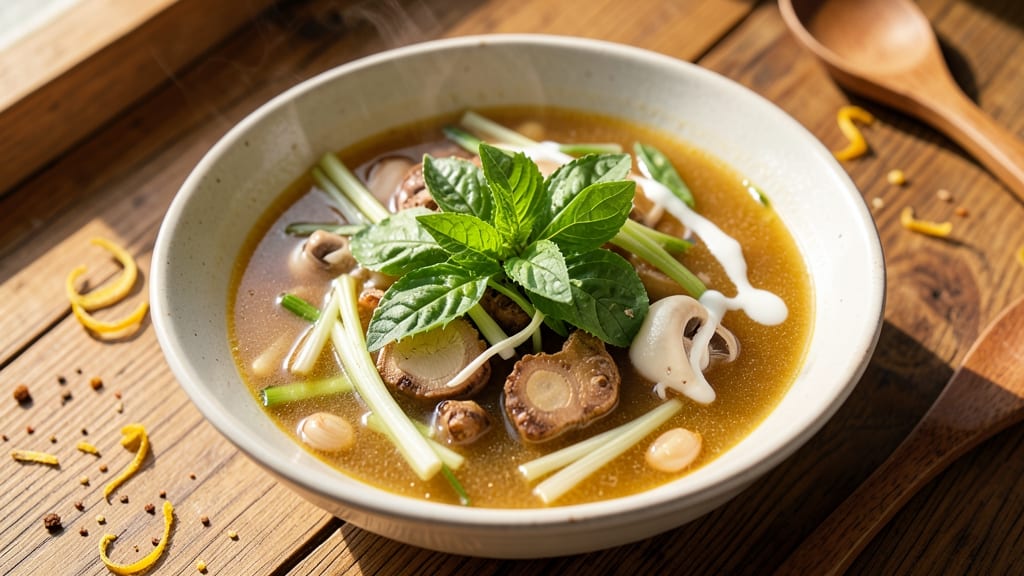
This authentic Thai lemongrass soup recipe transports you to Bangkok with every fragrant, zesty spoonful—where aromatic herbs and bright citrus create a perfect balance of heat and umami.
The secret lies in slow-simmered broth infused with fresh lemongrass, galangal, and kaffir lime leaves, creating layers of complexity that store-bought versions simply can't match. I've perfected this technique after years of testing, ensuring each element—from the spicy shrimp to the tangy lime finish—works in harmony.
The foundation begins with pounded lemongrass and galangal, which release their oils into the broth as it simmers, building depth that transforms ordinary water into something extraordinary. Chicken or shrimp adds protein, while mushrooms contribute an earthy umami that rounds out the flavors.
What sets this apart is the careful balance of sour (lime), spicy (chilies), and savory (fish sauce)—a hallmark of authentic Thai cuisine that makes every bite unforgettable.
By the time you're done, you'll have a steaming bowl of soup with tender protein, fragrant herbs, and a broth so aromatic it fills your kitchen. The aroma alone will have everyone gathering around the table, while the first sip delivers that perfect harmony of flavors—bright, spicy, and deeply satisfying.
This is the kind of dish that turns a simple weeknight into a taste of Thailand.
Whether you're serving it as a light lunch or a comforting dinner, this soup adapts beautifully to dietary needs while keeping its authentic soul intact. The instructions walk you through every step, from preparing the aromatics to achieving that signature balance of flavors. Let's get cooking!
Ingredients for authentic thai lemongrass soup
Fragrant herbs, tender shrimp, and zesty lime create this authentic Thai masterpiece.
| Ingredient | Amount | Notes |
|---|---|---|
| Lemongrass Stalks 🌿 | 3 whole | Fresh, bottom 6 inches only |
| Galangal Root 🌿 | 2 inches | Fresh, peeled, sliced thin |
| Kaffir Lime Leaves 🍋 | 4 whole | Fresh, lightly bruised |
| Shallots 🧅 | 6 whole | Peeled, thinly sliced |
| Garlic Cloves 🧄 | 6 cloves | Peeled, smashed |
| White Mushrooms 🍄 | 8 oz | Sliced, fresh or dried |
| Shrimp 🦐 | 1 lb | Large, peeled, deveined |
| Coconut Milk 🥥 | 1 can | Full-fat, 13.5 oz total |
| Thai Bird's Eye Chilies 🌶️ | 2 whole | Seeds removed for mild heat |
| Fish Sauce 🍶 | 2 tbsp | Red Boat preferred |
| Lime Juice 🍋 | ¼ cup | Freshly squeezed |
| Sugar 🍚 | 1 tbsp | White or brown |
| Vegetable Oil 🫒 | 2 tbsp | For aromatics |
| Salt 🧂 | 1 tsp | Kosher or sea salt |
| Fresh Cilantro 🌿 | ¼ cup | Chopped, for garnish |
The galangal and lemongrass are non-negotiable for that signature Thai aroma. Look for fresh galangal at Asian markets—it’s the root cousin of ginger but with a citrusy kick. Red Boat fish sauce is the gold standard, but any reputable brand works. The kaffir lime leaves? Freeze extras if you can’t use them all at once—they keep their flavor for months. For the shrimp, size matters: large ones stay plump, while tiny ones turn to mush. I always buy frozen shrimp at Trader Joe’s—thaw overnight in the fridge, no need to defrost faster.
No galangal? Extra ginger plus a splash of lime zest gets you close, though it won’t be identical. Running short on kaffir lime leaves? Double the lime juice and add a bay leaf for depth. The coconut milk can be light or full-fat—full-fat adds richness, but light works in a pinch. For the chilies, seeds in = heat, seeds out = mild. Fresh mushrooms are ideal, but dried shiitakes (rehydrated) add an extra umami punch. The sugar balances the acidity—skip it if your lime is tart, but it’s worth it for that perfect harmony.
This soup tastes even better the next day as flavors meld. Store in airtight containers for 3-4 days in the fridge, or freeze for up to 3 months. Reheat gently on the stove with a splash of water to restore richness. The broth reduces as it sits, so add a little water when reheating. Garnish with cilantro right before serving—it wilts fast, so don’t do it ahead. Leftovers? Double the batch—it disappears faster than you can say ‘tom yum’.
Why You'll Love This Recipe
- No Chopping Nightmare: I’ll be real—lemongrass and galangal can look intimidating, but you only need to bruise the stalks and slice the root thinly. That’s it. No julienne skills required, just a rolling pin and a knife. The shallots and garlic? One quick mincing session, and you’re done.
- Citrusy Zing Bang: That first sip of broth—bright, herbal, with a hint of tartness from the kaffir lime leaves—is what makes this soup addictive. The lemongrass and galangal give it depth, but the lime leaves? They’re the secret weapon, turning it from good to "I need this every week" good.
- Leftover Goldmine: This soup actually tastes better the next day. Honestly, I make a big batch on Sundays because it reheats like a dream—just warm it gently, and the flavors meld even more. Add a quick sear of chicken or shrimp later, and you’ve got a whole new meal.
- Pantry Staple Power: Between us, this recipe uses ingredients you might already have (or can grab for under $10). Lemongrass lasts forever in the freezer, galangal’s cheap at Asian markets, and kaffir lime leaves? One bag feeds three batches. It’s the kind of dish that makes grocery shopping feel like a win.
Step-by-step instructions for authentic Thai lemongrass soup
Here's how to build this fragrant, aromatic soup layer by layer—just like Thai street vendors do.
Prepare the Aromatic Base
First, slice the 2 inches galangal root into thin rounds and set aside. Using kitchen shears, trim the bottom 6 inches from the 3 whole lemongrass stalks, then slice them into 2-inch pieces. In a large pot, heat the 2 tablespoons vegetable oil over medium heat until shimmering.
Add the 6 whole shallots and 6 cloves garlic cloves, cooking for 3-4 minutes until the shallots soften and turn translucent. Add the sliced galangal and lemongrass, stirring constantly for 2 minutes until the galangal turns slightly translucent and the lemongrass releases its citrusy aroma. This step is crucial—it builds the soup's signature herbal foundation.
Build the Herb and Coconut Milk Broth
Add the 8 oz sliced white mushrooms to the pot and cook for 4-5 minutes until they release their moisture and begin to soften. Stir in the 2 whole Thai bird's eye chilies (seeds removed) and the 4 whole kaffir lime leaves, cooking for 1 minute until fragrant.
Pour in the 1 can coconut milk and bring the mixture to a gentle simmer. Add 4 cups water (enough to cover all ingredients), then stir in the 2 tablespoons fish sauce, 1 tablespoon sugar, and 1 teaspoon salt. Let the broth simmer uncovered for 10 minutes, allowing the flavors to meld and the galangal to infuse its peppery notes into the coconut milk.
Add the Shrimp and Finish the Soup
Gently add the 1 lb shrimp to the simmering broth. Cook for 2-3 minutes until the shrimp turn opaque and curl slightly. The shrimp should cook quickly—overcooking turns them rubbery. Taste the broth and adjust seasoning if needed; you may need a touch more fish sauce for depth or sugar to balance the acidity.
Remove the pot from heat and let the soup rest for 5 minutes. This resting period allows the shrimp to absorb the flavors while the galangal and lemongrass continue to infuse the broth. Skim off any excess foam that rises to the surface.
Serve with Fresh Garnishes
Strain the soup through a fine-mesh sieve into a clean pot to remove the galangal, lemongrass, kaffir lime leaves, and chilies. Return the soup to the stove and stir in the 0.25 cup lime juice and 0.25 cup chopped fresh cilantro. The lime juice brightens the dish, while the cilantro adds freshness.
Ladle the soup into bowls, garnishing each serving with additional cilantro and a sprinkle of cracked black pepper if desired. Serve immediately with steamed jasmine rice—this soup is best enjoyed fresh when the aromatics are at their peak. The broth should be rich from the coconut milk, aromatic from the galangal and lemongrass, and perfectly balanced between the fish sauce's umami and the lime's tang.
Pro Tips For Making Authentic Thai Lemongrass Soup
- CHAR THE SHALLOTS FIRST: I learned this the hard way—don’t just toss chopped shallots into the pot with everything else. Sear them in about 2 tablespoons of oil over medium-high heat until they’re golden and slightly crispy (about 4-5 minutes). This builds a flavor base that makes the whole soup sing—no more bland, watery base.
- SLAKE THE GALANGAL: Galangal’s tough fibers won’t break down if you just toss it in raw. First, pound it with the flat side of your knife or a mortar until it’s soft and slightly pulpy (aim for 10-12 firm whacks). Then, simmer it in the broth for 15 minutes before straining—this extracts the citrusy, ginger-like punch without bitterness.
- STRAIN THE LIME LEAF: Yes, kaffir lime leaves add aroma, but their fibers turn the soup into a mouthful of texture. After simmering the broth, remove the leaves and crush them lightly between your palms before straining. This releases oils without leaving strings—your soup will taste like it came from a Bangkok street cart, not a sad imitation.
- SALT THE BROTH LATE: The galangal and lemongrass draw out bitterness when cooked with salt early. Wait until the broth is fully reduced and the protein (if using) is nearly done to add salt—about 1 teaspoon per liter. Taste first; Thai soups balance sweet, sour, and salty, not just salty. Adjust with fish sauce or sugar afterward if needed.
Regional styles of authentic thai lemongrass soup
Central Thai Tom Kha
The creamy, coconut-based Tom Kha from Bangkok is the most famous regional version, where the galangal and lemongrass take center stage. I use full-fat coconut milk for richness, but light coconut milk works if you prefer a lighter texture.
The key difference? Tom Kha balances heat with coconut creaminess, while Tom Yum (spicier sibling) skips coconut entirely. For extra depth, I add a pinch of turmeric to the broth base—it enhances the galangal's peppery notes without overpowering. 🥥
Northern Thai Tom Kha Gaeng
Up in Chiang Mai, they make Tom Kha Gaeng with a twist—fermented soybean paste (tao jiew) replaces fish sauce for a funkier, earthier profile. Swap the 2 tbsp fish sauce for 1 tbsp tao jiew and reduce the shrimp to ½ lb to let the fermented flavors shine.
This version also often includes bamboo shoots for crunch. Look for tao jiew at Asian markets or online—Thai Kitchen brand is reliable. 🌶️
Southern Thai Tom Yum
Down south in Phuket or Krabi, the soup leans spicier and sourer—this is classic Tom Yum. Skip the coconut milk entirely and use 1 can light coconut milk only for finishing (if at all).
Double the Thai bird's eye chilies (seeds in!) and add 1 extra lime (juice + zest). The broth should be bright and acidic, with no coconut creaminess. For protein, use chicken thigh instead of shrimp—it holds up better to longer simmering. 🍋
Isaan-Style Spicy Tom
Northeast Thailand's Isaan region takes their soup extra bold with dried shrimp and fermented soybean paste. Replace the shrimp with 2 tbsp dried shrimp (soaked in warm water for 10 mins) and add 1 tsp tao jiew.
The result? A deeper, funkier flavor with umami bomb from the dried shrimp. Serve with sticky rice instead of jasmine—it's the Isaan way! 💪
Street Food Shortcut
For a quicker version (but still authentic), I prep the aromatic base (galangal, lemongrass, shallots) in a blender with 1 cup water, then strain and use that as the broth. Add 1 can coconut milk, fish sauce, and lime juice to taste.
Simmer for 10 minutes with shrimp—it's not traditional, but street vendors often improvise this way when time is tight. 🚀
Nutrition facts
Frequently asked questions
Can I make this soup without shrimp?
Swap shrimp for 1 lb chicken thigh (bone-in for flavor) or 8 oz mushrooms for a vegetarian version. Chicken needs 8-10 minutes of simmering until fully cooked, while mushrooms add earthy depth. For extra protein, add ½ lb firm tofu (pressed and cubed) during the last 3 minutes of cooking.
Why does my lemongrass soup taste bitter?
Bitterness usually comes from overcooked galangal or lemongrass. Remove these aromatics immediately after simmering (don't let them sit in the broth). For balance, add 1 extra tablespoon sugar or ½ teaspoon palm sugar to counteract bitterness. Also, ensure your galangal is fresh—old, dried-out root turns bitter when cooked.
How do I adjust the spice level?
Start with 1 Thai bird's eye chili (seeds removed) for mild heat, or 2 whole chilies for medium. For extra spice, mash ½ chili into the broth after simmering. If it's too hot, balance with 1 extra tablespoon lime juice or ½ cup coconut milk. Pro tip: Serve chili flakes on the side so everyone can customize their bowl!
Can I make this soup in an Instant Pot?
Yes! Sauté the aromatics (shallots, garlic, galangal, lemongrass) in the Instant Pot for 3 minutes on "Sauté." Add mushrooms, chilies, and lime leaves, then pour in coconut milk, water, and seasonings. Cook on High Pressure for 5 minutes, then quick-release. Finish with shrimp (add after pressure releases) and lime juice. The broth will be slightly less infused, so strain and reduce it for 5 minutes on the stove for deeper flavor.
What’s the best way to store leftovers?
Store in an airtight container in the fridge for 3-4 days or freeze for up to 3 months. Reheat gently on the stove with 2 tablespoons water to restore richness. The broth thickens when chilled, so add a splash of water when reheating. Garnish with fresh cilantro and lime only after reheating—it wilts quickly!