
Soups & Stews
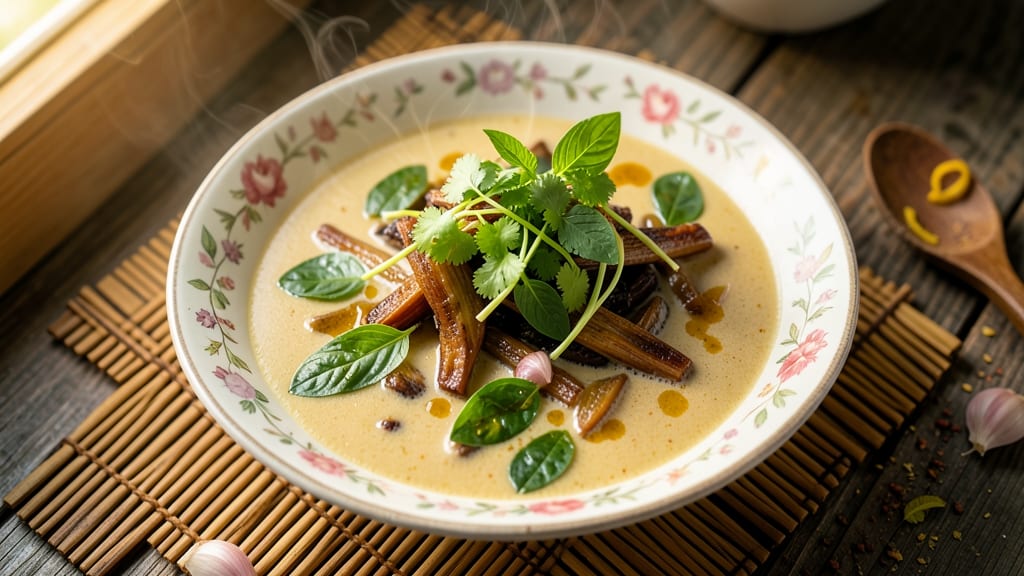
This banana stem soup recipe brings the earthy, aromatic soul of Southeast Asian cuisine to your kitchen with minimal effort. 🌿 The secret lies in transforming the fibrous stems—often discarded—into a velvety, herb-infused broth that’s both nutritious and deeply satisfying. I first discovered this dish while exploring Filipino street food, where it’s celebrated for its simplicity and health benefits. The process starts with meticulous cleaning and boiling to extract the stems’ natural sweetness, then blending with coconut milk and aromatic herbs for a balance of earthy and creamy flavors.
The beauty of this recipe is its versatility—it’s equally at home as a light lunch or a comforting dinner. The banana stem’s subtle sweetness pairs perfectly with the tang of lime and the heat of chili, while coconut milk adds a luxurious creaminess without dairy.
What makes it stand out is its dietary benefits: packed with fiber, vitamins, and antioxidants, it’s a powerhouse for digestion and immunity. Plus, it’s naturally vegan and gluten-free, making it accessible for almost any diet.
By the time you finish, you’ll have a steaming bowl of golden soup with a rich, velvety texture and layers of aromatic herbs floating on top. The first sip reveals a harmonious blend of earthy banana stem, creamy coconut, and bright citrus—simple yet complex.
This isn’t just a recipe; it’s a celebration of sustainable cooking, where every ingredient is used thoughtfully and every bite is packed with flavor. Ready to transform something unexpected into something extraordinary?
Whether you’re serving it as a light meal or a side dish, this soup shines with minimal prep and maximum impact. The best part? You’ll likely find yourself reaching for the banana stems again and again. Let’s get started on creating this Thai-inspired delight.
Ingredients for banana stem soup
Earthy banana stems meet creamy coconut and aromatic herbs for a Thai-inspired delight.
| Ingredient | Amount | Notes |
|---|---|---|
| Banana Stems 🍌 | 2 cups | Cleaned and chopped into 1-inch pieces |
| Coconut Milk 🥥 | 1 ½ cups | Full-fat canned preferred |
| Fresh Thai Basil Leaves 🌿 | ½ cup | Packed, stems removed |
| Fresh Cilantro Leaves 🌿 | ¼ cup | Packed, for garnish |
| Fresh Ginger Root 🧄 | 2 tbsp | Grated finely |
| Garlic Cloves 🧄 | 4 cloves | Peeled and smashed |
| Lime Juice 🍋 | 2 tbsp | Freshly squeezed |
| Red Chili Peppers 🌶️ | 2 whole | Bird's eye or Thai chili, sliced |
| Vegetable Oil 🫒 | 1 tbsp | For sautéing |
| Sea Salt 🧂 | 1 tsp | Fine grain preferred |
| White Peppercorns 🌶️ | ¼ tsp | Freshly ground |
| Water 💧 | 4 cups | For boiling stems |
Banana stems are the star here—look for fresh, vibrant green stems at Asian markets or well-stocked grocery stores. Trader Joe's and Whole Foods often carry them in the produce section, though you might need to ask. If you can't find them, substitute with okra or extra zucchini for texture, but the flavor will differ. The stems should be firm and free of brown spots. Clean them thoroughly under running water to remove any grit before chopping—this is non-negotiable for a smooth soup. For the coconut milk, full-fat canned versions like Thai Kitchen or Native Forest work best—they're rich enough to stand up to the earthy stems without needing extra creaminess.
No Thai basil? Regular basil or even mint will work in a pinch, though the flavor profile shifts. The cilantro is purely for garnish, so skip it if you're sensitive to the taste. For the ginger, fresh is essential—dried loses its punch. If you're short on time, pre-grated ginger from the jar works, but it's less vibrant. The chili peppers can be adjusted to taste: remove seeds for less heat or add more for a kick. Lime juice is crucial for brightness—freshly squeezed is a must. If you're out, bottled lime juice works, but it lacks the same zing. For extra depth, toast the garlic cloves in a dry pan for 30 seconds before adding—it adds a nutty dimension that takes this soup to the next level.
This soup tastes even better the next day as flavors meld—reheat gently on the stove with a splash of water to restore creaminess. Stores 3-4 days in the fridge, sealed tightly to preserve the coconut aroma. For longer storage, freeze in airtight containers for up to 3 months. Garnish with extra herbs and chili flakes before serving—it's the finishing touch. The stems can be prepped ahead and refrigerated for 2 days before boiling, making this a great make-ahead meal. Double the batch and freeze half for those nights when you crave comfort without the effort.
Why You'll Love This Recipe
- I’ll be real: coconut milk and fresh herbs might sound fancy, but banana stems are often cheap or free if you know where to look. A single bunch stretches into multiple servings, and the flavors are so bold you can stretch it with veggies or rice without losing impact. Practical? Absolutely. Delicious? Ridiculously.
- No-Waste Win: I swear by this soup because it turns banana stems—something most people toss—into something rich and satisfying. The stems soften into a silky texture that holds up perfectly in broth, and honestly? It’s the kind of recipe where you’re left with nothing but scraps for compost.
- Creamy-Ginger Hug: That ginger and coconut milk combo? It’s like a warm, spicy embrace in a bowl. The fresh Thai basil and cilantro brighten it up just enough to keep it from feeling heavy, and the stems add a subtle earthiness that ties everything together. (Yes, even on a Tuesday night.)
- Lunchbox Hero: Between us, this soup is my go-to for meal prep. It reheats beautifully, keeps for days in the fridge, and I’ve even packed it in thermoses for work—no soggy sandwiches here. The banana stems hold their shape surprisingly well, so it’s just as good cold as it is hot.
Step-by-step instructions for earthy banana stem soup
This Thai-inspired soup transforms humble banana stems into a fragrant, herb-packed delight.
🍳 Step 1: Sauté Aromatics Until Fragrant
Heat the 1 tablespoon vegetable oil in a medium pot over medium-high heat. Add the 2 whole red chili peppers (sliced) and cook for 30 seconds until they begin to soften slightly. This jumpstarts the flavor foundation.
Add the 4 cloves garlic and 2 tablespoons fresh ginger root to the pot. Sauté for 1-2 minutes until the garlic turns golden and the ginger becomes fragrant—this is your aromatic base. Be careful not to let the garlic burn; it should smell sweet and inviting, not bitter. The chili peppers will add just the right amount of heat without overpowering the earthy banana stems.
🍳 Step 2: Boil and Simmer the Banana Stems
Add the 2 cups banana stems (chopped into 1-inch pieces) to the pot. Pour in the 4 cups water and bring to a boil over high heat. Once boiling, reduce to medium heat and let it simmer uncovered for 15-20 minutes until the banana stems soften and the liquid reduces slightly.
You'll know it's ready when the stems are tender enough to pierce easily with a fork. The broth should smell rich and earthy—like a cross between banana and nutty sweetness. If the liquid reduces too much, add a splash of water to maintain the right consistency for blending. This step extracts all the subtle flavors from the banana stems, turning them into the soup's heart.
🥘 Step 3: Blend Until Silky Smooth
Using an immersion blender (or carefully transferring to a countertop blender), purée the soup until completely smooth. This is where the magic happens—the blended texture creates a velvety base that carries all the aromatic flavors. If using a countertop blender, work in batches and be cautious with hot liquids.
Return the blended soup to the pot and stir in the 1.5 cups coconut milk. Add the 1 teaspoon sea salt and 0.25 teaspoon white peppercorns (freshly ground). Simmer gently for 5 minutes to let the flavors meld together. The coconut milk should create a creamy, luxurious texture that balances the earthy banana stems. Taste and adjust seasoning—this is your chance to fine-tune the balance between sweet, savory, and spicy.
👨🍳 Step 4: Finish with Fresh Herbs and Lime
Remove the pot from heat and stir in the 0.5 cup fresh Thai basil leaves and 0.25 cup fresh cilantro leaves. Let the soup sit for 2-3 minutes to allow the herbs to infuse their bright flavors. The Thai basil will add a distinct anise-like note, while the cilantro brings freshness.
Finish with the 2 tablespoons lime juice, giving the soup a bright, tangy lift that cuts through the richness. The lime juice should make your mouth pucker slightly—this is essential for balancing the creamy coconut milk. Garnish each serving with a few extra Thai basil leaves and cilantro for color and aroma. Serve immediately while the herbs are still vibrant and the soup is steaming hot.
Pro Tips For Making Banana Stem Soup
- BLEACH THE STEMS FIRST: Skip the scrubbing—banana stems hold grit like a magnet. Soak the peeled stems in cold water with a splash of white vinegar for 10 minutes, then rinse. I learned this the hard way after spitting out grit in my first bowl (yes, even with "fresh" stems).
- SIMMER GINGER LOW AND LONG: High heat turns ginger bitter fast. Once you add the sliced ginger to the coconut milk, drop the heat to a bare simmer and let it cook for 15 minutes uncovered. The aroma deepens, and the stems absorb flavor better—no mushy texture, just rich depth.
- CHOP BASIL AND CILANTRO LAST: Tossing in herbs early wilts them into oblivion. Keep the Thai basil and cilantro whole until the very end, then add a handful at a time while the soup simmers. The heat releases their oils just enough to brighten the dish without turning them to mush.
- USE FULL-FAT COCONUT MILK: Light coconut milk saves calories but ruins the soup’s velvety mouthfeel. Splurge on the canned full-fat version—it’s the only way to get that creamy, almost custard-like texture that makes the dish sing. (I know, I know—your future self will resist the urge to cut corners.)
Essential equipment for banana stem soup
Immersion Blender
An immersion blender is my go-to tool for this recipe—it simplifies blending hot liquids right in the pot, eliminating transfer steps. I recommend the Ninja BN601 for its powerful motor and durable build.
If you prefer a countertop blender, use a high-wattage model like the Vitamix 5200 to handle the coconut milk's creaminess. Just work in batches and avoid overfilling to prevent splattering. 💫
Stainless Steel Pot
Choose a medium-sized (3-4 quart) stainless steel pot with a tight-fitting lid for even heat distribution. I use a All-Clad Stainless Steel Saucepan because it prevents flavor transfer from aluminum or copper.
The pot should have sloped sides to avoid hot spots when blending. Avoid nonstick—it can't handle the high heat needed for simmering.
Chef’s Knife
A sharp 8-inch chef’s knife is essential for chopping banana stems into 1-inch pieces efficiently. I swear by the Wüsthof Classic—its weight and balance make quick work of fibrous stems.
For safety, use a cutting board with a non-slip mat (like OXO Good Grips) to prevent movement while chopping. A dull knife will crush the stems, making blending harder.
Fine-Mesh Strainer
If you prefer a chunkier texture, strain the blended soup through a fine-mesh strainer (like OXO Good Grips) to remove any fibrous bits. This step is optional but creates a smoother finish.
For extra clarity, line the strainer with cheesecloth—it catches even finer particles. I only strain if the soup feels too fibrous after blending.
Measuring Spoons
Precise measurements matter for balance—use stainless steel measuring spoons (like OXO Stainless Steel) for the 2 tbsp lime juice, 1 tsp salt, and ¼ tsp white pepper.
Liquid measurements should be eye-level for accuracy. For fresh ginger and garlic, I use a microplane to grate finely—it’s faster than a knife and ensures even distribution.
Wooden Spoon
A heat-resistant wooden spoon (like OXO Good Grips) is perfect for stirring the soup without scratching stainless steel. Wood also helps prevent scorching when simmering. Avoid metal utensils during the final herb infusion—wood won’t bruise the delicate Thai basil leaves.
Keep a spoon handy to taste and adjust seasoning as you go. 🌿
Nutrition facts
Frequently asked questions
What's the best way to clean banana stems before cooking?
Rinse the stems thoroughly under cold running water, then scrub gently with a vegetable brush to remove any dirt or grit. Peel away the tough outer skin by making a small cut with a knife and pulling it off like a banana. For extra cleanliness, soak the chopped stems in water for 10 minutes before cooking to remove any lingering residue.
Can I substitute banana stems if I can't find them?
Yes! For texture, use okra or zucchini (chopped into similar pieces), but the flavor will differ. For a closer match, try lotus root or water chestnuts—they have a similar earthy quality. If you're missing the stems entirely, consider a creamy coconut soup with mushrooms or tofu instead.
How do I adjust the spice level in this soup?
Remove the seeds from chili peppers for less heat, or add more slices for extra spice. For a milder version, reduce to just 1 chili pepper (seeded). If you love heat, add a pinch of red pepper flakes or cayenne at the end. Always taste as you go—you can't overdo the lime juice to balance it!
Is this soup naturally gluten-free and vegan?
This recipe contains no gluten or animal products—just plant-based ingredients. The coconut milk, herbs, and stems make it perfect for vegan and gluten-free diets. Always double-check your coconut milk label to ensure it's dairy-free if you're avoiding all animal products.
Can I make this soup ahead of time?
Yes! Store in an airtight container in the fridge for 3-4 days or freeze for 3 months. Reheat gently on the stove with a splash of water to restore creaminess. The flavors actually improve overnight as the herbs infuse deeper. Just add fresh garnishes before serving.