
Soups & Stews
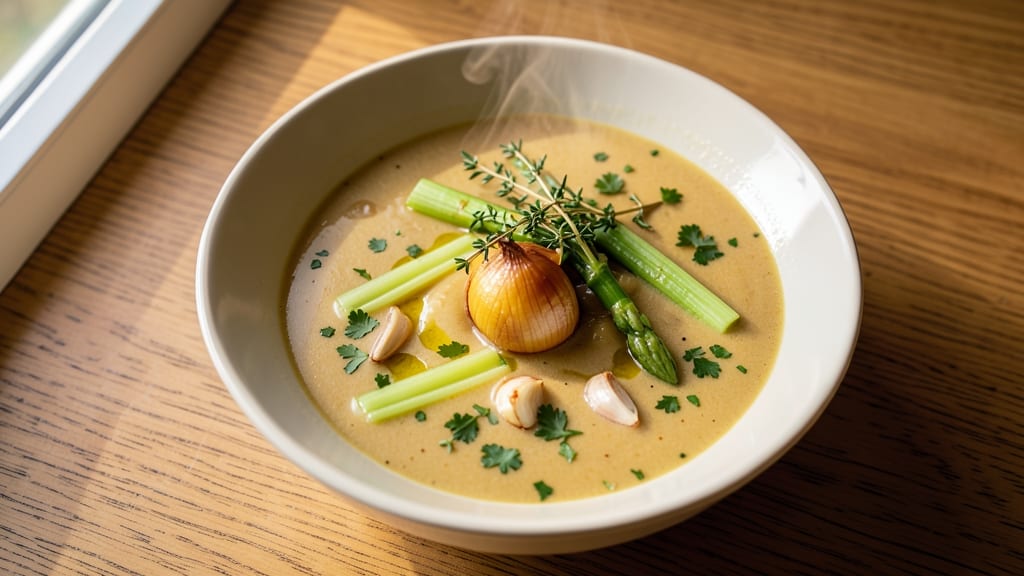
This asparagus celery soup recipe transforms humble vegetables into a velvety, herb-infused masterpiece—ready in just 30 minutes. The secret lies in caramelizing the vegetables before blending, which builds deep, savory flavor without needing heavy cream.
I developed this version after realizing most recipes either taste too watery or rely on dairy, so I focused on balancing natural sweetness with bright herbs and a touch of acidity.
The recipe begins with sautéing celery and onions until tender, then adding asparagus to develop its signature nutty depth. A splash of white wine (or vegetable broth) deglazes the pan, creating a fragrant base before simmering with garlic and thyme.
The real magic happens when you blend the soup until silky—no immersion blender required—then finish with a swirl of olive oil and lemon zest for brightness.
What you’ll end up with is a soup that’s rich yet light, with a texture that’s creamy without dairy and packed with springtime freshness. The asparagus adds a subtle sweetness, while celery brings earthy notes that pair beautifully with the herbs.
It’s the kind of dish that feels both comforting and refined—perfect for weeknight dinners or spring gatherings.
For extra depth, stir in a spoonful of miso paste or a splash of coconut milk, and top with toasted croutons or fresh parsley. This recipe adapts effortlessly to dietary needs while keeping the focus on bold, vegetable-forward flavor. Let’s make it!
Ingredients for asparagus celery soup
Fresh celery, asparagus, and herbs make this soup rich yet light—no dairy needed.
| Ingredient | Amount | Notes |
|---|---|---|
| Celery Stalks 🧅 | 3 whole | Trimmed, cut into 1/2-inch pieces |
| Yellow Onion 🧅 | 1 whole | Medium size, diced |
| Asparagus Spears 🌱 | 1 lb | Trimmed, cut into 1-inch pieces |
| Garlic Cloves 🧄 | 3 cloves | Fresh, minced |
| Fresh Thyme Leaves 🌿 | ¼ cup | Stems removed, chopped |
| Fresh Parsley Leaves 🌿 | ¼ cup | Chopped, for garnish |
| Extra-Virgin Olive Oil 🫒 | ½ cup | High quality, fruity |
| Dry White Wine 🍷 | ½ cup | Or substitute vegetable broth |
| Vegetable Broth 💧 | 2 cups | Low-sodium preferred |
| Lemon Zest 🍋 | 1 tsp | Freshly grated |
| Salt 🧂 | 1 tsp | Diamond Crystal kosher salt |
| Black Pepper 🌶️ | ½ tsp | Freshly ground |
| Miso Paste 🍶 | 1 tbsp | White miso, optional for depth |
| Toasted Bread Cubes 🍞 | ½ cup | For croutons, optional garnish |
Celery and asparagus are the stars here. Look for bright green asparagus with tightly closed tips—those are the freshest. The celery should be crisp, not rubbery. I grab mine from the farmers market in season, but the grocery store works too. For the thyme, fresh is best, but dried works in a pinch at one-third the amount. The miso paste adds depth without overpowering—Trader Joe's has a great white miso that's perfect for this. If you're using white wine, go for something dry like Sauvignon Blanc—it brightens the soup beautifully.
No white wine? Vegetable broth works just as well. Fresh herbs can be swapped for dried, but reduce the amount by half. The lemon zest is non-negotiable—it cuts through the richness and keeps everything fresh. If you're avoiding miso, a splash of coconut milk adds creaminess without dairy. The bread cubes for croutons can be any stale bread—toasted in olive oil with a pinch of salt. For extra richness, stir in a spoonful of tahini at the end. And if you're short on time, pre-chop everything before you start cooking—it makes the process smoother.
This soup tastes even better the next day—reheats beautifully in the microwave or on the stove. Store leftovers in an airtight container for 4-5 days in the fridge. For freezing, portion into containers and freeze for up to 3 months. The croutons are best added fresh, but you can toast extra and store them separately. If you make a double batch, freeze half right away—spring soup for lazy summer days. The herbs and lemon zest can be added after reheating to keep their freshness.
Why You'll Love This Recipe
- No Fuss, No Mess: I swear by this one-pot method—just chop the celery and onion, toss them in with the asparagus, and let the garlic and thyme work their magic. The blender does the rest while you’re still wiping your knife.
- Earthy Yet Bright: That first sip? Crisp celery and tender asparagus with garlic so subtle it lingers like a whisper, not a shout. The thyme adds this fresh, herbal lift that makes it taste like spring in a bowl—honestly, it’s the kind of flavor that sticks with you.
- Weeknight to Potluck: Make a double batch on Sunday, and you’ve got lunch covered for three days. Or bring it to a picnic—it’s light enough for summer but hearty enough for a chilly evening. My roommates still ask for seconds when I bring it over.
- Budget Bright Spot: Celery, onions, and asparagus are cheap staples that pack serious flavor. I’ve made this for under $5 a serving, and it always feels like a fancy meal. Plus, leftovers reheat like a dream—no soggy soup here.
Step-by-step instructions for herb-infused asparagus celery soup
This light, vibrant soup comes together faster than you'd expect—fresh spring flavors balanced with umami depth.
Sauté the Vegetable Base Until Fragrant
Heat the 0.5 cup extra-virgin olive oil in a large pot over medium heat. Add the 1 whole yellow onion and 3 whole celery stalks (prepped as directed), stirring occasionally for 5-6 minutes until the onions become translucent and the celery softens slightly. This foundational cooking releases their natural sweetness.
Add the 1 lb asparagus spears (cut into 1-inch pieces) and 3 cloves minced garlic, stirring to combine. Cook for another 4-5 minutes until the asparagus begins to soften but still holds its shape. You're building layers of flavor here—don't rush this step, as proper cooking ensures the soup's vibrant color and depth.
Deglaze and Simmer with Aromatics
Pour in the 0.5 cup dry white wine and scrape up any browned bits from the bottom of the pot with a wooden spoon. Let it simmer for 2-3 minutes until the wine reduces by half and its alcohol aroma dissipates. This deglazing step captures all the caramelized flavors you've built so far.
Add the 2 cups vegetable broth, 1 tsp lemon zest, 1 tbsp miso paste, and bring to a gentle boil. Reduce heat to medium-low and let it simmer uncovered for 15-20 minutes until the asparagus is fork-tender and the soup has thickened slightly. Stir occasionally to prevent sticking—this is where the soup's texture comes together.
Season and Finish with Fresh Herbs
Remove the pot from heat and stir in the 0.25 cup chopped fresh thyme leaves and 1 tsp salt. Taste and adjust seasoning with 0.5 tsp black pepper if needed. The miso paste should add a subtle umami depth, but if you prefer a cleaner flavor, you can omit it entirely.
For a silky texture, use an immersion blender to purée the soup directly in the pot until smooth. If you prefer some texture, leave about 20% of the soup unblended. The result should be a vibrant green soup with just the right body—creamy but not heavy.
Garnish and Serve Warm
Ladle the soup into bowls and top each serving with 0.25 cup chopped fresh parsley leaves and 0.5 cup toasted bread cubes for crunch. The parsley adds a bright finish that cuts through the soup's richness, while the bread cubes provide a satisfying texture contrast.
Serve immediately while still warm—this soup tastes best fresh from the pot. The lemon zest brightens the flavors, while the thyme and parsley elevate it from simple to sophisticated. Pair with a crisp white wine or enjoy as-is for a light yet deeply flavorful meal.
Pro Tips For Making Asparagus Celery Soup
- Char the Celery First: I learned this the hard way—sautéing celery until it’s deep golden (not just soft) adds a caramelized depth that plain cooking misses. Get your pan hot enough to see smoke wisping, then toss in the chopped celery with a pinch of salt. Let it sit for 30 seconds before stirring—yes, even if you’re impatient like me.
- Use Thyme Stems Too: Sounds weird, but it works: after stripping the leaves, crush the woody stems with the flat side of your knife and toss them into the pot with the leaves. They release more flavor without bitterness, and you’re not wasting anything. (Your future self will thank you.)
- Blanch Asparagus Before Adding: Skip the mushy asparagus by blanching the spears in boiling water for 90 seconds, then shocking them in ice water. This locks in their bright color and crisp texture—no more turning to mush when you blend. Works especially well if you’re using thicker stalks.
- Salt the Pot Early: Don’t wait until the end to season. Add a generous pinch of salt to the pot as soon as you start sautéing the onion—it draws out moisture and helps build flavor layer by layer. I used to hold back, but the soup tastes noticeably brighter when you do this. (Your taste buds will notice.)
Creative variations of asparagus celery soup
Spring-Inspired Twist
Transform this soup into a true spring celebration by adding 1 cup thinly sliced radishes during the final 5 minutes of simmering. Their peppery bite contrasts beautifully with the asparagus's sweetness.
I also like tossing in ½ cup diced fennel bulb with the celery—it adds an anise-like brightness that pairs wonderfully with the herbs. For extra vibrancy, garnish with edible flowers like nasturtiums or violets, which add both color and a mild floral note. 🌸
Creamy Vegan Adaptation
For a richer texture without dairy, stir in ½ cup full-fat coconut milk during the final 2 minutes of simmering. This creates a velvety consistency while keeping the soup plant-based. I also recommend adding 1 tbsp tahini at the end for extra depth and creaminess.
For a nutty twist, blend in ½ cup cooked cashews with the soup—they naturally emulsify, creating a luscious texture. 🥥
Umami Boost Variations
Elevate the soup's depth with 1 tbsp soy sauce or 1 tsp fish sauce (for non-vegetarian versions) when adding the broth. For a vegetarian umami punch, stir in 1 tbsp nutritional yeast at the end.
I also love adding 1-2 slices of smoked paprika to the sautéed vegetables for a subtle smokiness that pairs perfectly with the asparagus. 🌶️
Global Flavor Infusions
Give your soup an international flair by adding ½ tsp ground coriander and ¼ tsp cumin when sautéing the vegetables for a Middle Eastern twist. For an Italian-inspired version, stir in ½ cup canned diced tomatoes with the wine and add 1 tsp dried oregano to the herbs.
A Japanese-inspired adaptation includes 1 tsp grated fresh ginger and 1 tsp mirin when deglazing with wine. 🌍
Protein-Packed Additions
Turn this into a heartier meal by stirring in ½ cup cooked lentils or ½ cup chickpeas during the final 5 minutes of simmering. For a seafood option, add ½ lb cooked shrimp or ½ cup smoked salmon flakes just before serving.
I also recommend adding 1 poached egg per bowl for a luxurious touch—its rich yolk ties all the flavors together beautifully. 🍳
Spiced & Zesty Finishes
Add a kick of heat with ½ tsp cayenne pepper or 1 tsp hot honey drizzled over the top. For a tangy finish, stir in 1 tbsp apple cider vinegar or 1 tsp Dijon mustard at the end.
I love garnishing with crispy fried shallots for a sweet, crunchy contrast that balances the soup's earthy flavors. 🔥
Nutrition facts
Frequently asked questions
Can I make this soup without white wine?
Simply substitute ½ cup vegetable broth for the white wine. The broth will still deglaze the pan and add depth, though you may want to add an extra ½ teaspoon of lemon zest to brighten the flavor. The soup will still taste delicious—it just won’t have the same aromatic complexity from the wine.
How do I prevent the soup from turning out too watery?
Simmer the soup uncovered for the full 15-20 minutes to let excess liquid evaporate. If it’s still too thin, mash a few of the cooked asparagus pieces against the pot’s side to thicken it naturally. For extra richness, stir in 1 tablespoon of miso paste or ½ cup cooked lentils—both add body without dairy.
What’s the best way to store leftovers?
Let the soup cool completely, then transfer to an airtight container and refrigerate for up to 4-5 days. For freezing, portion into containers and freeze for 3 months max. Reheat gently on the stove with a splash of water or broth to restore texture. Add fresh herbs and lemon zest after reheating to keep flavors vibrant.
Can I use frozen asparagus instead of fresh?
Yes, but thaw it first and pat dry to remove excess moisture. Frozen asparagus works well, though fresh yields a brighter flavor. If using frozen, add it to the pot 5 minutes earlier than fresh asparagus (around 10 minutes into simmering) to ensure even cooking. The texture will be slightly softer but still delicious.
Is this soup gluten-free?
The base recipe is naturally gluten-free, but check your vegetable broth and miso paste labels—some contain hidden gluten. For croutons, use gluten-free bread or toasted gluten-free crackers. The soup itself is safe, but always verify all ingredients if avoiding gluten. A sprinkle of nutritional yeast can add umami without gluten.