
Soups & Stews
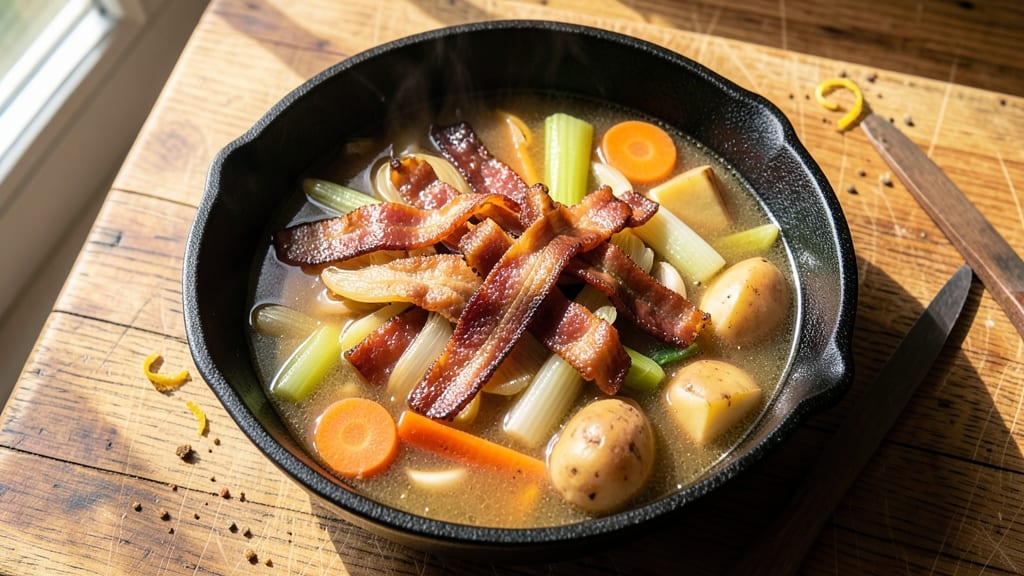
This bacon and vegetable soup recipe delivers the ultimate combination of smoky depth and comforting heartiness in every spoonful. The secret lies in rendering thick-cut bacon until crispy, then using those flavorful bits to build a rich, aromatic base for simmering seasonal vegetables.
I've perfected this recipe over years of testing, ensuring each bite balances tender meat, crisp vegetables, and a savory broth that practically sings with caramelized onion notes.
The beauty of this soup is its versatility—it works as a satisfying solo meal or pairs beautifully with crusty bread to soak up every last drop. We start with a classic technique of slow-cooked onions and celery to develop deep, sweet flavors, then add potatoes and carrots for hearty texture.
The bacon adds a satisfying crunch, while fresh herbs at the end brighten the dish without overpowering its natural richness.
What makes this recipe truly special is how it transforms simple ingredients into something extraordinary. The bacon infuses the broth with smoky richness, while the vegetables soften just enough to create a velvety texture.
Each spoonful delivers a perfect harmony of flavors—savory, slightly sweet, and undeniably comforting—making it ideal for chilly evenings or whenever you crave a meal that warms both body and soul.
This soup also excels as a make-ahead dish, as its flavors deepen over time. The instructions will guide you through every step, from rendering the bacon to simmering the vegetables, ensuring you achieve that restaurant-quality result at home.
Serve it with a sprinkle of fresh parsley and a side of crusty bread for the complete experience.
Ingredients for bacon and vegetable soup
Six ounces of thick-cut bacon and seasonal vegetables transform into a restaurant-quality soup.
| Ingredient | Amount | Notes |
|---|---|---|
| Thick-Cut Bacon 🥓 | 6 oz | Thick-cut preferred for crispiness |
| Yellow Onions 🧅 | 1 whole | Diced into small cubes |
| Celery Stalks 🥬 | 3 whole | Diced into small pieces |
| Carrots 🥕 | 3 medium | Peeled and sliced into rounds |
| Russet Potatoes 🥔 | 2 medium | Peeled and cubed evenly |
| Garlic Cloves 🧄 | 4 cloves | Minced finely for depth |
| Chicken Broth 💧 | 4 cups | Low-sodium preferred |
| Fresh Thyme 🌿 | 1 tbsp | Leaves only, chopped |
| Bay Leaves 🍃 | 2 whole | For aromatic depth |
| Black Peppercorns 🌶️ | ½ tsp | Freshly cracked for heat |
| Salt 🧂 | 1 ½ tsp | Kosher salt for seasoning |
| Fresh Parsley 🌿 | ¼ cup | Chopped for garnish |
| Crusty Bread 🍞 | 1 loaf | For serving (optional) |
The bacon is non-negotiable here—thick-cut renders perfectly for maximum crispiness and flavor. Oscar Mayer or Applegate are reliable brands for quality, but any thick-cut bacon works. Look for vibrant red color and visible fat marbling. The onions and celery form the aromatic base, so fresh, crisp vegetables are essential. If using pre-diced mixes, rinse them to remove excess moisture. For the potatoes, Russets hold their shape better than waxy varieties, but Yukon Golds add creaminess if you prefer a richer texture. The broth should be low-sodium to control seasoning—Pacific Foods or Swanson are solid choices.
No chicken broth? Vegetable broth with a splash of soy sauce mimics the umami depth. Fresh thyme is ideal, but dried thyme at one-third the amount works in a pinch. The bay leaves add complexity without overpowering—remove them before serving. For extra richness, stir in 1 tbsp of cream cheese at the end, though it's optional. The carrots can be swapped for turnips or parsnips if you're feeling adventurous. If your bacon is extra-fatty, drain it on paper towels before adding to the pot to avoid greasy soup.
This soup tastes even better the next day as flavors meld. Store in an airtight container in the fridge for up to 5 days, or freeze for 3 months. For freezing, cool completely first to prevent ice crystals. The crusty bread pairs perfectly—baguettes or sourdough work best. If making ahead, reheat gently on the stove, adding a splash of broth if needed. The parsley should be added fresh at the end to maintain its vibrant color and bright flavor.
Why You'll Love This Recipe
- One-Pot Magic: I swear by this recipe when I’m too tired to wash pots. Toss everything—bacon, onions, celery, carrots, and potatoes—into one pot, simmer, and boom. The bacon renders its own fat, so no extra oil needed. Even my picky husband doesn’t complain about the cleanup.
- Smoky Sweet Crunch: That first bite? Crispy bacon edges meet tender potatoes, with onions caramelizing just enough to hit all the right notes. The celery adds a fresh snap, and the carrots? They melt into the broth like a hug. Honestly, it’s the kind of soup that makes you close your eyes halfway through.
- Lunchbox Hero: Between us, this is my secret weapon for meal prep. Double the batch, and you’ve got hearty lunches for days—no sad desk salads here. The potatoes hold up perfectly when reheated, and the bacon bits? They turn every bite into a little flavor party. My kids actually ask for leftovers.
- Budget-Friendly Feast: Thick-cut bacon might sound fancy, but a few slices stretch far in broth. Onions, celery, and carrots are pantry staples, and potatoes? They’re practically free. I’ve made this soup for under $2 per serving, and it still feels like a restaurant-worthy meal. Not the prettiest, but the taste makes up for it.
Step-by-step instructions for bacon and vegetable soup
This method delivers rich, smoky depth and perfectly tender vegetables every time.
Render the Bacon and Sauté Aromatics
Cut the 6 oz thick-cut bacon into ¼-inch pieces using kitchen shears for even cooking. Place in a large Dutch oven over medium heat and cook undisturbed for 6-8 minutes until the edges become deep golden brown and the fat begins to render. This initial crisping creates the smoky foundation for your soup.
Once the bacon is 75% cooked and the fat pools in the pan, use a slotted spoon to remove the bacon and set aside on paper towels to drain excess fat. Return the Dutch oven to the heat and add the diced yellow onions, diced celery stalks, and sliced carrots. Cook for 5-6 minutes until the onions soften and the vegetables begin to release their natural juices. Here's the thing—don't rush this step. The vegetables need time to develop flavor through slow cooking in the bacon fat.
Build Flavor with Herbs and Potatoes
Add the minced garlic cloves, chopped fresh thyme, whole bay leaves, and cracked black peppercorns to the Dutch oven. Stir for 30 seconds until fragrant—you should detect a noticeable aroma of garlic and thyme. This is when the vegetables truly begin to sing.
Next, add the cubed russet potatoes and stir to combine with the aromatic vegetables. Pour in the 4 cups chicken broth and bring to a gentle simmer. The liquid should just barely bubble at the edges. This controlled simmer ensures the potatoes cook through without breaking down. Season with the 1.5 tsp salt, then return the crispy bacon pieces to the pot. Stir once to distribute everything evenly.
Simmer Until Vegetables Are Fork-Tender
Cover the Dutch oven and reduce heat to low-medium. Let the soup simmer for 20-25 minutes until the potatoes are fork-tender—they should pierce easily with minimal resistance. The vegetables should be soft but still hold their shape, not mushy. I know it's tempting to check constantly, but resist the urge to peek. Every time you lift the lid, you release heat and moisture, extending the cooking time.
About 5 minutes before the soup is done, add the minced garlic cloves if they weren't added earlier. This ensures they infuse flavor without burning. Taste the soup and adjust seasoning if needed—you may need a touch more salt or pepper to balance the flavors. The broth should be rich and aromatic, with the vegetables absorbing the smoky bacon essence.
Finish and Garnish for Serving
Remove the 2 whole bay leaves and discard them. Stir in the ¼ cup chopped fresh parsley just before serving to brighten the dish with freshness. The parsley adds a pop of color and a subtle herbal note that cuts through the richness of the bacon and broth.
Ladle the soup into bowls and serve immediately with crusty bread on the side. Each spoonful should deliver a perfect balance of smoky bacon, tender vegetables, and aromatic herbs. The bread is optional but recommended—it soaks up the flavorful broth beautifully. This soup tastes even better the next day as the flavors meld further, but the vegetables will be slightly softer if you wait.
Pro Tips For Making Bacon And Vegetable Soup
- CRISP THE BACON LOW: Cook thick-cut bacon at 300°F (150°C) instead of high heat—it renders fat slower but stays crispier and adds richer flavor to the soup. I used to rush it on high, and the bacon turned greasy and sad; patience here makes all the difference.
- CUT POTATOES UNIFORM: Slice russet potatoes into ½-inch chunks—consistent size means even cooking and no mushy bits lurking in the broth. I learned this after pulling out half-cooked hunks from one pot and overdone mush from another.
- SWAP CELERY FOR STALKS: Use whole celery stalks instead of chopped—they hold their shape better and add satisfying texture without turning to mush. Chopping releases too much water, diluting the broth faster.
- SALT THE BROTH LATE: Hold off on adding salt until the very end—after potatoes and bacon have cooked down. This lets you taste and adjust seasoning properly, since the flavors evolve as the soup simmers.
Perfect pairings for these flavors
Bread Pairings
Serve this soup with a crusty baguette or sourdough loaf to soak up every last drop of flavorful broth. I love toasting the bread lightly before serving—just brush with olive oil and sprinkle with flaky sea salt before popping in a 375°F oven for 5 minutes.
The crispy exterior contrasts perfectly with the creamy soup. For a heartier option, try rustic Italian bread with its airy interior that holds up well to the rich broth. 🍞
Cheese Additions
Add a sprinkle of sharp cheddar or gruyère for extra richness—just ¼ cup shredded stirred in during the last 5 minutes of simmering. The cheese melts beautifully into the broth, creating a velvety texture.
For a tangy twist, try crumbled blue cheese or feta on top before serving. I also recommend Parmesan crisps on the side for a crunchy garnish that adds depth to each bite.
Drink Pairings
A crisp white wine like Sauvignon Blanc or Pinot Grigio cuts through the richness of the bacon beautifully. The bright acidity refreshes your palate between spoonfuls. For beer lovers, a hoppy IPA or amber ale complements the smoky bacon flavors.
If you prefer non-alcoholic options, sparkling apple cider or iced hibiscus tea provide refreshing contrast. 🍷
Toppings for Extra Flavor
Finish your bowl with a dollop of sour cream or crème fraîche for creaminess, or a drizzle of hot honey for a sweet-smoky balance. Fresh chives or green onions add a bright pop of color, while crispy fried shallots provide a delightful crunch.
I also love adding a few crumbled bacon bits on top for extra smoky flavor—it's a simple but effective upgrade.
Vegetable Swaps
Customize your soup with seasonal vegetables like kale or spinach for greens, or zucchini and bell peppers for summer freshness. For a heartier option, add white beans or lentils—just ½ cup cooked—to boost protein.
If you love mushrooms, shiitake or cremini add an earthy depth that pairs wonderfully with the bacon. The key is keeping the vegetables tender-crisp for texture contrast.
Nutrition facts
Frequently asked questions
Can I use turkey bacon instead of pork bacon?
Turkey bacon works perfectly and adds a leaner option while keeping that essential smoky flavor. Just be aware it may cook faster than pork bacon, so watch it closely to avoid overcooking. The recipe will still deliver the same hearty, flavorful result.
How do I make this soup creamier without dairy?
Blend ½ cup of the cooked soup with an immersion blender until smooth, then return it to the pot. This creates a velvety texture without dairy. For extra richness, stir in 2 tablespoons of nutritional yeast at the end—it adds a cheesy flavor without lactose.
Can I make this soup in an Instant Pot?
Yes! Cook the bacon as directed, then sauté the vegetables. Add all ingredients except the parsley, then secure the lid and cook on high pressure for 6 minutes. Quick-release the pressure, stir in the parsley, and serve. The Instant Pot version cooks 30% faster while maintaining all the flavors.
Why did my soup turn out too salty?
This usually happens when using high-sodium broth or over-salting during cooking. The fix is simple: stir in ½ cup of cold water or milk and simmer for 5 minutes to dilute the salt. For future batches, taste the broth before adding all the salt—it should be seasoned but not briny.
What's the best way to reheat leftovers?
Gently reheat on the stove over low-medium heat until just warmed through—never boil. Add a splash of broth or water if the soup thickens too much. For microwave reheating, cover with a damp paper towel and heat in 30-second intervals, stirring between each. This prevents the vegetables from becoming mushy.