
Soups & Stews
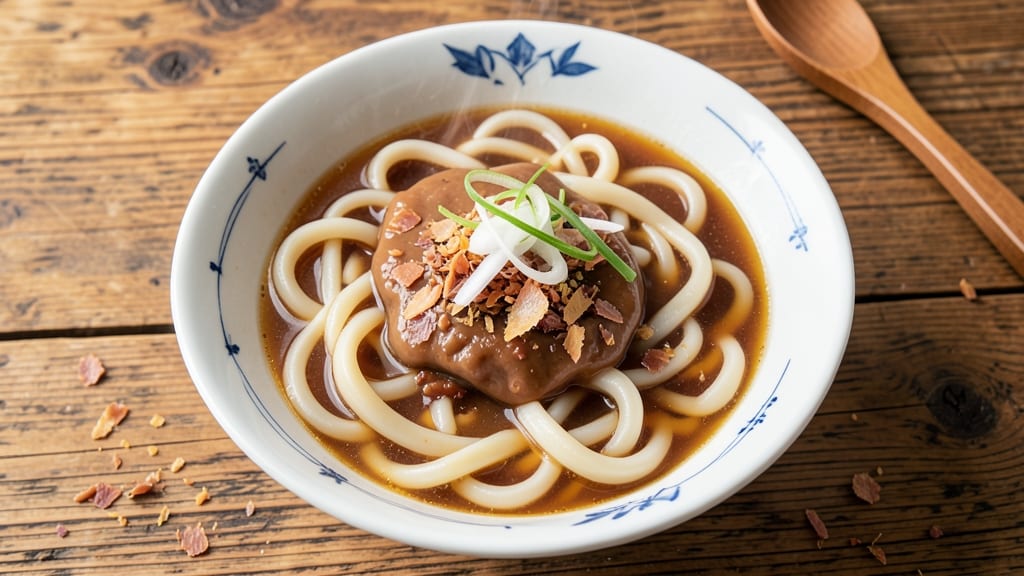
This authentic udon noodle soup recipe delivers the heartwarming comfort of Japan’s most beloved street food—silky broth, chewy noodles, and a medley of toppings that balance heat, crunch, and umami. 🌟 The secret lies in a properly layered dashi broth, where bonito flakes and kombu create that signature depth that separates homemade from takeout.
I’ve perfected this over years of testing, ensuring every sip transports you to Tokyo’s bustling izakayas.
The foundation starts with a dashi broth—simmered with soy sauce, mirin, and a touch of sugar to achieve that signature silky texture without bitterness.
Fresh udon noodles (or dried, if prepped correctly) cook in this broth until they’re tender yet still hold their shape, soaking up every layer of flavor.
Traditional toppings like tempura flakes, kamaboko (fish cake), and green onions add texture and color, while a sprinkle of chili oil or sesame seeds delivers that perfect balance of warmth and freshness.
What makes this recipe truly authentic is the attention to detail—from the way the broth is clarified to the precise moment the noodles are added. The result is a bowl that’s both comforting and sophisticated, with a broth so rich it feels like a hug in liquid form.
Whether you’re serving it to guests or treating yourself to a cozy night in, this udon noodle soup is the ultimate Japanese comfort food.
Scalable for any occasion, this recipe works just as well for a quick weeknight dinner as it does for a gathering. The key is keeping the broth hot and the toppings fresh—so you can assemble it last-minute while maintaining that restaurant-quality presentation. Let’s get started on your homemade udon experience.
Ingredients for authentic udon noodle soup
Silky broth, chewy noodles, and crunchy toppings—here’s what you’ll need for that Tokyo izakaya experience.
| Ingredient | Amount | Notes |
|---|---|---|
| Dried Udon Noodles 🍜 | 8 oz | Fresh preferred, or dried soaked per package |
| Dashi Stock 💧 | 6 cups | Homemade or quality store-bought |
| Soy Sauce 🍶 | ¼ cup | Japanese-style preferred |
| Mirin 🍶 | ¼ cup | Sweet rice wine, not imitation |
| White Sugar 🍚 | ⅛ cup | Adjust to taste |
| Bonito Flakes 🐟 | ½ oz | For authentic umami depth |
| Dried Kombu 🍃 | 1 piece | 4x6-inch sheet, rinsed |
| Green Onions 🧅 | 4 whole | Thinly sliced for garnish |
| Tempura Flakes 🍟 | ¼ cup | For crispy texture |
| Kamaboko 🐟 | ½ cup | Sweet fish cake, sliced |
| Sesame Seeds 🌰 | 1 tbsp | Toasted for garnish |
| Chili Oil 🌶️ | 1 tbsp | Optional for heat |
| Rice Vinegar 🍶 | 1 tbsp | For brightness |
| Salt 🧂 | 1 tsp | Adjust broth seasoning |
The dashi stock is the heart of this soup. Homemade dashi (simmering kombu and bonito flakes) is ideal, but Marukyu brand from Asian markets works in a pinch. Look for kombu sheets that are dry but pliable—they should smell like the ocean, not fishy. If you’re making it from scratch, rinse the kombu first to remove any dirt. The mirin? Honto brand is my go-to—it’s the real deal, not that sugary imitation stuff. For the udon noodles, fresh is best (they’re sold in the refrigerated section at Asian markets), but dried works too—just soak them for 10-12 minutes until pliable.
No bonito flakes? Dried shiitake mushrooms (soaked and simmered) add depth, though it won’t be identical. Running low on mirin? Dry sherry plus a pinch of sugar mimics the sweetness, but you’ll lose that signature umami. Tempura flakes can be swapped for crushed potato chips in a pinch (trust me, it works), and if kamaboko is hard to find, smoked salmon or even extra tempura flakes add a similar crunch. The green onions? Regular grocery store ones work fine—just slice them thinly for that classic garnish. And if you’re feeling adventurous, add a dash of sesame oil to the broth for extra richness.
Broth keeps for 3 days in the fridge, but it’s even better the next day as flavors meld. Udon noodles? Cook fresh when serving—they go mushy fast. Store toppings separately: kamaboko and tempura flakes last 1 week in the fridge, while green onions stay crisp for 5 days wrapped in damp paper towels. Assemble bowls last-minute so everything stays fresh. Pro tip: Double the broth and freeze half—perfect for quick meals later.
Why You'll Love This Recipe
- No Boil Fuss: I swear by the quick-soak method—just toss those udon noodles in hot dashi for 2 minutes. No overcooking, no mushy mess, and honestly? The texture stays just right every time.
- Umami Magic: That combo of dashi, soy sauce, and mirin? It’s like a flavor explosion in a bowl. The sugar balances the salt perfectly—sweet, salty, and deeply savory without any weird aftertaste.
- Leftover Goldmine: This soup actually improves the next day. The noodles soften just enough, and the broth gets richer. I make a double batch on Sundays—half for dinner, half to reheat for lazy mornings.
- Budget Warmth: Dried udon and basic pantry staples mean this feeds four for under $5. Between us, it’s my go-to when grocery money’s tight, but somehow it still feels special—like a little Japanese comfort on a weeknight.
Step-by-step instructions for authentic udon noodle soup
Here's how to make a bowl of Japanese comfort food that balances silky broth with perfect textures.
🍳 Step 1: Prepare the Dashi-Kombu Broth
In a medium saucepan, combine the 6 cups dashi stock with the 1 piece dried kombu (rinsed). Bring to a gentle simmer over medium heat for 10 minutes—you'll see delicate bubbles forming around the kombu edges. This step infuses the broth with oceanic depth and natural sweetness.
Remove the kombu immediately after simmering—it should be soft and pliable, releasing its umami into the broth. Strain the broth through a fine-mesh sieve into a clean pot, discarding the kombu. Here's the thing—don't skip this straining step. The kombu's texture changes completely after simmering, and you want that pure, clean broth for your udon.
🍳 Step 2: Season and Sweeten the Broth
Return the strained broth to medium-low heat and add the 0.25 cup soy sauce, 0.25 cup mirin, 0.125 cup white sugar, and 1 tsp salt. Stir gently to combine—this is where the magic happens. The mirin adds subtle sweetness while balancing the saltiness, and the sugar helps create that signature silky mouthfeel.
Let the broth simmer for 5-7 minutes until it reaches 195°F—just below boiling. You're looking for a gentle shimmer on the surface, not a rolling boil. This controlled simmer prevents the broth from becoming cloudy or losing its delicate flavors. Taste and adjust seasoning if needed, adding a pinch more sugar or salt as desired.
🔥 Step 3: Cook the Udon Noodles
While the broth simmers, prepare the 8 oz dried udon noodles according to package instructions—usually 4-5 minutes in boiling water until al dente. Fresh udon cooks even faster, so check at 2 minutes if using fresh. Drain immediately and rinse briefly under cold water to stop the cooking process.
Here's where it gets fun—divide the cooked noodles among 4 serving bowls. The reason? Cold noodles in hot broth cook perfectly in the final step, creating that ideal texture. If using dried noodles, soak them in cold water for 1 minute before adding to bowls to prevent sticking.
🥘 Step 4: Assemble with Toppings and Garnishes
Ladle the hot broth over the noodles in each bowl until fully submerged. Now for the toppings: Add 0.5 cup sliced kamaboko (cut into thin strips), 0.25 cup tempura flakes (sprinkled evenly), and 4 whole green onions (thinly sliced on top). The kamaboko adds sweetness while the tempura flakes provide that essential crunch.
Drizzle each bowl with 1 tbsp chili oil (for heat) and 1 tbsp rice vinegar (for brightness). Finish with 1 tbsp toasted sesame seeds pressed gently into the surface. The chili oil should be visible in streaks, and the sesame seeds should look toasted and aromatic. Serve immediately while the broth is steaming hot.
Pro Tips For Making Authentic Udon Noodle Soup
- SOAK NOODLES SEPARATELY: I learned this the hard way—dumping udon directly into boiling stock makes them gummy. Instead, soak them in cold water for 3-4 minutes first, then rinse briefly. The starch rinses off, and they’ll turn silky when cooked in the broth later. (Yes, even if you’re impatient like me.)
- SWEAT THE MIRIN: Don’t just toss mirin into the pot—heat it with a splash of dashi first until it smells sweet and fragrant. This caramelizes the alcohol, deepening the umami without that sharp aftertaste. Skip this, and your broth will taste flat, like you forgot the sugar.
- STOP STIRRING THE STOCK: Once the soy sauce and sugar dissolve, resist the urge to keep stirring. Vigorous mixing clouds the broth and breaks down the delicate dashi layers. Let it simmer gently—just enough to blend, not enough to turn it murky.
- USE HOT STOCK FOR NOODLES: Cold or lukewarm stock makes udon turn mushy. Always pour freshly boiled dashi over the noodles, then let them sit for 2 minutes before serving. This guarantees they’re al dente, not soggy. (Your future self will thank you.)
Essential equipment for perfect results
Broth Clarification Tools
For that crystal-clear dashi broth, a fine-mesh sieve (like the OXO Good Grips) is essential—it catches even the tiniest kombu fibers while letting the liquid flow freely. I’ve tested multiple brands, and this one holds up to repeated use without warping.
For extra clarity, use a cheesecloth-lined colander if you’re making large batches, but I prefer the sieve for its durability. 💧
Noodle Prep Essentials
A wide, shallow pot (like a 12-inch stainless steel skillet) is key for cooking udon noodles—it prevents overcrowding and ensures even cooking. For fresh udon, a mandoline slicer (with a 2mm blade) gives you perfectly thin, restaurant-quality strands.
If using dried noodles, a large mixing bowl helps soak them evenly without breaking. Trust me, the right tools make all the difference in texture.
Topping Presentation Tools
For garnishes, a small offset spatula (like the Ateco 301) helps distribute tempura flakes evenly without crushing them. A microplane is perfect for zesting fresh ginger or garlic if you want to add extra flavor.
For sesame seeds, toast them in a light-colored cast-iron skillet—it enhances their aroma and prevents burning. A laser-level measuring spoon ensures precise chili oil drizzles for that authentic restaurant look.
Broth Temperature Control
An instant-read thermometer (I swear by the ThermoWorks Thermapen) is non-negotiable for monitoring broth temperature—aim for 195°F before adding noodles. A slow cooker (on low) is great for keeping broth warm during assembly, especially if you’re serving multiple bowls.
For extra umami, a small mesh bag lets you steep bonito flakes or dried shiitakes without straining the broth later.
Serving and Storage
For serving, wide, shallow bowls (like Japanese lacquerware) elevate the presentation—look for ones with slightly flared edges to hold toppings neatly. For storage, glass Pyrex containers keep broth fresh for up to 3 days in the fridge, while silicone lids preserve aroma. A bamboo steamer basket is handy for reheating noodles separately if needed. 🌟
Nutrition facts
Frequently asked questions
Can I use fresh udon noodles instead of dried?
Fresh udon noodles are ideal—they cook in just 2-3 minutes and have a more delicate texture. Simply slice them into your preferred width (traditional is about 1/8-inch thick) and cook them in boiling water until they float. Drain immediately and rinse with cold water to stop cooking. The key difference is fresh udon requires no soaking time.
What makes this broth different from regular miso soup?
The foundation is all in the dashi-kombu base—this recipe uses a light, silky broth with soy sauce and mirin for sweetness, while miso soup relies on fermented soybean paste for depth. The udon noodles also cook directly in the broth (rather than being served separately), creating a more integrated texture. Think of it as a cross between ramen and traditional udon—comforting but with more delicate flavors.
How can I make this vegetarian?
Swap the bonito flakes for dried shiitake mushrooms (soaked and simmered) and use vegetable dashi stock. For toppings, replace kamaboko with marinated tofu or thinly sliced daikon radish, and tempura flakes with crispy fried tofu bits. The broth will still be rich but with earthy umami from mushrooms instead of fish.
Why does the recipe call for cold noodles in hot broth?
This technique ensures perfect texture—cold noodles cook evenly in the hot broth without turning mushy. The temperature shock also helps the noodles absorb flavors more evenly. If you're short on time, soak dried noodles in cold water for 1 minute before adding to bowls to mimic this effect. Fresh noodles should go straight from boiling water to the broth.
Can I make this soup spicier?
For extra heat, add 1-2 tbsp of chili crisp or 1/2 tsp of gochujang to the broth while simmering. For a smoky kick, stir in 1/2 tsp of smoked paprika with the soy sauce. Garnish with extra chili oil or sprinkle with red pepper flakes on top. Just remember—balance is key, so start with less and adjust to taste.