
Soups & Stews
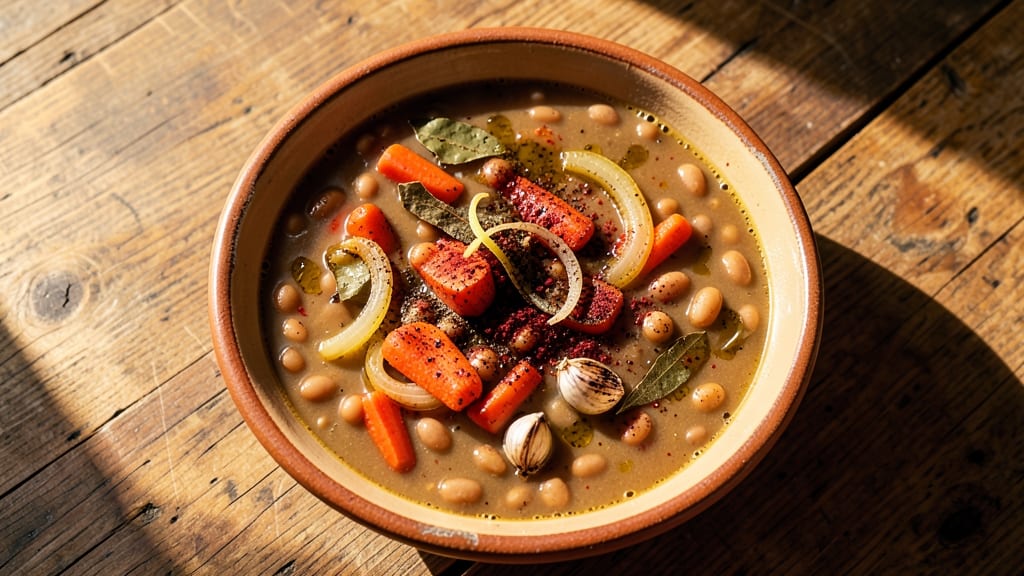
This authentic Spanish bean soup recipe brings the hearty flavors of Spain’s countryside to your kitchen—rich with smoky paprika, tender white beans, and deep garlic notes. 🌟 The soul of Asturian fabada or Castilian lentejas, this dish simmers for hours, transforming simple ingredients into a deeply comforting meal that tastes like home.
Whether you include chorizo or keep it vegetarian, the balance of smoky, savory, and earthy flavors makes every spoonful unforgettable.
The secret lies in slow cooking, where beans soften into creamy perfection while absorbing the aromatic broth infused with smoked paprika, garlic, and bay leaves. Unlike quick soups, this recipe rewards patience—each hour deepens the flavors, creating a dish that’s as satisfying as it is complex.
The result is a velvety, hearty soup that pairs beautifully with crusty bread or a glass of Spanish red wine, perfect for chilly evenings or family gatherings.
What sets this apart is its authenticity—no shortcuts, just traditional techniques that deliver restaurant-quality results at home. The chorizo adds smoky depth (optional for vegetarians), while the vegetables and herbs round out the flavors.
This isn’t just soup; it’s a taste of Spain’s culinary tradition, brought to life in your pot.
Serve it with a sprinkle of fresh parsley and a drizzle of olive oil for the final touch. Whether you’re recreating a classic or adapting it to your tastes, this recipe is your gateway to Spain’s most beloved comfort food. Let’s get cooking!
Ingredients for authentic spanish bean soup
Six cups of beans plus smoky paprika—this is where Spain’s soul meets your pot.
| Ingredient | Amount | Notes |
|---|---|---|
| Great Northern Beans (Dried) 🌱 | 2 cups | Soaked overnight for best texture |
| Smoked Paprika 🌶️ | 2 tbsp | Spanish pimentón for authentic flavor |
| Garlic Cloves 🧄 | 6 cloves | Freshly minced for deep aroma |
| Bay Leaves 🍃 | 2 whole | Fresh or dried, removed before serving |
| Carrots 🥕 | 3 medium | Peeled and sliced into rounds |
| Yellow Onion 🧅 | 1 large | Diced for even cooking |
| Celery Stalks 🌿 | 3 whole | Diced for classic mirepoix |
| Tomato Paste 🍅 | ½ cup | High-quality for rich flavor |
| Extra-Virgin Olive Oil 🫒 | ¼ cup | For sautéing vegetables |
| Vegetable Broth 💧 | 6 cups | Low-sodium preferred |
| Fresh Parsley 🌿 | ¼ cup | Chopped for garnish |
| Salt 🧂 | 1 ½ tsp | Adjust to taste |
| Black Pepper 🌶️ | ½ tsp | Freshly ground |
| Cumin Seeds 🌿 | 1 tsp | Toasted for extra depth |
The beans are non-negotiable. Great Northern or Canellini work best—soak them overnight for that creamy, fall-apart texture. Trader Joe’s sells pre-soaked beans if you're short on time, but they won’t have the same depth. For the paprika, Pimentón de la Vera from Spain is ideal, but any smoked paprika from the spice aisle will do. The garlic? Freshly minced makes all the difference—jarred minced garlic turns this into a sad, watery soup. Look for plump, firm cloves at the store, not those shriveled ones hiding in the back.
No smoked paprika? Regular paprika plus a pinch of liquid smoke gets you close. Short on time with the beans? Two 15-ounce cans of white beans (drained and rinsed) work in a pinch, but they lack the authentic texture. The mirepoix (onion, carrot, celery) can be pre-chopped—Trader Joe’s sells pre-diced veggies that save 10 minutes. Want more smokiness? Add a teaspoon of smoked salt along with the regular salt. The tomato paste? San Marzano is the gold standard, but any quality paste will work—just don’t use powdered tomato mix.
This soup tastes even better the next day—3-4 days in the fridge, no problem. For longer storage, freeze portions for up to 3 months. I always make a double batch because it’s perfect for lunches. The parsley? Add it fresh at the end—it wilts fast in hot soup. If you’re serving a crowd, keep the soup warm in a slow cooker on low heat. And trust me, the extra hour of simmering? Worth it for that restaurant-quality depth.
Why You'll Love This Recipe
- No-Fuss Soak: I’ll admit, I used to dread soaking beans—but these Great Northerns? Just a quick rinse, then simmer. The smoked paprika does all the heavy lifting while you chop a single carrot and crush garlic. Honestly, it’s the kind of recipe that makes you wonder why you ever overcomplicated things.
- Smoky Depth Magic: That pinch of smoked paprika isn’t just flavor—it’s the soul of the dish. Pair it with the earthy bay leaves and caramelized garlic, and suddenly you’ve got a bowl that tastes like a hug from a Spanish abuela. (Yes, even on a Tuesday night.)
- Leftover Goldmine: This soup only gets better the next day. The beans soften just right, the carrots melt into sweet threads, and the broth thickens into something rich. I make a double batch on Sundays because it’s my secret weapon for lazy lunches—no reheating drama, just pure satisfaction.
- Budget Booster: Dried beans and basic veggies? This is the kind of meal that stretches your grocery budget without sacrificing taste. Between us, I’ve fed four people for under $10 with this recipe—plus, the leftovers freeze like a dream. Practical? Absolutely. Delicious? Ridiculously.
Step-by-step instructions for smoky paprika bean soup
Here's how to craft this hearty Spanish classic with deep, smoky flavors.
🔥 Step 1: Sauté the Vegetable Base
Heat the 0.25 cup Extra-Virgin Olive Oil in a large Dutch oven over medium heat. Add the 1 large Yellow Onion (diced), 3 whole Celery Stalks (diced), and 3 medium Carrots (sliced) to the pan. Cook for 8-10 minutes until the vegetables soften and begin to take on color.
Here's the thing—don't rush this step. You want those vegetables to develop a slight caramelization before adding the paprika. When they're just starting to turn golden around the edges, that's your signal to move forward. The deeper color means more flavor in your soup.
👨🍳 Step 2: Toast the Spices and Build Flavor
Add the 1 tsp Cumin Seeds to the pan and toast for 30 seconds until fragrant. Immediately stir in the 2 tbsp Smoked Paprika—this is where the magic happens. The paprika will infuse the oil with its signature smoky aroma. Cook for another 1 minute until you can smell that deep, earthy Spanish flavor.
Next, add the 6 cloves Garlic Cloves (minced) and stir for 30 seconds until fragrant but not browned. This is the moment that matters: if you let the garlic burn, it'll turn bitter. Keep the heat at medium and stir constantly. The garlic should smell incredible but still look pale.
🍳 Step 3: Add Tomato Paste and Broth
Stir in the 0.5 cup Tomato Paste and cook for 2 minutes until it darkens slightly. This step deepens the soup's rich color and adds complexity. Pour in the 6 cups Vegetable Broth and bring the mixture to a gentle boil. Add the 2 whole Bay Leaves and 1.5 tsp Salt.
Now add the drained 2 cups Great Northern Beans (Dried) (if not pre-soaked, they'll need 1-2 hours longer to soften). I always use a slotted spoon to remove the beans from their soaking water—this prevents the soup from becoming watery later. The beans should be fully submerged in the broth.
⏰ Step 4: Simmer Until Tender
Reduce heat to low and simmer uncovered for 45-60 minutes until the beans are fork-tender. You'll know they're ready when they easily mash between your fingers with just slight resistance. The soup should have thickened slightly, but there should still be plenty of liquid.
I check for doneness by tasting a bean—if it's soft but still holds its shape, it's perfect. If it's still tough, give it another 15 minutes. Don't be tempted to add water; let the beans release their starch naturally to thicken the soup. Stir occasionally to prevent the bottom from sticking.
🥘 Step 5: Finish and Serve
Remove the 2 whole Bay Leaves and discard them. Stir in the 0.5 tsp Black Pepper and taste the soup. Adjust the seasoning with more salt if needed—I usually add about ½ tsp more at this stage. The soup should be rich but not overly salty.
Ladle the soup into bowls and garnish with the 0.25 cup Fresh Parsley (chopped). Serve immediately with crusty bread to soak up every last drop of that smoky, garlicky goodness. This soup tastes even better the next day, so make extra if you can—it's pure comfort in a bowl.
Pro Tips For Making Authentic Spanish Bean Soup
- SOAK BEANS OVERNIGHT: Dried Great Northerns need patience—skip the quick soak and let them sit in cold water 12+ hours. I learned this the hard way: rushing with hot water makes them tough, and you’ll end up with a soup that tastes like regret.
- TOAST THE PAPRIKA: Dry-toast the smoked paprika in a small pan for 30 seconds before adding it to the pot—just until it smells deep and nutty. This isn’t about burning it; it’s about waking up its flavor so the whole soup sings, not just whispers.
- DON’T SKIP THE BAY LEAF TWIST: Tear the bay leaves in half before adding them, then fish them out before serving. Whole leaves turn the soup bitter, and no one wants that—especially when you’ve spent hours on this dish. (Yes, even if you’re impatient like me.)
- CARROTS FIRST, BEANS LATER: Chop the carrots into ½-inch chunks and cook them in the broth for 10 minutes before adding the beans. This softens them just enough to melt into the soup without turning to mush—because nobody wants a watery bean stew.
Common mistakes when making your authentic spanish bean soup
Skipping the Soak
I’ve seen so many cooks rush this step and add unsoaked beans directly to the pot, thinking it’ll save time. Big mistake! Dried beans need that 8-12 hour soak (or quick-soak method) to soften properly.
Without it, your beans will stay rock-hard no matter how long you simmer, and the soup will taste bland. If you’re in a hurry, use canned white beans instead—just drain and rinse them well to avoid excess sodium. 🌱
Under-Simmering
Some recipes say "simmer for 1 hour," but that’s not enough for true tenderness. Beans need at least 45 minutes of gentle simmering after they’re submerged, and often longer if they’re tough. I’ve had beans take 2 hours to get just right.
The key is patience—don’t rush it! Use a Dutch oven to trap heat and keep the soup at a steady simmer. If you peek and see the beans aren’t soft, add ½ cup more broth and give them another 15 minutes.
Burning the Garlic
Garlic is the soul of this soup, but it’s easy to overdo it. When you add those 6 minced cloves, keep the heat at medium and stir constantly. If the garlic turns golden-brown or darker, it’ll taste bitter and overpower the dish.
I like to add it just before the broth comes in—this way, it infuses the liquid without burning. A quick trick? Taste the garlic after 30 seconds: if it’s fragrant but still pale, you’re golden. 🧄
Over-Salting Early
Many cooks add all the 1.5 tsp salt at the start, only to realize later the soup is too salty. Instead, add only ½ tsp salt with the broth, then taste again at the end. You can always add more salt, but you can’t take it out!
The beans also absorb flavor as they cook, so the seasoning will deepen. Pro tip: If you’re using low-sodium broth, you might need an extra ¼ tsp salt at the end. Trust your taste buds—they’re the final judge. 🧂
Ignoring the Bay Leaves
Bay leaves might seem like an afterthought, but they’re essential for that authentic Spanish aroma. If you forget to add them, your soup will lack depth. Here’s the catch: remove them before serving—they’re tough and can be a choking hazard.
I like to tie them in cheesecloth or use a bay leaf infuser for easy removal. Never skip them, but don’t let them sit in the soup too long or they’ll turn bitter. 🍃
Adding Water Too Soon
Some cooks panic when the soup thickens too much and add water to fix it. Resist the urge! The beans release starch as they cook, which naturally thickens the broth. If your soup is too thick, it’s a sign the beans are overcooked.
Instead, let it sit for 10 minutes off the heat—it’ll thicken further. If it’s still too thick, add ¼ cup broth, not water, to maintain flavor balance. The goal is a creamy but spoonable consistency, not a gluey mess. ⚡
Nutrition facts
Frequently asked questions about authentic Spanish bean soup
Can I substitute canned beans for dried?
Yes, but with adjustments! Use 2 (15-oz) cans of white beans (like cannellini or great northern) instead of dried. Drain and rinse thoroughly to remove excess sodium. The texture won't be identical—dried beans develop a creamier consistency—but it's a great shortcut. For best flavor, add 1 tbsp smoked paprika directly to the canned beans before cooking.
How do I make this vegetarian?
Skip the chorizo entirely and boost umami with 1 tbsp soy sauce or 1 tsp miso paste when adding the broth. For extra richness, stir in ½ cup tomato paste (instead of the 0.5 cup called for) and add 1 diced potato to thicken naturally. The smoky paprika and garlic will still deliver that authentic Spanish depth.
What's the difference between Fabada and this recipe?
This recipe captures the essence of both Fabada Asturiana (hearty pork/chorizo version) and Lentejas Estofadas (lentil-based). The key difference? Fabada uses morcilla (blood sausage) and pork ribs for deep meaty flavor, while this version keeps it flexible. For a true Fabada, add ½ lb smoked pork shoulder (cubed) and 2 oz morcilla with the beans. The simmering time increases to 2.5-3 hours for tender meat.
Can I make this in a slow cooker?
Sauté the vegetables and spices as directed, then transfer everything to a 6-quart slow cooker. Add the beans and broth, then cook on LOW for 6-7 hours or HIGH for 3-4 hours. The slow cooker's gentle heat prevents scorching and enhances the beans' creaminess. For extra flavor, add ½ cup water or broth if the soup gets too thick during cooking.
Why does my soup taste bland?
Most likely, the beans weren't cooked long enough or the broth lacks depth. First, ensure beans simmer for at least 45 minutes after adding to the pot. Second, boost flavor by adding 1 extra bay leaf, ½ tsp smoked salt, or 1 tsp fish sauce (trust me, it works!). Finally, taste the broth before adding beans—if it's flavorless, it'll never improve. A splash of red wine (¼ cup) or extra tomato paste can work wonders.