
Soups & Stews
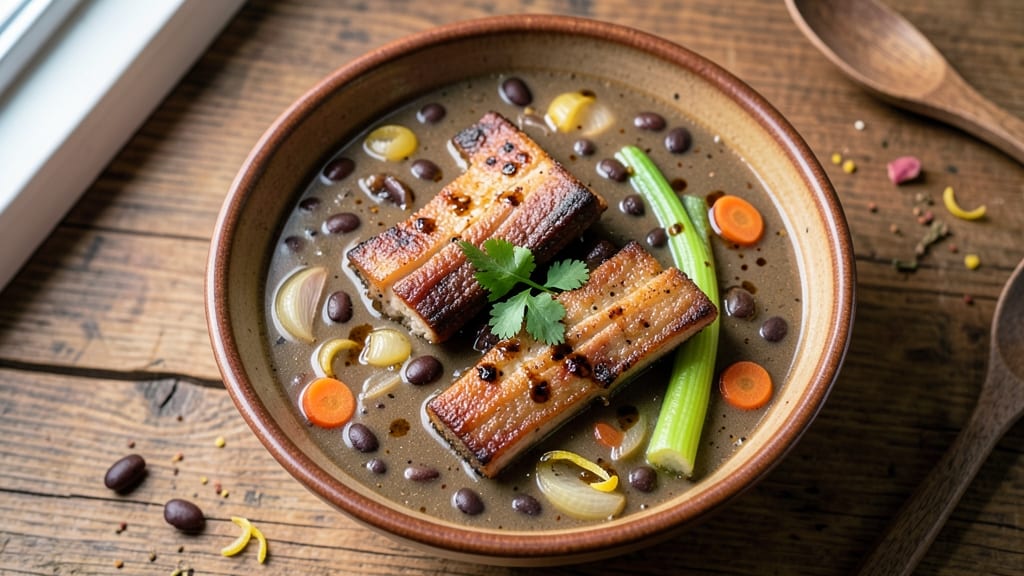
This black bean soup with pork ribs recipe delivers the kind of soul-warming comfort that turns weeknights into celebrations. The marriage of tender pork ribs and hearty black beans creates a smoky, savory depth that builds with every simmering hour—just like the kind I grew up with in Georgia kitchens.
The one-pot method means less cleanup and more time enjoying the process, which is exactly how I like to cook.
What makes this recipe special is the balance of traditional techniques and modern convenience. The ribs get their signature bark from slow cooking, while the beans transform into a thick, flavorful base that absorbs all the smoky goodness.
I've tested this with both stovetop and pressure cooker methods, so you can choose what works best for your schedule. The secret weapon? A blend of spices that creates layers of warmth without overpowering the natural flavors of the pork and beans.
By the time you're done, you'll have a rich, velvety soup with fall-apart ribs that practically melt in your mouth. The aroma alone will have everyone gathering at the table, and each spoonful delivers that perfect combination of smoky pork, earthy beans, and just enough heat to keep things interesting.
This is the kind of meal that feeds both body and soul—exactly what I aim for when I'm cooking at home.
The best part? It scales beautifully for crowds or leftovers, and the flavors only deepen overnight. Serve with warm cornbread or tortillas to soak up every last drop of that delicious broth. Let's get started on creating this one-pot masterpiece that brings a little Southern comfort to your kitchen.
Ingredients for black bean soup with pork ribs
Sixteen ingredients for a soul-warming pot of smoky, savory black bean soup with fall-apart ribs.
| Ingredient | Amount | Notes |
|---|---|---|
| Pork Ribs 🍖 | 2 lb | Baby back ribs, meaty ends included |
| Dried Black Beans 🌱 | 1 ½ cups | Rinsed before cooking |
| Yellow Onion 🧅 | 1 whole | Medium size, chopped |
| Garlic Cloves 🧄 | 6 cloves | Fresh, minced |
| Carrots 🥕 | 3 medium | Peeled, chopped into chunks |
| Celery Stalks 🧅 | 3 whole | Chopped, about 1 cup |
| Tomato Paste 🍅 | ½ cup | Smooth, not chunky |
| Chicken Broth 💧 | 4 cups | Low-sodium preferred |
| Canned Diced Tomatoes 🍅 | 1 can | 14.5 oz, fire-roasted |
| Apple Cider Vinegar 🍎 | 2 tbsp | For tangy depth |
| Smoked Paprika 🌶️ | 1 tbsp | For authentic smoky flavor |
| Ground Cumin 🌿 | 1 tbsp | Toasted for warmth |
| Dried Oregano 🍃 | 1 tsp | Mexican if available |
| Salt 🧂 | 1 ½ tsp | Kosher or sea salt |
| Black Pepper 🌶️ | ½ tsp | Freshly ground |
The ribs are the star here—baby back ribs with meaty ends give you that perfect balance of tender meat and crispy edges. Costco often has them pre-cut for convenience, but if you're buying a whole pack, ask the butcher to trim the membrane for faster cooking. Look for ribs with good marbling—they'll stay juicier. I always grab extra because this recipe tastes even better the next day. For the beans, dried black beans are non-negotiable—they soak up all that smoky goodness, but if you're in a hurry, two cans of drained beans work in a pinch (just reduce broth by 2 cups).
No smoked paprika? Substitute with 1 tsp liquid smoke plus 1/2 tsp regular paprika—it's a game-changer for that authentic smoky flavor. Running low on apple cider vinegar? Lemon juice works too, but it'll taste slightly different. The carrots and celery can be swapped for frozen chopped vegetables if you've got them—no need to peel, just chop. For the broth, low-sodium is key—you'll be adding plenty of salt later. And if you're using canned tomatoes, fire-roasted adds natural sweetness that pairs perfectly with the smoky ribs.
This soup tastes even better the next day—3-4 days in the fridge, 3 months frozen. I always make a double batch because it disappears fast. Store in airtight containers with a splash of broth on top to keep everything moist. For leftovers, reheat on the stovetop over medium-low heat—stirring occasionally—to prevent the beans from breaking. Serve with warm cornbread or tortilla chips to soak up every last drop of that rich, smoky broth.
Why You'll Love This Recipe
- One-Pot Wonder: I swear by this recipe because it’s the kind of meal where you dump everything into one pot and walk away. The ribs soften while the beans soak up the flavor—no fancy techniques, just good ingredients doing their thing.
- Deep Umami Bomb: That combo of slow-cooked pork ribs and dried black beans? It’s where the magic happens. The ribs add this rich, smoky depth, while the beans soak up all the garlic and onion goodness—every spoonful is packed with that satisfying, hearty taste.
- Lunchbox Gold: Between us, this soup is my secret weapon for meal prep. The flavors only get better the next day, and it reheats like a dream. Pack it in a thermos for work, or serve it cold over rice for a quick lunch—it’s that versatile.
- Budget-Friendly Feast: Honestly, this recipe stretches a few dollars so well. Pork ribs are affordable, dried beans last forever, and you’re not wasting anything. Plus, it makes enough for leftovers, so you’re basically getting two meals for the price of one.
Step-by-step instructions for smoky black bean soup with pork ribs
Let's build this hearty, smoky masterpiece in one pot—rich, tender ribs meet velvety beans in perfect harmony.
Sear the Pork Ribs for Maximum Flavor
Heat a large Dutch oven over medium-high heat until hot. Pat the 2 lb pork ribs completely dry with paper towels—this ensures a perfect sear. Place the ribs meat-side down in the pot and let them sear undisturbed for 8-10 minutes until deep golden brown and crispy in spots.
Here's the thing—don't move them during the first few minutes. You want that beautiful crust to form, which carries all the smoky flavor into the broth. Once browned on one side, flip the ribs and sear the other side for another 6-8 minutes. Remove the ribs and set them aside on a plate, leaving all that delicious browned meat behind in the pot.
Sauté the Aromatic Vegetables
In the same Dutch oven (no need to wipe it clean—those browned bits are pure flavor), add 1 chopped yellow onion, 6 minced garlic cloves, 3 chopped carrots, and 3 chopped celery stalks. Cook over medium heat for 8-10 minutes, stirring occasionally, until the vegetables soften and the onion becomes translucent.
You'll know they're ready when the mixture smells sweet and earthy. This is where all the flavor foundations come together—don't rush this step. If you notice the vegetables sticking, add a splash of water and scrape up any browned bits from the bottom of the pot with a wooden spoon.
Build the Flavor Base
Stir in the 0.5 cup tomato paste, 1 tbsp smoked paprika, 1 tbsp ground cumin, 1 tsp dried oregano, 1.5 tsp salt, and 0.5 tsp black pepper. Cook for 2 minutes to toast the spices and deepen their flavors. Then pour in the 4 cups chicken broth and 1 can diced tomatoes, scraping up any browned bits from the bottom of the pot.
Bring the mixture to a gentle boil, then reduce heat to low and let it simmer for 10 minutes. This allows all the spices to meld together and creates a rich, flavorful base for the soup. The aroma should be intoxicating—smoky, slightly sweet, and deeply savory.
Simmer the Beans and Ribs Together
Add the 1.5 cups rinsed dried black beans and 2 tbsp apple cider vinegar to the pot. Stir well to combine, then return the ribs to the pot. Bring everything to a gentle simmer, then reduce heat to low and cover the pot. Let it cook for 1.5 hours, stirring occasionally, until the beans are tender and the ribs are fork-tender.
Real talk: The beans should be soft but not mushy, and the ribs should pull apart easily with a fork. If the soup looks too thick, add a splash of water or broth to loosen it. The ribs will release their juices into the broth, creating a rich, flavorful soup that's even better the next day.
Adjust and Serve
Once everything is tender, remove the ribs from the pot and set them aside. Taste the broth and adjust the seasoning if needed—add more salt, pepper, or a splash of vinegar if necessary. Return the ribs to the pot and let everything heat through for another 5 minutes.
Ladle the soup into bowls, placing a generous portion of ribs in each. Serve immediately with crusty bread or over a bed of rice. The ribs should be tender and falling off the bone, and the beans should be creamy and full of flavor. Each bite delivers a perfect balance of smoky, savory, and tangy notes.
Pro Tips For Making Black Bean Soup With Pork Ribs
- Sear the Ribs First: I used to toss the pork ribs straight into the pot with everything else, and the soup always tasted bland. Now I brown the ribs in a hot skillet with a little oil—just 3-4 minutes per side—before adding them to the pot. That crust locks in flavor and makes the ribs tender without overcooking them in the soup.
- Soak Beans Overnight: Dried black beans need love before they hit the pot. Skip the quick-soak trick and let them soak in cold water for at least 8 hours (overnight works best). This isn’t just about speed—it’s about texture. Under-soaked beans turn mushy; properly soaked ones hold their shape and soak up flavors like a sponge.
- Don’t Crowd the Pot: I learned this the hard way—adding all the ingredients at once leads to lukewarm soup and half-cooked carrots. Start with the ribs and onions in enough water to cover by 2 inches, then bring to a boil. Once the ribs are tender (about 45 minutes), add the beans, garlic, and carrots. This keeps the heat steady and prevents a sad, watery mess.
- Use a Flavor Booster: Sounds weird, but it works: add a 4-inch piece of kombu (seaweed) or a bay leaf to the pot with the ribs. It infuses the broth with depth without overpowering the pork or beans. Remove it before serving—no one needs to see it, but they’ll taste the difference. (Yes, even if you’re skeptical like I was.)
Make-ahead tips for black bean soup with pork ribs
Prep Ahead Strategy
Start by soaking the 1.5 cups dried black beans overnight in 4 cups water with 1 tsp salt—this cuts cooking time by 45 minutes. I use a large glass bowl in the fridge, which also prevents them from absorbing fridge odors.
Drain and rinse before using to remove any bitter compounds. This step is non-negotiable for perfect texture. 🌱
Rib Prep Shortcut
Buy pre-cut baby back ribs from Costco or your local butcher—they'll save you 20 minutes of prep time. If you're using a whole pack, ask the butcher to trim the membrane for faster cooking.
Store uncooked ribs in a ziplock bag with 1 tbsp olive oil and 1 tsp smoked paprika in the fridge for up to 3 days before cooking. This marinade jumpstarts the flavor development.
Freezer-Friendly Components
Assemble the entire soup (except ribs) up to 2 days ahead and freeze in airtight containers. When ready to cook, thaw overnight in the fridge, then add the ribs and simmer for 1 hour instead of 1.5 hours.
The beans will be perfectly tender without overcooking. I always freeze a double batch—it's my go-to meal prep for busy weeks. ❄️
Rib Cooking Hack
Sear and partially cook the ribs 1 day ahead—simmer them in broth for 1 hour at 325°F, then cool completely and refrigerate. When reheating, add them to the soup during the final 30 minutes of cooking.
This method ensures they stay juicy and tender, even when reheated. I do this all the time for large gatherings—it's a total game-changer for crowd feeding.
Broth Boost
Make a double batch of broth from the ribs' first cooking liquid. Strain the broth after removing the ribs, cool it quickly in an ice bath, then freeze in 1-cup portions.
Use these frozen cubes to enrich future soups or braises. I keep a stash in my freezer labeled "Rib Broth" for exactly this purpose—it adds incredible depth to any dish. 💡
Reheating Leftovers
Reheat soup on the stovetop over medium-low heat for 10-15 minutes, stirring occasionally and adding 2-3 tbsp water if it looks too thick. For ribs, warm them separately in a 350°F oven for 10 minutes with a splash of broth.
This keeps them moist and prevents them from drying out. I always reheat portions in small batches to maintain perfect texture—never microwave the ribs directly. 🔥
Nutrition facts
Frequently asked questions
Can I use canned black beans instead of dried?
Yes, you can absolutely use canned beans for convenience! Use two 15-ounce cans of drained black beans and reduce the broth by 2 cups to maintain the right consistency. The texture will be slightly softer, but the flavor will still be rich and satisfying. Just be sure to adjust the seasoning since canned beans sometimes have added salt.
How do I get the ribs extra tender?
For melt-in-your-mouth ribs, start by trimming the membrane from the bone side—this speeds up cooking and keeps them tender. Then, after searing, simmer them in the broth for the full 1.5 hours at a gentle simmer (not a rolling boil). If you're short on time, use a pressure cooker: cook the ribs for 45 minutes at high pressure after searing, then finish in the soup for 30 minutes.
Can I make this soup in a slow cooker?
It's perfect for hands-off cooking. After searing the ribs and sautéing the vegetables, transfer everything to a 6-quart slow cooker. Add all ingredients and cook on low for 6-7 hours or high for 3-4 hours. The ribs will be fork-tender and the beans will be perfectly soft. Just stir occasionally and add a splash of water if needed to prevent burning.
What if my soup is too thick?
Don't worry—this happens when the beans release starch! Thin it with 1/2 to 3/4 cup warm broth or water, stirring well. For extra creaminess, mash a few beans against the pot's side with a spoon. If you prefer it chunkier, just leave it as is—the beans add great texture. The soup will thicken again as it cools, so adjust while it's hot.
How can I add more heat to this recipe?
For a spicier kick, add 1/2 tsp cayenne pepper or 1 chopped jalapeño with the vegetables. For smoky heat, increase the smoked paprika to 2 tbsp and add 1/2 tsp chipotle powder with the spices. If you love fresh heat, stir in 1 chopped serrano pepper at the end. Always taste first—you can always add more, but you can't take it out!