
Soups & Stews
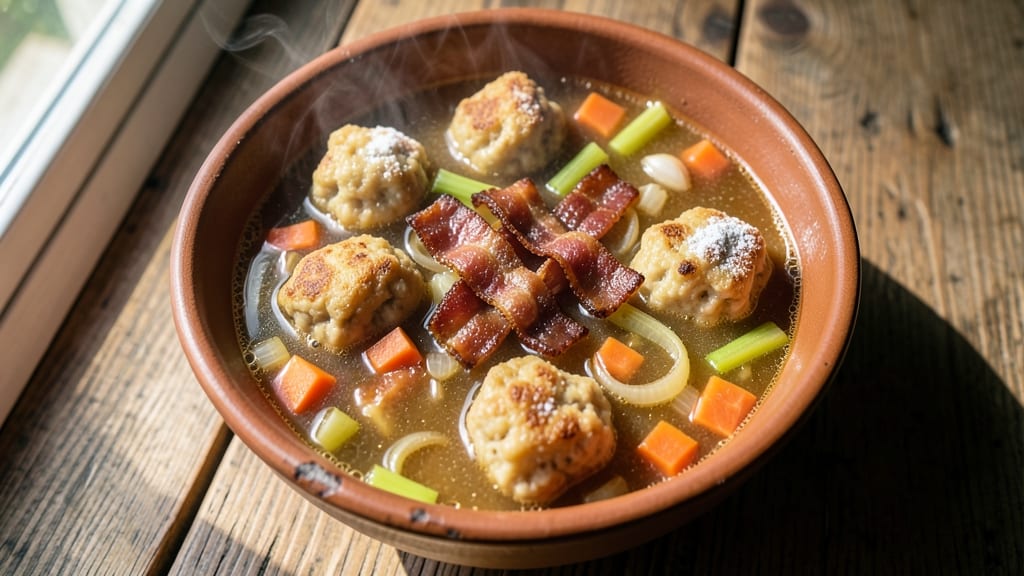
This authentic knoephla soup recipe brings the hearty flavors of Swabian Germany straight to your kitchen, where tender hand-cut egg noodles float in a rich, savory broth.
The secret lies in the traditional knöpfle dough—rolled, sliced, and boiled to perfection—paired with a deeply flavorful broth made from onions, leeks, and bacon. I’ve perfected this recipe over years of testing, ensuring every spoonful delivers the comfort and tradition of a German home-cooked meal.
The broth forms the soul of this dish, simmered low and slow with aromatic vegetables and bacon for depth. Meanwhile, the knöpfle dough transforms into delicate, chewy dumplings that soak up the broth’s richness without losing their shape.
This isn’t just soup—it’s a labor of love, where each ingredient plays a vital role in creating a dish that’s both rustic and refined.
What makes this recipe truly special is the balance of textures: the soft, pillowy knöpfle contrasting with the crispy fried onions often sprinkled on top. Serve it with a side of roasted vegetables or a simple green salad to round out the meal.
The aroma alone will transport you to a cozy German kitchen, where this dish has been a staple for generations.
Whether you’re preparing it for a family gathering or a quiet weeknight dinner, this knoephla soup delivers the warmth and satisfaction of a classic. The process might require patience, but the result—a bowl of hearty, comforting goodness—is worth every moment. Let’s get started on creating this timeless dish.
Ingredients for authentic knoephla soup
Six hearty servings of Swabian comfort—where tender dumplings meet rich, savory broth.
| Ingredient | Amount | Notes |
|---|---|---|
| Bacon 🥓 | ½ lb | Thick-cut, sliced into 1/2-inch pieces |
| Yellow Onions 🧅 | 2 large | Chopped, yellow or red preferred |
| Leeks 🧅 | 2 whole | White and light green parts only |
| Carrots 🥕 | 4 medium | Peeled, cut into 1/2-inch slices |
| Celery Stalk 🧅 | 3 whole | Chopped, leafy parts removed |
| Garlic Cloves 🧄 | 4 cloves | Minced, fresh preferred |
| All-Purpose Flour 🌾 | 2 cups | For knöpfle dough, sifted |
| Large Eggs 🥚 | 4 whole | Room temperature for dough |
| Whole Milk 🥛 | 1 ½ cups | Full-fat for best texture |
| Salt 🧂 | 2 tsp | Kosher or sea salt |
| Black Pepper 🌶️ | ½ tsp | Freshly ground preferred |
| Vegetable Oil 🫒 | ½ cup | For frying knöpfle |
| Fresh Parsley 🌿 | ¼ cup | Chopped, for garnish |
| Bay Leaves 🍃 | 2 whole | For broth infusion |
| Chicken Broth 💧 | 8 cups | Low-sodium preferred |
The bacon sets the flavor foundation here. Thick-cut from Costco gives the best texture, but any quality bacon works. Look for good marbling—it renders beautifully for that deep, smoky taste. Leeks and onions are non-negotiable for the broth; organic from Whole Foods if you can swing it, but regular grocery store works fine. The carrots should be firm and bright orange—no rubbery ones. For the knöpfle dough, King Arthur flour is my go-to, but any all-purpose will do. Fresh eggs make a difference in the dumplings' texture, so don't skimp there.
No thick-cut bacon? Regular bacon cut into smaller pieces works in a pinch. Organic leeks too expensive? Regular leeks work fine—just clean them well. The broth can be made with vegetable broth instead of chicken for a vegetarian version. For the knöpfle dough, if you can't find fresh parsley, dried parsley at half the amount gets you close. The bay leaves? Dried works perfectly—no need for fresh. And if you're worried about the dumplings sticking, lightly flour your hands when shaping them.
This soup tastes even better the next day as flavors meld. Store in the fridge for 4-5 days or freeze for 3 months. For reheating, add a splash of water or broth—it dries out fast. I always make a double batch and freeze half; single-serving portions are perfect for quick lunches. The fried onions on top? Make them fresh or use store-bought—Trader Joe's crispy onions are my shortcut secret.
Why You'll Love This Recipe
- No Chopping Chaos: I swear by this recipe because you only need to dice onions, celery, and carrots—nothing fancy. The bacon renders its own fat, so you’re basically simmering in flavor without extra cleanup.
- Smoky Depth Magic: That crispy bacon crumbles into the broth, while the leeks and onions caramelize just enough to make every spoonful rich and layered. Honestly, it’s the kind of taste that lingers—like a hug in a bowl.
- Leftovers That Shine: This soup actually improves the next day. The flavors meld, the dumplings soften perfectly, and it’s still hearty enough for lunch. I make a double batch on Sundays just for this reason.
- Budget-Friendly Feast: Bacon, veggies, and a few pantry staples stretch into six servings without breaking the bank. Between us, it’s my go-to when I need to feed a crowd or stretch groceries further.
Step-by-step instructions for authentic knoephla soup
Here's how to craft this classic German comfort food with tender dumplings and rich savory broth.
Cook the Bacon and Sauté the Vegetables
In a large Dutch oven, cook the 0.5 lb bacon over medium heat for 8-10 minutes, stirring occasionally, until the bacon is golden brown and crispy. Remove the bacon with a slotted spoon and set it aside on paper towels, leaving the rendered fat in the pot.
In the same pot, add 2 large yellow onions, 2 whole leeks (white and light green parts only), 4 medium carrots (cut into ½-inch slices), and 3 whole celery stalks (chopped). Cook for 10 minutes, stirring occasionally, until the vegetables begin to soften. Add 4 cloves garlic (minced) and cook for another 1 minute until fragrant.
Here's the thing—don't rush this step. The vegetables should develop a deep, caramelized flavor that forms the base of your soup. If they're not soft enough, keep cooking for another 5 minutes until they're tender but not mushy.
Build the Flavorful Broth
Pour in the 8 cups chicken broth and add the 2 whole bay leaves. Bring the mixture to a gentle boil, then reduce heat to low and let it simmer for 20 minutes. This allows the flavors to meld together and the broth to deepen in taste.
While the broth simmers, season it with 2 teaspoons salt and ½ teaspoon black pepper. Taste and adjust the seasoning if needed—this is where you ensure your soup has that perfect balance of savory and umami flavors. The bay leaves will infuse the broth with their aromatic essence, so don't skip them.
Real talk: If you're using low-sodium broth, you might need to add a bit more salt to compensate. Taste as you go—this is the moment that matters for getting that authentic German flavor.
Prepare the Knoephla Dough
In a medium bowl, whisk together the 2 cups all-purpose flour and ½ teaspoon salt. Make a well in the center and add the 4 whole large eggs (room temperature) and 1.5 cups whole milk. Mix gently with a wooden spoon or your hands until a soft dough forms.
I know it seems weird, but trust me—you want the dough to be slightly sticky but manageable. If it's too dry, add a splash more milk. If it's too wet, sprinkle in a bit more flour. The dough should hold together when pressed but still be soft enough to roll out easily.
Cover the bowl with a clean kitchen towel and let the dough rest for 10 minutes. This resting time helps the gluten relax, making it easier to shape the dumplings later.
Shape and Fry the Knoephla
Heat ½ cup vegetable oil in a large skillet over medium heat until it shimmers but isn't smoking. Roll the dough out on a lightly floured surface to about ¼-inch thickness. Cut into 1-inch squares and gently drop them into the hot oil.
Fry the knöpfle for 2-3 minutes per side until they're golden brown and puffed up slightly. Don't overcrowd the pan—fry them in batches if needed. Remove the knöpfle with a slotted spoon and drain them on paper towels. They should be crispy on the outside and soft on the inside.
If the oil gets too cool, it'll absorb into the dough instead of creating that gorgeous sear we're after. Keep the heat steady and work in batches to maintain the oil's temperature.
Assemble and Serve the Soup
Once the knöpfle are fried, gently add them to the simmering broth. Stir lightly to distribute them evenly. Return the cooked bacon to the pot and let everything heat through together for 5 minutes. The knöpfle will absorb some of the broth, becoming tender and flavorful.
Ladle the soup into bowls, garnishing each serving with ¼ cup chopped fresh parsley. Serve immediately while the knöpfle are still warm and the broth is steaming. Each spoonful should deliver that perfect combination of crispy, chewy dumplings floating in a rich, savory broth.
Don't skip the parsley—it adds a fresh finish that brightens the dish. And if you have any leftovers, they reheat beautifully the next day, making this soup even more comforting.
Pro Tips For Making Authentic Knoephla Soup
- CRISP THE BACON LOW: I learned this the hard way—crisping bacon too fast makes the soup taste like a grease fire. Cook it on medium-low heat until the fat renders slowly and the edges turn golden. That’s when you’ll get rich, flavorful bacon crumbles without burning the onions that come next.
- SLICE LEEKS THINLY: Thick leek rings stay tough and chewy. Cut them paper-thin—almost like shredding—so they melt into the broth instead of turning to mush. (Yes, it takes a few extra minutes, but your soup will thank you.)
- DON’T BOIL THE KNOEPHLA: The dumplings are delicate—if you drop them into boiling water, they’ll fall apart before they’re done. Simmer the broth first, then add the knoephla and cook just until they float. Overcooking turns them into glue.
- SAUTÉ ONIONS UNTIL CARAMELIZED: Skip the quick brown—let those onions cook for 15-20 minutes until deep golden and jammy. That’s the flavor base for your soup, and rushing it means missing out on the sweet, rich depth that makes knoephla soup taste real.
Best sauces and condiments for these flavors
Classic Fried Onions
Crispy fried onions add a sweet, caramelized crunch that elevates knoephla soup to restaurant-quality. Heat 2 tablespoons vegetable oil in a skillet over medium heat, then add 1 cup thinly sliced yellow onions.
Cook for 8-10 minutes, stirring occasionally, until golden brown. Sprinkle with ½ teaspoon salt and ¼ teaspoon sugar to enhance sweetness. Let cool slightly before scattering over the soup. 🌟
Creamy Sour Cream Swirl
For a modern twist, stir ¼ cup sour cream into the hot broth just before serving. The tangy richness cuts through the richness of the bacon and dumplings. I like to drizzle it in swirls with a spoon for visual appeal.
Use full-fat sour cream for the best texture—it melts beautifully into the broth without curdling. 🥛
Smoked Paprika Finish
Add ½ teaspoon smoked paprika to the simmering broth during the final 5 minutes of cooking. This subtle smokiness complements the bacon and deepens the soup's complexity.
For extra depth, toast ¼ teaspoon ground cumin with the paprika in a dry skillet for 30 seconds before adding to the broth. 🌶️
Fresh Herb Garnish
Beyond parsley, try chopped chives or thyme sprigs for a fresh herbal note. The bright, slightly peppery flavor of chives pairs beautifully with the richness of the soup. For a pop of color, add edible flowers like nasturtiums—they're mild and add a delicate floral touch. 🌿
Crispy Bacon Bits
Save the extra bacon from cooking and crisp it up separately. Cut into ¼-inch pieces and fry in 1 tablespoon oil over medium-high heat for 2-3 minutes until extra crispy.
Sprinkle over the soup just before serving for a satisfying crunch. This step turns a simple ingredient into a showstopper. 🥓
Nutrition facts
Frequently asked questions
What makes knoephla soup different from other German dumpling soups?
Knoephla soup stands out because of its unique hand-cut egg noodles—traditionally rolled, sliced, and fried before being added to the broth. Unlike spaetzle (which is scraped through a grater) or kloesse (small boiled dumplings), knoephla has a distinct crispy-chewy texture that soaks up the rich broth beautifully. The Swabian region's version also often includes bacon and a deeper vegetable base than lighter German soups.
Can I make knoephla soup vegetarian?
Skip the bacon and use vegetable broth instead of chicken broth. For extra depth, add mushrooms or smoked paprika to mimic the meaty flavor. The knoephla dough remains the same, and you can still fry onions for garnish. Just be sure to toast your vegetables well to develop that savory base.
Why does the knoephla dough need to rest before shaping?
The 10-minute rest relaxes the gluten in the dough, preventing it from shrinking or tearing when you roll and cut it. This makes the knoephla more uniform and easier to handle. Think of it like kneading bread—resting helps develop structure. If you're short on time, you can skip resting but expect slightly more fragile dumplings.
How do I fix knoephla that sticks together when frying?
This usually happens if the dough is too wet or the oil isn't hot enough. For next time, roll the dough slightly thinner (⅛-inch) and ensure your oil is shimmering (not smoking) before frying. If it happens mid-cook, gently separate the pieces with a slotted spoon and let them crisp further. A lightly floured surface also helps prevent sticking during rolling.
Can I prepare knoephla soup ahead of time?
Yes! Make the broth and fry the knoephla up to 2 days ahead, then refrigerate separately. Reheat the broth gently and add the knoephla just before serving to maintain their texture. For freezing, store components separately for up to 3 months. The knoephla freeze well too—just thaw in the fridge overnight before reheating in a dry skillet.