
Soups & Stews
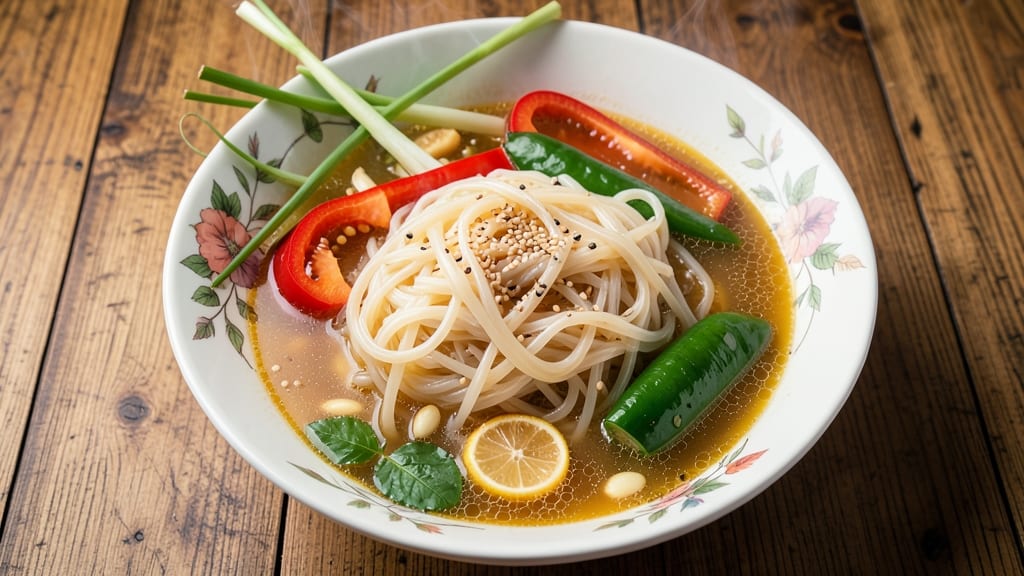
This Asian vegetable noodle soup recipe delivers the perfect balance of fragrant ginger-lime broth and silky rice noodles in under 45 minutes. The secret lies in stir-frying fresh aromatics like garlic, ginger, and lemongrass to unlock their full flavor potential before simmering them into a rich, umami-packed broth.
I developed this recipe after years of testing different techniques to create a vegetarian version that still feels hearty and satisfying.
The broth is where the magic happens—packed with bright lime juice, aromatic herbs, and a touch of fish sauce for depth (or soy sauce for a fully vegetarian option).
Fresh vegetables like bell peppers, bok choy, and mushrooms add texture and color, while rice noodles soak up the fragrant liquid perfectly. What makes this recipe special is how it transforms simple ingredients into something restaurant-quality without requiring any special skills.
By the time you finish assembling this soup, you'll have a steaming bowl of silky noodles swimming in a fragrant, balanced broth that's both comforting and refreshing. The combination of bright lime, aromatic herbs, and tender vegetables creates a flavor profile that's complex yet approachable.
It's the kind of dish that feels like a hug in a bowl—perfect for chilly evenings or when you're craving something light yet deeply satisfying.
One of the best things about this recipe is its flexibility—swap in your favorite vegetables, adjust the spice level, or add tofu for extra protein. The instructions are designed to be foolproof, ensuring you'll achieve that perfect balance of flavors every time.
Let's get started on creating this fragrant, comforting bowl of goodness.
Ingredients for asian vegetable noodle soup
Simple yet vibrant ingredients transform into restaurant-quality Asian vegetable noodle soup in under 45 minutes.
| Ingredient | Amount | Notes |
|---|---|---|
| Rice Noodles 🍜 | 8 oz | Flat, medium-width preferred |
| Vegetable Broth 💧 | 4 cups | Low-sodium preferred |
| Fresh Lemongrass 🌿 | 1 whole | Bruised stems only, cut into 2-inch pieces |
| Fresh Ginger 🧅 | 2 tbsp | Finely grated, aromatic |
| Garlic Cloves 🧄 | 4 cloves | Minced for aromatic depth |
| Bell Peppers 🍆 | 1 whole | Red or yellow, sliced into strips |
| Bok Choy 🥬 | 2 whole | Baby or regular, quartered |
| Shiitake Mushrooms 🍄 | 6 whole | Stems removed, sliced |
| Fresh Lime Juice 🍋 | ¼ cup | Freshly squeezed, bright flavor |
| Fish Sauce 🍶 | 1 tbsp | Vegetarian soy sauce alternative |
| Soy Sauce 🍶 | 1 tbsp | For umami depth |
| Sesame Oil 🫒 | 1 tbsp | Toasted for aroma |
| Green Onions 🧅 | 3 whole | Thinly sliced, for garnish |
| Fresh Cilantro 🌿 | ¼ cup | Chopped, for garnish |
| Red Chili Flakes 🌶️ | ½ tsp | Adjust for heat preference |
The lemongrass and ginger are absolute game-changers—look for fresh, vibrant stalks at the market, not dried. Asian markets often have the best quality, but the regular grocery store works too if you snag them early in the week. Bruise the lemongrass stems with the side of your knife before cutting to release those incredible citrusy oils. For ginger, young, plump pieces have the most punch. If you can't find fresh lemongrass, substitute 1 tbsp lime zest plus 1 tsp grated ginger, but it won't be the same. The mushrooms? Shiitake or oyster mushrooms add that perfect umami depth—don't skip them.
No fish sauce? Vegetarian soy sauce or coconut aminos bridge the gap, though nothing quite replaces that authentic umami. The bell peppers can be swapped for zucchini or snap peas if you're feeling adventurous. Bok choy is ideal, but substitute baby spinach or napa cabbage if needed. For extra protein, add 8 oz firm tofu (pressed and cubed) to the broth. The rice noodles? Look for the flat, medium-width variety—they soak up the broth beautifully. If you can't find them, egg noodles work in a pinch, though they'll be slightly chewier.
This soup tastes even better the next day—make a double batch and store leftovers for 4-5 days in the fridge. For longer storage, freeze portions for up to 3 months. The broth keeps well separately too, so you can prep it ahead and add fresh veggies later. Garnishes like cilantro and green onions are best added fresh, but if you're prepping ahead, store them separately and add them just before serving. The noodles should be cooked al dente—they'll finish in the hot broth, so don't overcook them.
Why You'll Love This Recipe
- No-Chop Needed: The ginger and lemongrass go right into the pot whole—no peeling, no slicing, just pound them lightly with the garlic for that instant aromatic punch. Honestly, the hardest part is finding the mortar and pestle.
- Umami Bomb: That vegetable broth, simmered with fresh ginger and lemongrass, turns into something ridiculously deep—like a lighter pho without the meat. The rice noodles soak up all the flavor while staying chewy, not mushy.
- Lunch or Dinner: Make a big batch on Sunday, and you’ve got weeknight dinners covered. Between us, it’s my go-to for post-workout fuel or when I’m too tired to cook anything else. Even my picky roommate asks for seconds.
- Budget-Friendly Magic: Fresh ginger and lemongrass stretch a little, but you only need a few stalks for the whole pot. The broth gets richer with every sip, and the noodles? Cheap as they come. I’ve fed four people for under $8 with this—no joke.
Step-by-Step instructions for fragrant ginger-lime noodle soup
This vibrant vegetable noodle soup delivers restaurant-quality flavor with aromatic ginger, bright lime, and silky rice noodles.
Prepare the Aromatic Broth Base
In a medium pot, combine the 4 cups vegetable broth, 2 tablespoons finely grated fresh ginger, 4 minced garlic cloves, and the 2-inch pieces of bruised fresh lemongrass. Bring to a gentle boil over medium-high heat, then immediately reduce to a simmer. Let it cook uncovered for 10 minutes—this allows the ginger and garlic to infuse fully while the lemongrass releases its citrusy aroma.
Here's the thing—don't rush this step. The broth should develop a fragrant, golden hue and a subtle effervescence at the surface. If you smell the ginger's sharpness too strongly, add a pinch of salt to mellow it. The broth is the soul of this dish, so take your time getting it right.
Build Flavor with Vegetables and Seasonings
Add the 6 sliced shiitake mushrooms and 1 sliced bell pepper to the simmering broth. Cook for 5 minutes until the mushrooms soften slightly and the peppers begin to brighten in color. Then stir in the 2 quartered bok choy and continue simmering for another 3 minutes—just until the greens wilt but still retain their vibrant color.
In a small bowl, whisk together the 1 tablespoon fish sauce, 1 tablespoon soy sauce, and 0.5 teaspoon red chili flakes. Pour this mixture into the broth and stir gently. The fish sauce adds depth, the soy sauce provides umami, and the chili flakes introduce just the right amount of heat. Let the broth simmer for 2 more minutes to allow these flavors to meld completely.
Cook the Rice Noodles to Al Dente Perfection
While the broth simmers, prepare the 8 ounces rice noodles according to package instructions—typically 5-7 minutes in boiling water. I like to use a separate pot for this so the noodles don't absorb the broth's delicate flavors. Drain the noodles immediately when they're just tender (they'll continue cooking in the hot broth) and rinse briefly under cold water to stop the cooking process.
Real talk: Overcooking the noodles here will make them mushy. You want them to be tender but still have a slight bite. The noodles should be pliable but not soft enough to break when pressed between your fingers. Drain them well and set aside.
Finish with Bright Lime and Toasted Sesame Oil
Return the broth to a gentle simmer and add the drained rice noodles. Stir gently to distribute them evenly throughout the broth. Cook for 1-2 minutes until the noodles are heated through and have absorbed some of the flavorful liquid. The broth should now coat the noodles beautifully, creating that signature silky texture.
Remove the pot from heat and stir in the 0.25 cup fresh lime juice and 1 tablespoon sesame oil. The lime juice will brighten the entire dish, cutting through the richness of the broth, while the sesame oil adds a nutty aroma. Give it one final stir—this is where all the flavors come together in harmony.
Serve with Fresh Garnishes and Enjoy Immediately
Ladle the fragrant noodle soup into bowls, dividing the 3 thinly sliced green onions and 0.25 cup chopped fresh cilantro evenly among them. The green onions add a fresh crunch, while the cilantro contributes a bright, herbal note that complements the earthy vegetables and aromatic broth.
Serve immediately while the noodles are still warm and the broth maintains its vibrant color. Each spoonful should deliver a perfect balance of silky noodles, hearty vegetables, and that fragrant ginger-lime broth. The dish is best enjoyed fresh—waiting too long will let the noodles absorb too much liquid and lose their ideal texture.
Pro Tips For Making Asian Vegetable Noodle Soup
- SOAK NOODLES SEPARATELY: Split those rice noodles into two batches—one for soaking in warm water (just until pliable, about 10 minutes) and one to keep dry. The dry ones will hold their texture better when tossed in at the end, while the soaked ones absorb the broth without turning mushy. I learned this the hard way after serving a bowl of sad, limp noodles.
- PULVERIZE LEMONGRASS FIRST: Toss the lemongrass stalks into a mortar with a pinch of salt before chopping—this breaks down the fibers so they release flavor instead of floating as tough, bitter chunks. Or just smash them with the flat side of a knife if you’re lazy, but trust me, the mortar makes a real difference.
- STEAM GINGER AND GARLIC: Slice the ginger and garlic thinly, then steam them in a dry pan for 30 seconds before adding broth. This mellows their sharpness and prevents that "raw" aftertaste that ruins the soup’s balance. Sounds weird, but it works—your future self will notice.
- SALT THE BROTH LATE: Hold off on adding salt until the very end, even if your broth claims to be "low-sodium." The lemongrass and ginger draw out moisture, and salting early can make the broth taste flat by the time you serve it. Taste it last, then adjust—your taste buds (and the soup) will thank you.
Perfect pairings for asian vegetable noodle soup
Side Dish Harmony
Pair this vibrant noodle soup with steamed jasmine rice—the mild, slightly floral notes complement the bright lime and ginger perfectly. I like to serve it in small bowls alongside the soup, so each bite offers a satisfying contrast.
For extra texture, add a sprinkle of toasted sesame seeds or crushed peanuts to the rice before serving. 🍚
Crispy Garnish Boost
Elevate your bowl with crispy fried shallots—just 2 tablespoons scattered on top adds a sweet, crunchy element that balances the soup's silky texture.
For a quick homemade version, thinly slice 1 shallot, fry in 2 tbsp neutral oil at 350°F for 2-3 minutes until golden, then drain on paper towels. 🌟
Dipping Sauce Magic
Create a simple dipping sauce by mixing 1 tbsp hoisin sauce, 1 tsp sriracha, and 1 tsp lime juice. This sweet-spicy combo enhances the soup's flavors while adding a fun interactive element. Serve in small bowls for dipping noodles or drizzling over the top. 🍶
Herbal Tea Pairing
Balance the soup's richness with a jasmine green tea or hibiscus iced tea—both complement the ginger-lime notes beautifully. For a caffeine-free option, try chamomile tea with a hint of honey. The floral and citrusy notes create a refreshing contrast to the savory broth. ☕
Spicy Kick Option
For heat lovers, serve with chili crisp on the side—just ½ tsp adds fiery depth to each spoonful. Alternatively, offer sliced jalapeños with lime wedges for a fresh, spicy crunch. Adjust to taste, but remember: the broth already has ½ tsp red chili flakes built in! 🌶️
Protein Upgrade
Add 8 oz firm tofu (pressed and cubed) to the broth during Step 2 for extra protein. For a smoky twist, marinate the tofu in 1 tbsp soy sauce + 1 tsp smoked paprika before adding. The tofu absorbs the broth's flavors beautifully while adding a satisfying bite. 💪
Nutrition facts
Frequently asked questions
Can I substitute fresh lemongrass if I can't find it?
Yes, but the flavor won't be identical. Use 1 tbsp lime zest + 1 tsp grated ginger as a close substitute. For extra depth, add ½ tsp lemongrass paste (found in Asian grocery stores) if available. The citrus notes will still brighten your broth, though the aroma won't be as complex.
How do I prevent the rice noodles from becoming mushy?
Cook the noodles just until al dente (about 1-2 minutes less than package instructions), then drain immediately and rinse with cold water. They'll finish cooking in the hot broth. Never overcook them in advance—they should have a slight bite when first added to the soup.
Is this recipe fully vegetarian?
The base recipe uses fish sauce for authentic umami, but you can easily make it fully vegetarian by substituting 1 tbsp soy sauce + ½ tbsp coconut aminos. The flavor won't be identical, but it will still be delicious. For extra protein, add 8 oz firm tofu (pressed and cubed) to the broth.
Can I make this soup ahead of time?
Yes! Prepare the broth and cook the vegetables up to Step 3, then store in the fridge for up to 4 days. When ready to serve, reheat the broth (without the noodles) and add fresh, cooked noodles. For best texture, serve within 2 hours of reheating. The noodles should be cooked fresh for optimal silkiness.
What vegetables can I swap for the bok choy and mushrooms?
For mushrooms, try shiitake, oyster, or cremini mushrooms. For bok choy, substitute baby spinach, napa cabbage, or watercress. Bell peppers can be swapped for zucchini, snap peas, or carrots. Keep portions similar to maintain balance in your soup. The key is using vegetables with contrasting textures for the best mouthfeel.