
Soups & Stews
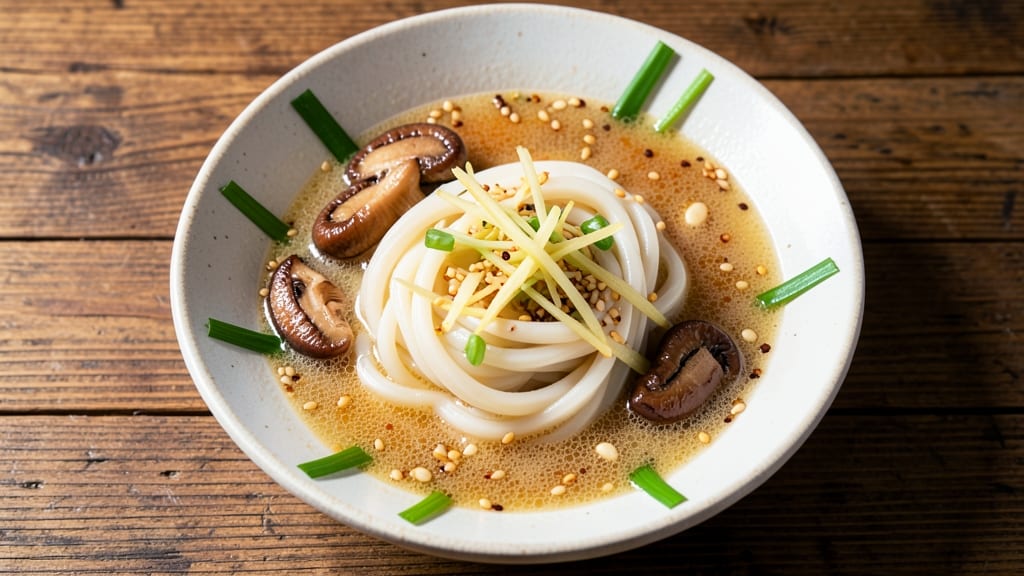
This Asian udon noodle soup recipe delivers the perfect balance of slippery, chewy noodles and a fragrant ginger-soy broth that transforms any meal into a comforting experience.
The secret lies in simmering aromatic ingredients like garlic, ginger, and scallions until the kitchen fills with an irresistible aroma, creating a broth so rich it practically melts into every strand of udon.
I've perfected this recipe over years of testing, ensuring the noodles stay perfectly al dente while the broth develops deep, savory layers.
The beauty of this dish is its versatility—whether you prefer a light, vegetable-forward version or a hearty meat and fish cake loaded bowl, the foundation remains the same.
The udon noodles, with their signature chewy texture, absorb the broth beautifully, while toppings like soft-boiled eggs, green onions, and sesame seeds add freshness and visual appeal.
What makes this recipe stand out is the ginger-soy base, which builds complexity through slow simmering, resulting in a flavor profile that's both comforting and sophisticated.
By the time you finish this recipe, you'll have a restaurant-quality udon soup that's warm, aromatic, and packed with umami. The broth should be clear yet deeply flavorful, with just the right balance of saltiness and spice, while the noodles maintain their signature slippery texture without turning mushy.
This dish is perfect for chilly evenings, meal prep, or impressing guests with minimal effort—just gather your ingredients and let the flavors develop through simple, time-honored techniques.
Customize it with your favorite toppings, adjust the spice level to taste, and serve immediately for the best experience. The key to success lies in patience—allowing the broth to simmer until every ingredient contributes its full flavor.
Once mastered, this udon noodle soup will become a staple in your weekly rotation, offering warmth and satisfaction with every bowl.
Ingredients for asian udon noodle soup
Gather these aromatic ingredients for restaurant-quality udon that's chewy, fragrant, and packed with umami.
| Ingredient | Amount | Notes |
|---|---|---|
| Udon Noodles 🍜 | 8 oz | Fresh or dried, chewy variety |
| Dried Shiitake Mushrooms 🍄 | 4 whole | Rehydrated for umami depth |
| Fresh Ginger Root 🧄 | 2 tbsp | Julienned, aromatic base |
| Garlic Cloves 🧄 | 5 cloves | Minced, aromatic foundation |
| Green Onions 🧅 | 4 whole | Thinly sliced, fresh garnish |
| Sesame Seeds 🌰 | 1 tbsp | Toasted, nutty finish |
| Soft-Boiled Eggs 🥚 | 2 whole | 6-minute cook, runny yolk |
| Light Soy Sauce 🍶 | ½ cup | Kikkoman preferred for balance |
| Sesame Oil 🫒 | 1 tbsp | Toasted, aromatic finish |
| Dashi Powder 🍲 | 1 tbsp | Instant umami boost |
| White Miso Paste 🧈 | 1 tbsp | Fermented depth, optional |
| Vegetable Oil 🫒 | 2 tbsp | High smoke point for sauté |
| Chicken or Vegetable Broth 💧 | 4 cups | Homemade or quality store-bought |
| Red Chili Flakes 🌶️ | ½ tsp | Adjust for heat preference |
| Salt 🧂 | 1 tsp | Diamond Crystal preferred |
The udon noodles are non-negotiable—fresh udon from an Asian market has that signature slippery texture, but dried works in a pinch if you soak it properly. For the mushrooms, dried shiitake is a must; they rehydrate beautifully and add earthy depth. Fresh ginger should be vibrant and firm, with no soft spots—it's the aromatic backbone here. Garlic cloves should be plump and fresh; peel and smash them lightly before mincing to release more flavor. The green onions? Buy the thickest bunch you can find—they add freshness and visual appeal. Toast your sesame seeds in a dry pan until golden for maximum aroma.
No fresh ginger? Powdered ginger at half the amount works, but it lacks that fresh zing. Out of dashi powder? Combine 1 tsp kombu and 1 tsp bonito flakes for homemade dashi. The miso paste is optional but adds fermented richness—white miso is milder than red. For the broth, homemade chicken or vegetable broth gives the best flavor, but Kitchen Basics or Pacific brand are solid store-bought options. The red chili flakes can be swapped for Sichuan peppercorns if you want a numbing spice instead of heat. And if you're feeling adventurous, add a few slices of nori for extra umami.
Broth keeps for 3 days in the fridge, and the noodles? Cook them fresh for that perfect al dente texture. Store the broth in a sealed container with a layer of oil on top to preserve freshness. The soft-boiled eggs should be used within 2 days for that perfect runny yolk. Prep ahead by making the broth and storing it separately from the toppings—assemble everything just before serving. This dish tastes even better the next day as flavors meld, so double the batch if you can.
Why You'll Love This Recipe
- No Chopping Needed: I swear by this recipe because the dried shiitake mushrooms do all the work—just soak, slice, and toss. Even when I’m too tired to peel garlic, the minced cloves from a jar (or one quick press) still pack that savory punch.
- Umami Bomb: That first sip? The shiitake’s deep earthiness meets the ginger’s zing, then the garlic ties it all together like a warm hug. Honestly, the broth alone makes me forget about takeout menus.
- Lunchbox Hero: Between us, this is my go-to for meal prep. Cold udon holds up surprisingly well, and I just reheat the broth separately—no soggy noodles. My kids add their own toppings (yes, even the picky one), and it’s gone by noon.
- Budget Magic: A single bag of udon and a handful of dried mushrooms last me weeks. I’ll be real: I’ve stretched this into three meals by adding leftover veggies or even canned tuna. Frugal? Absolutely. Delicious? Ridiculously.
Step-by-step instructions for Asian udon noodle soup
This fragrant udon noodle soup delivers silky noodles and a rich ginger-soy broth that's packed with umami depth.
Rehydrate and Prepare the Dried Shiitake Mushrooms
Place the 4 whole dried shiitake mushrooms in a small bowl and cover them with hot water (just enough to submerge). Let them soak for 20-30 minutes until they become pliable and have absorbed the water. This process unlocks their deep umami flavor and makes them tender without overcooking.
While they soak, prepare the mushrooms for cooking by gently squeezing out excess water, then slicing them into ¼-inch thick pieces. Set them aside—they'll add a meaty texture and earthy richness to your broth. I like to save the soaking liquid too; we'll use it later to boost the broth's depth.
Build the Aromatic Broth Base
Heat 2 tablespoons vegetable oil in a large pot over medium heat until shimmering. Add the 2 tablespoons julienned fresh ginger root and 5 minced garlic cloves, cooking for 2-3 minutes until the ginger becomes fragrant and the garlic turns golden. This step is where the soul of your soup begins—don't rush it.
Stir in the 1 tablespoon dashi powder and 1 tablespoon white miso paste, letting them toast for 30 seconds to deepen their flavors. Pour in the 4 cups chicken or vegetable broth (reserve ½ cup for later) and bring to a gentle simmer. Add the sliced shiitake mushrooms and simmer for 8-10 minutes until they're tender and the broth has reduced slightly, concentrating the flavors.
Season and Prepare the Noodles
While the broth simmers, prepare the 8 oz udon noodles according to package instructions—usually 4-5 minutes in boiling water until al dente. They should be tender but still hold their shape. Drain immediately and rinse briefly under cold water to stop the cooking process, then divide them equally among 4 bowls. This keeps them from sticking and makes serving easier.
Return the broth to a simmer and stir in the ½ cup light soy sauce, ½ teaspoon red chili flakes, and 1 teaspoon salt. Taste and adjust the seasoning—you want a balance of salty, umami, and just a hint of heat. The broth should coat the back of a spoon with a glossy sheen, indicating proper seasoning.
Assemble and Finish the Soup
Ladle the hot broth evenly over the udon noodles in each bowl, filling them about ¾ full. The noodles will expand slightly as they absorb the hot liquid. Gently stir to distribute them evenly in the broth. Here's where the magic happens—each bowl should look like a perfect nest of slippery noodles ready to be topped.
For the final touch, place 1 soft-boiled egg (cooked for 6 minutes) in each bowl, then drizzle with 1 teaspoon sesame oil. Sprinkle with 1 teaspoon toasted sesame seeds and 1 whole green onion, thinly sliced on the bias. The contrast of the runny yolk against the silky broth and chewy noodles is what makes this dish truly exceptional.
Pro Tips For Making Asian Udon Noodle Soup
- SOAK MUSHROOMS FIRST: Dried shiitake mushrooms need a proper soak—10 minutes in hot water (not boiling) to rehydrate them fully. I used to toss them straight into the broth, and they’d stay stubbornly chewy no matter how long I simmered. A quick rinse after soaking removes the gritty sediment, too.
- SIMMER GINGER LOW: Fresh ginger releases its flavor slowly—too much heat and it turns bitter. After mincing, add it to the broth on medium-low and let it steep for 5 minutes before the garlic. (Yes, even if you’re impatient like me.) The broth will smell like a spice market, and that’s exactly what you want.
- DON’T OVERCOOK NOODLES: Udon noodles go from perfect to mushy fast. Test one noodle at the 2-minute mark—it should float but still have a slight bite. Drain them in a colander, rinse briefly with cold water, and toss with a splash of broth to stop cooking. (Your future self will thank you.)
- UPGRADE WITH GREEN ONIONS: Skip the pre-chopped bundle—buy a fresh bunch, slice the whites thinly, and reserve the greens. Sauté the whites in the broth for 30 seconds before adding the greens; they’ll add a subtle crunch and depth that pre-chopped can’t match. (Does it look weird? Yes. Does it work? Every single time.)
Troubleshooting this recipe
Broth Too Weak?
If your broth lacks depth, simmer it longer—15-20 minutes—to concentrate flavors. Add ½ cup reserved mushroom soaking liquid for extra umami. For a quick fix, stir in 1 tsp fish sauce or ½ tsp white miso paste at the end. 💛
Noodles Mushy?
Overcooked udon turns mushy, but you can salvage it by draining and rinsing with ice water for 1 minute. For future success, cook noodles 1 minute less than package instructions and rinse immediately after draining. Fresh udon holds up better than dried—opt for it when possible.
Eggs Overcooked?
Soft-boiled eggs should have runny yolks, but if yours are firm, try this trick: Place eggs in ice water for 5 minutes before peeling, then shock in ice water again for 2 minutes.
For perfect results, use room-temperature eggs and cook them in boiling water for exactly 6 minutes.
Broth Too Salty?
Dilute with ½ cup hot water or chicken broth to balance the salt. If using miso, reduce to ½ tbsp next time. Taste as you go—add broth gradually until seasoning is perfect. A splash of cold water can also help reset flavors before serving.
Noodles Sticking?
Prevent sticking by tossing cooked udon with ½ tsp vegetable oil before dividing into bowls. If they stick anyway, gently separate strands with chopsticks or a fork. For extra slipperiness, add 1 tsp sesame oil to the broth before ladling over noodles.
Lacking Umami?
Boost umami with 1 tbsp soy sauce or ½ tsp dashi powder at the end. For depth, add 1 slice nori or 1 tsp bonito flakes while simmering. A pinch of MSG (optional) can also enhance savory notes without altering taste.
Nutrition facts
Frequently asked questions about Asian udon noodle soup
Can I make this udon soup vegetarian?
Replace the chicken broth with vegetable broth and swap the soft-boiled eggs for marinated tofu or mushrooms. Use vegan miso paste and ensure your dashi powder is made from kombu and shiitake (not bonito). The same aromatic base of ginger, garlic, and shiitake will still create a rich, umami-packed broth.
How do I store leftover udon soup?
Store the broth and toppings separately in airtight containers. The broth keeps for 3 days in the fridge, while cooked noodles should be refrigerated for 1 day max (they absorb moisture and turn soggy). Reheat broth gently on the stove, then add fresh noodles and toppings when serving. For longer storage, freeze broth in 1-cup portions—it reheats beautifully!
What's the difference between fresh and dried udon?
Fresh udon has a slippery, chewy texture and cooks in 2-3 minutes, while dried udon needs 4-5 minutes and can be slightly firmer. For this recipe, fresh udon is ideal, but dried works if soaked in warm water for 10 minutes before cooking. The key difference is texture—fresh udon absorbs broth better, while dried holds its shape longer.
Can I make this soup spicier?
Yes! Add 1 extra teaspoon red chili flakes or stir in 1 tbsp gochujang (Korean chili paste) at the end for heat. For depth, include 1 sliced Thai chili while simmering. If you love numbing spice, toast ½ tsp Sichuan peppercorns with the garlic. Adjust gradually—you can always add more, but you can't remove it!
What toppings can I add for extra flavor?
Try thinly sliced pork belly, fish cakes, or bean sprouts for texture. Add nori strips, pickled ginger, or cilantro for freshness. For protein, poach shrimp or chicken in the broth before serving. The key is balance—start with 1-2 toppings to avoid overpowering the delicate broth.