
Soups & Stews
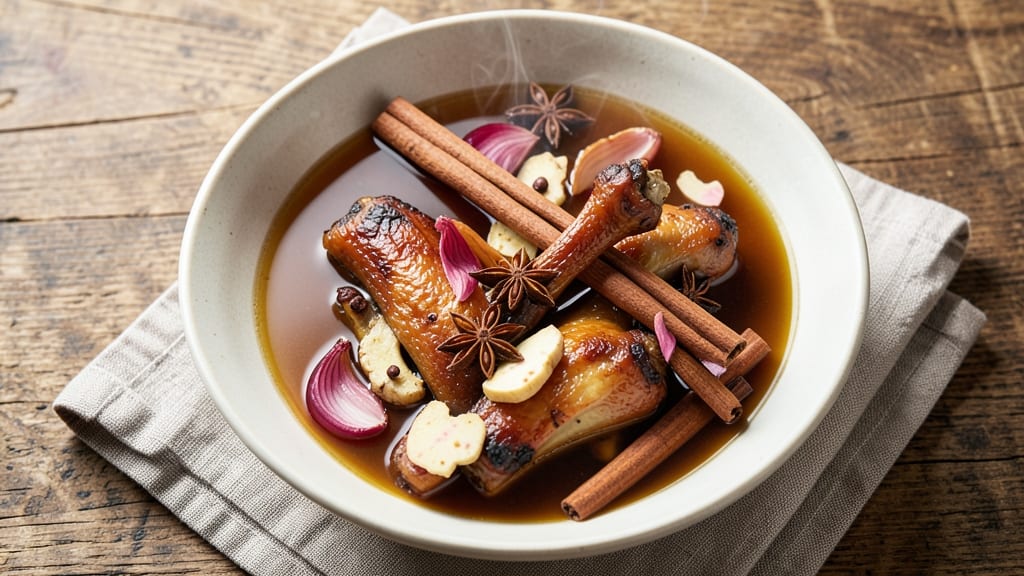
This Asian soup stock recipe transforms simple ingredients into a fragrant, deeply flavorful foundation for soups, stews, and braises. The secret lies in charring bones and aromatics to unlock layers of umami and complexity—technique that elevates any dish.
What starts as a pot of water and scraps becomes a rich, aromatic broth with just a few hours of simmering time.
The five-spice blend—star anise, cinnamon, cloves, fennel, and peppercorns—creates a signature warmth that lingers in every sip. Unlike store-bought versions, this homemade stock builds depth through slow extraction, ensuring each spoonful delivers authentic, restaurant-quality flavor. Perfect for beginners, it requires minimal effort but yields professional results.
By the end, you’ll have a versatile stock that works in pho, hot pot, or even marinades—its richness transforms ordinary meals into extraordinary ones. The process is simple: char, simmer, strain. No fancy equipment needed, just patience and attention to detail.
Store it for up to 3 months in the freezer, ready to elevate any dish with a single ladle. Let’s create this foundational ingredient that will change how you approach Asian cooking forever.
Ingredients for asian soup stock
Transform simple pantry staples into a fragrant, restaurant-quality Asian soup stock foundation.
| Ingredient | Amount | Notes |
|---|---|---|
| Chicken Bones 🍗 | 3 lb | Chicken carcass or necks preferred |
| Onion Peels 🧅 | 1 cup | Yellow or red, dried or fresh |
| Fresh Ginger Root 🌿 | 2 oz | Unpeeled, roughly chopped |
| Star Anise Pods 🌶️ | 4 whole | Whole, not ground |
| Cinnamon Sticks 🌿 | 2 whole | 2-inch pieces |
| Cloves 🌶️ | 8 whole | Whole, not ground |
| Fennel Seeds 🌿 | 1 tbsp | Whole, lightly toasted |
| Black Peppercorns 🌶️ | 1 tbsp | Whole, lightly crushed |
| Garlic Cloves 🧄 | 6 whole | Unpeeled, lightly charred |
| Green Onions 🧅 | 2 whole | Cut into 2-inch pieces |
| Bay Leaves 🌿 | 2 whole | Dried, standard size |
| Water 💧 | 12 cups | Filtered preferred |
| Salt 🧂 | 1 tsp | Diamond Crystal preferred |
The bones form the stock's backbone—chicken carcasses or necks yield the most gelatinous richness. Whole chicken from the grocery store's butcher section works perfectly; simply roast until golden for deeper flavor. For spices, Whole Foods' bulk section offers the freshest star anise, cinnamon, and fennel seeds—look for vibrant colors and no moisture. The ginger should be firm with no soft spots; Asian markets often carry larger, more aromatic roots. Char your garlic and green onions in a dry skillet until fragrant—this step unlocks unmatched depth. Penzeys Spices is ideal for specialty whole spices if you prefer convenience over bulk bins.
No star anise? Anise seeds at double the quantity work as a substitute, though the flavor profile shifts slightly. Running low on fennel seeds? Fresh fennel bulb, thinly sliced, adds a similar anise-like brightness. Substituting black peppercorns for white peppercorns is acceptable, though black offers more robust aroma. For a vegetarian version, replace bones with mushroom stems or kombu—simmer 30 minutes longer for comparable body. The onion peels can be dried and stored for future batches; simply crush them before adding to the pot. If your garlic burns easily, lightly char it in the oven at 400°F for 10 minutes instead of the stovetop.
This stock freezes beautifully—portion into 1-cup ice cube trays for easy single-use servings. In the fridge, it keeps for 5 days covered tightly; the freezer extends shelf life to 3 months. For maximum flavor, use within 2 weeks of freezing. The charred aromatics settle at the bottom, so always strain through a fine-mesh sieve or cheesecloth-lined colander. Store in glass containers to prevent absorption of freezer odors. Label clearly—this stock transforms into pho, ramen, or braising liquids with just a ladleful.
Why You'll Love This Recipe
- No Waste, All Flavor: I swear by this—those onion peels and ginger scraps you’d normally toss? They’re the secret weapon here. Toss them in with the bones, and suddenly you’ve got depth without extra effort. The star anise and cinnamon sticks? Just drop them in whole, no chopping, no fuss.
- Deep Umami Magic: That first sip? Chef’s kiss. The chicken bones render into pure richness, while the ginger and spices layer in warmth. It’s not just broth—it’s the kind of flavor that makes you pause mid-slurp because it’s that good. Honestly, I’ve never made stock this aromatic before.
- Meal Prep MVP: Freeze it in ice cube trays for instant upgrades to any dish. Need a quick ramen? Dumpling soup? Phở? Just grab a cube (or two), toss it in boiling water, and boom—restaurant-quality base. I keep a stash in my freezer for those nights when I’m too tired to think.
- Budget Booster: Chicken bones are cheap, and this stock stretches like crazy. A single batch feeds my family for weeks, whether it’s in soups, braises, or even rice dishes. Between us, I’ve spent $5 on bones and spices that last months—way better than pricey store-bought versions.
Step-by-step instructions for fragrant five-spice broth
Master this aromatic broth technique for restaurant-quality depth in every bowl.
Char the Chicken Bones and Aromatics
Preheat your oven to 450°F. Arrange the 3 lb chicken bones on a baking sheet in a single layer. Roast for 20-25 minutes until the bones develop deep brown spots and begin to smell nutty—this caramelization forms the foundation of your broth's rich flavor. While the bones roast, prepare the aromatics by charring the 6 whole garlic cloves and 2 whole green onions directly over a gas flame or under a broiler for 2-3 minutes until blackened in spots.
This high-heat step creates complex Maillard reactions that elevate the broth's depth. The charred aromatics will infuse the broth with a smoky sweetness that's essential for authentic Asian stock. Work quickly during this phase—over-charred aromatics can turn bitter. Once the bones and aromatics are charred, transfer everything to a large stockpot, discarding any burnt bits from the baking sheet.
Toast the Spices and Add Liquids
Reduce the oven temperature to 350°F. In a dry skillet over medium heat, toast the 1 tbsp fennel seeds and 1 tbsp black peppercorns for 2 minutes until fragrant and lightly blistered. Immediately transfer to the stockpot. Add the 4 whole star anise pods, 2 whole cinnamon sticks, 8 whole cloves, 2 whole bay leaves, and the charred 2 oz fresh ginger root (unpeeled) to the pot.
The reason for toasting these spices is to release their essential oils before they steep in the broth. You'll know they're ready when the kitchen fills with their warm, earthy aroma. Pour in the 12 cups water and bring to a gentle boil. Skim off any foam that rises to the surface—this removes impurities that would otherwise cloud your finished broth.
Simmer the Broth for Maximum Extraction
Once boiling, reduce heat to maintain a gentle simmer—you should see small bubbles at the edges but no vigorous boiling. Let the broth cook uncovered for 3 hours, stirring occasionally. The 1 cup onion peels will infuse subtle sweetness, while the charred bones and aromatics develop their complex flavors.
During this time, the collagen in the bones will break down into gelatin, creating that signature silky texture. I check the broth periodically and add water if the level drops below halfway up the bones. The broth is ready when it develops a deep amber color and the scent of charred bones and spices fills your kitchen—this typically happens around the 2.5-hour mark.
Strain and Season to Perfection
After simmering, remove the pot from heat and let the broth sit for 10 minutes to allow any settled particles to sink. Line a fine-mesh strainer with cheesecloth or a coffee filter to catch any fine particles. Carefully ladle the broth through the strainer into a clean container, pressing gently on the solids to extract maximum flavor without letting sediment through.
Return the strained broth to the pot and stir in the 1 tsp salt. Taste and adjust seasoning—you want a balance of umami from the bones, sweetness from the charred aromatics, and warmth from the spices. The broth should be deeply flavorful but not salty. For best results, use the broth immediately or refrigerate for up to 5 days, skimming off any solidified fat that rises to the surface before using.
Pro Tips For Making Asian Soup Stock
- Char the Bones First: I learned this the hard way—skipping the char step means your stock will taste bland. Get those chicken bones smoking under the broiler (or over a gas flame) for 5-7 minutes on each side. The Maillard reaction pulls out deeper flavor, and you’ll notice it immediately when you add water.
- Slice Ginger Thin: Sounds weird, but it works: thinly slice that ginger—about 1/8-inch thick—so it infuses without turning to mush. Thick chunks just sit there like flavorless rocks. (Yes, even if you’re impatient like me.)
- Don’t Boil It Dry: After 2 hours of simmering, your stock should still have at least 2 inches of liquid covering everything. If it gets too low, add hot water—not cold—to avoid shocking the stock. I’ve ruined batches by letting them reduce too much; trust me, it’s not worth the effort.
- Toast the Spices: Crack open those star anise pods and cinnamon sticks first—lightly toast them in a dry pan for 30 seconds until fragrant. This wakes up their flavors and prevents bitterness. (Your future self will thank you when the stock tastes balanced.)
Storing and reheating this asian soup stock
Refrigerator Storage
Let your stock cool to room temperature before transferring to airtight containers—I use glass mason jars with screw lids. Store in the fridge for up to 5 days, but I recommend using it within 3 days for peak flavor.
The charred aromatics settle at the bottom, so always stir before ladling. Skim off any solidified fat that rises to the surface before using. 🥫
Freezer Storage
For longer storage, freeze your stock in 1-cup portions using ice cube trays. Once frozen, transfer cubes to freezer bags or labeled containers. This method works perfectly for single-use portions in recipes like pho or ramen.
The stock maintains quality for up to 3 months, though I find it's best used within 2 months for maximum flavor retention.
Reheating Methods
When reheating, I prefer the stovetop method for best results. Pour the stock into a pot and heat over medium-low heat until steaming. Avoid boiling to prevent cloudiness.
For quick use, microwave on 50% power for 1-2 minutes, stirring halfway. Always reheat to at least 165°F to ensure safety. 🔥
Reviving Flavor
If your stock tastes flat after reheating, boost its depth by adding a pinch of salt, a splash of fish sauce, or a few drops of soy sauce.
For extra richness, stir in 1 tsp butter or a spoonful of fresh ginger juice before using. These adjustments work wonders for restoring that restaurant-quality taste.
Portioning Tips
I like to freeze stock in 1-cup portions for easy use in recipes. For pho, I'll use 4 cups of stock per batch, while ramen typically requires 6-8 cups.
Label each container with the date and intended use—this helps me track freshness and plan meals efficiently. A permanent marker works best for clear labeling. ✨
Vegetarian Adaptations
For a vegetarian version, replace the chicken bones with mushroom stems or kombu. Simmer for 45 minutes longer to extract maximum flavor. Store and reheat using the same methods, but expect a slightly lighter body.
The five-spice blend still shines through, creating a wonderfully aromatic base for vegetarian soups. 🌱
Nutrition facts
Frequently asked questions about Asian soup stock
Can I use beef or pork bones instead of chicken?
Beef bones add incredible depth and richness, while pork creates a sweeter, more robust flavor. For beef, use marrow or knuckle bones and simmer for 4-5 hours instead of 3. Pork bones work well too—just reduce simmering time to 2.5-3 hours to avoid over-extraction. The five-spice blend complements all three meats beautifully.
Why does my stock taste bitter or metallic?
Bitterness usually comes from over-charred aromatics or boiling too vigorously. For metallic notes, check your pot—reactive metals like aluminum can impart off-flavors. Use stainless steel or enameled cast iron instead. Always simmer gently (small bubbles) and remove foam immediately when boiling begins. If it's too late, balance the flavor with a splash of fish sauce or soy sauce.
How can I make a lighter, clearer broth?
For a clear stock, use only the meaty chicken bones (no skin) and simmer for 2 hours instead of 3. Strain through a very fine-mesh sieve or cheesecloth, then chill overnight. The fat will solidify on top—skim it off before using. Skip the onion peels and reduce simmering time to 1.5 hours for maximum clarity while preserving flavor.
Can I make this stock in an Instant Pot?
Yes! Char the bones and aromatics first, then add everything to your Instant Pot with 12 cups water. Cook on high pressure for 60 minutes, then do a natural release. The pressure cooker cuts time by half while still extracting great flavor. For extra depth, finish with 15 minutes of simmering on the stovetop after pressure cooking.
What are the best uses for this stock?
This aromatic stock shines in pho, ramen, hot pot, and braised dishes. Use it as a base for congee, stir-fries, or even marinades. The five-spice blend makes it perfect for Vietnamese or Chinese dishes, while the charred depth works beautifully in Thai or Korean soups too. Store extra portions for quick meal prep!