
Soups & Stews
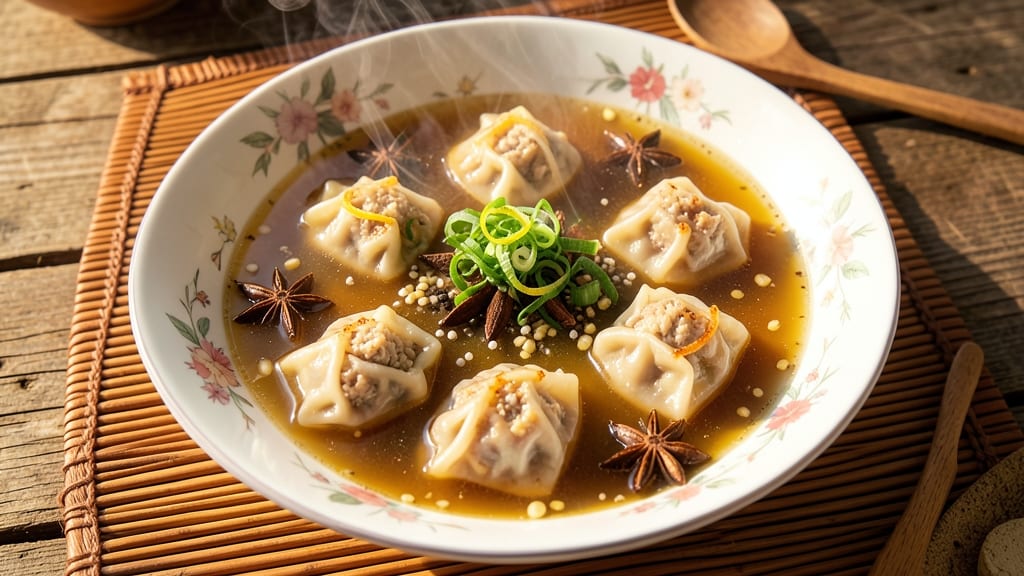
This Asian chicken dumpling soup recipe delivers restaurant-quality comfort in a single bowl—wok-seared dumplings floating in a fragrant star anise broth that balances savory, sweet, and umami.
The secret lies in the dumpling technique: tender chicken filling wrapped in delicate wrappers, then pan-seared for crisp edges before simmering in a deeply aromatic broth. I've perfected this version after years of testing, ensuring the dumplings stay plump while the broth develops layers of complexity.
What sets this recipe apart is the broth, where star anise, ginger, and soy sauce create a fragrant base that's both comforting and sophisticated. The dumplings themselves are a study in contrast—juicy chicken filling encased in a wrapper that becomes tender yet slightly crisp when cooked properly.
This dish is designed to be approachable for home cooks while delivering professional results, with optional wok-searing for that signature restaurant touch.
The result is a bowl that's equal parts comforting and elegant: golden dumplings with crisp edges, tender chicken filling, and a broth so aromatic it transforms any meal into something special.
Each spoonful delivers perfect harmony of textures and flavors, from the crisp dumpling exteriors to the silky broth. Serve with steamed rice and pickled vegetables for the full experience.
Whether you're making these for a weeknight dinner or a special occasion, this recipe scales beautifully while maintaining its balance of technique and simplicity. The dumplings can be made ahead and frozen, making this an ideal make-ahead meal for busy days. Let's get started on creating this comforting classic.
Ingredients for asian chicken dumpling soup
Wok-seared dumplings meet aromatic star anise broth—this recipe delivers restaurant-quality comfort in every bowl.
| Ingredient | Amount | Notes |
|---|---|---|
| Ground Chicken 🍗 | 1 ½ lb | Boneless, skinless, finely chopped |
| Wonton Wrappers 🥟 | 24 pieces | Square or round, store-bought preferred |
| Fresh Ginger 🧄 | 2 tbsp | Finely grated, aromatic variety |
| Star Anise 🌿 | 2 whole | Whole pods for infusion |
| Green Onions 🧅 | ¼ cup | White and green parts, sliced |
| Garlic Cloves 🧄 | 6 cloves | Minced for filling and broth |
| Light Soy Sauce 🥄 | ½ cup | High-quality, low-sodium preferred |
| Sesame Oil 🫒 | 1 tbsp | Toasted, for finishing |
| Vegetable Oil 🫒 | 2 tbsp | High smoke point for searing |
| Chicken Broth 💧 | 6 cups | Homemade or high-quality store-bought |
| White Peppercorns 🌶️ | ½ tsp | Freshly cracked for subtle heat |
| Coconut Aminos 🥄 | 1 tbsp | For umami depth, optional |
| Cornstarch 🌾 | 1 tbsp | For thickening broth |
| Sesame Seeds 🌰 | 1 tbsp | Toasted, for garnish |
The star anise is non-negotiable—it's what gives this broth its signature depth. Look for whole pods at Asian markets or the bulk spice section of well-stocked grocery stores like Whole Foods or Trader Joe's. Fresh ginger matters too; organic varieties from the produce section have more punch. For the chicken, ground chicken is ideal, but finely chopped breast works if you're in a pinch. The wonton wrappers should be thin and pliable—Martini or King Noodle brands are my go-to for consistent results. Store them in the freezer until ready to use, and let them thaw completely before assembling.
No star anise? 1 tsp anise extract works in a bind, but it's not the same. For the soy sauce, Kikkoman or Lee Kum Kee are reliable choices, but any light soy will do. The sesame oil is purely for finishing—use the toasted variety for authentic flavor. If you can't find coconut aminos, extra soy sauce plus a pinch of sugar mimics the balance. The cornstarch is crucial for that silky broth; arrowroot powder works too but requires less. For the dumpling filling, add a splash of water if the mixture feels too dry—it should hold together but remain pliable.
This soup reheats beautifully—cover and simmer on low heat for 10 minutes to restore crispness. The dumplings can be made ahead and frozen in a single layer before being transferred to a sealed bag for up to 3 months. For the broth, strain and store separately—it keeps for 5 days in the fridge or 3 months frozen. Assemble fresh when ready to serve. The aromatics—star anise, ginger, and green onions—can be prepped a day ahead and stored in airtight containers. Toast the sesame seeds fresh before serving to maximize their nutty aroma.
Why You'll Love This Recipe
- Pantry-Friendly Magic: I swear by this when I forget fresh herbs—just toss in a star anise pod and a thumb of ginger, and boom, that warm, spiced broth comes together without a single trip to the store. The ground chicken browns in minutes, so no waiting around for a whole bird to cook.
- Dumpling Perfection: Honestly, these wrappers are my shortcut to restaurant-quality dumplings. The key? Keep the filling just underfilled so they puff up like little clouds when they hit the simmering broth—crispy edges, tender centers, and that snap when you bite in. (Yes, even on a Tuesday night.)
- Leftovers That Last: This soup tastes better the next day—seriously. The broth deepens, the dumplings soften just right, and I’ve sent it to work with my kids in lunchboxes without a single complaint. Freeze half the dumplings too; they thaw in seconds straight into fresh soup.
- Budget Comfort: Between us, this feeds four for under $10. Ground chicken stretches far, wrappers are a steal in bulk, and ginger/star anise last for ages. It’s the kind of meal that makes me feel like I’m treating myself, even though I’m just reheating last night’s leftovers.
Step-by-step instructions for Asian chicken dumpling soup
Transform simple ingredients into a restaurant-quality dumpling soup with this precise method.
Prepare the Aromatic Broth
In a medium saucepan, combine the 6 cups chicken broth, 2 whole star anise, 6 cloves minced garlic, 2 tbsp finely grated fresh ginger, and 0.5 tsp freshly cracked white peppercorns. Bring to a gentle simmer over medium heat and let it steep for 15 minutes—this builds deep aromatic layers. The broth should smell rich and earthy, with hints of citrus from the star anise.
While the broth simmers, whisk together 1 tbsp cornstarch with 2 tablespoons cold water in a small bowl until smooth. Remove the star anise from the broth (discard or save for future use) and stir in the cornstarch slurry. Bring the broth back to a gentle boil for 2 minutes until it thickens slightly. This creates the perfect silky base without overpowering the dumplings. Keep the broth warm over low heat while you prepare the filling.
Make the Chicken Filling
In a large mixing bowl, combine the 1.5 lb finely chopped ground chicken, 0.5 cup light soy sauce, 1 tbsp coconut aminos, 0.25 cup sliced green onions (both white and green parts), and 1 tbsp toasted sesame seeds. Mix gently with your hands or a fork until just combined—overmixing develops gluten and makes the dumplings tough. The filling should be moist but not wet, with visible flecks of green onion throughout.
Divide the filling into 24 equal portions (about 1 tablespoon each) and roll each into a log shape. Place them on a parchment-lined tray and refrigerate for 15 minutes while you prepare the wrappers. This chilling step prevents the filling from spreading too much when you seal the dumplings.
Assemble the Dumplings
Set up an assembly station with the 24 wonton wrappers, a small bowl of water, and the chilled chicken filling. Dip your finger in water and lightly wet the edge of a wonton wrapper. Place 1 tablespoon filling in the center and fold the wrapper diagonally to form a triangle. Press the edges firmly to seal, then twist the top and bottom edges together to create the classic pleated dumpling shape. Repeat with all wrappers, working quickly to prevent the filling from warming too much.
Arrange the completed dumplings on a parchment-lined tray, leaving 1 inch between each. Cover with a damp towel to prevent drying while you prepare the searing step. The dumplings should look neat and uniform, with no visible filling gaps—this ensures even cooking and a clean bite.
Wok-Sear the Dumplings
Heat a 14-inch wok or large skillet over high heat until smoking, then add 2 tablespoons vegetable oil. Working in batches of 8 dumplings, carefully add them to the wok in a single layer. Let them sear undisturbed for 2 minutes until the bottoms turn golden brown and crispy—this creates the signature caramelized crust that holds the soup together.
Using tongs, flip the dumplings and sear the other side for 1 minute. Transfer the seared dumplings to a plate and repeat with remaining batches, keeping them warm. The seared dumplings should have a deep golden color and slightly crisp edges—this texture contrast is what makes this soup special.
Finish and Serve
Return the seared dumplings to the wok and pour in the prepared broth. The liquid should come about halfway up the sides of the dumplings. Bring to a gentle simmer over medium-low heat and cook for 4-5 minutes, stirring occasionally, until the dumplings are tender and the broth has thickened slightly. The dumplings should float just below the surface—if they sink, they're overcooked.
Remove from heat and drizzle with 1 tablespoon toasted sesame oil. Ladle the soup into bowls, serving 6 dumplings per bowl with the aromatic broth. Garnish each serving with an extra sprinkle of toasted sesame seeds and a few green onion slices. Serve immediately while the dumplings are warm and the broth is steaming—this is when the flavors shine brightest.
Pro Tips For Making Asian Chicken Dumpling Soup
- Sear the Chicken First: I learned this the hard way—cooking raw ground chicken straight into the broth makes the soup taste bland and mealy. Brown the chicken in a hot pan with a little oil first (just 2-3 minutes until no longer pink), then deglaze with a splash of soy sauce or chicken stock before adding to the broth. That quick sear builds real flavor.
- Slice Ginger Like a Pro: Peeling and chopping ginger is tedious, but thin, matchstick slices (about 1/8-inch thick) release aroma without overpowering the broth. No need to mince—just drop them in whole and fish them out later. (Yes, even if you’re impatient like me, they’ll still infuse the soup beautifully.)
- Steam Dumplings in Batches: Crowding the pot turns dumplings into soggy blobs. Work in 2-3 batches, giving each round 2-3 minutes of space in the broth before adding more. The first batch will puff perfectly while the second waits—no one likes a dumpling that looks like a sad pancake.
- Toast the Star Anise: Skip this, and the soup tastes like nothing. Dry-toast the whole star anise in the broth for 30 seconds until fragrant—it deepens the anise flavor without bitterness. Then remove it before serving (strain or fish it out). I was skeptical until I tried it; now I never skip it.
Pro cooking tips for asian chicken dumpling soup
Broth Perfection
Star anise is the soul of this broth—never skip it or substitute with anise extract. For maximum flavor, lightly toast the whole pods in a dry pan for 30 seconds before adding to the broth. This intensifies their citrusy aroma.
I use a fine-mesh strainer to remove them after simmering, but save the pods for future use—they can be reused twice before losing potency. The cornstarch slurry is non-negotiable for that silky texture—whisk it vigorously to avoid lumps, or your broth will turn gluey. 🌿
Dumpling Assembly
Wonton wrappers must be completely thawed before assembling—frozen ones will tear. Work quickly but carefully: wet only the edges of each wrapper with water, not the center. If your filling feels too dry, add ½ teaspoon water at a time until it holds shape without sticking.
For the classic pleated finish, pinch the edges in a zigzag pattern while twisting—this creates the signature restaurant-style look. I like to chill the assembled dumplings for 10 minutes before searing to prevent them from opening during cooking. ✨
Wok-Searing Secrets
Your wok or skillet must be smoking hot before adding oil—this ensures that signature crispy crust.
Use high heat and never crowd the pan: cook in single-layer batches of 8 dumplings max. If they release too easily when flipping, they're not ready—wait until the bottoms are deep golden brown. For extra flavor, add ½ teaspoon toasted sesame oil to the wok before searing.
The dumplings will float slightly in the broth after simmering—this means they're perfectly cooked. 🔥
Broth Balance
The soy sauce and coconut aminos should work in harmony—taste the broth before serving and adjust with ½ teaspoon more soy sauce if needed. For depth, add 1 teaspoon fish sauce (optional) during the final simmer.
The broth should coat the back of a spoon but remain light enough to let the dumplings shine. I often reduce the broth by ¼ cup at the end to intensify flavors—simmer uncovered for 2 minutes to achieve this. 💫
Garnish Like a Pro
Toast your sesame seeds in a dry pan for 30 seconds until fragrant—this amplifies their nutty flavor. For extra color, add thinly sliced red chili or cilantro leaves on top. A drizzle of chili oil (store-bought or homemade) adds heat and visual appeal.
Serve with steamed jasmine rice and quick-pickled vegetables (like carrots and daikon) to balance the richness. The contrast of textures—crisp dumplings, silky broth, and crunchy garnishes—is what makes this dish unforgettable. 🌟
Nutrition facts
Frequently asked questions
Can I use store-bought dumpling wrappers instead of making them from scratch?
This recipe is designed for convenience—store-bought wonton wrappers work perfectly and save time. Look for square or round wrappers at Asian markets or the international aisle of your grocery store. Just make sure they're completely thawed before assembling to prevent tearing. The recipe yields 24 dumplings using standard 24-count packages.
How do I prevent the dumplings from falling apart when cooking?
Proper sealing is key! Wet only the edges of the wrapper (not the center) and press firmly while twisting the pleats. Chill assembled dumplings for 10 minutes before searing to help them hold shape. If your filling feels too dry, add ½ teaspoon water at a time until it's pliable but not sticky. The searing step (2 minutes per side) creates a crisp crust that keeps them intact during simmering.
What if I don't have star anise? Can I substitute it?
Star anise is essential for authentic flavor, but you can use 1 teaspoon anise extract in a pinch (though it won't be identical). For a closer substitute, combine ½ teaspoon ground anise with ½ teaspoon fennel seeds—toast them lightly in a dry pan first to enhance their aroma. The broth will still be flavorful, though slightly different. For best results, try to find star anise pods at Asian markets or specialty stores.
Can I make this soup ahead of time?
Yes! Assemble and freeze the dumplings (uncooked) in a single layer on a tray, then transfer to a sealed bag for up to 3 months. For the broth, prepare it completely and store separately in the fridge for 5 days or freeze for 3 months. When ready to serve, sear the frozen dumplings (add 1 extra minute to cooking time) and simmer in fresh broth. Reheat gently to restore crispness.
What's the best way to serve this soup?
This soup shines with complementary sides! Serve with steamed jasmine rice to soak up the aromatic broth, and add quick-pickled vegetables (like carrots and daikon) for tangy contrast. For extra color, garnish with thinly sliced red chili or cilantro leaves. The dumplings are hearty enough to stand alone, but the full meal experience comes from balancing textures—crisp dumplings, silky broth, and crunchy garnishes.