
Soups & Stews
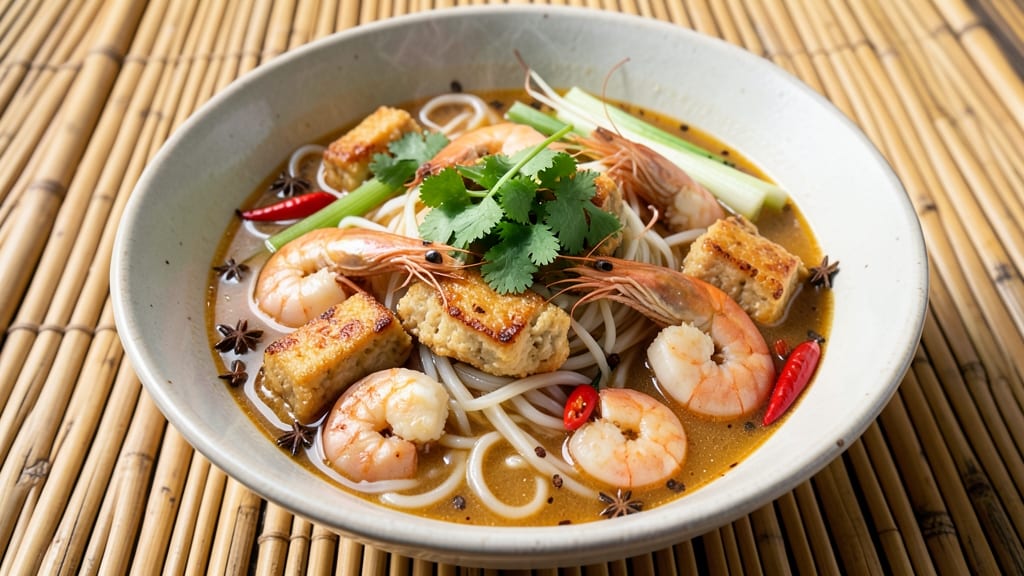
This Asian seafood noodle soup recipe transforms a simple pot of broth into a fragrant, aromatic masterpiece that balances heat, citrus, and umami in every spoonful. The secret lies in slow-simmered lemongrass and chili, which infuse the broth with layers of complexity—bright, herbal, and just spicy enough to linger.
I developed this version after years of testing regional styles, blending the bold flavors of Vietnamese pho with the comforting richness of Japanese ramen, all while keeping it accessible for home cooks.
The magic happens in the broth, where star anise, cinnamon, and ginger create a warm, spiced foundation, while lemongrass and Thai chilies add that signature tangy heat. Fresh shrimp, fish cakes, and bean sprouts bring texture and freshness, while rice noodles soak up the flavorful liquid perfectly.
What makes this recipe stand out is its balance—never overpowering, always harmonious, with each ingredient playing its part in a symphony of taste.
By the time you serve this soup, you’ll have a steaming bowl of golden broth, tender seafood, and delicate noodles that melt in your mouth. The aroma alone will draw everyone to the table, while the first sip delivers that perfect marriage of spice, citrus, and seafood sweetness.
This isn’t just a meal; it’s an experience that feels like a hug in a bowl.
Whether you’re serving a crowd or treating yourself to a comforting weeknight dinner, this recipe scales beautifully and adapts to your preferences—add extra chili for heat, more herbs for freshness, or a splash of lime to brighten the flavors. Let’s get cooking!
Ingredients for asian seafood noodle soup
The aromatic core of this soup starts with lemongrass, ginger, and chili—fresh ingredients that transform simple broth into something magical.
| Ingredient | Amount | Notes |
|---|---|---|
| Fresh Shrimp (Peeled and Deveined) 🦐 | 1 lb | Medium size, tail-on for presentation |
| Fish Cakes (Store-Bought or Homemade) 🐟 | ½ lb | Or substitute with squid rings |
| Rice Noodles (Flat, Medium Width) 🍜 | 8 oz | Like Miang Kham or Sen Lemong |
| Lemongrass Stalks 🌿 | 4 whole | Bruised and cut into 2-inch pieces |
| Thai Bird's Eye Chilies 🌶️ | 4 whole | Adjust to taste, seeds removed |
| Star Anise Pods 🌟 | 2 whole | Lightly crushed for aroma |
| Cinnamon Sticks 🌳 | 2 whole | 2-inch pieces for gentle flavor |
| Fresh Ginger (Peeled) 🧄 | 2 tbsp | Finely minced, aromatic |
| Garlic Cloves 🧄 | 6 cloves | Smashed, not minced |
| Fish Sauce 🍶 | 2 tbsp | Red Boat preferred |
| Lime Juice 🍋 | ⅓ cup | Freshly squeezed |
| Bean Sprouts 🌱 | 2 cups | Fresh, rinsed well |
| Green Onions 🧅 | ¼ cup | Thinly sliced, white and green parts |
| Fresh Thai Basil Leaves 🌿 | ¼ cup | Or regular basil in a pinch |
| Vegetable Oil 🫒 | 2 tbsp | For high-heat searing |
| Low-Sodium Chicken or Seafood Stock 💧 | 4 cups | Homemade or high-quality |
| Salt 🧂 | 1 ½ tsp | Diamond Crystal preferred |
| Black Pepper 🌶️ | ½ tsp | Freshly cracked |
Lemongrass is non-negotiable here. Look for thick, pale stalks with no brown spots—they should snap easily when bent. Asian markets usually have the freshest, but most grocery stores carry them too. If you can't find Thai bird's eye chilies, substitute with serrano peppers, but reduce the amount by half. The fish sauce? Red Boat is the gold standard, but any reputable brand works. Pro tip: crush the star anise and cinnamon sticks lightly with the side of your knife—they'll infuse the broth with layers of warmth without overpowering it.
No fresh shrimp? Scallops or mussels work beautifully—just adjust cooking time. Running out of fish cakes? Shrimp or squid rings add the same texture. The rice noodles should be medium-width and flat—they soak up the broth perfectly. If you can't find them, egg noodles in a pinch, but they won't have the same delicate bite. For extra freshness, rinse the bean sprouts right before adding them to the bowl—they wilt fast in hot broth. And if Thai basil isn't available, regular basil plus a pinch of cinnamon mimics its flavor profile surprisingly well.
This soup tastes even better the next day—the flavors meld beautifully overnight. Store leftovers in the fridge for up to 3 days, or freeze portions for 2 months. I like to portion it into individual containers so I can grab a quick lunch. The broth freezes well too—just reheat it gently and add fresh herbs and seafood when serving. For extra richness, stir in a tablespoon of coconut milk before serving, but keep it optional—it's already packed with flavor.
Why You'll Love This Recipe
- No-Fuss Assembly: I swear by this one—just toss in shrimp, fish cakes, and pre-soaked noodles. The lemongrass and chilies do all the flavor work while I stir for five minutes. Honestly, the hardest part is deciding how many bowls to make.
- Umami Bomb: That first sip? Chef’s kiss. The shrimp turns tender-pink, the fish cakes soak up the broth like sponges, and the lemongrass infuses the whole pot with citrusy depth. Between us, I’ve never met a bowl of noodle soup that hits this hard.
- Weeknight to Party: Same recipe, totally different vibes. Serve it steaming in mugs for a lazy Tuesday, or plate it with lime wedges and fresh herbs for guests. My roommates still think I’m a culinary genius—no one’s the wiser.
- Budget-Friendly Leftovers: Fish cakes stretch across three meals, shrimp freezes perfectly, and noodles last forever. I make a double batch on Sundays, reheat portions all week, and still save money compared to takeout. (Yes, even on a Tuesday night.)
Step-by-step instructions for fragrant lemongrass seafood noodle soup
Here's how to build this aromatic, balanced broth from scratch—layering flavors like a pro.
Toast the Aromatics for Deep Flavor
Heat a large pot or Dutch oven over medium heat. Add the 2 tbsp vegetable oil and let it warm for 30 seconds until shimmering. Add the 4 whole lemongrass stalks (cut into 2-inch pieces), 2 whole star anise pods, and 2 whole cinnamon sticks. Toast for 2 minutes until fragrant—you'll smell that citrusy lemongrass and warm spice aroma.
Next, add the 2 tbsp fresh ginger (peeled) and 6 cloves garlic (smashed). Cook for another 1 minute until the garlic turns golden and the ginger softens slightly. This step builds the aromatic base that will infuse the entire broth. Don't walk away—burnt garlic ruins everything.
Build the Broth with Chili and Stock
Add the 4 whole Thai bird's eye chilies (seeds removed) and cook for 30 seconds just until they darken slightly. Immediately pour in the 4 cups low-sodium chicken or seafood stock and bring to a gentle boil. Once boiling, reduce heat to medium-low and simmer uncovered for 15 minutes—this lets the spices fully infuse without burning.
I know it seems like a long time, but this slow simmer extracts maximum flavor. Here's the thing—if you rush it, you'll get a weak, one-dimensional broth. The spices need time to release their oils into the liquid. After 15 minutes, strain out the lemongrass, star anise, cinnamon sticks, and chilies using a fine-mesh strainer.
Sear the Seafood for Maximum Flavor
Increase heat to medium-high and add the 1 lb fresh shrimp (peeled and deveined) and 0.5 lb fish cakes to the simmering broth. Cook for 2-3 minutes until the shrimp turn opaque and the fish cakes develop a golden crust. Don't overcrowd the pot—work in batches if needed to maintain even cooking.
Here's where the magic happens: the searing creates a light crust that locks in juices while adding depth to the broth. When the shrimp curl slightly and the fish cakes float to the surface, they're ready. Remove them with a slotted spoon and set aside—we'll add them back later to warm through.
Season and Prepare the Noodles
Return the broth to a simmer and stir in the 2 tbsp fish sauce, 0.33 cup lime juice, 1.5 tsp salt, and 0.5 tsp black pepper. Taste and adjust—you want a balance of salty, tangy, and umami. The broth should coat your spoon with a silky sheen.
While the broth simmers, prepare the 8 oz rice noodles according to package instructions (usually 5-7 minutes in boiling water). Drain immediately and rinse under cold water to stop cooking. This prevents mushy noodles while keeping them tender. Divide the noodles among 4 bowls.
Assemble and Garnish for Perfect Presentation
Ladle the hot broth over the noodles, dividing evenly among bowls. Add the reserved shrimp and fish cakes, then top with 2 cups bean sprouts, 0.25 cup green onions, and 0.25 cup fresh Thai basil leaves. The contrast of textures—chewy noodles, tender shrimp, crisp sprouts—makes every bite exciting.
Serve immediately while steaming hot. The aroma alone will have everyone at the table. Each spoonful delivers that perfect balance of spicy, citrusy, umami-rich broth with perfectly cooked seafood. Real talk: this is the kind of soup that disappears fast.
Pro Tips For Making Asian Seafood Noodle Soup
- CHAR THE SHRIMP FAST: Toss shrimp in a mix of cornstarch and a pinch of salt, then sear them in a screaming-hot pan for just 30 seconds per side until they turn opaque. Overcooking turns them rubbery—trust the timer, not the color.
- SLICE LEMONGRASS LENGTHWISE: Split the stalks down the middle and scrape out the tough outer layers with the edge of your knife. The pale inner pith is where all the flavor hides—no need to mince, just bruise it lightly before adding to the broth.
- DON’T BOIL THE NOODLES: Soak rice noodles in warm (not boiling) water for 8–10 minutes until pliable, then drain and rinse with cold water. Boiling them shrinks them into mush—this keeps them chewy and separate.
- FRIZZ THE CHILIES FIRST: Toss whole Thai chilies in oil and fry them for 10 seconds until they blister—this unlocks their heat without overpowering the broth. Remove them before adding to the soup, then chop and stir in at the end.
Storing and reheating this dish
Refrigerator Storage
Let your soup cool to room temperature within 2 hours—this prevents bacterial growth. Transfer to airtight containers (I use glass Pyrex with snap-on lids) and store for up to 3 days in the fridge.
The flavors actually deepen overnight as the broth continues to meld. Always leave 1 inch of headspace to prevent spills from condensation. 💫
When reheating, focus on the noodles—they dry out faster than the broth. Add 1-2 tablespoons of water or stock per bowl before reheating to restore moisture. I prefer stovetop reheating over microwave for better texture control.
Freezer Storage
This soup freezes beautifully for up to 2 months without losing its vibrant flavors. Portion into quart-sized freezer bags (lay them flat to save space) and squeeze out excess air to prevent freezer burn. Label each bag with the date—trust me, you'll forget! 🧊
To reheat from frozen, thaw overnight in the fridge, then simmer gently on the stove. For quick meals, transfer the frozen soup directly to a pot with ½ cup water and heat on low-medium until steaming. The noodles will soften slightly but stay al dente.
Broth-Only Freezing
Save time by freezing just the broth separately. Strain it through a fine-mesh sieve after cooking, then freeze in 1-cup portions in ice cube trays. Once frozen, transfer cubes to a freezer bag.
When ready to use, thaw and reheat the broth, then add fresh seafood and noodles. This method preserves maximum flavor and aroma. 💡
For extra richness when reheating frozen broth, stir in 1 teaspoon of fish sauce and ½ teaspoon of sugar to balance any flatness from freezing. The acidity from lime juice should be added fresh when serving for maximum brightness.
Reheating Tips
Never microwave the soup with noodles—they turn mushy and lose texture. Instead, heat the broth separately and assemble bowls with freshly cooked noodles. For best results, cook fresh noodles from dry when reheating, then add hot broth. This keeps them chewy and satisfying. ✨
If your soup seems too thick after reheating, thin with warm water or stock (not cold) to maintain temperature. A splash of fresh lime juice also helps revive flavors. Garnish with fresh herbs and chili flakes to brighten up any reheated bowl.
Nutrition facts
Frequently asked questions
Can I substitute fresh shrimp with another seafood?
Shrimp can be swapped for scallops, mussels, or squid rings—just adjust cooking times. Scallops take 2-3 minutes per side, while mussels should open fully in 3-4 minutes. For squid, cook for 1-2 minutes until opaque.
How do I adjust the spice level?
Remove chili seeds for milder heat or keep them for extra spice. For a spicier kick, add 1-2 extra chilies or a dash of chili flakes. To balance heat, squeeze in more lime juice or add a spoonful of coconut milk.
What's the best way to make this soup vegetarian?
Replace shrimp with tofu cubes or mushrooms, and fish cakes with vegetable spring rolls or tofu puffs. Use vegetable stock and swap fish sauce for soy sauce or coconut aminos. Garnish with extra herbs and lime.
Can I make the broth ahead of time?
Yes! Prepare the broth up to 3 days ahead and store it in the fridge. For longer storage, freeze it in 1-cup portions (strain first). Reheat gently and add fresh seafood and noodles when serving. The flavors actually improve overnight!
Why did my noodles turn mushy?
Overcooking or reheating in the microwave causes this. Always rinse cooked noodles in cold water to stop cooking, and reheat only the broth separately. Add fresh noodles when serving to keep them chewy.