
Soups & Stews
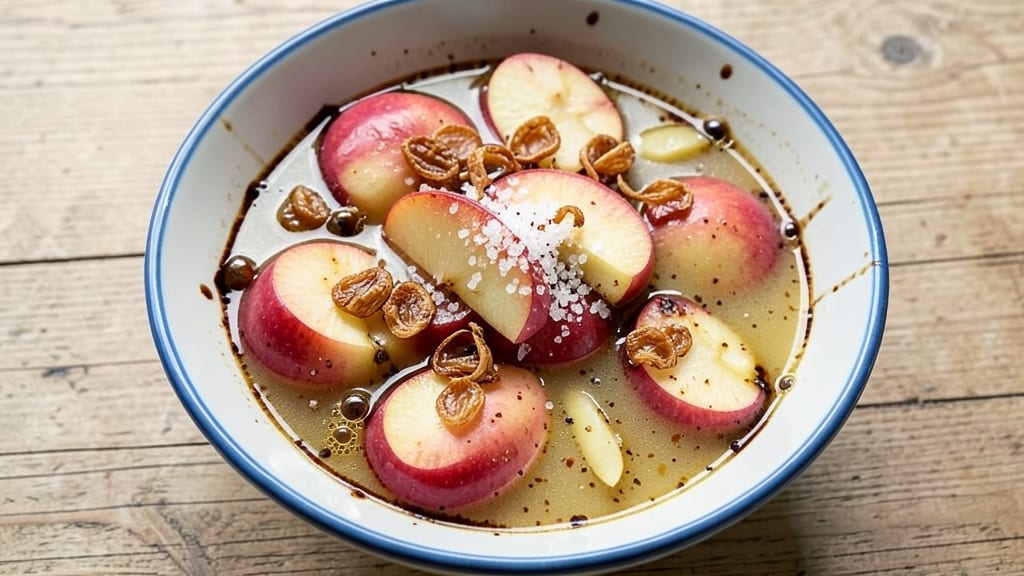
This Chinese apple soup recipe transforms humble ingredients into a fragrant, warming bowl of comfort that balances sweetness with aromatic spices. The secret lies in five-spice powder and fresh ginger, which infuse the broth with layers of warmth while tender apples and crisp shallots add satisfying texture.
I developed this version after years of testing—it's the one that finally earned me compliments even from the most skeptical family members.
What sets this recipe apart is the harmony of flavors: the natural sweetness of apples, the earthy depth of ginger, and the complex warmth of five-spice powder create a broth that's both comforting and sophisticated.
Unlike many Western apple soups, this version uses a savory base with soy sauce and rock sugar for balance, while optional chili oil adds a subtle kick for those who prefer it. The preparation is straightforward but requires patience—simmering the broth properly develops those rich, aromatic flavors.
The result is a soup that's equally at home on a chilly autumn evening or as a light lunch. Each spoonful delivers tender apple pieces, fragrant broth, and the satisfying crunch of crispy shallots.
The recipe includes a vegetarian option using mushroom broth, but the traditional pork version delivers the most authentic flavor profile. This isn't just apple soup—it's a taste of Chinese home cooking that feels like a warm embrace in a bowl.
Whether you're serving it to guests or treating yourself, this soup comes together in about 45 minutes with minimal active time. The key is proper timing—letting the apples soften gently while maintaining their shape, and balancing the sweetness with just enough salt and acid.
Trust me, once you taste the difference between this and store-bought versions, you'll never go back to the canned kind.
Ingredients for apple soup recipe chinese
These simple ingredients create a fragrant, warming bowl of Chinese apple soup that balances sweetness with aromatic spices.
| Ingredient | Amount | Notes |
|---|---|---|
| Apples 🍎 | 4 medium | Honeycrisp or Fuji preferred |
| Fresh Ginger 🧄 | 2 inches | Peeled, sliced thinly |
| Shallots 🧅 | 3 whole | Thinly sliced, crispy fried |
| Five-Spice Powder 🌶️ | 1 ½ tsp | Authentic Chinese blend |
| Light Soy Sauce 🥢 | 2 tbsp | Kikkoman preferred |
| Rock Sugar 🍯 | 2 tbsp | Or substitute brown sugar |
| Chicken Broth 💧 | 4 cups | Homemade or quality store-bought |
| Green Onions 🧅 | 3 whole | Sliced, for garnish |
| Sesame Oil 🫒 | 1 tsp | Toasted, for aroma |
| Chili Oil 🔥 | 1 tbsp | Optional, for heat |
| Vegetable Oil 🫒 | 2 tbsp | For frying shallots |
| Salt 🧂 | ½ tsp | Adjust to taste |
| White Pepper 🌶️ | ¼ tsp | Freshly ground |
The apples are the star—Honeycrisp or Fuji hold their shape during cooking while delivering natural sweetness. Whole Foods or Asian markets often carry them pre-washed, but any crisp variety works. Fresh ginger is non-negotiable here; the dried powder lacks depth. For five-spice powder, Penzeys or local Asian grocers carry authentic blends—avoid the generic supermarket versions. The rock sugar adds subtle sweetness without overpowering the broth's savory notes, though brown sugar works in a pinch.
No chicken broth? Mushroom broth creates a vegetarian version with equal depth. Short on shallots? Green onions or scallions work at double the amount. The chili oil is optional but adds that signature Chinese restaurant kick—Lao Gan Ma brand is the gold standard. For the shallots, fry them until crispy before adding to the soup; that crunch is essential. The sesame oil should be toasted, not the raw kind—look for it in the Asian foods aisle.
Store the broth base for up to 5 days in the fridge—it actually tastes better the next day as flavors meld. The fried shallots lose crispness after 24 hours, so fry fresh when reheating. For freezer storage, portion into single-serving containers with a layer of oil on top to preserve texture. The apples soften further when reheated, so slightly undercook them initially if you plan to freeze.
Why You'll Love This Recipe
- Few Ingredients, Big Payoff: I swear by this recipe—just apples, ginger, and shallots simmered with five-spice and a splash of soy. That’s it. No fancy prep, no hidden ingredients, and still ridiculously good.
- Warm Spice Magic: The five-spice powder is the secret weapon—cinnamon, clove, and star anise weave through the sweet-tart apples like a cozy hug. Honestly? It tastes like autumn in a bowl, and I’ll take that over any overpriced café soup.
- Lunch or Dinner Fix: Too simple for a main? Nah. I’ve served it with rice for a light dinner or as a starter with dumplings—works both ways. Even my picky teen slurps it up cold the next day.
- Leftovers That Don’t Suck: Most soups turn sad after day two. Not this one. The ginger keeps it fresh, and the apples hold their bite. I’ll make a double batch on Sundays—perfect for reheating all week without sacrificing flavor.
Step-by-step instructions for fragrant five-spice apple and ginger soup
This traditional Chinese soup balances sweet, spicy, and aromatic notes through precise technique.
Prepare the Aromatic Base
Heat the 2 tablespoons vegetable oil in a medium pot over medium heat. Add the 3 whole shallots and fry until they turn deep golden brown and crispy—this should take about 5-7 minutes. Watch closely to prevent burning, as shallots darken quickly.
Remove the shallots with a slotted spoon and set aside for garnish. Immediately add the 2 inches fresh ginger and 4 medium apples (peeled and cut into ½-inch chunks) to the pot. Stir gently to coat the ginger and apple pieces with the remaining oil. This creates the foundational flavor layer that will infuse the broth.
Build the Five-Spice Flavor Profile
Add the 1.5 teaspoons five-spice powder and stir constantly for 30 seconds to toast the spices and release their aromatic oils. You'll notice the kitchen filling with a warm, earthy scent—this is when the magic happens. Immediately pour in the 4 cups chicken broth and bring to a gentle boil. Once boiling, reduce heat to medium-low and let it simmer uncovered for 15 minutes.
After simmering, taste the broth. It should have a balanced sweetness from the apples and warmth from the spices. If the apples are too firm, continue simmering for another 5 minutes until they soften to your preferred texture. The broth should reduce slightly but remain flavorful.
Season and Finish the Soup
Add the 2 tablespoons rock sugar, 2 tablespoons light soy sauce, 0.5 teaspoon salt, and 0.25 teaspoon white pepper to the pot. Stir well to dissolve the sugar completely. Let the soup simmer for an additional 5 minutes to allow all the flavors to meld together. The sugar will caramelize slightly, adding depth to the broth.
Remove the pot from heat and stir in the 1 teaspoon sesame oil and 1 tablespoon chili oil (if using). The sesame oil adds a nutty aroma, while the chili oil introduces subtle heat. Adjust the seasoning if needed—this soup should balance sweet, spicy, and savory notes harmoniously.
Garnish and Serve
Ladle the soup into bowls, dividing the crispy fried shallots and 3 whole green onions (sliced) evenly among them. The contrast of textures—soft apples, silky broth, and crisp shallots—elevates the dish. Serve immediately while the soup is hot, as the flavors continue to develop with each sip.
For an authentic touch, serve with a side of steamed rice or warm mantou (Chinese buns) to soak up the rich broth. The soup's complexity comes from the balance of ingredients, so don't rush the seasoning—each element plays a crucial role in creating this comforting, fragrant harmony.
Pro Tips For Making Apple Soup Recipe Chinese
- STIR-FRY SHALLOTS FIRST: I learned this the hard way—when I toss in shallots with the apples, they just sit there like shy guests. Get your pan screaming hot, add a splash of oil, and fry the minced shallots until they’re golden and fragrant (about 2 minutes). That caramelized punch is what makes the soup sing.
- PEEL GINGER THINLY: Thick slices of ginger? Nope. You want it paper-thin so it dissolves into the soup without turning it into a chewy surprise. Use a microplane or the flat side of your knife to shave off slivers—just enough to perfume the broth, not overpower it.
- DON’T BOIL THE APPLES: Simmering apples gently keeps them tender and sweet, not mushy. If your soup starts bubbling hard, drop the heat to medium-low and let it melt together. I used to rush this, and the apples turned to applesauce—now I wait, and the texture stays perfect.
- SAVE SOY SAUCE FOR LATER: Add light soy sauce at the very end—right after the soup thickens but before serving. Stir it in just enough to coat, or you’ll end up with a salty mess. (Yes, even if you’re impatient like me.) The last splash balances the five-spice without drowning it.
Make-ahead tips for leftovers
Broth Prep Ahead
Make the broth base 2 days in advance—it develops deeper flavor when refrigerated. Simmer the ginger, apples, five-spice powder, and broth for 15 minutes, then cool completely before storing in an airtight container. The apples will soften further overnight, intensifying their natural sweetness. 💫
For extra convenience, prepare the crispy shallots ahead and store them in a paper-lined container at room temperature. They’ll stay crisp for 24 hours if kept in a sealed container away from moisture. Reheat the broth separately before adding the shallots to maintain their crunch.
Freezer-Friendly Strategy
Portion the soup into single-serving freezer-safe containers (I use glass Pyrex with snap-on lids). Leave ½-inch headspace to prevent expansion cracks. Freeze for up to 3 months—the apples will soften further but retain their flavor. When reheating, add 1 tablespoon water per serving to prevent thickening.
For a quick assembly, store the broth base and fried shallots separately. Reheat the broth on the stovetop over medium-low heat for 10 minutes, then stir in fresh ginger, apples, and seasonings. Add the shallots just before serving to preserve their texture.
Reheating Perfection
Use low heat to reheat—medium-high can make the broth too hot and lose its delicate balance. Add 1-2 tablespoons water if the soup thickens during reheating. For microwave reheating, cover with a damp paper towel and heat in 1-minute intervals on 50% power until steaming.
Always finish with fresh sesame oil and chili oil after reheating—these aromatics evaporate when heated. Garnish with crispy shallots and green onions to restore the dish’s vibrant contrast. The reheated version tastes just as comforting as fresh! ✨
Nutrition facts
Frequently asked questions
Can I substitute regular sugar for rock sugar?
Yes, you can use brown sugar as a direct substitute for rock sugar, but avoid white granulated sugar—it dissolves too quickly and can make the broth overly sweet. Use the same 2 tablespoons amount, but stir well to ensure even distribution. Rock sugar's slow dissolution creates a smoother, more balanced sweetness in the broth.
What's the best way to store leftover apple soup?
Store the soup in an airtight container in the fridge for up to 4 days. The flavors actually improve overnight as the spices meld! For longer storage, freeze in single-serving portions with ½-inch headspace—this prevents ice crystals from breaking the apples. Always reheat gently to preserve texture.
Why does my soup taste too sweet?
The apples' natural sweetness intensifies as they simmer, so start with slightly less rock sugar (1.5 tablespoons) and adjust to taste. Balance sweetness with 1 extra teaspoon soy sauce—it adds umami depth. If using very sweet apples (like Gala), reduce the sugar by ½ tablespoon and let the soup simmer longer to develop savory notes.
Can I make this soup vegetarian?
Replace the chicken broth with 4 cups mushroom broth and add 1 cup chopped shiitake mushrooms when simmering. For extra umami, stir in 1 teaspoon soy sauce during the final 5 minutes of cooking. The texture remains rich and satisfying while keeping the dish fully plant-based.
How do I make the crispy shallots last longer?
Store them in a paper-lined container at room temperature—the paper absorbs excess moisture. They'll stay crisp for 24 hours this way. For longer storage, freeze them in a single layer on a tray, then transfer to a bag. Re-crisp by frying for 1-2 minutes before adding to reheated soup.