
Soups & Stews
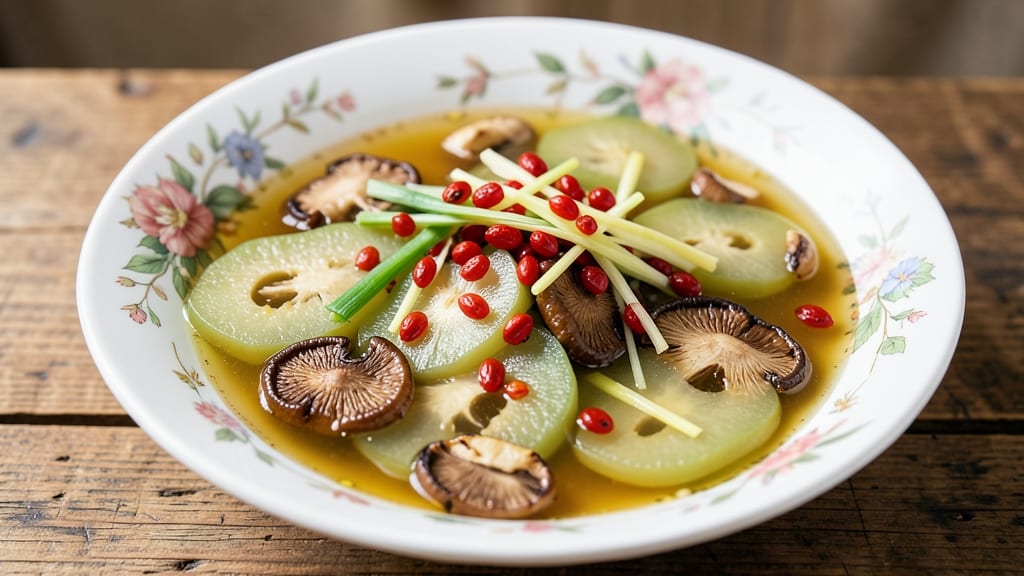
This bottle gourd Chinese soup delivers the perfect balance of lightness and depth—herbal, comforting, and packed with traditional flavors that transport you to a bustling Cantonese kitchen. 💛 The secret lies in stir-frying aromatic ginger and garlic until fragrant, then simmering tender bottle gourd (or winter melon) in a fragrant broth infused with goji berries and dried shiitake mushrooms.
It’s the kind of soup that feels both nourishing and effortlessly elegant, ideal for warm evenings or as a healing meal.
The beauty of this recipe is its adaptability—whether you’re following a vegetarian diet or looking to add protein, it accommodates both. Traditional versions rely on the natural sweetness of bottle gourd and the umami depth of mushrooms, but tofu or shrimp can be easily incorporated for a heartier twist.
The broth, simmered low and slow, develops layers of complexity that make every spoonful satisfying, while the texture contrast of soft gourd and chewy mushrooms keeps it interesting.
What makes this soup truly special is how it marries simplicity with sophistication. No fancy equipment is needed—just a pot, a knife, and patience to let the flavors meld.
The result is a dish that’s as much about the process as it is the outcome: the sizzle of aromatics, the gentle aroma of simmering herbs, and the final presentation with delicate garnishes like cilantro or scallions.
It’s the kind of recipe that feels like a hug in a bowl, yet still impresses when served to guests.
Perfect for meal prep or a last-minute dinner, this soup scales effortlessly and tastes even better the next day as the flavors deepen. Whether you’re introducing someone to Chinese comfort food or simply craving a lighter yet deeply flavorful dish, this recipe delivers.
Let’s get cooking—your kitchen (and taste buds) will thank you.
Ingredients for bottle gourd chinese soup
Herbal, comforting, and packed with traditional flavors—this bottle gourd soup delivers restaurant-quality lightness in every spoonful.
| Ingredient | Amount | Notes |
|---|---|---|
| Bottle Gourd (or Winter Melon) 🍈 | 4 cups | Cubed, skin removed if thick |
| Dried Shiitake Mushrooms 🍄 | 6 whole | Rehydrated, stems removed |
| Goji Berries 🍇 | ½ cup | Dried, rinsed if dusty |
| Fresh Ginger 🧅 | 2 tbsp | Thinly sliced, peeled |
| Garlic Cloves 🧄 | 5 cloves | Minced, aromatic |
| Scallions 🧅 | 3 whole | White and green parts separated |
| Fresh Cilantro 🌿 | ¼ cup | Chopped, for garnish |
| Vegetable Stock 💧 | 6 cups | Low-sodium preferred |
| Sesame Oil 🫒 | 1 tbsp | Toasted, for aroma |
| Light Soy Sauce 🥄 | 1 tbsp | Kikkoman preferred |
| Rice Vinegar 🍶 | 1 tbsp | Seasoned, for brightness |
| Cornstarch 🌾 | 1 tsp | Slurry with 1 tbsp water |
| Vegetable Oil 🫒 | 2 tbsp | For stir-frying aromatics |
| Sea Salt 🧂 | 1 tsp | Diamond Crystal preferred |
| White Pepper 🌶️ | ¼ tsp | Freshly ground |
The bottle gourd is the star here, and Asian markets usually have it pre-cut for convenience, but if you're using winter melon, look for firm, heavy ones—that means they're packed with juice. Dried shiitake mushrooms should be plump and dark brown; Trader Joe's carries good ones in bulk. Goji berries can be found in the tea or health food aisle—avoid the tiny, dusty ones—rinse them well before using. Fresh ginger and garlic are non-negotiable for that aromatic punch, but if you're in a pinch, pasteurized ginger or jarred minced garlic will work in a bind.
No dried shiitake? Fresh shiitake mushrooms work too—just don't bother rehydrating them. Running low on goji berries? Dried cranberries or raisins add a similar sweet-tart contrast. The vegetable stock is where flavor builds, so homemade or high-quality store-bought makes all the difference. For extra depth, add a splash of miso paste to the broth while simmering. The cilantro and scallions are purely for garnish—skip them if you're not a fan, but the soup will still shine without them.
This soup tastes even better the next day, so double the batch and store it in the fridge for up to 5 days. For longer storage, freeze it in 2-cup portions—just thaw overnight in the fridge before reheating. The broth thickens as it cools, so add a splash of water when reheating if it feels too dense. Garnish with a drizzle of sesame oil and a sprinkle of white pepper right before serving—trust me on this, it elevates everything.
Why You'll Love This Recipe
- No-Fuss Prep: I slice the bottle gourd into thick chunks—no peeling, no fuss—and let the pot do the work while I chop the garlic and ginger. Honestly, the hardest part is waiting for the shiitakes to rehydrate, and even that’s just dumping them in hot water for 10 minutes.
- Earthy Depth: That first sip of ginger and garlic simmering with shiitakes? It’s like a warm hug for your taste buds. The goji berries add this subtle sweetness that balances the umami—trust me, it’s the kind of flavor that lingers just right.
- Lunchbox Hero: Between us, this soup is my go-to for meal prep. It reheats beautifully, and the bottle gourd stays tender even after three days in the fridge. Pack it in a thermos, and you’ve got a satisfying lunch that’s way better than takeout.
- Budget-Friendly Magic: Dried shiitakes and goji berries last forever, and bottle gourd is dirt cheap compared to other veggies. I’ve made this soup for under $3 per serving—yet it feels like a restaurant-quality dish. Not the prettiest, but the taste makes up for it every time.
Step-by-step instructions for bottle gourd Chinese soup
Here's how to transform simple ingredients into a fragrant, healthful soup that balances earthy flavors with herbal brightness.
🍳 Step 1: Rehydrate and Prep Ingredients
Start by rehydrating the 6 whole dried shiitake mushrooms in 4 cups hot water for 20 minutes until pliable. Drain, reserving the soaking liquid, and remove stems. This step unlocks their deep umami potential while keeping the broth flavorful.
While mushrooms soak, rinse the 0.5 cup goji berries in a fine-mesh strainer to remove any dust. Thinly slice the 2 tbsp fresh ginger and peel the 5 cloves garlic, then mince both finely. Separate the 3 whole scallions into white and green parts - we'll use whites for cooking and greens for garnish later. Prep the 4 cups bottle gourd by cubing it into ½-inch pieces, peeling if the skin is thick. I like to keep these slightly larger than traditional Chinese soup cubes for better texture contrast.
🍳 Step 2: Build Flavor with Aromatics
Heat 2 tbsp vegetable oil in a large pot over medium-high heat until shimmering. Add the sliced ginger and minced garlic, cooking for 1-2 minutes until fragrant and just beginning to color at the edges. This quick sauté develops their natural oils without burning, creating the aromatic foundation.
Add the rehydrated shiitake mushrooms and stir for 2 minutes until they release their moisture. Pour in the reserved mushroom soaking liquid and 6 cups vegetable stock, then bring to a gentle boil. Here's where the magic happens - reduce heat to medium-low and let it simmer for 10 minutes to meld the flavors. You'll notice the broth develop a subtle earthy aroma that's subtly sweet from the mushrooms.
🥘 Step 3: Add Vegetables and Season
Add the cubed bottle gourd and 1 tbsp light soy sauce to the simmering broth. Stir gently to distribute the soy sauce evenly. The bottle gourd will begin to soften within 5 minutes, but we want to preserve some bite - aim for 8-10 minutes total cooking time until fork-tender but still holding its shape.
Meanwhile, prepare the goji berries by toasting them in a dry skillet over low heat for 1 minute until fragrant. Add them to the soup along with 1 tbsp rice vinegar and 1 tsp sesame oil. The vinegar brightens the dish while the sesame oil adds nutty depth. Taste and adjust seasoning with 1 tsp sea salt and 0.25 tsp white pepper - the pepper adds subtle warmth without overpowering.
⏰ Step 4: Thicken and Finish
Mix the 1 tsp cornstarch with 1 tbsp water to create a smooth slurry. Slowly ladle this into the simmering soup while stirring constantly for 1-2 minutes until the broth thickens slightly to a velvety consistency. You want it thick enough to coat the back of a spoon but still light enough to sip easily.
Turn off the heat and let the soup rest for 5 minutes. This resting period allows all the flavors to fully meld together. The bottle gourd will continue to absorb some liquid, creating that perfect balance between broth and vegetables. Here's the thing - don't skip this step. Patience now ensures every spoonful delivers maximum flavor.
🍽️ Step 5: Serve with Fresh Garnishes
Ladle the soup into bowls and garnish immediately with chopped 0.25 cup fresh cilantro and the reserved scallion greens. The bright green garnishes provide a beautiful contrast to the earthy broth while adding freshness. I like to serve this with a side of steamed rice or crusty bread to soak up every last drop of that flavorful broth.
Each bowl should deliver a harmonious blend of textures - the tender bottle gourd, chewy mushrooms, and delicate goji berries all suspended in a velvety broth. The combination of umami from shiitakes, sweetness from goji berries, and the bright finish from rice vinegar creates a truly satisfying herbal experience that's both light and deeply flavorful.
Pro Tips For Making Bottle Gourd Chinese Soup
- SOAK MUSHROOMS 30 MINUTES: I learned this the hard way—skipping the soak leaves dried shiitakes tough as shoe leather. Toss them in warm water for 30 minutes before slicing, then drain and reserve that mushroom water. It’s the base of your soup, so don’t waste it.
- PEEL GINGER THINLY: That thick, knobby ginger you’re used to? Too aggressive. For this soup, slice just the pale, juicy part—about 1/4-inch thick—leaving the tough outer skin behind. It melts into the broth without overpowering, and you’ll actually taste the warmth, not the bite.
- SIMMER LOW AND LONG: Rushing the bottle gourd? Big mistake. After the initial boil, drop the heat to a whisper and let it cook uncovered for at least 45 minutes. The skin should soften to the point where a spoon glides through it like butter—no mushy, watery mess here.
- DRIZZLE GOJI INFUSION: Skip dumping goji berries straight in. Instead, steep them in 1 cup hot water for 10 minutes, then strain and add the liquid to your soup. The berries themselves? Toss them in at the very end—just for color and a chewy surprise. This keeps the broth from turning bitter.
Regional styles of this recipe
Cantonese Comfort
This is the version you’ll find in bustling Cantonese kitchens—where bottle gourd (or winter melon) takes center stage as a cooling yet nourishing summer staple. The key here is the light, fragrant broth built from dried shiitake mushrooms and goji berries, which balance sweetness and umami perfectly.
In Hong Kong, this soup is often served with congee or steamed dumplings for a heartier meal. I’ve seen street vendors in Guangzhou sell it as a quick, refreshing lunch—just add a poached egg for extra richness. 💛
Sichuan Spice Twist
For a bolder take, bring in some Sichuan heat by adding 1 tsp chili crisp or ½ tsp ground Sichuan peppercorns to the broth while simmering. The peppercorns add a numbing tingles that pairs beautifully with the sweet bottle gourd.
I like to use Trader Joe’s chili crisp for its perfect balance of heat and smokiness. Garnish with extra chili oil and a sprinkle of toasted sesame seeds for texture. This version is a favorite in Chengdu, where spicy soups are a staple.
Fujian Coastal Version
In Fujian province, coastal flavors dominate, so this soup often incorporates fresh seafood like shrimp or scallops. Add ½ lb shrimp (peeled and deveined) to the broth during the last 5 minutes of cooking.
For extra depth, stir in 1 tsp fermented black beans (like lao gan ma) and a splash of Shaoxing wine when building the aromatics. The wine adds a subtle fruity note that brightens the dish. Serve with steamed buns or rice noodles for a true Fujian street-food experience.
Modern Vegetarian Adaptations
For a protein-packed vegetarian version, swap the shrimp for ½ lb firm tofu (pressed and cubed) or 1 cup edamame. Tofu should be added to the broth 10 minutes before serving to prevent it from turning mushy.
I love adding ½ cup baby bok choy as well—it wilts beautifully in the broth and adds a fresh, slightly bitter contrast. For a nutty finish, stir in 1 tbsp tahini or toasted peanut powder before serving.
This version is perfect for vegan diets but still delivers that satisfying umami depth.
Winter Melon Substitution
If bottle gourd is hard to find, winter melon makes an excellent substitute—just be sure to choose a firm, heavy melon with minimal seeds. For extra sweetness, add 1 tbsp rock sugar or honey to the broth while simmering.
In Taiwan, this version is often called "bai beng" soup and is a go-to for hot weather. The melon’s mild flavor lets the shiitake and goji berries shine, making it a crowd-pleaser. 🌿
Quick Weeknight Hack
Short on time? Use instant miso paste (like Miso Master) to boost umami in 10 minutes. Mix 1 tbsp miso into the broth while simmering, along with 1 tsp grated ginger and 1 minced garlic clove.
Skip the cornstarch slurry and rely on the miso to thicken the broth naturally. This version is just as flavorful but cuts prep time in half—perfect for busy weeknights. Garnish with crispy fried shallots for a restaurant-worthy touch.
Nutrition facts
Frequently asked questions
Can I use regular zucchini instead of bottle gourd?
While zucchini works in a pinch, it lacks the mild sweetness and delicate texture that makes bottle gourd perfect for this soup. For the closest substitute, choose a firm zucchini with minimal seeds and reduce cooking time to 5-7 minutes to prevent mushiness. The flavor will be more neutral, so boost umami with an extra ½ tsp miso paste or 1 tsp soy sauce.
How do I make this soup spicier?
Add heat by stirring in ½ tsp chili flakes or 1 tsp chili crisp during the final 5 minutes of simmering. For a smoky kick, include ½ tsp smoked paprika with the aromatics. For Sichuan-style tingles, add ¼ tsp Sichuan peppercorns (lightly toasted) to the broth. Always taste first—adjust gradually to avoid overpowering the delicate flavors.
Why did my soup turn out too thin?
The most common reason is insufficient simmering time—let the broth reduce naturally for 15-20 minutes before adding vegetables. If it's still too thin, mix 1 tsp cornstarch with 1 tbsp water and stir vigorously until thickened. For extra body, add ½ cup cooked rice or 1 tbsp tahini at the end. Pro tip: Use a wider pot to increase surface area for faster reduction.
Can I make this soup ahead of time?
This soup tastes even better the next day as flavors deepen. Store in an airtight container in the fridge for up to 5 days or freeze for 3 months. Reheat gently on low heat, adding 1-2 tbsp water if too thick. The cornstarch slurry may separate—just stir vigorously to recombine. Garnish fresh before serving to maintain vibrant flavors.
What's the best way to serve leftovers?
Transform leftovers into a hearty meal by serving over steamed jasmine rice or rice noodles. For extra protein, top with soft-boiled eggs or pan-fried tofu. In Chinese households, it's common to pair with dumplings or congee for a satisfying lunch. The broth makes excellent "soup dumplings" too—just mix with ground pork/chicken and wrap in wonton wrappers!