
Soups & Stews
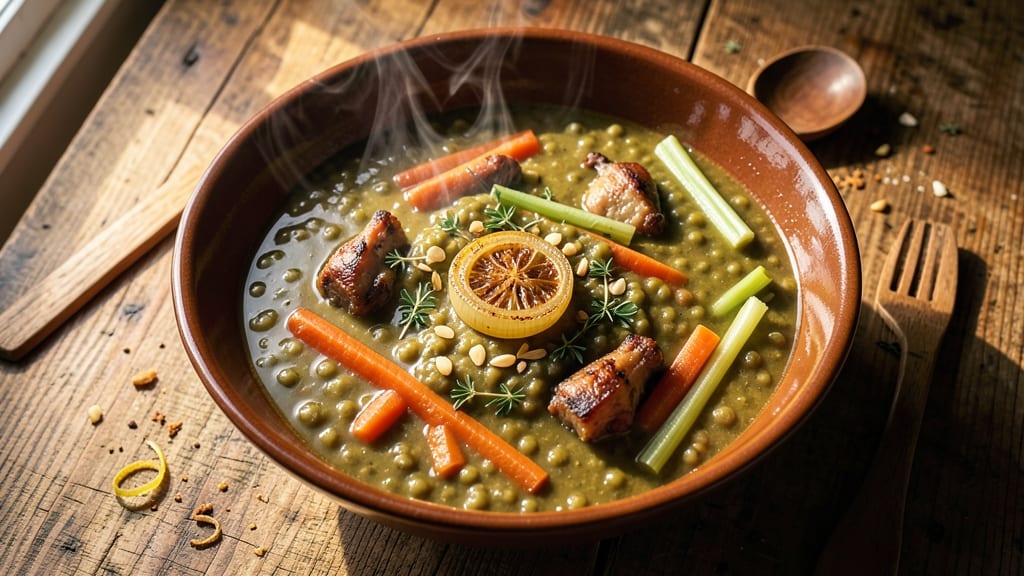
Andersen’s split pea soup with ham hocks transforms simple ingredients into a rich, velvety masterpiece through slow cooking. The secret lies in simmering ham hocks for hours, extracting deep, savory flavors that infuse every spoonful—this isn’t just soup, it’s comfort in a bowl.
Traditional techniques like browning the ham bones first create a flavor base that elevates the peas from ordinary to extraordinary.
The process is straightforward but requires patience: split peas soak overnight for tender texture, while ham hocks render their collagen into a thick, aromatic broth. Herbs like thyme and bay leaves add subtle complexity, balancing the soup’s hearty richness.
This method delivers restaurant-quality results at home, with a depth of flavor you won’t find in instant versions.
By the time you ladle the finished soup into bowls, you’ll notice the ham hocks have dissolved into tender meat, the peas are perfectly soft yet still hold their shape, and the broth has a luxurious thickness.
The aroma alone—smoky, herby, and deeply savory—will have everyone gathering around the table. Serve with crusty bread to soak up every last drop.
What makes this recipe truly special is how it builds flavor over time, rewarding your patience with a soup that tastes even better the next day. The slow-cooked ham hocks don’t just add protein—they create a symphony of umami that turns a simple split pea soup into a heirloom-worthy dish.
Here’s how to make it.
Ingredients for andersen's split pea soup recipe with ham hocks
Split peas, ham hocks, and herbs—this classic combo builds restaurant-style flavor through slow simmering.
| Ingredient | Amount | Notes |
|---|---|---|
| Dried Green Split Peas 🌱 | 2 cups | Uncooked, rinsed well |
| Ham Hocks 🍖 | 2 lb | Fresh or frozen, untrimmed |
| Yellow Onion 🧅 | 1 whole | Chopped, medium size |
| Carrots 🥕 | 3 medium | Peeled, chopped into chunks |
| Celery Stalks 🌿 | 3 whole | Chopped, medium size |
| Garlic Cloves 🧄 | 4 cloves | Peeled, smashed |
| Fresh Thyme 🌿 | 2 sprigs | Or 1 tsp dried thyme |
| Bay Leaves 🍃 | 2 whole | Dried, standard size |
| Salt 🧂 | 2 tsp | Kosher or sea salt |
| Black Peppercorns 🌶️ | ½ tsp | Freshly cracked |
| Water 💧 | 8 cups | Cold, filtered preferred |
| Crusty Bread 🍞 | 1 loaf | For serving, optional |
| Olive Oil 🫒 | 2 tbsp | For browning ham |
| Fresh Parsley 🌿 | ¼ cup | Chopped, for garnish |
The ham hocks are non-negotiable here. Look for pork hocks with good fat cap—Costco or butcher shops usually have them fresh. If frozen, thaw overnight in the fridge. The split peas? Bob's Red Mill or store-brand work fine, but check for no added salt. Fresh thyme is ideal, but dried works at one-third the amount. Pro tip: Browning the ham hocks in olive oil first builds the deepest flavor—don't skip this step.
No ham hocks? Smoked turkey legs work in a pinch, but the flavor won't be identical. Fresh herbs wilt fast—store them in damp paper towels in a sealed bag for up to 5 days. The carrots and celery can be pre-chopped and frozen in a bag for convenience. For a quicker version, use canned diced tomatoes (1 cup) along with the fresh veggies. And if you're short on time, soak the peas for 4 hours instead of overnight—they'll still soften, just not quite as perfectly.
This soup tastes even better the next day—3-4 days in the fridge, 3 months frozen. I always make a double batch and freeze half. For serving, toasted crusty bread is perfect, but any bread works. Garnish with fresh parsley right before eating—it brightens up the rich flavors. Store leftovers in airtight containers with a splash of water to keep them moist.
Why You'll Love This Recipe
- No-Fuss Simmer: I swear by this recipe because it’s the kind of meal that actually lets you set it and forget it. Toss in the dried peas, ham hocks, and chopped veggies—no fancy prep—and let the flavors meld for hours. By the time you’re ready to eat, the ham’s fall-off-the-bone tender, and the peas are creamy without a single blender in sight.
- Rich, Deep Umami: That ham hock? It’s the star. The slow simmer extracts all its smoky, savory goodness into the broth, while the split peas soak it up like a sponge. Add a splash of vinegar at the end—trust me—and you’ve got that perfect tangy-sweet balance that makes this soup dangerously addictive.
- Weeknight Crowd-Pleaser: This isn’t just a soup; it’s a full meal that feeds a family without breaking the bank. Serve it with crusty bread, or turn it into a hearty sandwich the next day. Honestly, I’ve brought this to potlucks, game nights, and even my book club—everyone leaves happy.
- Leftovers That Taste Better: Between us, the second day is often my favorite. The flavors deepen, and the texture gets even creamier. I make a double batch on Sundays so I can reheat portions all week—no sad, watery leftovers here. Plus, the ham hocks add enough richness that it never tastes like "last night’s dinner."
Step-by-step instructions for andersen's split pea soup with ham hocks
Here's how to build rich, herb-infused split pea soup with deep flavor from slow-cooked ham hocks.
Brown the Ham Hocks for Maximum Flavor
Pat the 2 lb ham hocks dry with paper towels—this helps them brown better. Heat the 2 tbsp olive oil in a large Dutch oven over medium-high heat until shimmering. Add the ham hocks in a single layer and cook undisturbed for 5-6 minutes until deeply golden brown on all sides. This step is crucial—it develops the Maillard reaction that creates that deep, savory foundation for your soup.
Flip the ham hocks carefully with tongs and continue browning for another 3-4 minutes. You want them to develop a rich, caramelized crust. Once browned, remove the ham hocks and set them aside in a small bowl—they'll continue cooking later. Don't drain the rendered fat; we'll use it to sauté the vegetables.
Sauté the Vegetable Base
In the same Dutch oven, add the chopped 1 whole yellow onion, 3 medium carrots, and 3 whole celery stalks. Cook over medium heat for 5-6 minutes, stirring occasionally, until the vegetables begin to soften and the onion becomes translucent. This step builds the flavor foundation—don't rush it.
Add the 4 cloves smashed garlic, 2 sprigs fresh thyme, and 2 whole bay leaves to the pot. Stir everything together and cook for another 1-2 minutes until the garlic is fragrant but not browned. The thyme and bay leaves will infuse the soup with their aromatic qualities as it simmers. If you notice the garlic starting to brown too quickly, reduce the heat slightly to medium-low.
Combine All Ingredients and Simmer
Return the browned ham hocks to the Dutch oven. Add the 2 cups dried green split peas, 2 tsp salt, and 0.5 tsp freshly cracked black peppercorns. Pour in the 8 cups cold water, making sure all the ingredients are submerged. The split peas should be fully covered by at least an inch of liquid.
Bring the mixture to a boil over high heat, then immediately reduce the heat to low. Cover the pot with a tight-fitting lid and let it simmer gently for 1 hour. After the initial hour, check the soup—you want the split peas to be mostly tender but still slightly firm. If they're not quite there, continue simmering uncovered for another 30-45 minutes, stirring occasionally to prevent sticking.
Finish and Adjust the Soup
Once the split peas are tender but still hold their shape (they'll soften more as they cool), remove the ham hocks and set them aside. Strain the soup through a fine-mesh sieve to remove the thyme sprigs and bay leaves—this prevents any bitter flavors from lingering. Return the soup to the pot and discard the strained solids.
Taste the soup and adjust the seasoning if needed. You might need to add a bit more salt or black peppercorns to taste. The ham hocks should be fork-tender now. Shred the meat using two forks and return it to the pot, stirring well to combine. Let the soup simmer uncovered for another 5-10 minutes to allow the flavors to meld together.
Serve with Fresh Garnish
Ladle the hot split pea soup into bowls and garnish each serving with the 0.25 cup chopped fresh parsley. The parsley adds a bright, fresh contrast to the rich, savory soup. Serve immediately with slices of the 1 loaf crusty bread on the side for dipping.
This soup tastes even better the next day as the flavors continue to develop. Store any leftovers in an airtight container in the refrigerator for up to 5 days, or freeze for up to 3 months. The ham hocks add a deep, meaty richness that transforms simple split peas into a hearty, comforting meal.
Pro Tips For Making Andersen'S Split Pea Soup Recipe With Ham Hocks
- BLANCH HAM HOCKS FIRST: Drop those ham hocks in boiling water for 5 minutes before adding to the pot—this loosens the skin and renders fat faster. I used to skip this, and the soup always tasted like it needed more time to develop depth.
- SIFT THE PEAS: Give dried split peas a quick sift to remove debris and broken bits—your soup will be smoother, and you’ll avoid chewing on grit. (Yes, even if you’re impatient like me.)
- SAUTÉ THE VEGETABLES LOW: Cook onions, carrots, and celery on medium-low heat until soft, not browned—this prevents bitterness and lets their flavors meld without overpowering the peas. After burning three batches, I finally figured out patience pays off here.
- SKIM THE FOAM: After the first 30 minutes of simmering, skim off the grayish foam rising to the top—it’s protein scum, and ignoring it makes the soup taste cloudy. Does it look weird? Yes. Does it work? Every single time.
Common mistakes when making great andersen's split pea soup recipe with ham hocks
Skipping the Browning Step
Never skip browning the ham hocks—this is where the deep, savory flavor comes from! The Maillard reaction creates complex caramelized notes that infuse the entire soup. If you're short on time, at least sear them for 3-4 minutes per side to get some color.
I’ve tried making this soup without browning, and it just doesn’t have that same rich, umami depth. 🍖
Under-Soaking the Peas
If you don’t soak the split peas overnight (at least 8 hours in cold water), they’ll absorb too much liquid during cooking and turn mushy. I’ve learned this the hard way—once, I rushed and only soaked them for 2 hours, and the soup ended up watery.
Pro tip: Rinse them well before soaking to remove any debris, and change the water once if you’re in a hurry. 🌱
Ignoring the Ham Hocks’ Cooking Time
Ham hocks need 2-3 hours of simmering to break down properly. If you remove them too early, they’ll be tough and chewy. I’ve seen people pull them out after just 1 hour, thinking they’re done, only to end up with rubbery meat.
Let them cook until they’re fork-tender—this is what gives the soup its luxurious body and rich flavor. 💪
Over-Stirring While Simmering
Stirring the soup too often can break down the peas and make the broth cloudy. Instead, give it a gentle stir every 30 minutes to prevent sticking. I’ve noticed that when I stir constantly, the peas lose their shape and the soup loses its silky texture.
Let the peas do their thing—they’ll soften beautifully on their own. ✨
Forgetting to Skim the Fat
As the ham hocks cook, they’ll release fat that rises to the top. Skim this off occasionally to prevent a greasy soup. I used to ignore this, and the final soup would feel heavy and unbalanced.
Use a large spoon or fat separator to remove the fat every 30-45 minutes while simmering. This keeps the soup light and lets the herbs shine. 🧂
Over-Salting the Soup
Split peas absorb a lot of liquid, so it’s easy to over-salt the soup if you’re not careful. Start with just 1 tsp of salt and taste as you go—you can always add more later.
I’ve ruined batches by dumping in too much salt upfront. The ham hocks already add significant saltiness, so err on the side of caution. Adjust to taste at the end! 💡
Nutrition facts
Frequently asked questions
Can I substitute ham hocks with another meat?
Yes, but the flavor will differ. For a similar rich taste, use smoked turkey legs or pork shanks. If you prefer chicken, opt for bone-in chicken thighs—they'll add depth but won't replicate the ham's smoky quality. The key is using meat with bones for maximum flavor infusion.
How do I know when the split peas are perfectly cooked?
Peas should be tender but still hold their shape—they'll soften further as they cool. Test by tasting one: it should be creamy inside with a slight bite. If they're mushy, they've overcooked. For best results, simmer uncovered for 30-45 minutes after the initial hour.
Can I make this soup in a slow cooker?
Brown the ham hocks first, then add all ingredients to the slow cooker. Cook on low for 8-10 hours or high for 4-5 hours. The slow cooker's gentle heat enhances the ham's collagen breakdown, creating an even richer broth. Just check the peas' doneness at the end.
Why does my soup taste bland?
Most likely, you skipped browning the ham hocks or didn't simmer long enough. The Maillard reaction from browning creates deep flavor, and ham hocks need 2+ hours to render their richness. Boost flavor by adding 1 tsp smoked paprika or ½ cup tomato paste at the start.
Can I freeze this soup?
Yes! Let it cool completely, then store in airtight containers for up to 3 months. The ham hocks will keep their texture better if frozen separately and added back when reheating. Thaw overnight in the fridge before reheating. The flavors actually improve after freezing.